Behind vs. In Back Of Worksheets
About This Worksheet Collection
The Behind vs. In Back Of worksheet collection provides students with meaningful practice in distinguishing formal and informal language. Through comparisons, rewrites, dialogue exercises, and contextual decision-making, learners explore how tone, audience, and purpose shape word choice. The set emphasizes how subtle vocabulary differences influence the overall professionalism and clarity of writing, making it ideal for building stylistic awareness.
As students work through the collection, they develop stronger command of register, editing skills, and flexible writing abilities. They practice transforming informal expressions into polished academic phrasing, analyze dialogue for tone, and produce writing in multiple styles. These worksheets support learners in becoming thoughtful communicators who can adjust their voice for different settings, from essays to conversations to news-style reports.
Detailed Descriptions Of These Worksheets
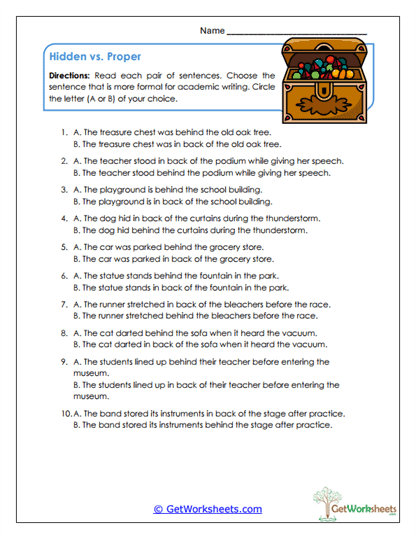
Hidden vs. Proper
Students compare pairs of sentences and select the more formal option, learning how behind differs in tone from the conversational in back of. This task strengthens awareness of register and encourages thoughtful evaluation of audience and purpose. Learners also build confidence in selecting appropriate vocabulary for academic writing. The activity reinforces polished, intentional word choice.
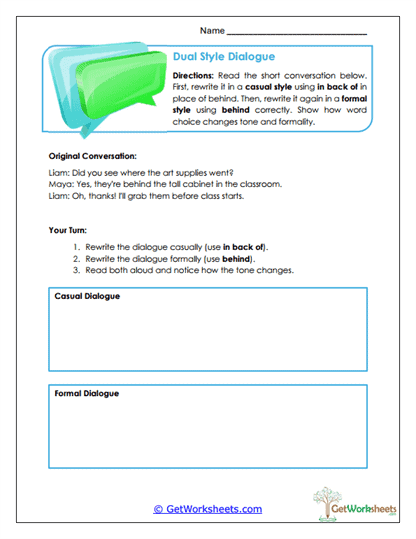
Dual Style Dialogue
Learners rewrite a dialogue twice-once using informal phrasing and once using the more formal alternative-to explore how vocabulary affects tone. This exercise highlights how audience expectations shape word choice in conversation. Students develop voice, clarity, and stylistic variation as they craft both versions. It encourages flexible writing and careful revision.
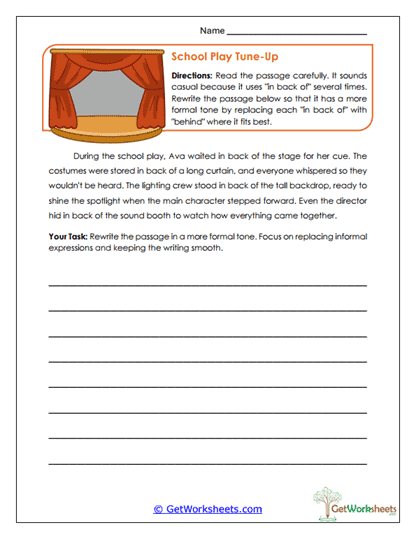
School Play Tune-Up
Students transform an informal paragraph into a more formal version by replacing in back of with behind and adjusting other elements for smoother style. This revision activity deepens understanding of tone and formality in paragraph writing. Learners practice editing for clarity and professionalism. It cultivates stronger paragraph-level coherence and control.
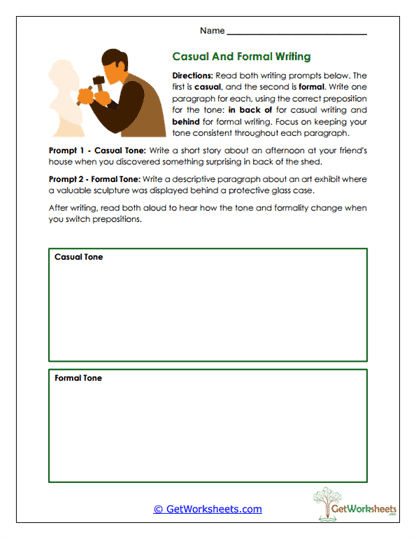
Casual and Formal Writing
Learners write one paragraph in a casual tone using in back of and another in a formal tone using behind. This contrast helps students understand how audience and purpose guide vocabulary, sentence structure, and voice. The activity builds flexibility in shifting tone. Students gain practical experience writing in multiple registers.
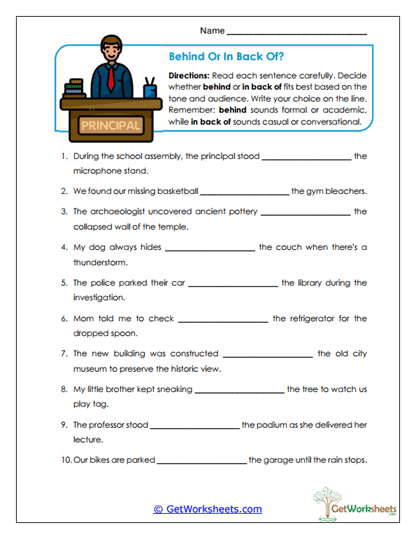
Behind or In Back Of?
Students choose which preposition suits each sentence based on tone and context. This helps learners distinguish between conversational and academic language while reinforcing prepositions of place. The activity promotes thoughtful word selection and accuracy in usage. It also encourages careful reading and contextual interpretation.
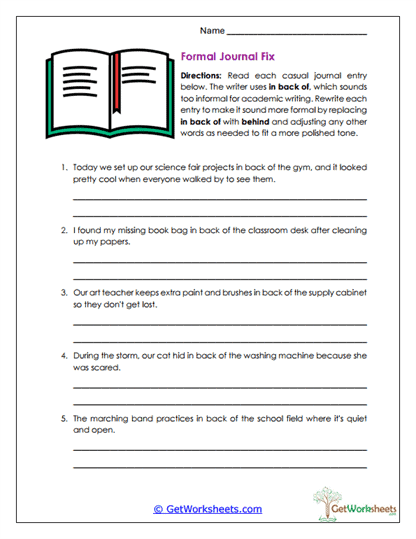
Formal Journal Fix
Learners revise casual journal entries to make them more formal by replacing informal expressions and improving overall tone. This exercise builds editing and rewriting skills while emphasizing the impact of vocabulary on voice. Students gain practice applying formal writing conventions. It supports greater clarity and professionalism in written work.
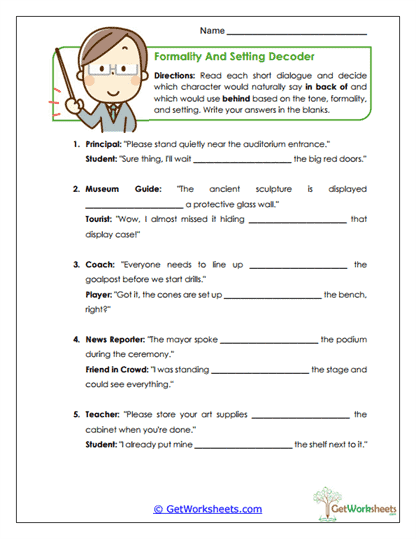
Formality and Setting Decoder
Students read mini-dialogues and determine which character would use the casual in back of and which would choose the formal behind. This encourages analysis of character voice, setting, and tone. Learners deepen awareness of how context influences language choices. The activity reinforces correct spatial vocabulary in meaningful situations.
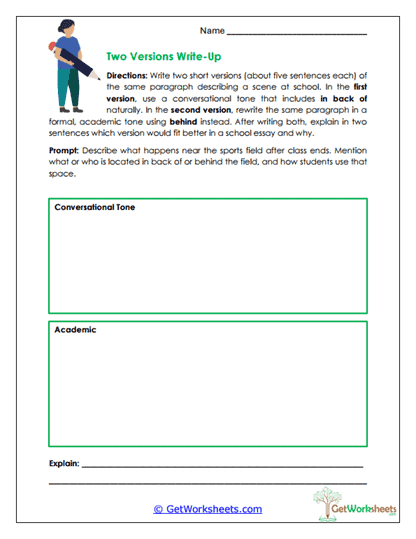
Two Versions Write-Up
Learners write two descriptions of the same scene-one informal, one formal-and then reflect on which is appropriate for an academic essay. This supports understanding of writing purpose and tone control. Students practice adjusting vocabulary and structure to change register. The worksheet helps them analyze how language choices shape clarity and professionalism.
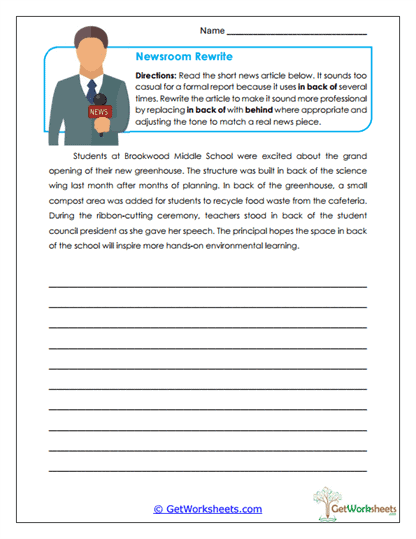
Newsroom Rewrite
Students revise a news-style passage that uses informal language, transforming it into a polished informational paragraph. This activity strengthens editing skills and reinforces expectations for journalistic tone. Learners practice replacing conversational expressions and refining sentence flow. It builds confidence in writing for formal nonfiction audiences.
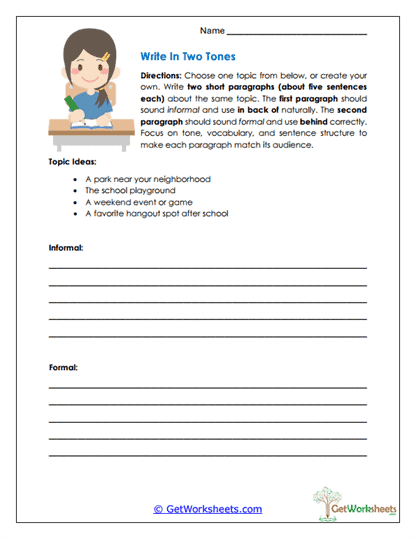
Write in Two Tones
Learners choose a topic and create two paragraphs: one using casual phrasing and one using formal language. This reinforces how audience and purpose guide vocabulary, tone, and structure. Students gain experience shifting between communicative styles. It also supports accurate prepositional usage while encouraging creative expression.
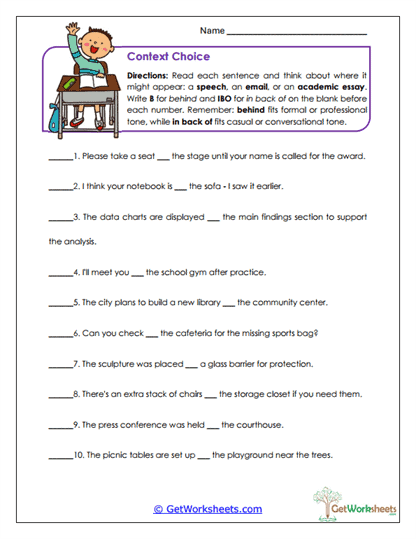
Context Choice
Students evaluate each sentence and decide whether it belongs in a formal setting or a casual one, choosing behind or in back of accordingly. This activity strengthens tone awareness and audience sensitivity. Learners improve their ability to judge vocabulary appropriateness. It reinforces clear, context-driven grammar and usage decisions.
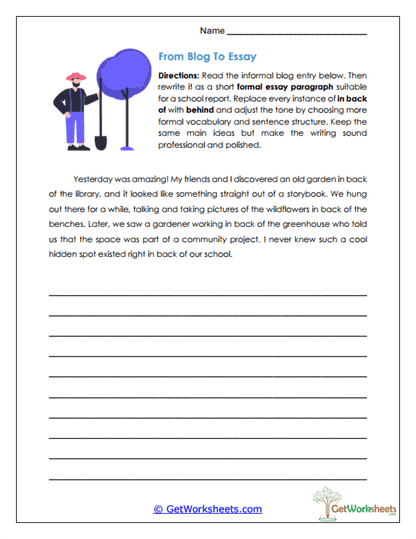
From Blog to Essay
Students revise an informal blog-style paragraph into a polished academic version by replacing informal expressions and adjusting tone. This task develops skill in transforming everyday writing into formal prose. Learners practice editing for clarity, precision, and vocabulary choice. It provides valuable experience applying academic writing conventions.
Bookmark Us Now!
New, high-quality worksheets are added every week! Do not miss out!