Author Studies Worksheets

About This Worksheet Collection
This Author Studies collection introduces students to influential writers across time and genres, helping them explore how authors' lives, styles, themes, and historical contexts shape their work. Through biographies, craft analysis, comparative passages, quote interpretation, and critique-writing, students engage in deep literary thinking. Each worksheet encourages close reading, evidence gathering, and reflective analysis-skills essential to understanding both literature and the people who create it.
The collection supports academic growth in informational reading, literary analysis, and critical writing while fostering appreciation for diverse voices and cultural contributions. Students learn to recognize authorial choices, make connections between life and literature, and understand how writers express ideas through craft, structure, and genre. These activities help build well-rounded, thoughtful readers capable of analyzing literature with insight and confidence.
Detailed Descriptions Of These Worksheets
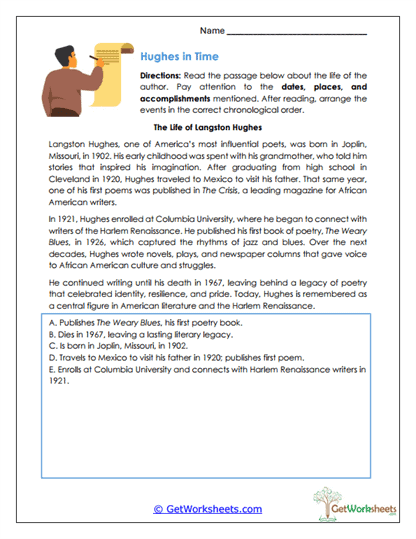
Hughes Timeline
Students read a biography of Langston Hughes and place life events in chronological order. They learn to identify key details, organize information, and understand how timelines reflect biographical structure. The activity builds informational literacy and highlights Hughes' cultural impact.
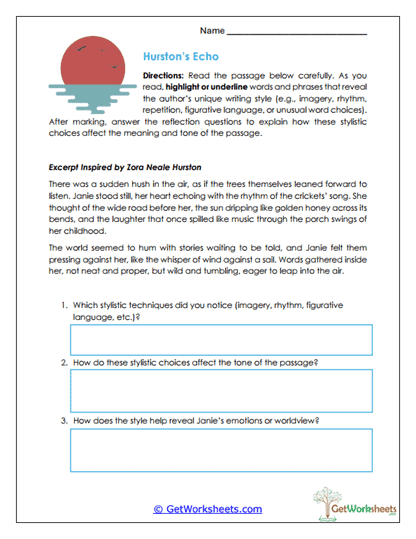
Hurston's Style
Learners annotate an excerpt inspired by Zora Neale Hurston, identifying figurative language, rhythm, imagery, and stylistic patterns. They answer reflection questions about how these choices shape tone and meaning. The worksheet strengthens close reading and understanding of author craft.
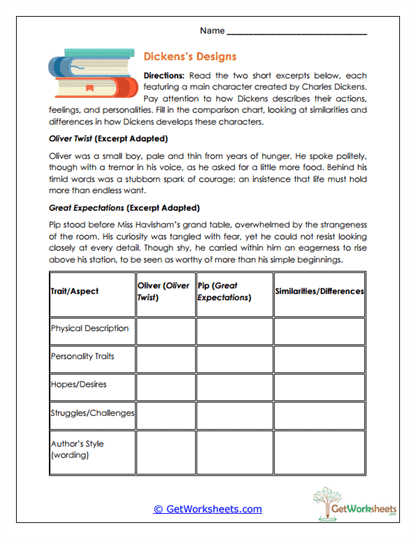
Dickens Character Study
Students compare short excerpts from Oliver Twist and Great Expectations to analyze Dickens' characterization techniques. Using a comparison chart, they examine personality traits, emotions, and descriptive details. This activity reinforces comparing texts and using evidence to identify similarities and differences.
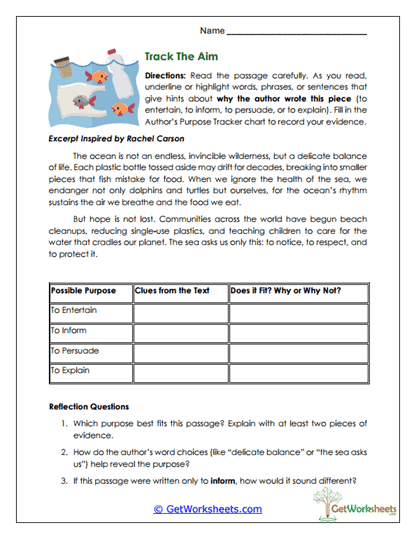
Author's Purpose Tracker
Learners read a passage inspired by Rachel Carson and determine whether the purpose is to inform, persuade, entertain, or explain. They collect text evidence to support their decision. The worksheet builds critical reasoning and helps students analyze how word choice and ideas signal purpose.
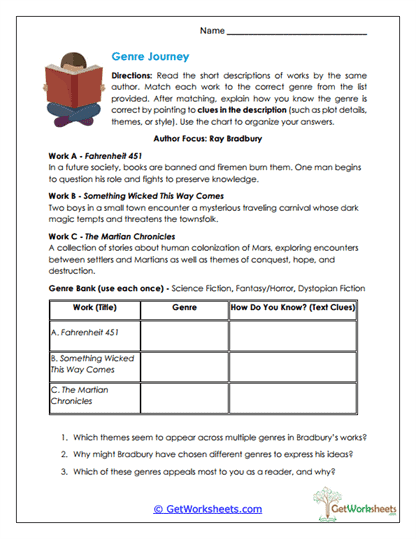
Genre Matching
Students match brief descriptions of Ray Bradbury-inspired works to their correct genres and explain their reasoning. They examine genre clues such as themes, styles, or plot elements. The activity develops genre understanding and supports evidence-based classification.
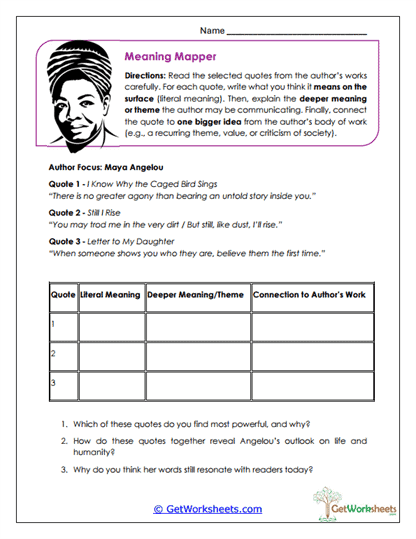
Angelou Quote Analysis
Learners analyze selected quotes from Maya Angelou by writing the literal meaning, identifying deeper themes, and connecting each quote to Angelou's broader body of work. This stepped structure deepens students' interpretive thinking and recognition of recurring literary themes.
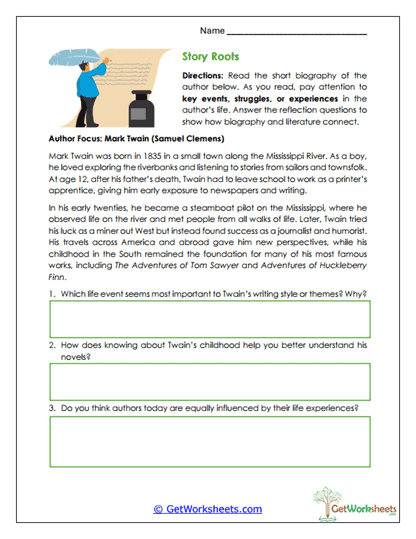
Twain Biography Study
Students read a short biography of Mark Twain and explain how his early experiences influenced his fiction. They identify key events, hardships, and inspirations. The worksheet builds comprehension of life-literature connections and encourages thoughtful analysis of author background.
Freedom Theme Comparison
Learners compare two passages inspired by Frederick Douglass and Walt Whitman, focusing on how each expresses the theme of freedom. They examine differences in perspective, style, and historical context. The activity strengthens comparative analysis and thematic reasoning.
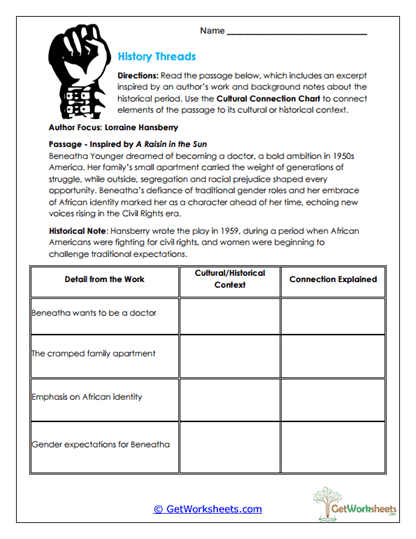
Historical Context Connections
Students read an excerpt inspired by Lorraine Hansberry alongside historical notes about the 1950s. They complete a chart connecting textual details to historical realities. This worksheet builds understanding of sociocultural context and how it shapes character motivations and themes.
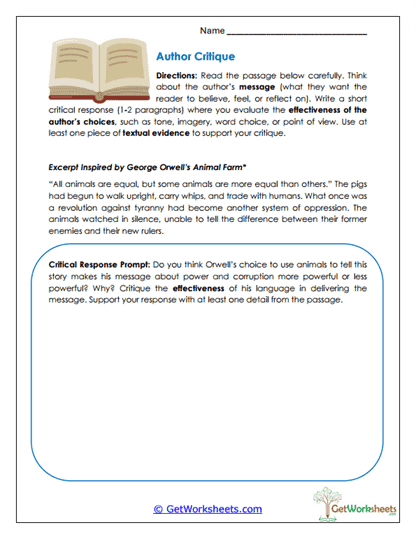
Author Critique Response
Learners read an excerpt inspired by Animal Farm and write a brief critique analyzing the author's imagery, tone, and message. They support their claims with textual evidence. This activity strengthens analytical writing and understanding of allegory and literary criticism.
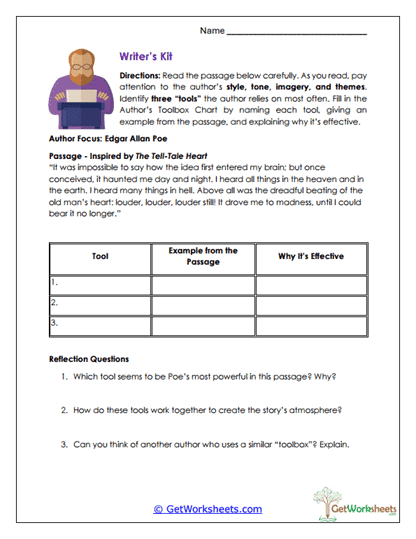
Poe Writer's Tools
Students analyze an excerpt inspired by The Tell-Tale Heart, identifying Edgar Allan Poe's stylistic "tools," such as repetition, imagery, and suspense. They provide examples and explain each tool's effect. The worksheet builds close-reading skills and understanding of how style shapes atmosphere.
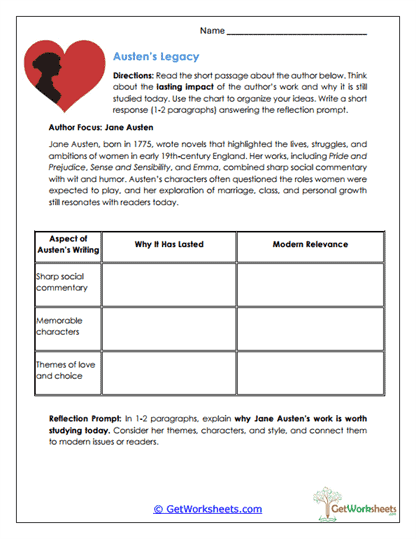
Austen's Literary Impact
Learners read a passage about Jane Austen and complete a chart analyzing why her work remains influential. They connect themes, character portrayals, and social commentary to modern relevance, then write a brief reflective response. This activity strengthens literary analysis and appreciation of authorial legacy.
Bookmark Us Now!
New, high-quality worksheets are added every week! Do not miss out!