Arctic Ocean Worksheets
About This Worksheet Collection
This Arctic Ocean worksheet collection offers students a comprehensive look at one of Earth's most unique and rapidly changing environments. Through reading passages, vocabulary tasks, scientific analyses, and writing prompts, learners explore topics such as sea ice, wildlife adaptations, ocean currents, geopolitics, and climate change. The worksheets balance foundational geography with deeper environmental concepts, ensuring students build both factual knowledge and scientific understanding.
As students complete matching activities, cloze passages, argument-writing prompts, and higher-level case studies, they strengthen informational reading skills, scientific reasoning, and academic vocabulary. These lessons encourage learners to interpret evidence, trace cause-and-effect relationships, evaluate claims, and make connections between human activity and natural systems. The collection builds confidence in navigating complex texts while fostering curiosity about Earth's polar regions.
Detailed Descriptions Of These Worksheets
Ocean Secrets
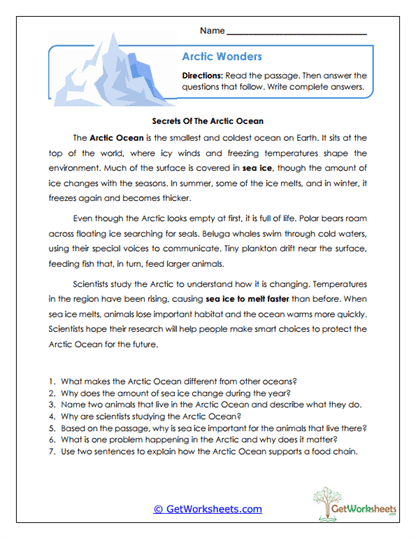
Students read a passage about why the Arctic Ocean is the smallest and coldest ocean and how its animals depend on sea ice. The text explains the impact of rising temperatures on melting ice and shifting ecosystems. Learners answer structured questions that guide them in identifying key ideas and cause-and-effect relationships. This worksheet develops strong nonfiction comprehension skills and deepens understanding of polar environments.
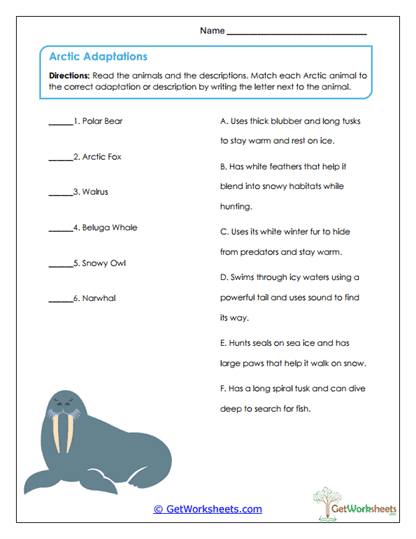
Survival Skills
This matching activity introduces students to Arctic animal adaptations such as blubber, camouflage, and migration. Learners match each adaptation to the correct animal, strengthening their grasp of how species survive extreme environments. The task encourages careful reading and reinforces essential ecology vocabulary. It also builds understanding of the relationship between traits and habitat.
Polar Links
Students use a word bank to complete sentences describing Arctic Ocean features, wildlife, and ice formations. This activity strengthens domain-specific vocabulary through meaningful context. Learners must read carefully to decide which scientific term fits each sentence. The worksheet promotes confidence in interpreting and applying Arctic terminology.
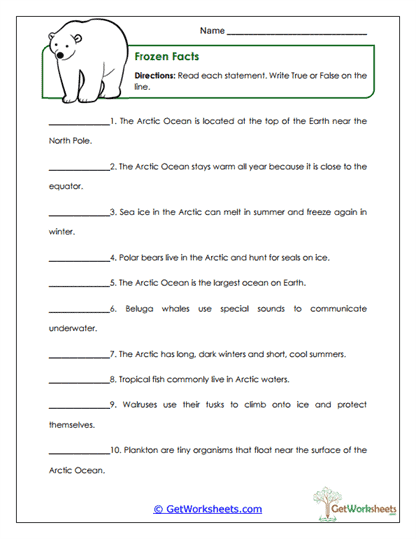
Chill Check
This true/false worksheet assesses students' knowledge of sea ice, climate, and Arctic wildlife. Some statements challenge common misconceptions, encouraging analytical reading. Learners practice verifying information and applying accurate scientific facts. The format prepares students for similar comprehension checks in science and geography.
Frosty Words
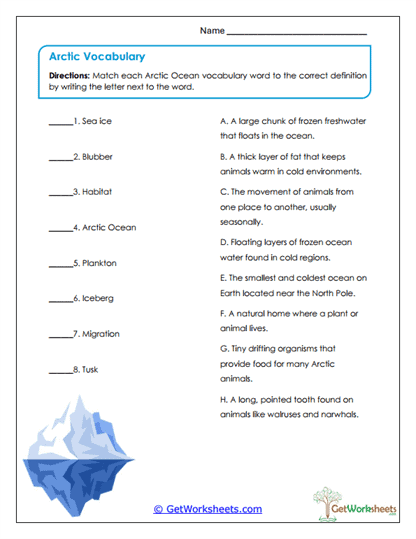
Students match Arctic vocabulary-such as iceberg, habitat, or migration-to their definitions. The task builds foundational terminology needed for understanding Arctic systems and wildlife. Matching reinforces precision in word meanings and improves reading comprehension. The activity helps learners navigate informational text with greater clarity.
Current Flow
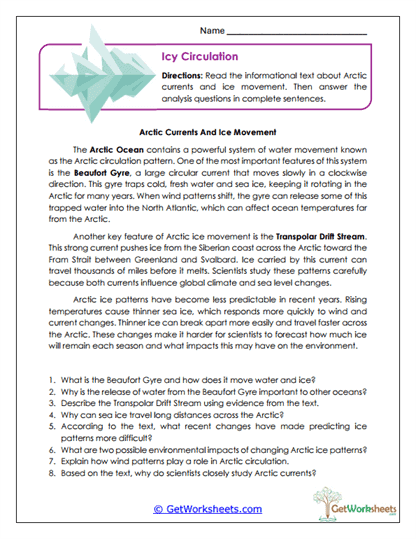
Learners read an informational passage about Arctic currents like the Transpolar Drift Stream and the Beaufort Gyre. The text explains how these currents move water and ice and how climate change affects them. Students answer analysis questions requiring deeper reasoning. This worksheet supports scientific comprehension and evidence-based thinking.
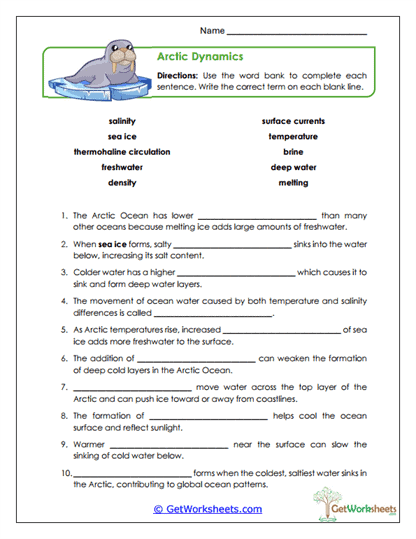
Ocean Forces
Students complete scientific sentences using terms such as salinity, brine, density, and surface currents. The worksheet demonstrates how temperature and salt levels drive Arctic water movement. Learners also explore how melting ice alters ocean layers. The activity strengthens understanding of Earth science processes and improves technical vocabulary application.
Cold Conflict
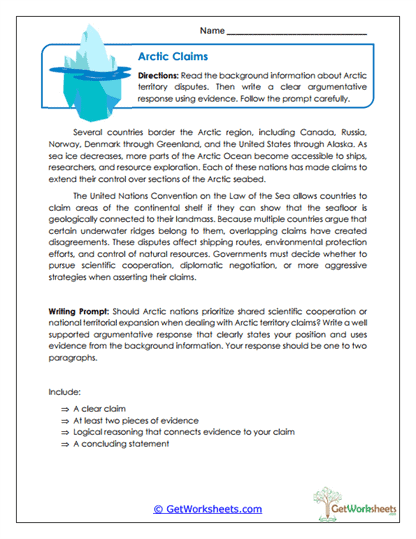
This argumentative writing prompt introduces geopolitical issues tied to melting Arctic sea ice and new shipping routes. Students read background information about international claims and the Law of the Sea. They then write a short argument supported by evidence. The worksheet builds persuasive writing skills and deepens understanding of global politics.
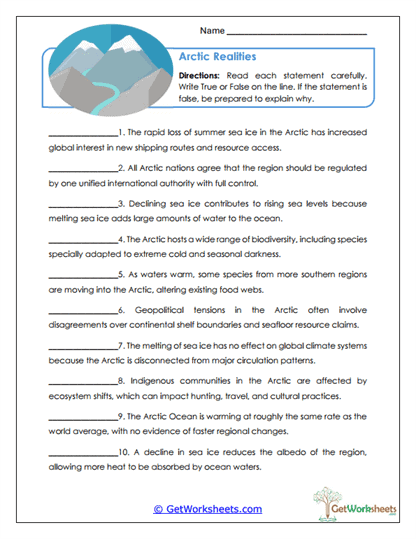
Polar Truths
Students decide whether advanced statements about Arctic biodiversity, climate, and geopolitics are true or false. For any false item, they must explain the correct information. This encourages justification and careful evaluation of scientific claims. The activity strengthens accuracy, clarity, and critical reading.
Route Debate
Learners analyze a case study of the Northwest Passage and how changing ice conditions shape trade and environmental concerns. Students answer higher-level questions requiring synthesis of political, economic, and scientific ideas. This case study builds inferential reasoning and real-world problem-solving skills. It also teaches students to connect climate change to global systems.
Layer Logic
This multiple-choice worksheet focuses on Arctic Ocean layers and how seasonal changes influence sea ice and water density. Students use their knowledge of heat loss, sunlight, and climate patterns to choose correct answers. The activity reinforces fundamental oceanography concepts. It also builds critical-thinking skills by requiring students to evaluate similar scientific explanations.
Warming Waters
Students read a passage about warming Arctic oceans, the albedo effect, and ecological consequences of melting ice. They answer analysis questions in complete sentences using evidence from the text. The activity strengthens comprehension of scientific processes and cause-and-effect relationships. It also supports higher-order thinking and clear, evidence-based writing.
Bookmark Us Now!
New, high-quality worksheets are added every week! Do not miss out!