Apologizing and Making Amends Worksheets
About This Worksheet Collection
This collection of Apologizing and Making Amends worksheets offers teachers a rich set of resources for guiding students through the essential social-emotional skill of repairing relationships. Each worksheet uses relatable stories, realistic scenarios, and reflective tasks to help learners understand what meaningful apologies look like and why they matter. With a mix of comprehension passages, choice-based activities, writing prompts, and tone-analysis tasks, the collection provides plenty of variety to keep students engaged while reinforcing positive interpersonal habits.
Across the pages, students build the ability to recognize emotions, take responsibility, and choose language that shows sincerity and empathy. They develop deeper awareness of how their actions affect others and learn practical strategies for mending conflicts in both personal and academic environments. The materials blend literacy development with SEL instruction, strengthening reading comprehension, critical thinking, and communication skills all at once. Teachers can use these worksheets to support classroom community building, conflict resolution lessons, and everyday behavior guidance.
Detailed Descriptions Of These Worksheets
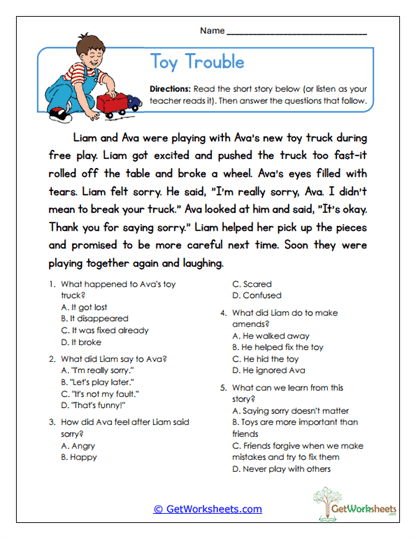
Toy Trouble
In this reading activity, students explore a short story about two children navigating a conflict over a damaged toy. They answer comprehension questions that push them to consider what motivated each character and how the conflict was resolved. The worksheet encourages learners to think about honesty and teamwork as essential elements of making amends. It also highlights the importance of empathy when repairing friendships.
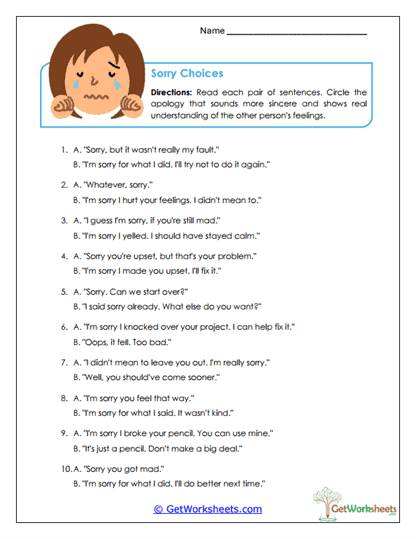
Sorry Choices
Students compare pairs of apology statements to determine which one reflects genuine remorse and thoughtful communication. Each example invites them to examine the role of tone, responsibility, and clarity in resolving conflicts. As they make their selections, students develop sharper judgment about what makes an apology effective. The activity encourages learners to notice how specific wording changes the impact of a message.
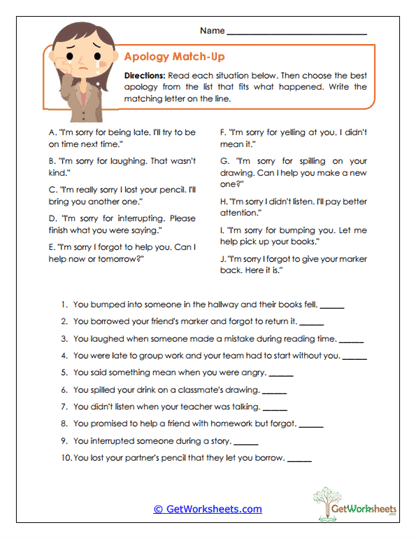
Apology Match-Up
This worksheet asks students to read through several real-life situations and match each one with the apology that best fits the context. The task requires close attention to detail as learners identify the statement that accepts responsibility and directly addresses the problem. Through this matching process, students strengthen their ability to interpret social scenarios. They also gain practice distinguishing meaningful responses from vague or incomplete ones.
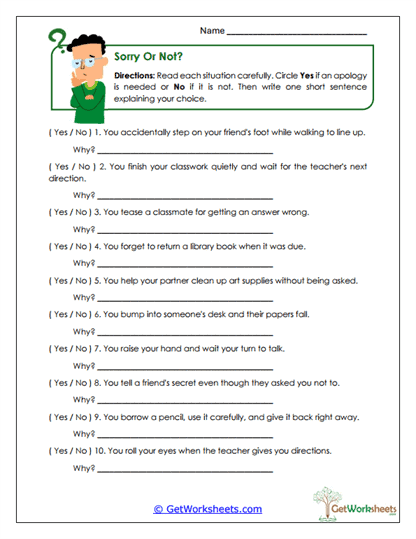
Sorry or Not?
Learners are presented with ten everyday situations and must decide whether an apology is appropriate in each case. After circling their answer, they explain their reasoning in a brief written response. This combination of decision-making and justification helps students reflect on how behavior affects others. The worksheet encourages thoughtful consideration of responsibility in common social interactions.
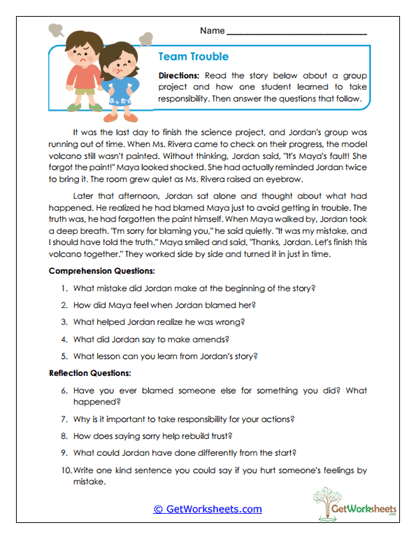
Team Trouble
Students read a short story about a group project that becomes complicated when one participant avoids blame. Comprehension and reflection questions guide them to evaluate character choices and consider how dishonesty influences teamwork. The activity highlights the importance of owning mistakes and maintaining trust within a group. It also supports deeper thinking about positive problem-solving strategies.
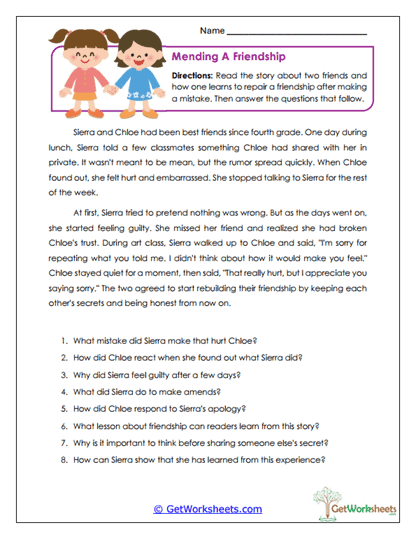
Mending a Friendship
In this passage-based worksheet, students examine a story about two friends working through hurt feelings. They respond to questions that prompt them to analyze emotions, motivations, and the steps taken to repair the relationship. The task underscores the value of sincere apologies in rebuilding trust. Students also practice identifying how characters grow and change as they resolve conflict.
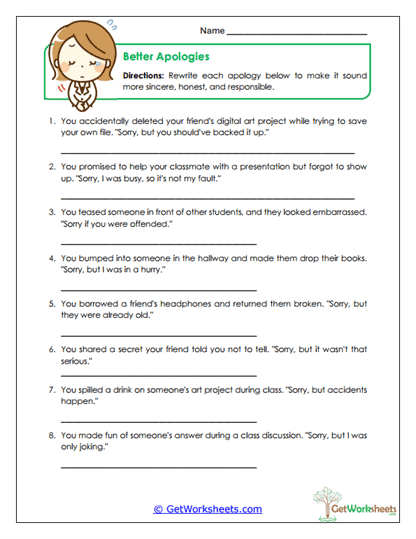
Better Apologies
Students are given several weak or incomplete apologies and asked to rewrite them into stronger, more thoughtful versions. The task encourages learners to consider how phrasing, tone, and accountability influence the quality of an apology. As they revise, students gain experience crafting clearer and more respectful communication. This activity strengthens both language skills and social-emotional understanding.
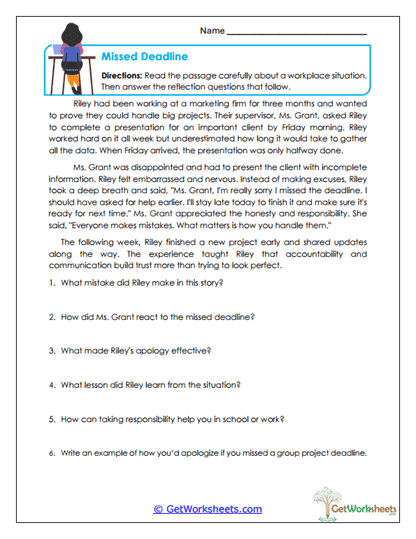
Missed Deadline
This worksheet introduces a workplace-themed story about responsibility and communication. After reading, students answer questions that encourage reflection on how the character addressed the mistake and repaired the situation. The activity demonstrates how professional apologies differ from casual ones. It also helps learners connect real-world expectations to skills used in school settings.
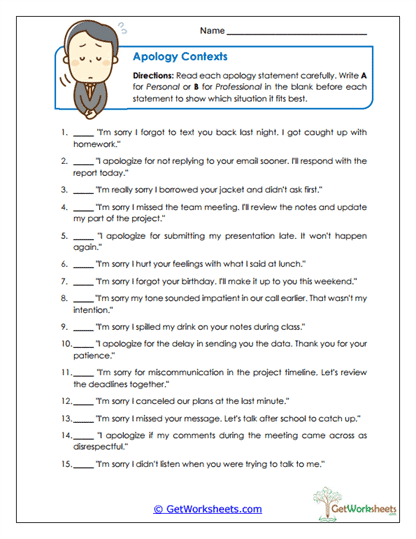
Apology Contexts
Students read a series of apology statements and decide whether each belongs in a personal or professional context. This sorting activity highlights how tone and formality shift depending on the situation. As they categorize the statements, students learn to recognize audience expectations in communication. The task promotes adaptability and awareness of social cues.
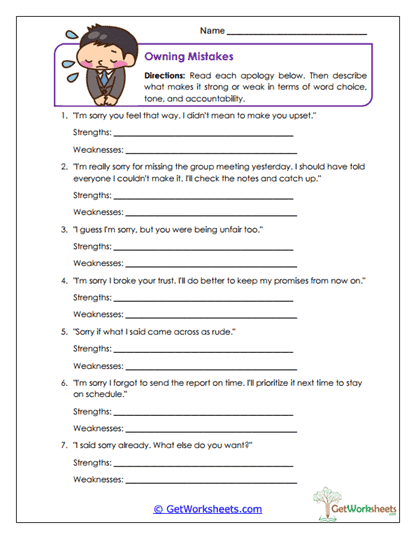
Owning Mistakes
In this worksheet, students analyze a set of apology examples to determine their strengths and weaknesses. They evaluate how well each statement shows responsibility and emotional awareness. This close reading exercise encourages critical thinking about communication choices. Students come away with a clearer sense of what makes an apology feel sincere and respectful.
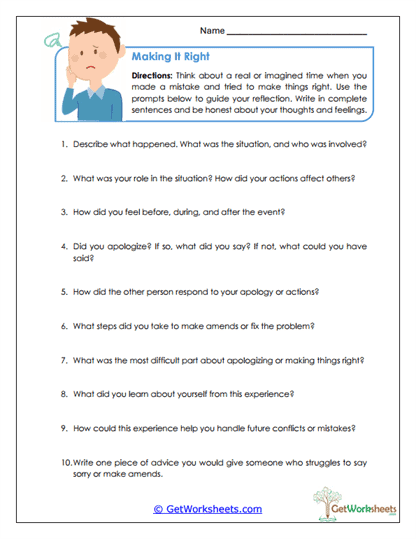
Making It Right
Learners reflect on a real or hypothetical situation in which they made a mistake and tried to fix it. Guided prompts help them describe what happened, how others were affected, and what steps they took to improve the situation. The activity encourages honest self-assessment and thoughtful writing. It supports the development of emotional insight and clear expression.
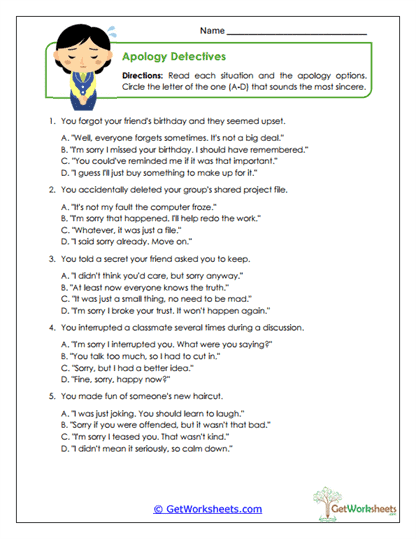
Apology Detectives
Students review several short scenarios and choose the apology that best demonstrates sincerity and responsibility. Each question requires them to compare tone, empathy, and level of accountability across multiple choices. The activity deepens their ability to recognize meaningful responses in social situations. It also reinforces the importance of choosing words carefully when resolving conflicts.
Bookmark Us Now!
New, high-quality worksheets are added every week! Do not miss out!