Antarctica Worksheets
About This Worksheet Collection
This Antarctica worksheet collection introduces students to the Earth's southernmost continent through a blend of reading comprehension, geography practice, scientific exploration, and creative expression. Each worksheet highlights a different aspect of Antarctic life and landscape-from climate and wildlife to landforms, research practices, and environmental change. The variety of formats ensures that students engage with content in multiple ways, supporting both factual learning and deeper conceptual understanding.
As learners work through reading passages, fill-in-the-blank exercises, matching tasks, writing prompts, and analytical questions, they strengthen essential academic skills. These worksheets reinforce scientific vocabulary, reading comprehension strategies, geographic reasoning, and evidence-based explanation. Students also develop critical thinking as they analyze climate systems, interpret adaptations, and consider the global importance of Antarctica. Together, these activities build a strong foundation for scientific literacy and world geography knowledge.
Detailed Descriptions Of These Worksheets
Polar Journey
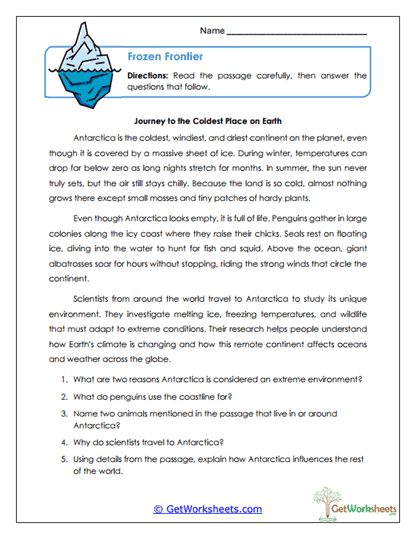
Students read a passage describing Antarctica's extreme climate, wildlife, and importance to global science. They learn about the continent's icy landscape and animals such as penguins, seals, and albatrosses. The passage also explains why researchers study Antarctic ice and how the region affects worldwide weather patterns. Through comprehension questions, learners strengthen their ability to draw conclusions from informational text.
Map Mastery
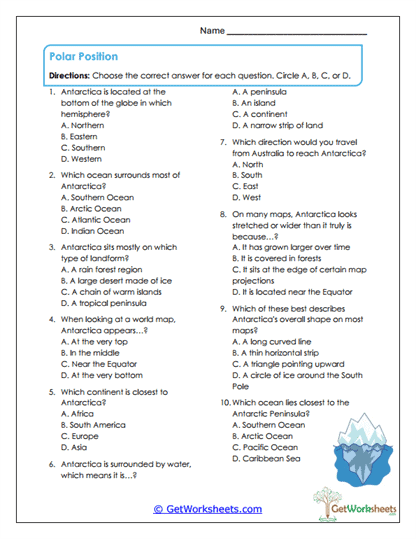
This multiple-choice worksheet assesses key geographic knowledge about Antarctica, including its hemisphere, surrounding ocean, and major landforms. Students analyze maps and identify unique features such as the Antarctic Peninsula and Southern Ocean. The activity builds familiarity with global projections and reinforces directional vocabulary. It also promotes confident map-reading and spatial reasoning.
Chill Check
Students complete fill-in-the-blank statements that review essential facts about Antarctica's wildlife, climate, and location. Clues guide them toward accurate terms such as "ice sheet" and "Southern Hemisphere." The activity supports precise recall of scientific and geographic concepts. It serves as an efficient review tool or comprehension check.
Frozen Vocabulary
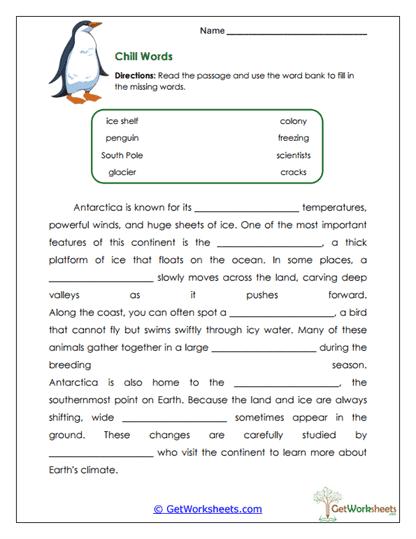
Learners fill in missing words within a nonfiction paragraph describing glaciers, colonies, and ice formations. By using a word bank, students practice applying vocabulary meaningfully in context. The cloze passage format helps build reading fluency and understanding of scientific terminology. It also encourages prediction and contextual reasoning.
Term Builder
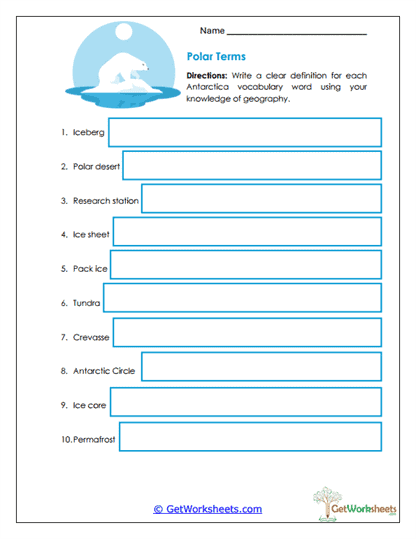
Students write definitions for Antarctic terms such as iceberg, crevasse, tundra, and permafrost. They rely on prior knowledge rather than a word bank to craft accurate explanations. This activity promotes mastery of specialized vocabulary and improves scientific language precision. It also strengthens students' ability to rephrase concepts in their own words.
Frost Facts
Students evaluate statements about Antarctica and identify whether they are true or false. Topics include vegetation, climate, wildlife, and population. This review activity helps students distinguish fact from misconception. It reinforces foundational knowledge and strengthens scientific accuracy.
Adaptation Match
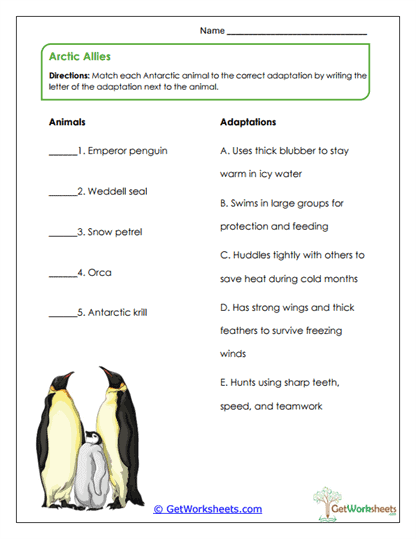
Students match Antarctic animals-including penguins, seals, krill, and orcas-to the adaptations that help them survive extreme cold. This activity illustrates how physical and behavioral traits support life in harsh ecosystems. Learners practice categorization and examine cause-and-effect relationships in nature. The worksheet builds foundational life science understanding.
Icy Adventure
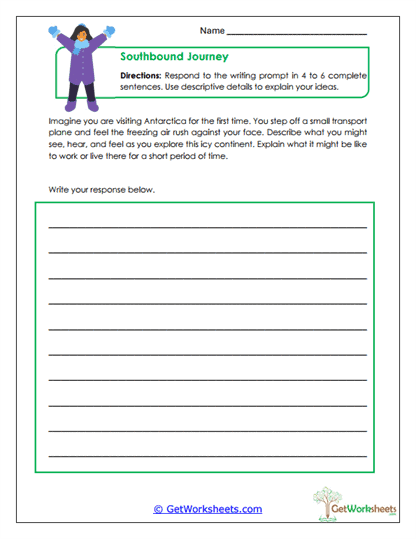
This writing prompt invites students to imagine visiting Antarctica for the first time and describe sensory details of their experience. Learners write 4-6 sentences illustrating what they might see, hear, or feel. The activity promotes descriptive writing skills and vivid imagery. It also helps students blend factual understanding with creative expression.
Climate Insight
Students answer short-answer questions about Antarctica's role in climate research, including topics such as ice cores and environmental impact. They must use explanation and evidence to support their ideas. The worksheet strengthens analytical thinking and clear scientific writing. It also deepens understanding of global climate systems.
Glacial Guide
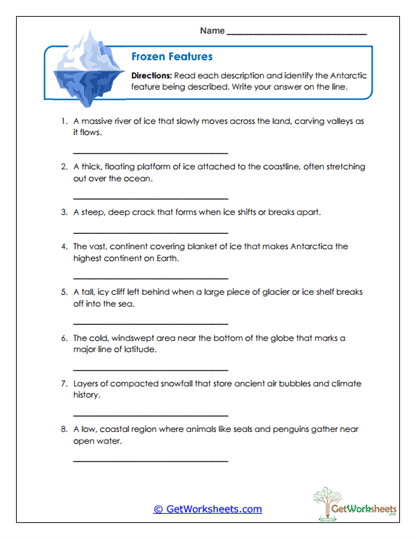
Learners read clues describing Antarctic features such as glaciers, crevasses, and ice shelves. They then identify the correct term for each description. This task builds strong landform vocabulary and improves visualization of icy environments. It reinforces key geography skills through focused identification practice.
Melting Impact
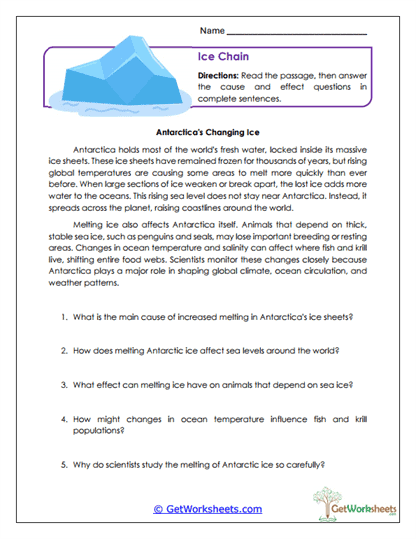
Students read a passage explaining how rising global temperatures are accelerating the melting of Antarctic ice sheets. They examine cause-and-effect relationships involving sea-level rise, wildlife habitats, and ocean circulation. Comprehension questions help learners extract key details and scientific vocabulary. The worksheet strengthens critical reading of environmental science topics.
Polar Light
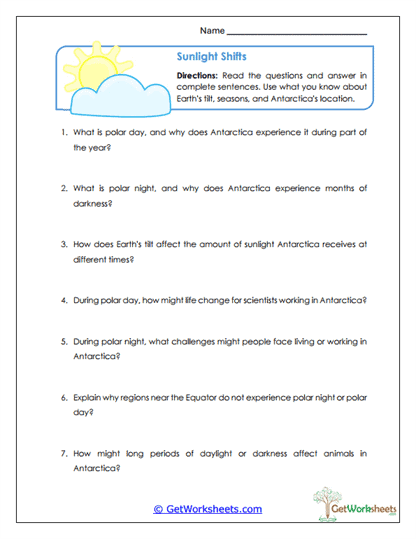
This worksheet explores Earth's axial tilt and explains how it causes Antarctica to experience months of daylight or darkness. Students consider how polar day and night affect both humans and animals. The questions encourage comparisons with regions near the equator. Learners build geography and astronomy vocabulary while practicing explanatory writing.
Bookmark Us Now!
New, high-quality worksheets are added every week! Do not miss out!