Africa Worksheets
About This Worksheet Collection
This Africa worksheet collection offers students a broad introduction to the continent's geography, cultures, ecosystems, and landmarks. Through a mix of reading passages, matching tasks, map-related activities, and reflective writing prompts, learners build an understanding of Africa's diverse physical regions and human communities. The worksheets balance factual learning with comprehension and critical-thinking practice, helping students form accurate, nuanced views of the continent.
Across these activities, students strengthen essential academic skills such as analyzing informational text, comparing regions, interpreting clues, recognizing landforms, and connecting culture to environment. They also build geographic vocabulary, deepen ecological understanding, and develop the ability to communicate their learning through both structured responses and personal reflection. By exploring Africa through multiple lenses, this collection fosters curiosity, global awareness, and foundational geographic literacy.
Detailed Descriptions Of These Worksheets
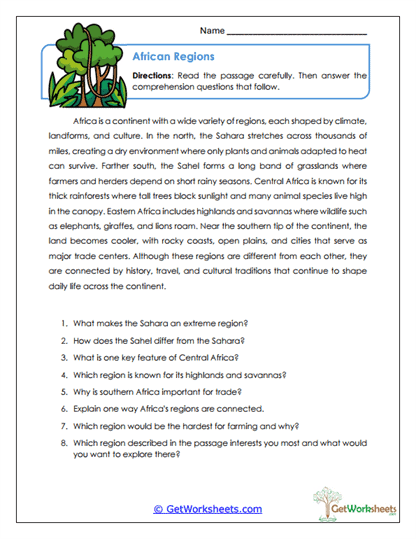
African Regions
Students read a passage introducing Africa's major regions and answer comprehension questions that highlight differences in climate, landforms, and culture. They compare places such as the Sahara and the Sahel and analyze how environmental conditions influence trade and daily life. The worksheet promotes close reading and critical thinking by asking students to interpret causes and identify key regional features. It also encourages personal engagement by inviting students to reflect on which region they find most interesting.
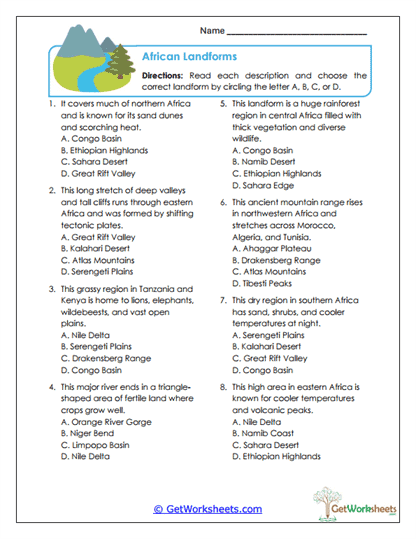
African Landforms
Learners review descriptions of important African landforms and identify each one using multiple-choice options. This activity develops detail recognition as students distinguish deserts, mountains, rivers, and other physical features. It reinforces continent-specific geography through clear, concise descriptions. The worksheet also strengthens test-taking skills by encouraging careful elimination and reasoning.
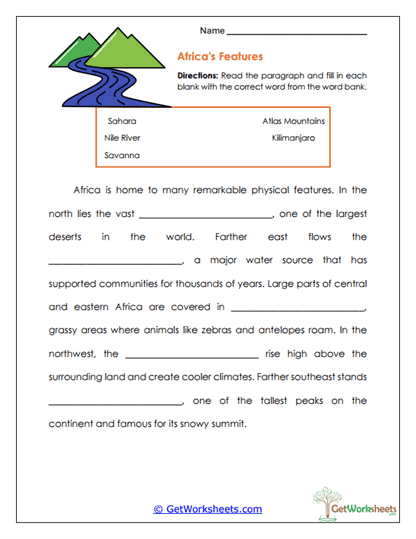
Africa's Features
Students complete a cloze passage using terms such as Nile River, Savanna, and Sahara from a word bank. The activity helps learners connect vocabulary to context while reinforcing major physical features of the continent. It also highlights relationships between landscapes, ecosystems, and human activity. The cloze format supports both reading comprehension and content retention.
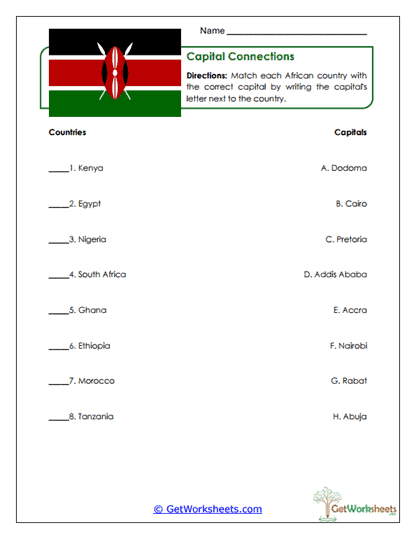
Capital Connections
Students match African countries with their capitals, building essential political geography knowledge. This activity improves memory skills and helps learners visualize connections between nations and their government centers. The matching format makes practice structured and accessible. It also supports broader map skills and global awareness.
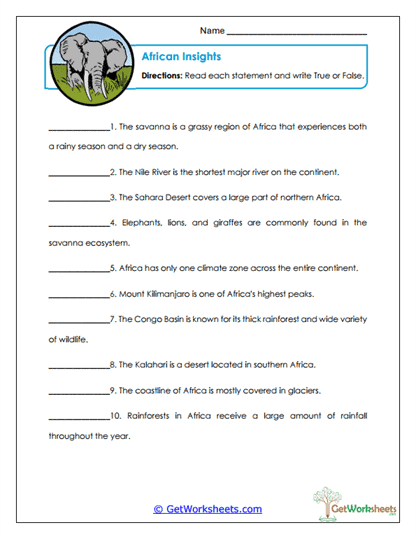
African Insights
This true-or-false worksheet challenges students to verify facts about Africa's regions, climate zones, and ecosystems. Learners must evaluate each statement carefully, which builds accuracy and clarifies common misconceptions. The activity strengthens critical-thinking skills by emphasizing fact-checking. It's a valuable tool for reinforcing foundational geographic knowledge.
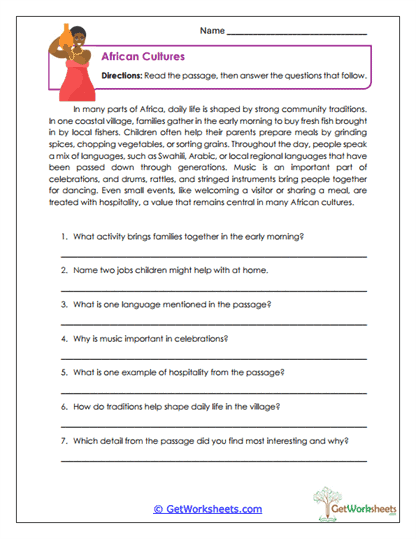
African Cultures
Students read about life in an African coastal village, with details about food, music, family roles, and traditions. Text-based questions ask learners to infer, summarize, and interpret cultural practices. The worksheet builds cultural understanding by showing the diversity of African communities. It also improves comprehension and encourages thoughtful written responses.
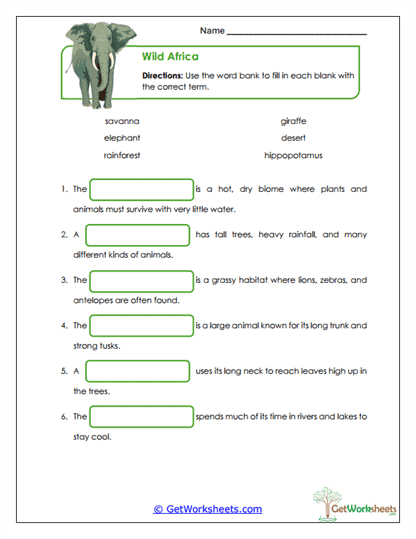
Wild Africa
Using a word bank, students identify biomes and animals such as elephant, savanna, and rainforest. This reinforces vocabulary associated with African wildlife and habitats. Learners connect species to ecosystems, deepening ecological understanding. The activity supports both science and geography learning through accessible categorization.
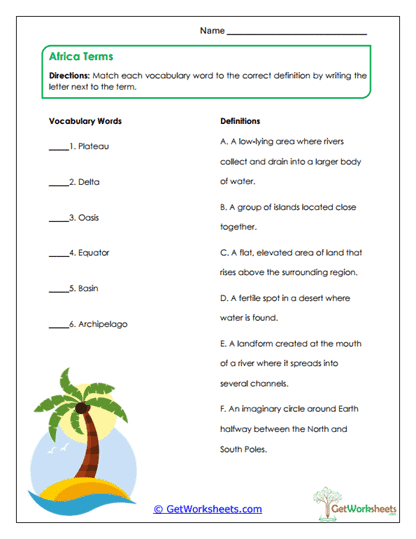
Africa Terms
Students match geographic terminology-such as plateau, delta, and oasis-to precise definitions. This vocabulary-focused activity strengthens understanding of landforms essential to studying Africa and the wider world. Matching tasks sharpen word-recognition skills. The worksheet also supports clarity and accuracy in geographic language.
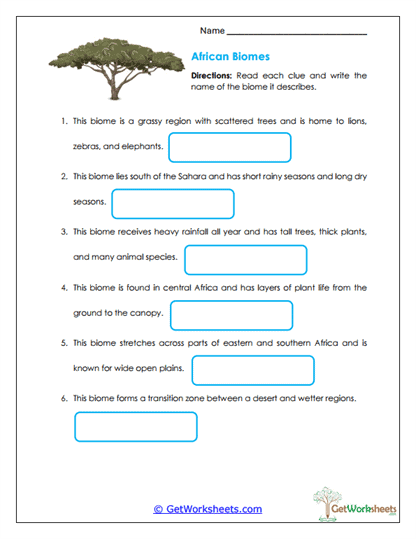
African Biomes
Learners read clues describing features such as rainfall, vegetation, and wildlife, then identify the correct biome. This activity deepens understanding of Africa's ecological diversity. It also reinforces reasoning as students match clues to biome characteristics. The task supports literacy and science integration.
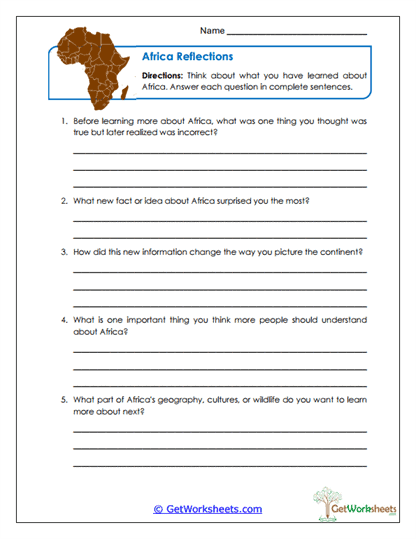
Africa Reflections
This open-ended worksheet asks students to reflect on what they've learned about Africa and how their thinking has changed. Prompts encourage them to synthesize knowledge about geography, culture, and wildlife. It strengthens metacognitive skills by helping learners articulate new understanding. The activity also supports personal expression and global awareness.
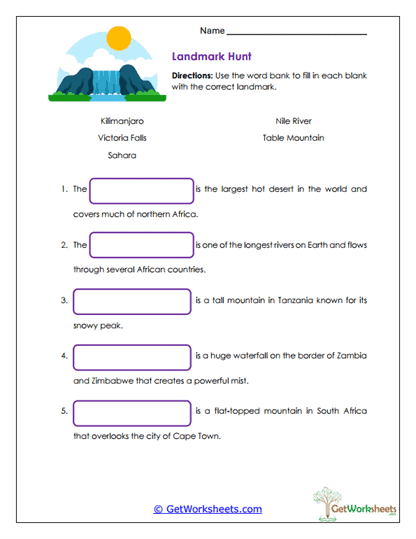
Landmark Hunt
Students identify famous African landmarks using context clues and a word bank featuring places like Kilimanjaro and Victoria Falls. The worksheet highlights significant physical features while reinforcing vocabulary and comprehension skills. Each clue provides memorable facts that build geographic knowledge. The activity strengthens recognition of Africa's most iconic locations.
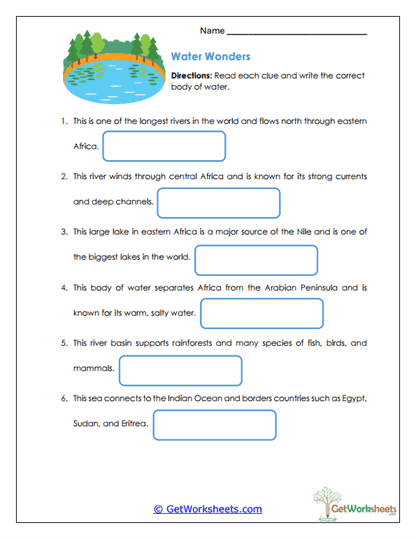
Water Wonders
Learners identify major African waterways-such as the Congo River and Red Sea-using clues about location, climate influence, and human settlement. This helps students understand the importance of water systems across the continent. The activity promotes context-clue reasoning and accurate geographic labeling. It also builds ecological understanding by connecting waterways to people and environments.
Bookmark Us Now!
New, high-quality worksheets are added every week! Do not miss out!