Ending Choice Analyzer
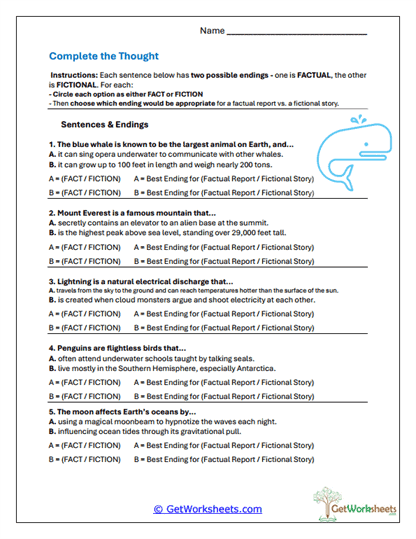
This worksheet helps students in Grades 4, 5, and 6 strengthen reading comprehension, genre awareness, and critical thinking by analyzing sentence endings. Learners compare two possible endings for each sentence and determine which one reflects factual accuracy and which one belongs to fictional or imaginative writing, using logic, realism, and knowledge of how different text types work.
Learning Goals
- Differentiating Fact and Fiction (Grades 4-6)
Students identify whether sentence details align with real-world facts or imaginative storytelling. - Evaluating Sentence Meaning
Learners analyze how specific word choices and details affect the overall truthfulness of a sentence. - Genre Awareness & Matching
Students determine which endings are appropriate for factual reports versus fictional narratives. - Assessing Reasonableness of Claims
The activity reinforces evaluating whether details follow scientific rules, natural laws, or creative invention.
Instructional Benefits
- Teacher-Created Resource
Designed by educators to align with upper elementary ELA standards and genre instruction. - Side-by-Side Comparison Format
Paired endings make differences between fact and fiction clear and concrete. - Flexible Classroom Use
Ideal for reading lessons, literacy centers, homework, review, or assessment. - Builds Careful Reading Habits
Encourages students to slow down and evaluate details thoughtfully.
This printable worksheet helps students become more accurate and thoughtful readers by comparing factual and fictional sentence endings. By evaluating reasonableness and genre fit, learners strengthen comprehension, critical thinking, and understanding of how facts and fiction differ in writing. It’s a simple, no-prep resource that works well in both classroom instruction and homeschool settings.
This worksheet is part of our Fact vs Fiction Worksheets collection.
Bookmark Us Now!
New, high-quality worksheets are added every week! Do not miss out!