Media Claim Analyzer
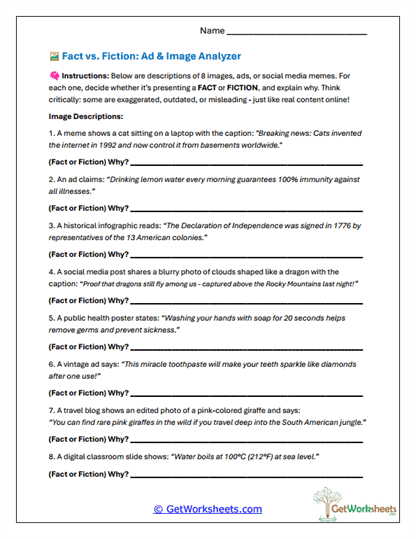
This worksheet helps students in Grades 5, 6, and 7 strengthen media literacy, critical reading, and reasoning skills by analyzing descriptions of ads, memes, and images that mix accurate information with misleading or fictional claims. Learners evaluate each media-based description, decide whether the claim is fact or fiction, and explain their reasoning by examining credibility, exaggeration, satire, and plausibility.
Learning Goals
- Evaluating Online Claims (Grades 5-7)
Students practice determining whether media-based claims are accurate, misleading, or fictional. - Critical Analysis of Statements
Learners examine wording, context, and implied messages to assess credibility. - Recognizing Misinformation Techniques
Students identify exaggeration, satire, and misleading presentation in digital content. - Evidence-Based Judgment
The activity reinforces explaining conclusions using logic and clear supporting reasoning.
Instructional Benefits
- Teacher-Created Resource
Designed by educators to support upper elementary and middle school media literacy standards. - Real-World Digital Context
Uses familiar formats like ads and memes to make skill practice relevant and engaging. - Flexible Classroom Use
Ideal for media literacy units, ELA lessons, discussion activities, homework, or assessment. - Supports Responsible Digital Citizenship
Encourages thoughtful evaluation before accepting or sharing online content.
This printable worksheet helps students become more discerning consumers of digital media by teaching them to question claims that may seem believable at first glance. By analyzing media descriptions and supporting judgments with evidence, learners strengthen critical thinking, media awareness, and digital literacy skills. It’s a meaningful, no-prep resource suitable for both classroom instruction and homeschool learning.
This worksheet is part of our Fact vs Fiction Worksheets collection.

Bookmark Us Now!
New, high-quality worksheets are added every week! Do not miss out!