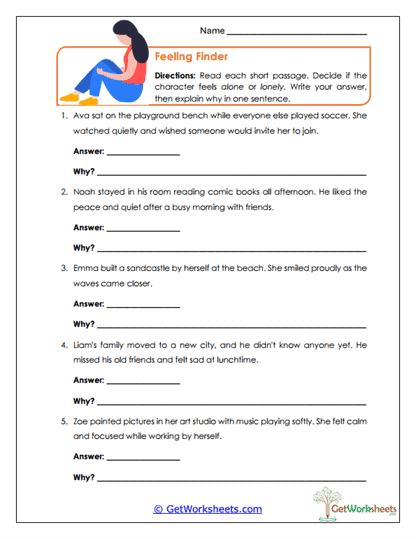
Feeling Finder
This worksheet helps students in Grades 4, 5, and 6 develop deeper reading comprehension by identifying whether characters feel alone or lonely in short narrative passages. Students rely on inferencing, context clues, vocabulary meaning, emotional reasoning, and written explanation as they choose the correct word and justify their thinking in complete sentences.
Skills Reinforced
- Inferencing and Interpretation (Grades 4-6): Determine implied emotions based on actions, thoughts, and details in the text.
- Vocabulary Distinctions: Accurately distinguish between alone (physical solitude) and lonely (emotional isolation).
- Constructed Response Writing: Explain reasoning clearly using evidence from each passage.
- Social-Emotional Understanding: Recognize and interpret emotional states through language and behavior.
Instructional Benefits
- Teacher-Created Resource: Designed to combine vocabulary instruction with close reading and SEL skills.
- Evidence-Based Thinking: Requires students to justify answers rather than guess.
- Short, Manageable Passages: Supports focus, comprehension, and discussion.
- Flexible Use: Ideal for vocabulary lessons, reading groups, SEL integration, or independent practice.
This printable worksheet helps students connect word meaning to emotional understanding through careful reading and explanation. By deciding whether characters feel alone or lonely and supporting their answers with evidence, learners strengthen inferencing skills, vocabulary precision, and empathy. It is a no-prep resource that works well in both classroom and homeschool language arts settings, supporting thoughtful interpretation and clear written reasoning.
This worksheet is part of our Alone vs. Lonely Worksheets collection.
Bookmark Us Now!
New, high-quality worksheets are added every week! Do not miss out!