Texting and Online Communication Etiquette Worksheets
About This Worksheet Collection
This Texting and Online Communication Etiquette collection teaches students how to communicate respectfully, safely, and thoughtfully in digital spaces. Through vocabulary practice, message rewrites, scenario analysis, and reflection tasks, learners explore the unique challenges of texting and online interaction-such as tone misunderstandings, privacy concerns, and rapid emotional responses. Each worksheet guides students in developing responsible habits that protect relationships, support safety, and promote clarity in virtual conversations.
Students strengthen essential digital citizenship skills while also building academic abilities like reading comprehension, vocabulary application, written expression, inference, and multiple-choice reasoning. These activities prepare learners to navigate group chats, messaging apps, comments, and posts with kindness, awareness, and confidence. By learning to "think before they send," students gain the tools needed for safe and respectful online communication.
Detailed Descriptions Of These Worksheets
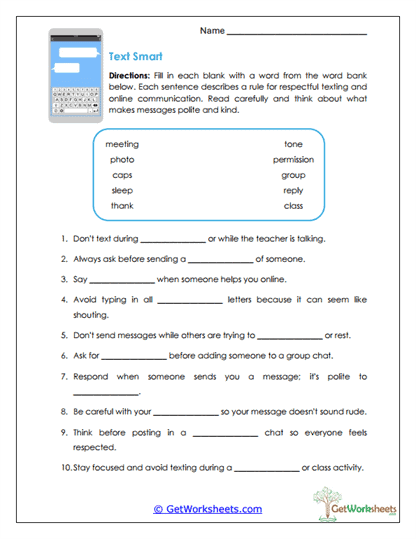
Text Smart
Students complete sentences using digital-etiquette vocabulary from a word bank. The worksheet teaches rules such as avoiding texting in class, seeking permission before posting, using polite tone, and avoiding all-caps messages. Learners practice reading for meaning and applying vocabulary in context while reinforcing respectful online habits.
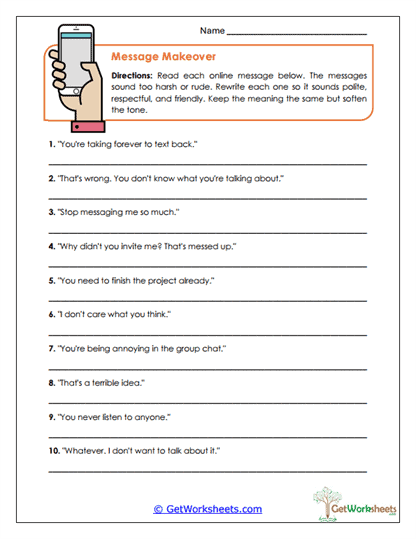
Message Makeover
Learners read online messages that sound blunt or rude and rewrite them to sound polite and friendly. This activity helps students recognize how tone affects digital communication and how misunderstandings occur. It supports empathy, emotional regulation, and clearer online expression.
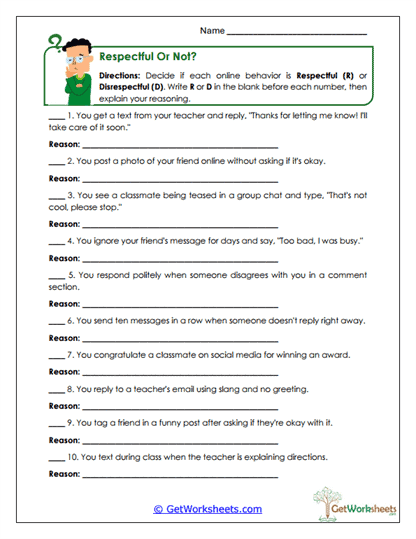
Respectful or Not
Students label online behaviors as respectful or disrespectful and justify their answers in writing. They evaluate scenarios involving photos, comments, texting etiquette, and teacher communication. The activity strengthens critical thinking, responsible decision-making, and written explanation skills.
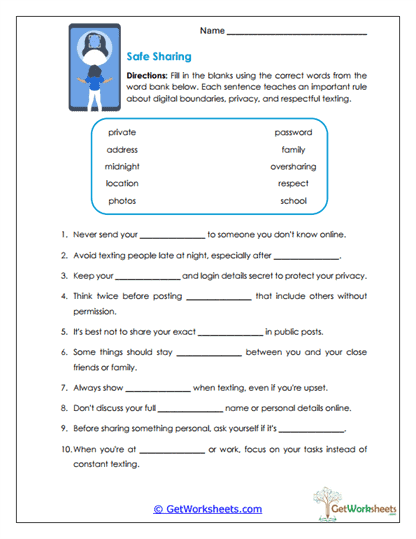
Safe Sharing
Learners use a word bank to complete sentences about online privacy and safe sharing habits. They learn about protecting personal information, keeping passwords secure, and respecting others' photos. The worksheet reinforces digital boundaries and vocabulary related to safety.
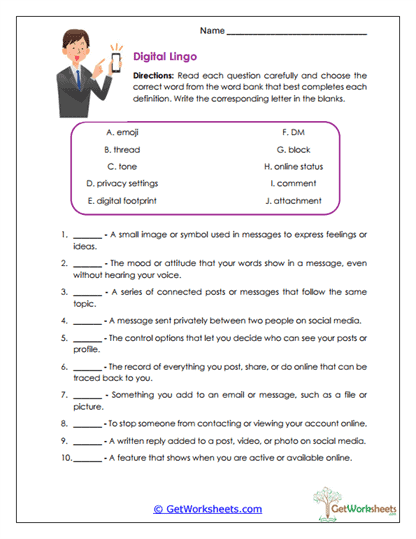
Digital Lingo
Students match common digital vocabulary-such as emoji, tone, attachment, and digital footprint-to the correct definitions. This activity builds digital literacy and helps learners understand key online concepts and communication tools.
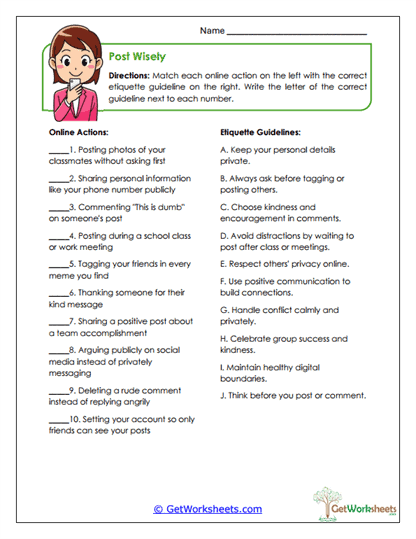
Post Wisely
Students match online actions to the correct digital etiquette guideline, such as thinking before posting, showing kindness, and protecting privacy. The worksheet strengthens understanding of safe posting habits and encourages responsible decision-making online.
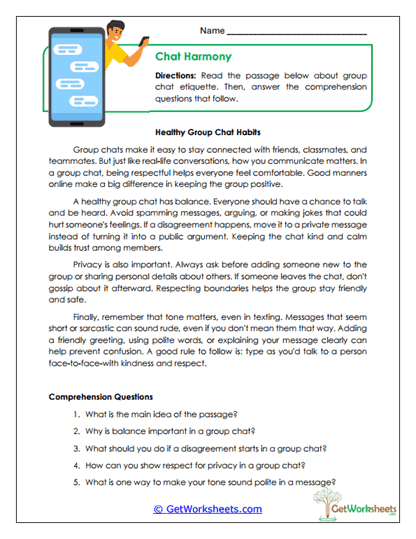
Chat Harmony
Learners read an informational passage about respectful group-chat habits and answer comprehension questions about main ideas and communication strategies. The activity teaches students how group chats mirror real-life conversations and why thoughtful digital participation matters.
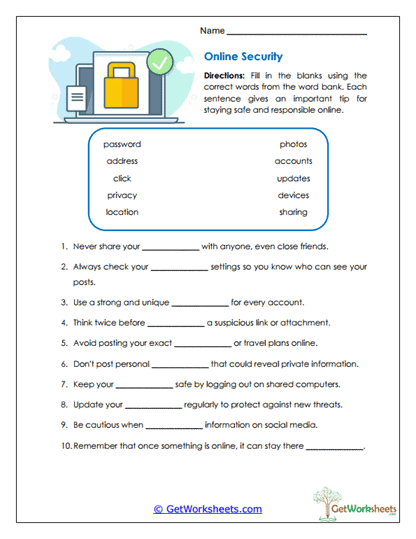
Online Security
Students complete sentences using cybersecurity vocabulary from a word bank. Topics include strong passwords, privacy settings, suspicious links, and safe browsing. The worksheet reinforces online safety habits and builds vocabulary related to digital protection.
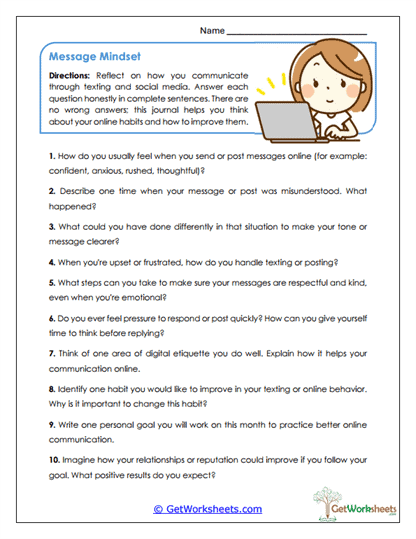
Message Mindset
Learners respond to open-ended prompts about their texting habits, tone, misunderstandings, and communication goals. The activity encourages self-awareness, emotional regulation, and expressive writing. It helps students reflect meaningfully on how to improve digital interactions.
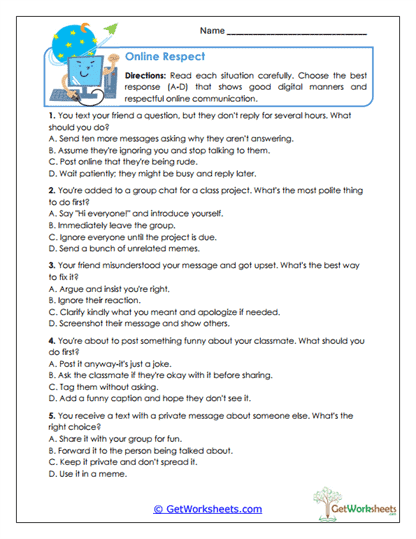
Online Respect
Students read digital-communication scenarios and choose the most respectful response from four options. They practice empathy, courtesy, and problem-solving in virtual settings. The worksheet strengthens digital citizenship and social decision-making.
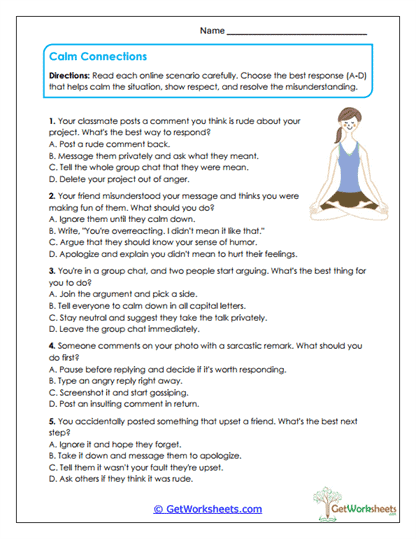
Calm Connections
Learners evaluate scenarios involving misunderstandings, rude posts, sarcasm, and group-chat conflict. They choose the calmest, most solution-focused response. This activity reinforces emotional regulation, respectful communication, and conflict resolution online.
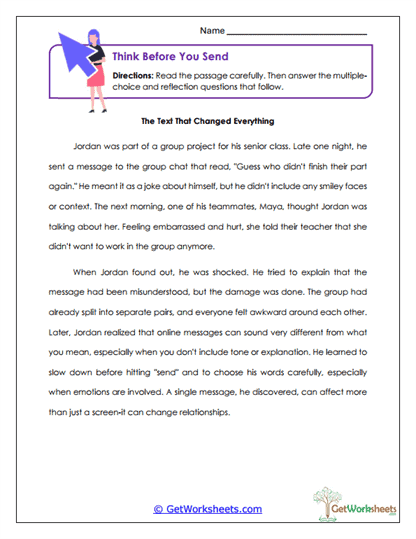
Think Before You Send
Students read a narrative about a group-chat misunderstanding and answer comprehension and reflection questions. The worksheet teaches learners to consider tone, context, and timing before sending messages. It builds reading comprehension, inference skills, and SEL insight into digital communication.
Bookmark Us Now!
New, high-quality worksheets are added every week! Do not miss out!