Special Ed Worksheets
-
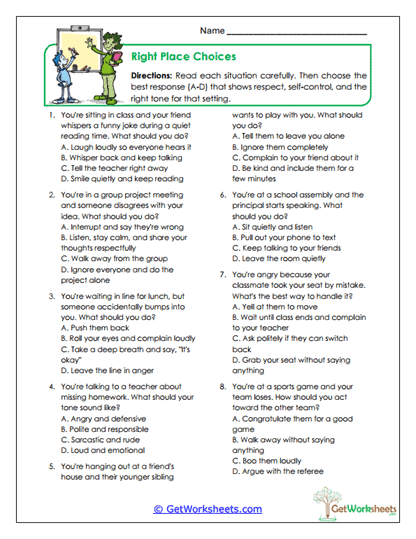
Adapting Behavior to Different Social Settings
-
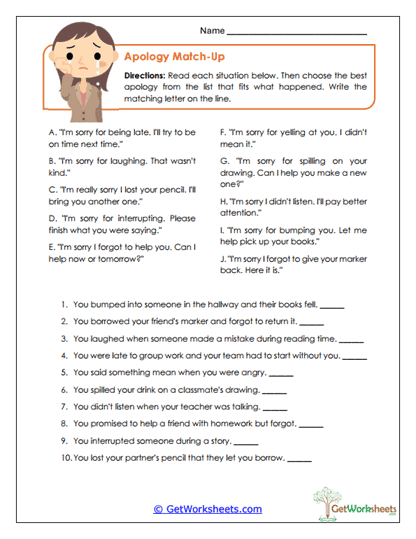
Apologizing and Making Amends
-
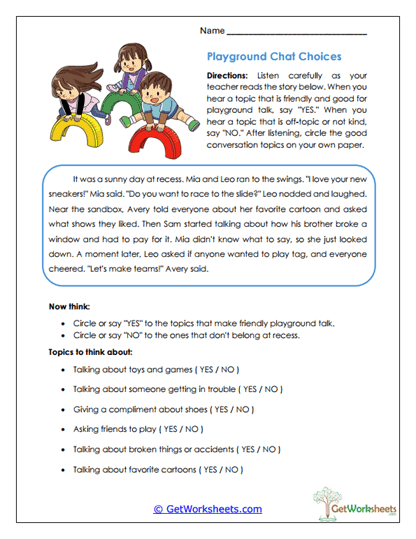
Appropriate Topics of Conversation
-
-
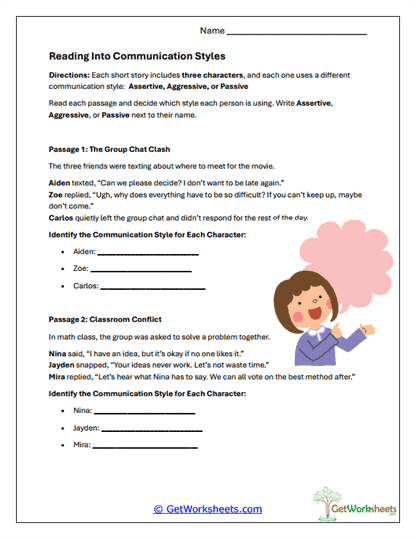
Assertiveness vs. Aggression vs. Passivity
-
Conflict Resolution
-
Conversational Skills
-
Dealing with Peer Pressure
-
Different Types of Relationships
-
Entering and Exiting Group Activities
-
Following Group Rules or Social Norms
-
Friendship Skills
-
Giving and Receiving Compliments
-
Greetings and Introductions
-
Handling Teasing and Bullying
-
Manners and Politeness
-
Nonverbal Communication
-
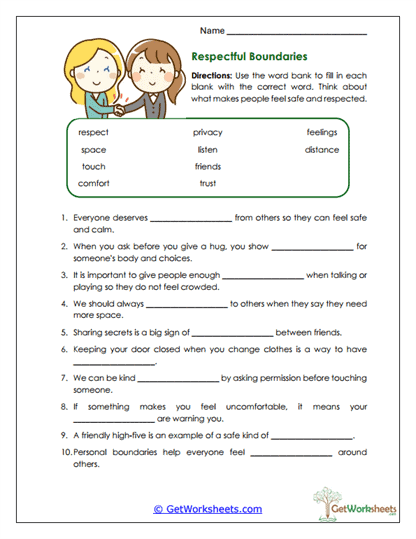
Personal Space and Boundaries
-
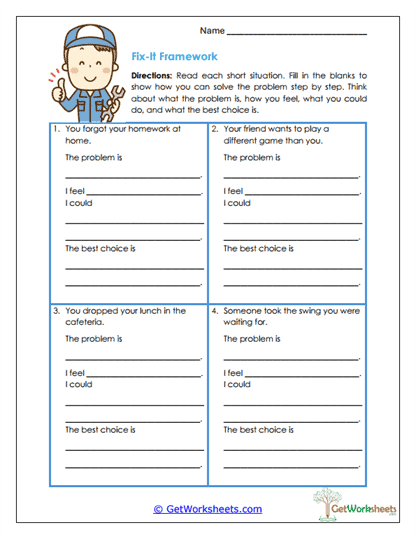
Problem Solving in Social Situations
-
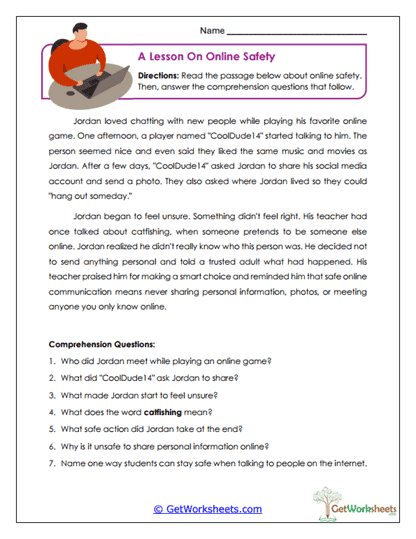
Recognizing Unsafe or Unhealthy Social Interactions
-
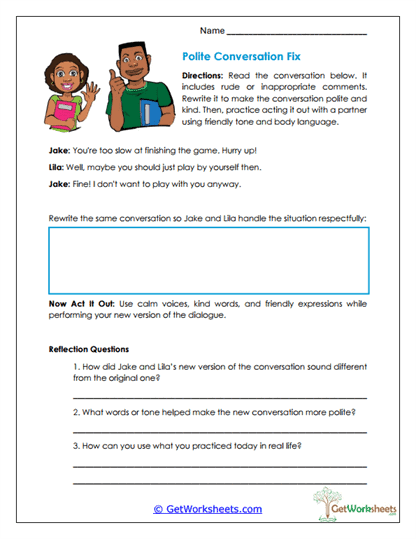
Role Playing Social Scenarios
-
Self-Regulation in Social Settings
-
Teamwork and Cooperation
-
Texting and Online Communication Etiquette
Special Education Worksheets Collection
Helping learners develop social, emotional, and communication skills is essential for confidence, independence, and healthy relationships. This Special Education worksheet collection is designed to support these areas with structured guidance, visual supports, and approachable activities. Each worksheet encourages learners to understand themselves, interact positively with others, and practice real-life social expectations in a safe and supportive way.
Within this collection, students engage in activities that explore conversation skills, emotional regulation, personal boundaries, teamwork, conflict resolution, and more. The worksheets offer clear examples, modeled scenarios, step-by-step prompts, and reflection opportunities that help students build meaningful life skills. Whether used in classrooms, therapy sessions, or at home, these resources make abstract social concepts concrete and teachable.
Educators and caregivers can further customize learning by exploring the full range of subtopic worksheet sets included in this collection. Each subtopic focuses on a specific social skill or communication area, making it easy to tailor instruction to each learner's needs. Together, these sub-collections create a comprehensive pathway that supports growth, confidence, and everyday success.
Subtopic Worksheet Collection Descriptions
Adapting Behavior to Different Social Settings
These worksheets help learners understand how behavior may change depending on the place or people involved. This builds flexibility and situational awareness. It supports smoother interactions in settings like school, home, and community activities.
Apologizing and Making Amends
Learners practice offering sincere apologies and repairing relationships after mistakes. This strengthens emotional responsibility and empathy. Being able to make amends helps maintain positive connections with others.
Appropriate Topics of Conversation
These worksheets teach how to choose topics that fit various situations and audiences. Understanding this skill supports respectful and engaging communication. It helps students feel more comfortable in everyday conversations.
Assertiveness vs. Aggression vs. Passivity
Students learn the differences between speaking up, speaking too strongly, or not speaking up at all. This supports balanced and healthy communication. Knowing these boundaries helps learners express themselves respectfully.
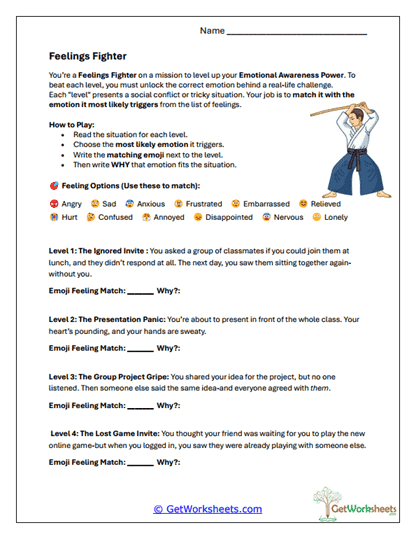
Conflict Resolution
These worksheets guide students through steps for solving disagreements calmly and respectfully. This encourages problem-solving and perspective-taking. It helps learners navigate challenges with peers or adults.
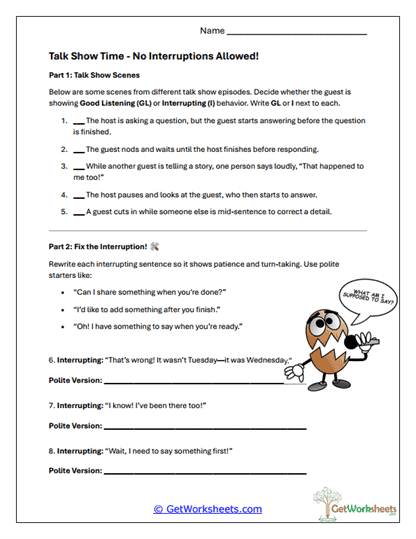
Conversational Skills
Learners practice starting conversations, asking questions, and staying engaged. These skills support clearer communication and social confidence. Strong conversation habits make it easier to build meaningful connections.
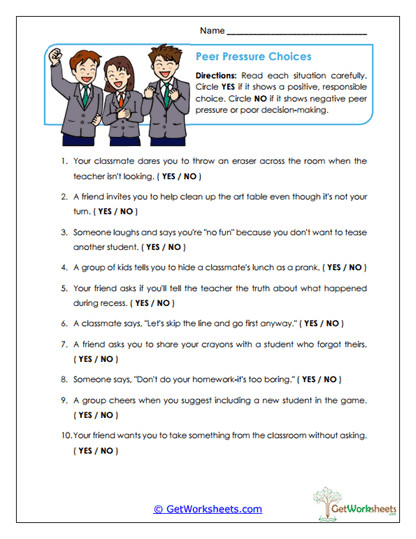
Dealing with Peer Pressure
These worksheets help learners recognize when they're being influenced and how to make their own choices. Understanding this builds decision-making and self-respect. It empowers students to stay true to their values.
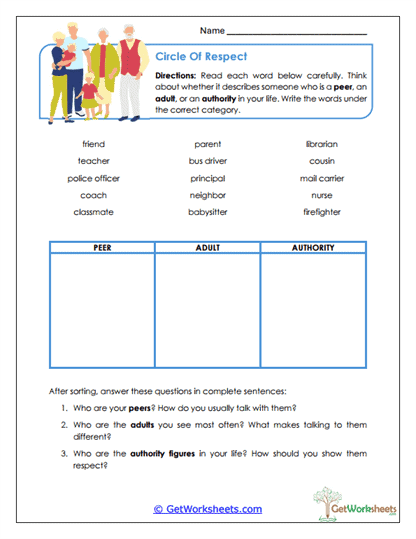
Different Types of Relationships
Students explore friendships, acquaintances, family relationships, and professional interactions. This promotes understanding of social roles and expectations. Recognizing relationship types helps learners interact appropriately with different people.
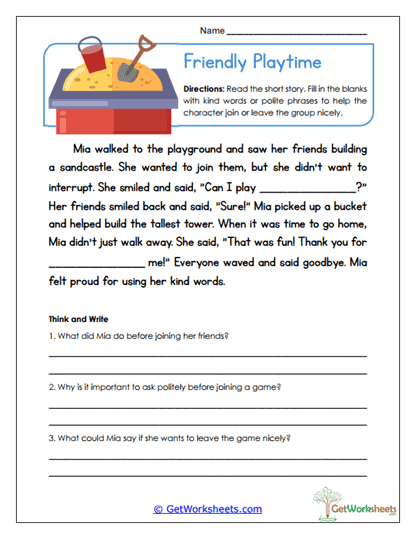
Entering and Exiting Group Activities
These worksheets teach how to join or leave group activities politely and confidently. This supports smoother participation in shared tasks. Feeling comfortable entering groups helps learners make friends and work with others.
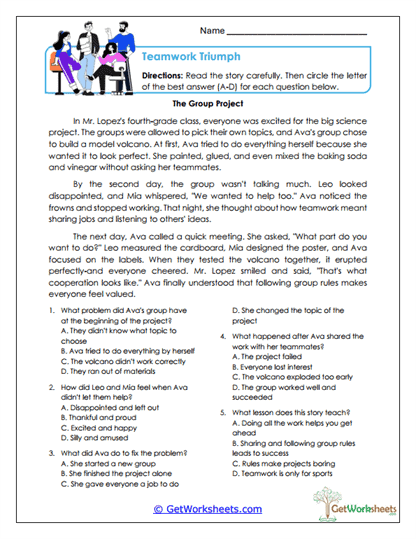
Following Group Rules or Social Norms
Learners practice understanding and following expectations in group settings. This encourages cooperation and shared responsibility. It helps students participate more successfully in classrooms or events.
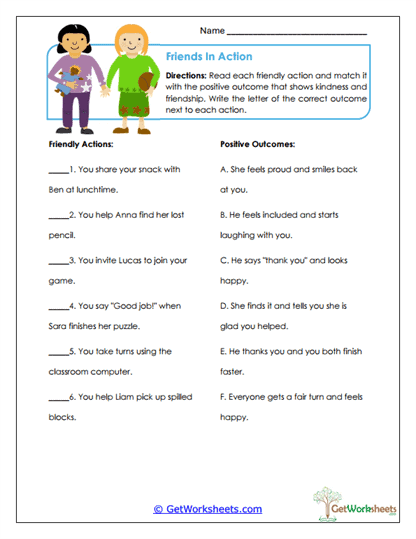
Friendship Skills
These worksheets highlight what makes a good friend and how to maintain positive connections. This supports emotional understanding and mutual respect. Building strong friendships boosts confidence and a sense of belonging.
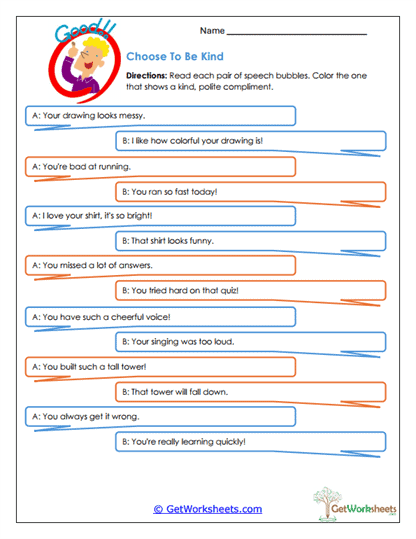
Giving and Receiving Compliments
Students practice offering kind words and responding to compliments with appreciation. This strengthens communication and social warmth. It helps create positive interactions that lift others up.
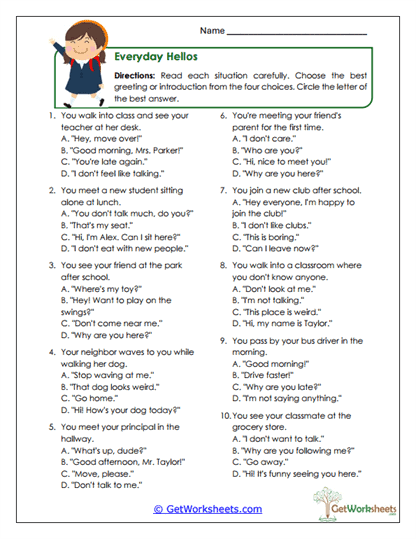
Greetings and Introductions
Learners practice saying hello, introducing themselves, and acknowledging others. These foundational behaviors support confidence in new situations. Strong greeting skills make social moments feel more welcoming.
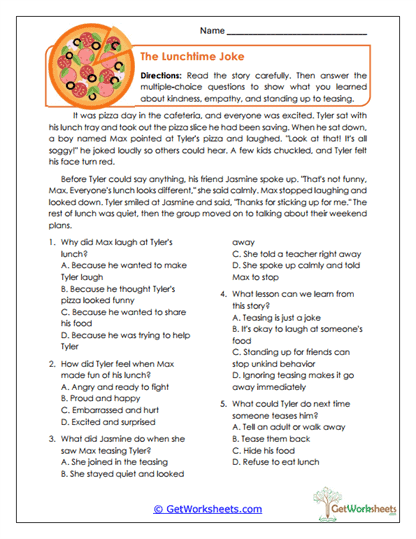
Handling Teasing and Bullying
These worksheets teach strategies for recognizing teasing, responding assertively, and seeking help when needed. This builds safety awareness and resilience. Knowing what to do helps learners feel more secure in social spaces.
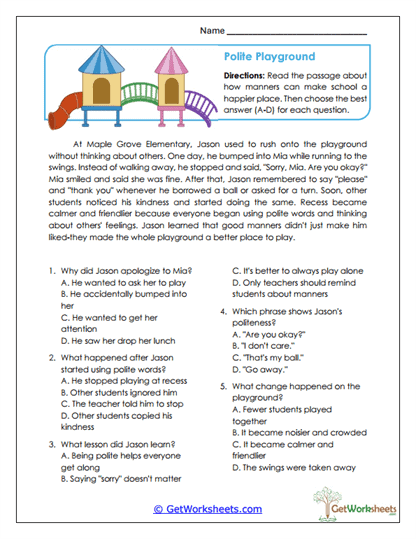
Manners and Politeness
Students learn common polite behaviors that show respect for others. This supports smoother interactions and positive impressions. Practicing manners helps create kind, considerate social environments.
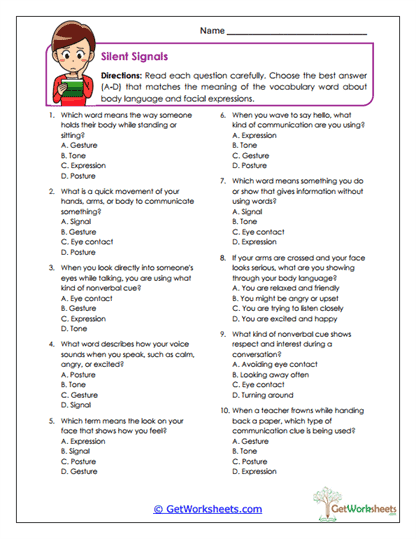
Nonverbal Communication
Learners explore body language, facial expressions, and tone of voice. Understanding these cues supports deeper social understanding and empathy. Recognizing nonverbal signals helps improve everyday communication.
Personal Space and Boundaries
These worksheets teach how to respect physical and emotional boundaries. This supports healthy relationships and self-esteem. Understanding personal space helps learners feel comfortable and safe.
Problem Solving in Social Situations
Students practice recognizing problems, exploring options, and choosing positive solutions. This develops logical thinking and emotional regulation. It helps learners handle everyday challenges more confidently.
Recognizing Unsafe or Unhealthy Social Interactions
These worksheets help students identify warning signs of harmful or uncomfortable interactions. This supports personal safety and emotional awareness. Knowing how to recognize these situations helps learners protect themselves.
Role Playing Social Scenarios
Learners act out everyday interactions to practice communication in a fun, structured way. This builds confidence and reinforces skills through experience. Role play prepares students for real-life moments.
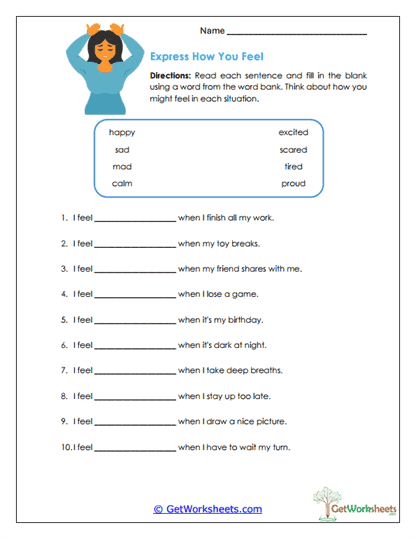
Self-Regulation in Social Settings
These worksheets guide students in managing emotions, staying calm, and making thoughtful choices. This supports emotional control and readiness to learn. Strong self-regulation helps learners stay engaged in group settings.
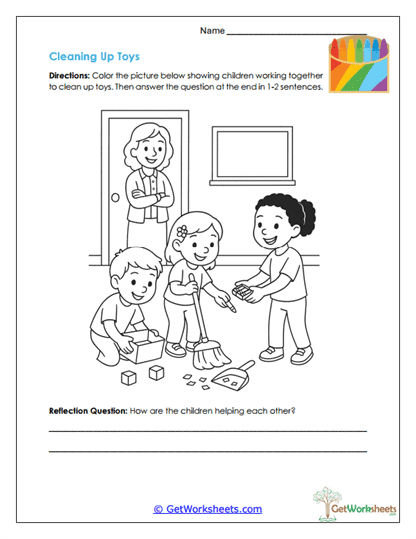
Teamwork and Cooperation
Students practice working with others, sharing tasks, and listening to teammates. This strengthens collaboration and problem-solving skills. Being able to work cooperatively helps with success in group activities.
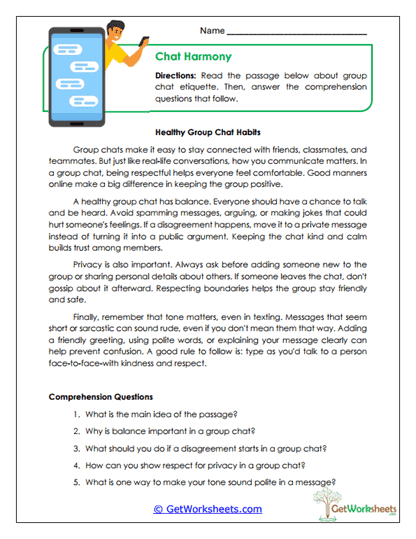
Texting and Online Communication Etiquette
These worksheets teach how to communicate respectfully and clearly in digital spaces. This builds awareness of tone, timing, and appropriate messaging. Learning online etiquette helps learners stay safe and thoughtful when using technology.
Bookmark Us Now!
New, high-quality worksheets are added every week! Do not miss out!