Self-Regulation in Social Settings Worksheets


About This Worksheet Collection
This Self-Regulation in Social Settings collection is designed to help students manage their emotions, make thoughtful choices, and maintain calm behavior in everyday interactions. Through stories, scenario-based questions, vocabulary practice, written reflections, and coping-strategy exercises, learners explore how feelings influence actions and how to choose responses that support positive relationships. The worksheets provide realistic situations-from classroom frustrations to teamwork challenges and even workplace pressures-allowing students to practice staying calm in a variety of settings.
As students move through these activities, they strengthen self-awareness, emotional vocabulary, impulse control, and responsible decision-making. They also develop valuable academic skills such as reading comprehension, written expression, matching vocabulary to context, and interpreting social scenarios. This collection helps learners build resilience, understand their emotional triggers, and rehearse strategies for managing strong feelings before they affect communication or behavior.
Detailed Descriptions Of These Worksheets
Cool and Calm Choices
Students read realistic school scenarios that may spark frustration or disappointment and write calm, thoughtful reactions. They practice pausing and choosing strategies like breathing, asking for help, or using positive self-talk. This activity builds emotional control and supports safer, more peaceful interactions. It encourages problem-solving rather than impulsive responses.
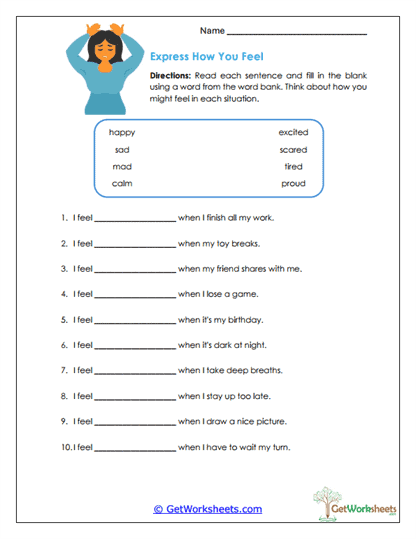
Express How You Feel
Learners complete sentences using emotion words from a word bank. Each situation represents a simple real-life moment that helps students connect events with feelings. The worksheet supports emotional awareness and vocabulary growth. It strengthens communication by helping students name their feelings accurately.
Benny's Calm Day
Students read a short story about Benny staying calm after a setback and answer comprehension questions. The activity models emotional control and constructive problem-solving. Learners analyze how Benny used coping strategies and teamwork. It reinforces comprehension and shows how calm reactions lead to better outcomes.
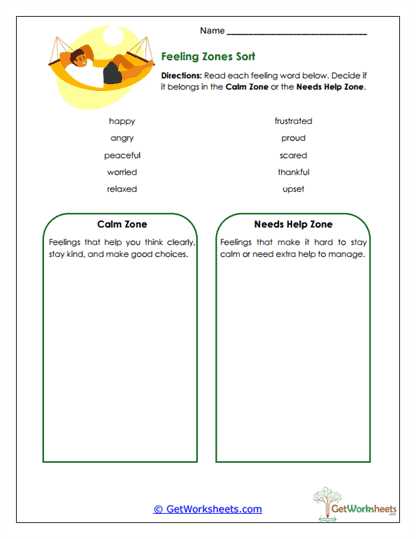
Feeling Zones Sort
Learners sort emotion words into a Calm Zone or Needs Help Zone. The activity teaches students to recognize which feelings are manageable and which may require coping strategies or support. It builds emotional monitoring skills and encourages seeking help when needed. The sorting format supports vocabulary understanding.
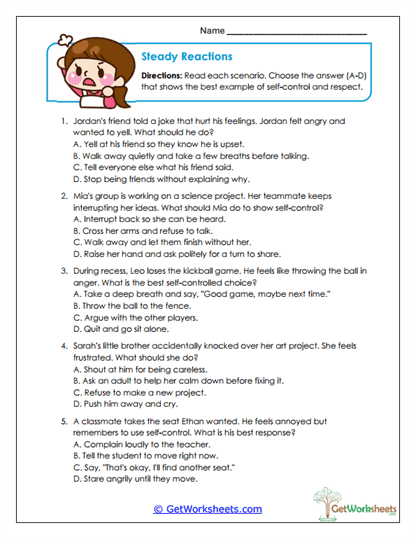
Steady Reactions
Students choose the most self-controlled response to teasing, accidents, frustration, and disagreements. The multiple-choice format helps learners identify healthier alternatives to impulsive reactions. This activity strengthens responsible decision-making and emotional regulation. It reinforces respectful communication in challenging moments.
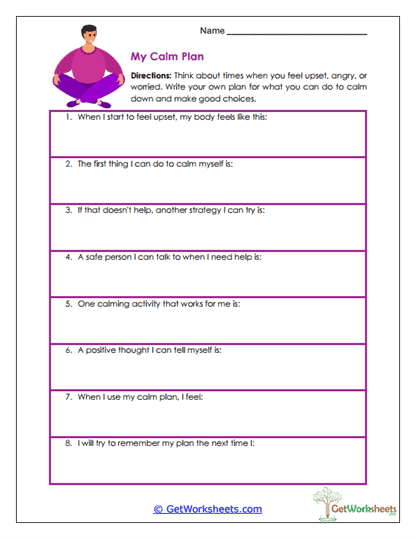
My Calm Plan
Learners create a personalized calm-down plan that includes physical signs of strong emotions, coping strategies, trusted adults, and positive thoughts. They reflect on how they feel after using their strategies. The worksheet builds independence and self-advocacy. It supports long-term emotional resilience and self-regulation.
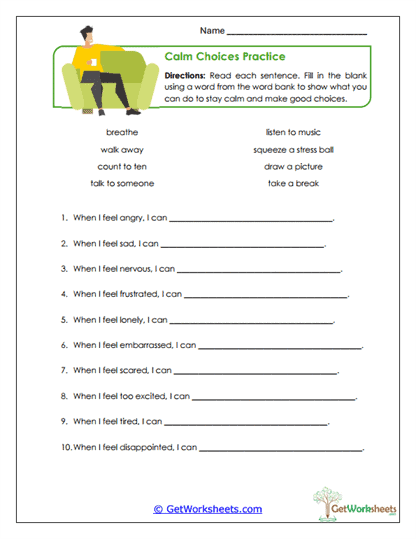
Calm Choices Practice
Students use a word bank of coping strategies to complete fill-in-the-blank sentences. They match calming techniques to emotional triggers, practicing proactive problem-solving. This activity builds emotional vocabulary and reinforces regulation strategies. It provides structured practice in choosing healthy responses.
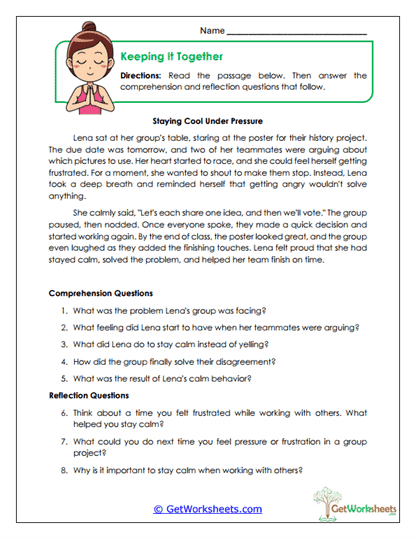
Keeping It Together
Learners read a passage about a group conflict and how a character stays calm. They answer comprehension and reflection questions related to emotional control and teamwork. The worksheet highlights how calm communication supports group problem-solving. It strengthens reading comprehension and reflective thinking.
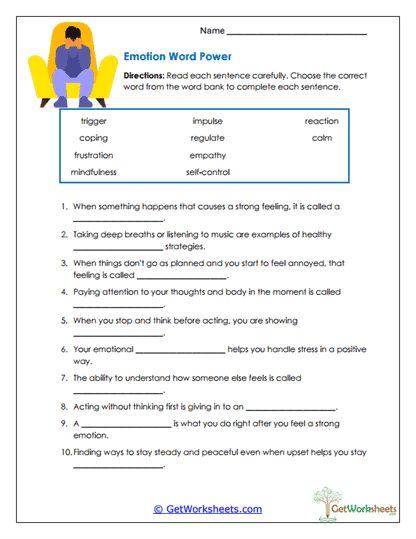
Emotion Word Power
Students select the correct vocabulary word for each sentence from a list of emotional regulation terms. The worksheet teaches foundational SEL language such as impulse, coping, regulate, and mindfulness. It deepens understanding of how emotions influence actions. Learners build literacy and emotional intelligence at the same time.
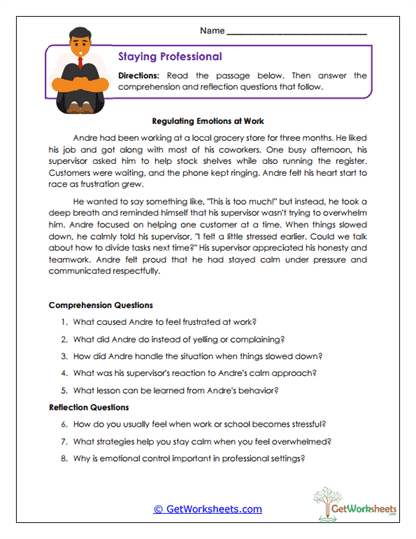
Staying Professional
Students read a workplace scenario illustrating calm problem-solving under pressure. They answer questions about triggers, communication choices, and professionalism. The activity shows how self-regulation applies beyond school. It supports career readiness and strengthens comprehension.
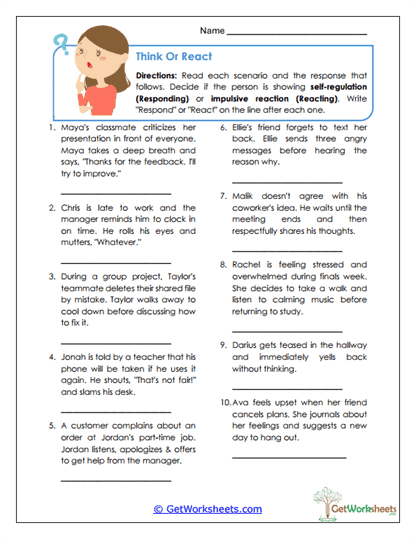
Think or React
Learners examine whether a character is "Responding" calmly or "Reacting" impulsively in various scenarios. The activity encourages students to recognize the difference in their own behavior. It supports impulse control and thoughtful decision-making. Students strengthen emotional literacy and social evaluation skills.
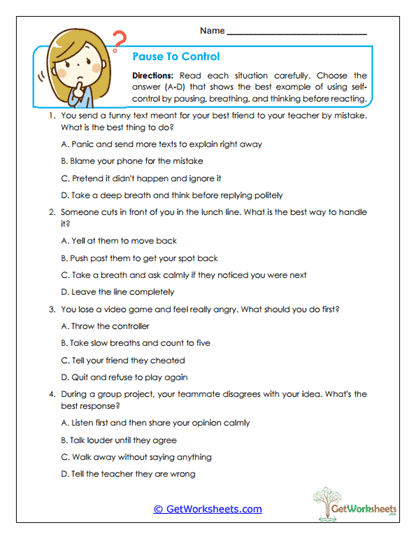
Pause to Control
Students choose the most self-controlled action for each scenario involving frustration, misunderstandings, or disagreements. The options encourage habits like breathing, pausing, and staying calm before responding. The worksheet builds emotional resilience and strengthens problem-solving. It helps learners internalize healthy coping strategies.
Bookmark Us Now!
New, high-quality worksheets are added every week! Do not miss out!