Script Reading Worksheets
About This Worksheet Collection
This collection of script reading worksheets is designed to transform reading into an interactive, performance-based experience that builds both fluency and comprehension. By working with scripts, learners engage with dialogue, character perspective, and expressive delivery in ways that go beyond traditional reading tasks. These activities are especially valuable for teachers looking to integrate speaking and listening standards into literacy instruction, while also providing engaging, low-prep options for small groups or partner work. Parents can also use these worksheets to encourage confident, expressive reading at home through collaborative practice.
As learners move through the collection, they develop key skills such as prosody, pacing, voice control, and character interpretation. The activities emphasize flexibility, reflection, and responsiveness, helping students understand how tone, timing, and delivery influence meaning. In addition to fluency, students strengthen comprehension by analyzing dialogue, summarizing key ideas, and adjusting their reading based on context. Together, these worksheets support the development of expressive, thoughtful readers who can bring text to life with clarity and confidence.
Detailed Descriptions Of These Worksheets
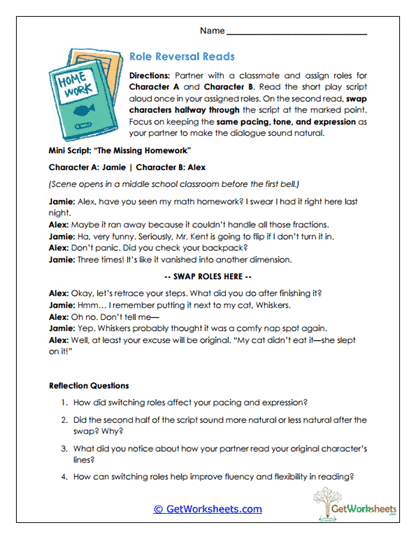
Role Reversal Reads
Switching character roles midway through a script encourages learners to adjust tone, pacing, and expression in real time. This activity strengthens perspective-taking by requiring students to interpret multiple voices within the same passage. Teachers can use it to build both fluency and deeper character understanding. It also promotes active listening as students respond to how their peers performed each role.
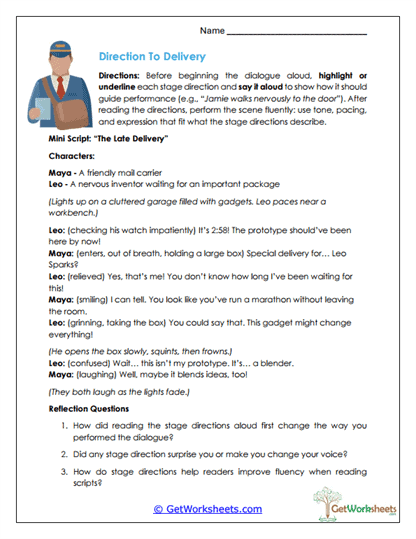
Direction to Delivery
This worksheet highlights the importance of stage directions by guiding learners to interpret cues related to movement, tone, and emotion. By applying these directions during reading, students gain a clearer sense of how meaning extends beyond dialogue alone. Educators will find it especially useful for introducing script structure and performance awareness. The activity reinforces intentional, expressive reading.
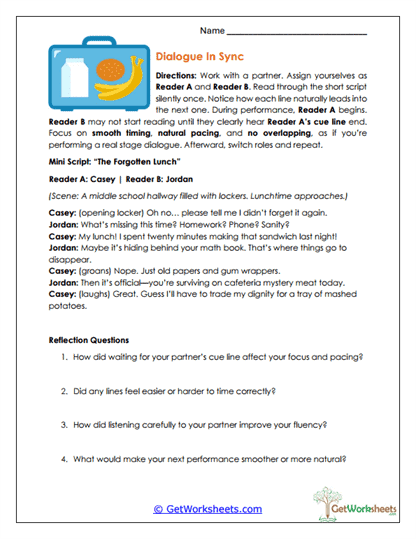
Dialogue in Sync
Partner-based reading helps learners develop natural conversational pacing by responding to cues without overlapping lines. The focus on timing and listening encourages smoother, more realistic dialogue delivery. Teachers can use this worksheet to strengthen both fluency and communication skills. It also helps students understand how rhythm and response shape meaning.
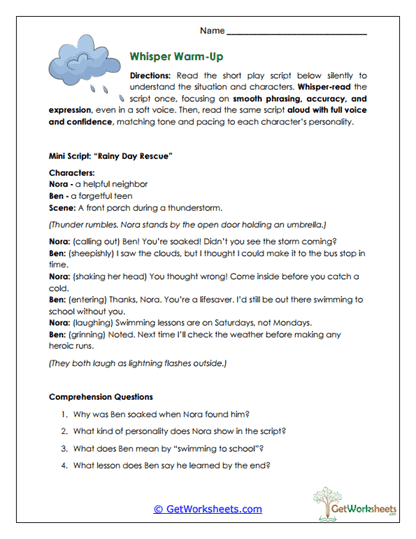
Whisper Warm-Up
A gradual progression from quiet reading to full voice delivery allows learners to build confidence without pressure. Starting with whisper reading helps students focus on accuracy before adding expression and volume. Educators can use this approach to support hesitant readers while still promoting growth. The structured transition encourages steady improvement in fluency.
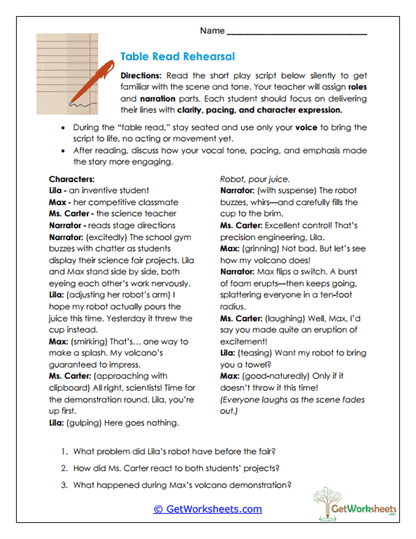
Table Read Rehearsal
This activity mirrors real-world script practice by focusing entirely on vocal delivery rather than physical acting. Learners develop clarity, pacing, and expression while seated, keeping attention on reading skills. Teachers will appreciate how it reinforces fluency without added distractions. It also builds confidence in oral reading and collaboration.
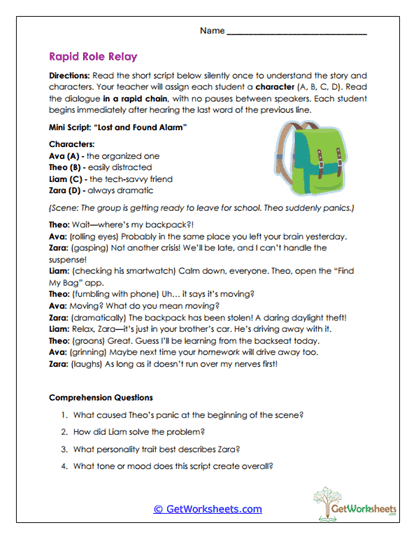
Rapid Role Relay
Fast-paced dialogue exchanges challenge learners to stay alert and respond immediately, strengthening focus and engagement. This worksheet encourages quick thinking while maintaining accuracy and expression. Educators can use it to energize reading sessions and build conversational fluency. It also helps students become more comfortable with real-time reading interactions.
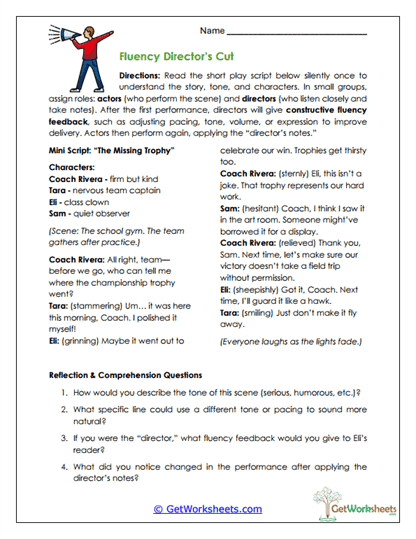
Fluency Director's Cut
Combining reading with peer feedback, this worksheet allows learners to evaluate and refine their performance. Students act as both reader and "director," offering suggestions for improving tone and pacing. Teachers can use it to build self-awareness and encourage constructive critique. The revision process reinforces continuous improvement in fluency.
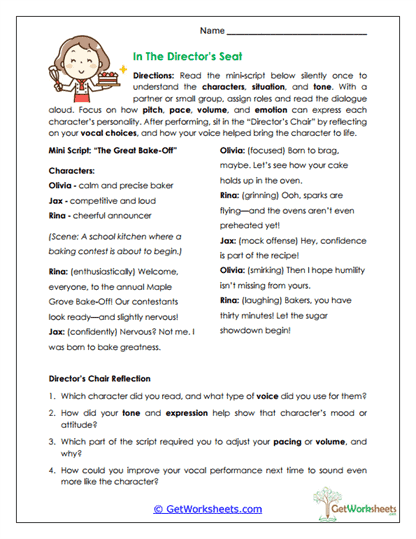
In the Director's Seat
This reflective activity asks learners to analyze how voice choices such as pitch, pace, and tone affect meaning. By evaluating their own performance, students develop greater control over expressive reading. Educators can use it to promote thoughtful, intentional delivery. It also supports independence as learners take ownership of their progress.
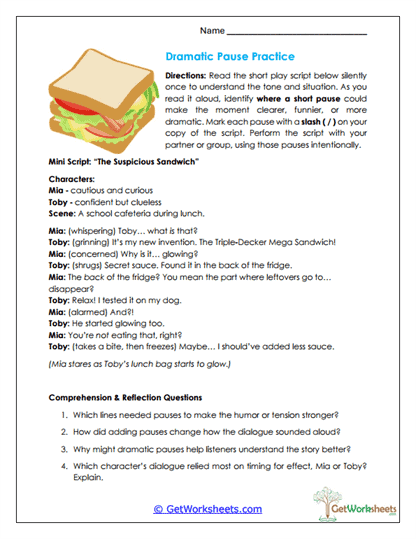
Dramatic Pause Practice
Focusing on timing, this worksheet teaches learners how pauses can enhance meaning and engagement. By identifying and practicing strategic pauses, students improve clarity and expression. Teachers can use it to strengthen prosody and comprehension simultaneously. The activity highlights how pacing influences the listener's understanding.
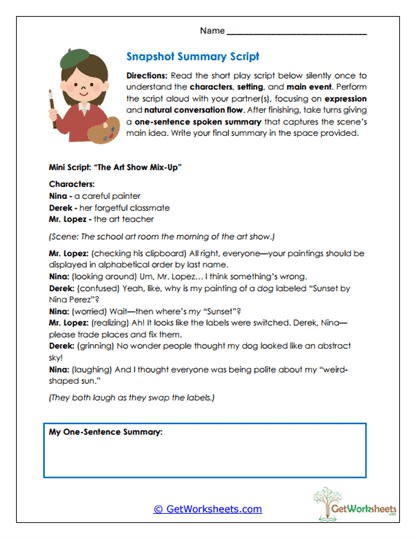
Snapshot Summary Script
Condensing a script into a single sentence challenges learners to identify the most important ideas. This activity strengthens comprehension by requiring students to distinguish between key details and less relevant information. Educators can use it to build summarization and writing skills. It also encourages precise and thoughtful expression.
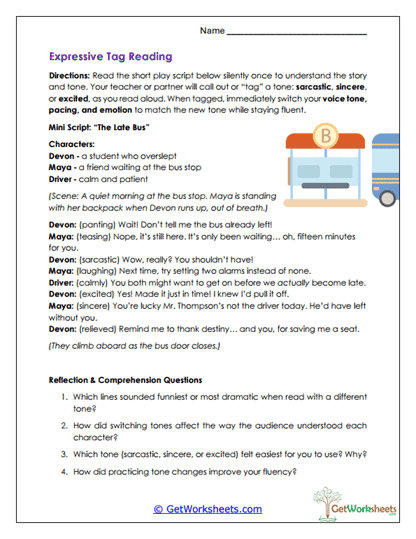
Expressive Tag Reading
Quick tone shifts prompted by labeled "tags" require learners to adapt their voice while maintaining fluency. This dynamic activity builds flexibility and helps students understand how delivery changes meaning. Teachers can use it to increase engagement and develop expressive range. It also sharpens attention and responsiveness during reading.
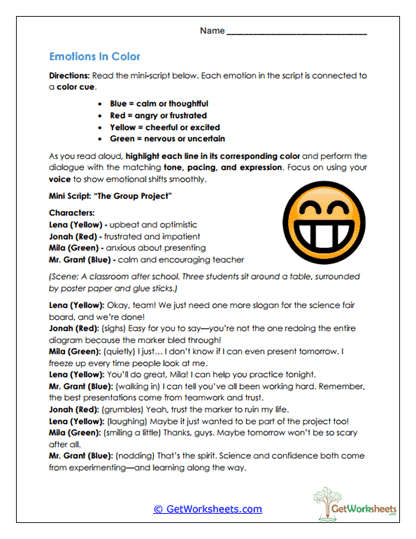
Emotions in Color
Color-coded emotional cues guide learners in adjusting tone, pacing, and expression throughout a script. This visual support helps make abstract concepts like mood and feeling more concrete. Educators can use it to strengthen both comprehension and expressive reading skills. The activity encourages deeper connection to character emotions and intent.
Bookmark Us Now!
New, high-quality worksheets are added every week! Do not miss out!