Recognizing Unsafe or Unhealthy Social Interactions Worksheets
About This Worksheet Collection
This Recognizing Unsafe or Unhealthy Social Interactions collection equips students with the knowledge and confidence to identify risky behaviors, set boundaries, and seek help when needed. Through stories, scenario analysis, vocabulary work, multiple-choice decision-making, and structured reflection, learners explore a wide range of situations-from peer pressure and boundary crossing to digital dangers and unhealthy relationships. Each worksheet encourages students to trust their instincts, recognize warning signs, and communicate assertively.
As students complete these activities, they strengthen critical safety-related skills such as responsible decision-making, self-advocacy, boundary recognition, and emotional awareness. They also develop essential academic abilities including reading comprehension, written reflection, interpreting scenarios, and using precise vocabulary. The worksheets empower students to protect their well-being, practice speaking up, and understand the difference between healthy interactions and harmful behaviors-both in person and online.
Detailed Descriptions Of These Worksheets
Safe vs. Unsafe Situations
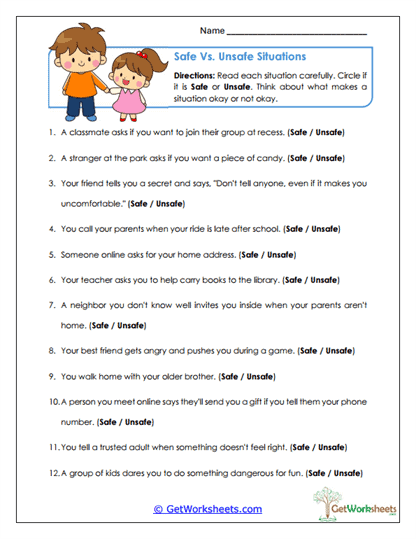
Students read real-life scenarios and identify whether each one is safe or unsafe. They learn to recognize danger signs in school, public, peer, and online settings. The activity reinforces responsible decision-making and stranger safety. It helps students understand when to trust adults and when to seek help immediately.
Body Sensations as Clues
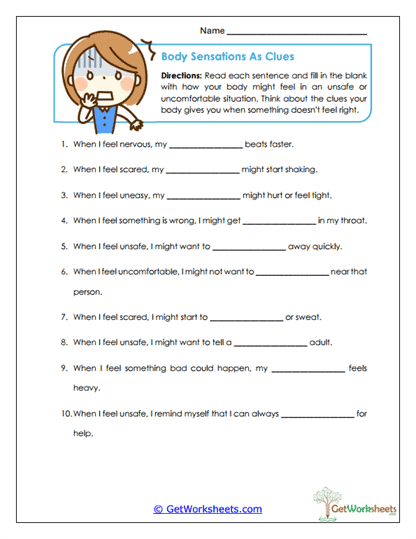
Learners complete sentences describing physical sensations that signal discomfort or danger, such as shaking or a fast heartbeat. This worksheet builds self-awareness by connecting emotions to bodily cues. It teaches students to trust early warning signs. Vocabulary practice and context clues support reading comprehension.
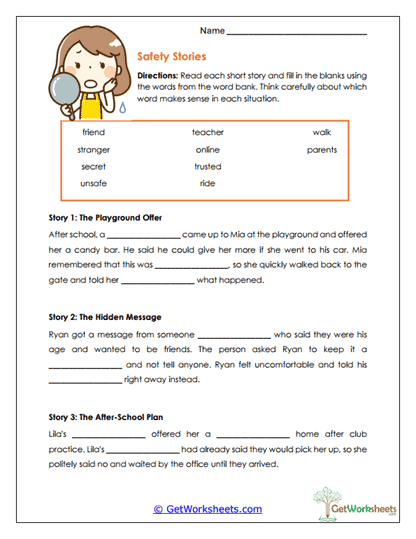
Safety Stories
Students read brief safety-focused stories and fill in missing words from a word bank. They evaluate scenarios involving strangers, unsafe secrets, and pressure. The activity teaches personal safety rules and reinforces recognition of trusted adults. It strengthens comprehension and vocabulary related to safety.
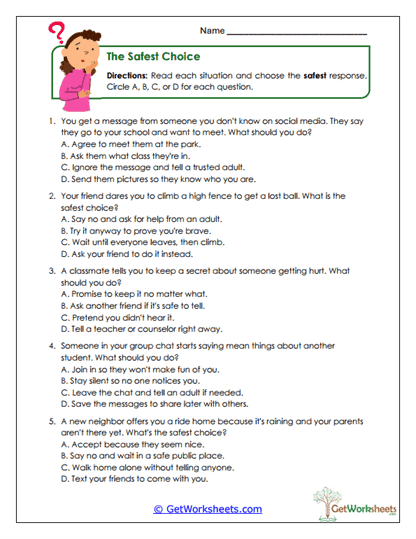
The Safest Choice
Learners analyze high-risk scenarios involving peer pressure, dares, online communication, and unsafe secrets. They select the safest response and explain why it is the best choice. The worksheet promotes risk assessment and assertive decision-making. It encourages students to refuse unsafe requests and seek support.
Boundary Decisions
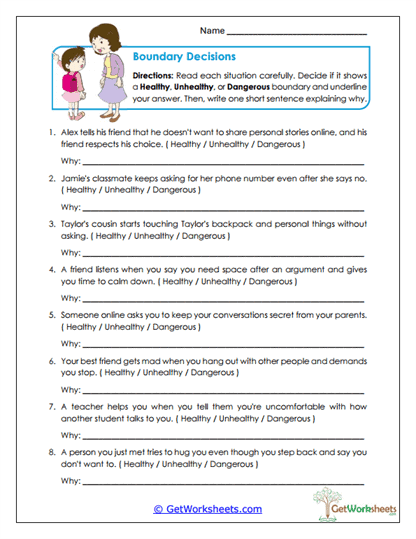
Students classify behaviors as Healthy, Unhealthy, or Dangerous and write explanations for each. The activity helps learners identify when boundaries are respected, crossed, or violated. It develops critical thinking and emotional safety awareness. Students practice self-advocacy through written justification.
A Lesson on Online Safety
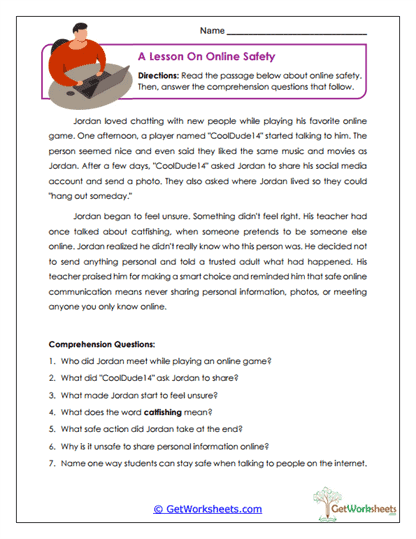
Learners read a narrative about an unsafe gaming interaction and answer comprehension questions. They identify red flags such as personal questions, privacy risks, and manipulation. The activity strengthens digital citizenship and teaches students how to stay safe online. It emphasizes the importance of trusted adults and protective decisions.
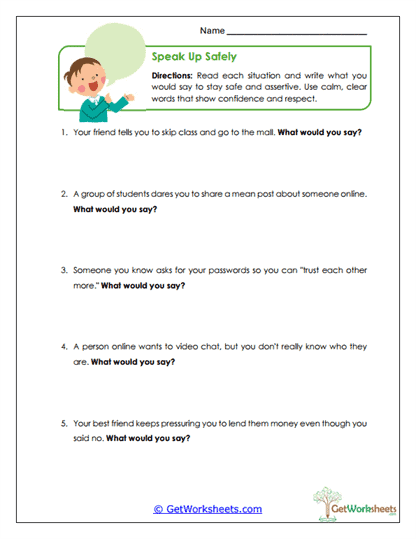
Speak Up Safely
Students read scenarios involving unsafe peer or online pressure and write assertive responses. The worksheet teaches calm, confident refusal skills. It supports personal safety by reinforcing clear communication of boundaries. Learners build writing fluency while practicing protective statements.
Notice and Speak Up
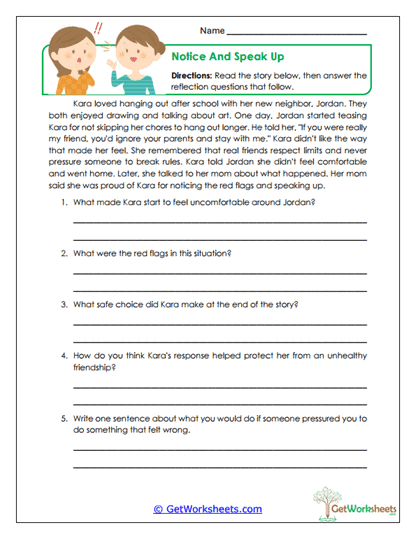
Learners read a story about a friendship that becomes unsafe and answer reflection questions. The activity helps students recognize manipulation and unhealthy pressure. They practice identifying red flags and safe choices. It strengthens comprehension, critical thinking, and self-advocacy.
Relationship Checkpoint
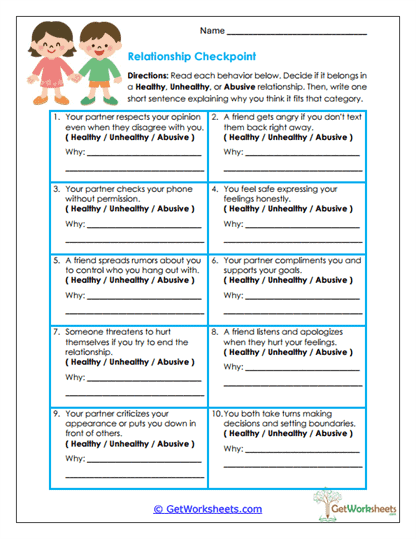
Students classify behaviors as Healthy, Unhealthy, or Abusive and explain their reasoning. The worksheet builds awareness of boundary violations, emotional harm, and respectful communication. It encourages learners to recognize when a relationship becomes unsafe. Written explanations promote careful evaluation of social situations.
Online Boundaries
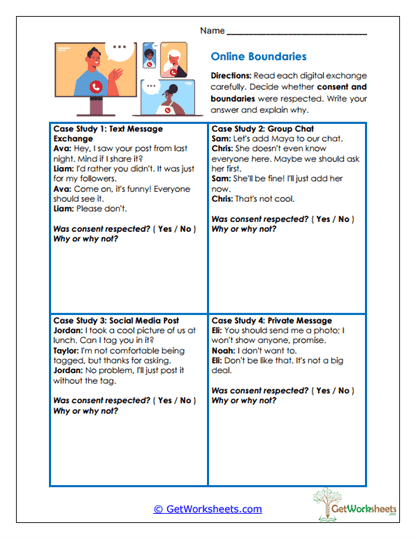
Learners analyze digital case studies and decide whether online boundaries were respected. They identify violations such as sharing photos without permission or pushing someone to respond. The activity teaches consent, privacy, and respectful digital behavior. Students practice written justification and online safety awareness.
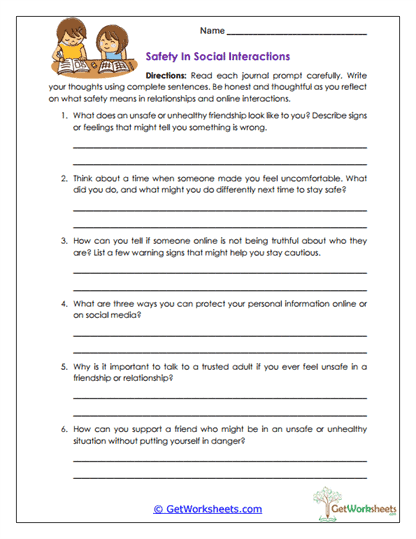
Safety in Social Interactions
Students respond to journal prompts about warning signs, unsafe situations, boundaries, and trusted adults. The activity promotes deep reflection on personal safety and responsible decision-making. Learners practice expressive writing while considering strategies to protect themselves and support others. It strengthens emotional awareness and digital safety knowledge.
My Safety Plan
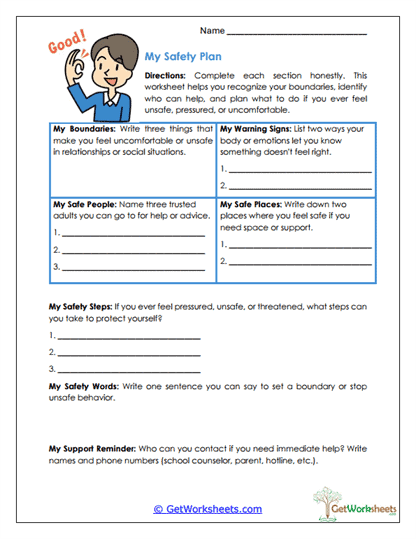
Students create a personalized safety plan by identifying boundaries, warning signs, trusted adults, and safe places. They write statements they can use in unsafe situations and list emergency contacts. The worksheet teaches self-advocacy, preparation, and protective decision-making. It empowers students to stay safe and know where to turn for help.
Bookmark Us Now!
New, high-quality worksheets are added every week! Do not miss out!