Problem Solving in Social Situations Worksheets
About This Worksheet Collection
This Problem Solving in Social Situations collection offers students practical, step-by-step opportunities to navigate common conflicts with empathy, calm thinking, and responsible choices. Through scenarios, narratives, structured frameworks, reflection prompts, matching tasks, and cause-and-effect activities, students learn how to respond thoughtfully rather than react impulsively. Each worksheet provides relatable examples-ranging from playground disagreements to workplace misunderstandings-that show students how communication, patience, and perspective-taking lead to healthier resolutions.
As learners move through the collection, they strengthen core social-emotional abilities such as decision-making, emotional regulation, conflict resolution, and teamwork. At the same time, they build academic skills including reading comprehension, written expression, interpreting scenarios, and reasoning through multiple-choice questions. These activities equip students with lifelong strategies for managing misunderstandings, solving problems collaboratively, and maintaining positive relationships across many social settings.
Detailed Descriptions Of These Worksheets
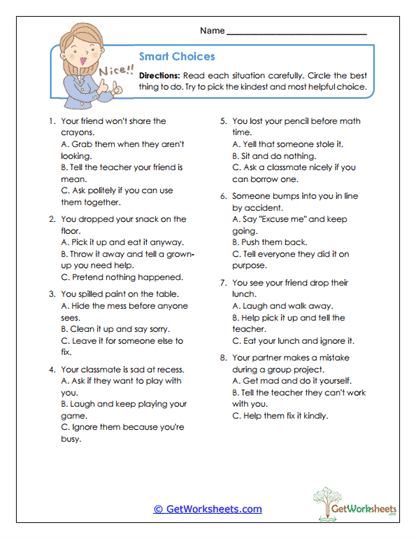
Smart Choices
Students read everyday dilemmas and choose the most helpful and empathetic response from multiple options. They practice distinguishing between reactive choices and thoughtful actions. This activity builds responsible decision-making and strengthens students' ability to support positive relationships. It reinforces careful reading and scenario interpretation.
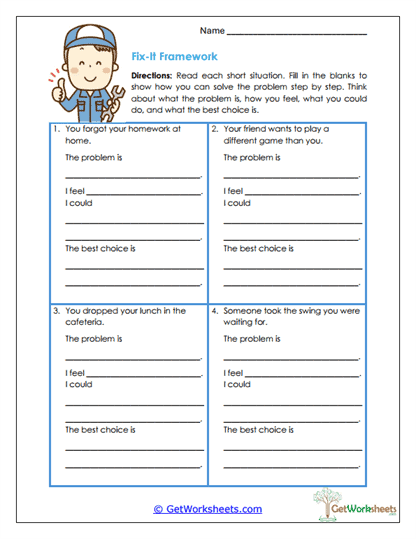
Fix-It Framework
Learners follow a structured process-identify the problem, describe feelings, consider options, and choose the best solution. They complete sentence frames for realistic situations such as disagreements or forgotten items. The worksheet builds self-reflection and emotional regulation. It helps students form positive habits for solving conflicts constructively.
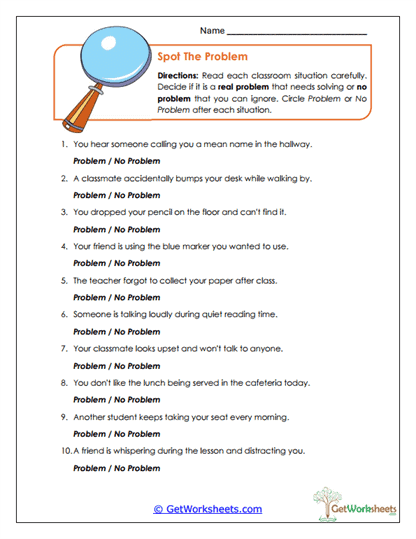
Spot the Problem
Students decide whether each situation is a real problem that needs attention or a minor annoyance they can let go. This helps learners evaluate the seriousness of everyday challenges. The activity supports emotional regulation by teaching when to react and when to stay calm. It strengthens decision-making and critical thinking.
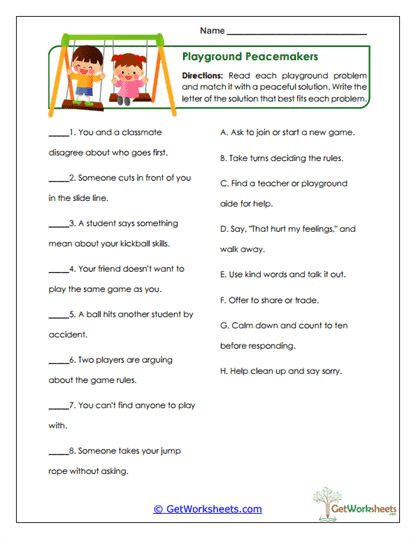
Playground Peacemakers
Learners match playground problems with peaceful, appropriate solutions. Scenarios highlight fair play, turn-taking, and respectful communication. Matching responses encourages students to think about how kindness reduces conflict. The worksheet promotes cooperative behavior in group settings.
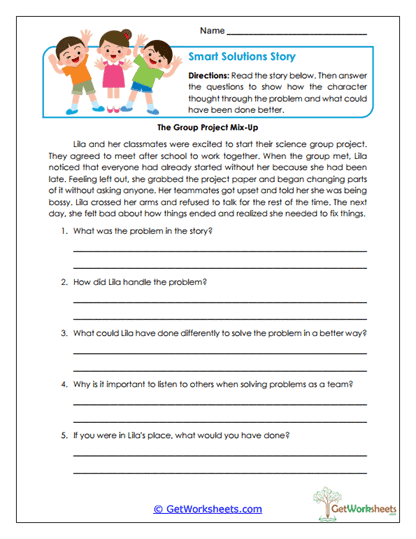
Smart Solutions Story
Students read a narrative about a misunderstanding in a group project and answer comprehension and reflection questions. They examine what went wrong and how the character could have handled the situation more constructively. This activity builds comprehension, teamwork awareness, and thoughtful writing. It reinforces patience and effective communication.
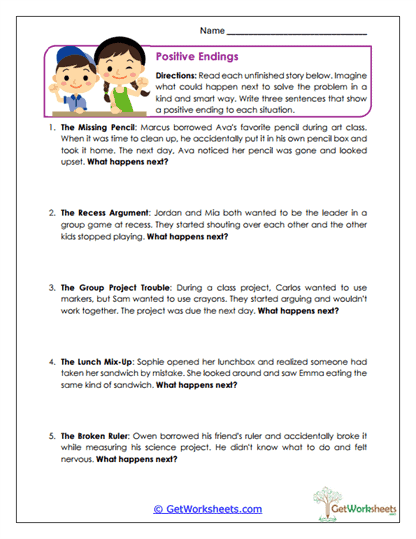
Positive Endings
Learners read unfinished scenarios and write three-sentence resolutions that show kind, constructive problem-solving. The worksheet encourages creativity and empathy. Students practice shifting from emotional reactions to thoughtful solutions. It strengthens expressive writing and responsible decision-making.
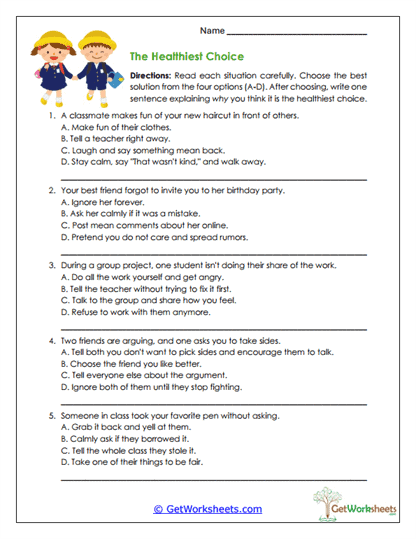
The Healthiest Choice
Students choose the healthiest solution from four options and explain their reasoning. Scenarios address rumors, disagreements, teasing, and group work concerns. The activity teaches learners to evaluate fairness, kindness, and safety. It builds written justification skills and social awareness.
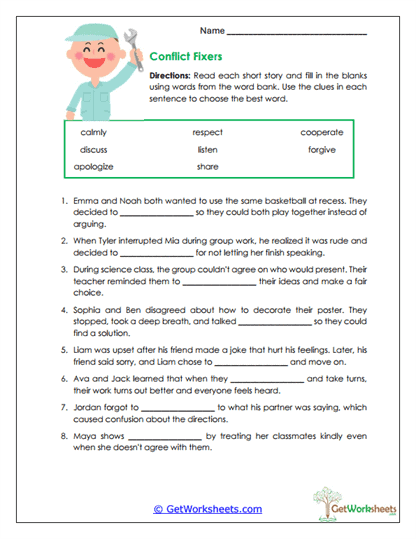
Conflict Fixers
Learners fill in blanks using a word bank of positive problem-solving vocabulary. They connect words like "listen," "forgive," and "cooperate" to appropriate conflict scenarios. This activity reinforces vocabulary and constructive communication strategies. It builds comprehension and SEL vocabulary use.
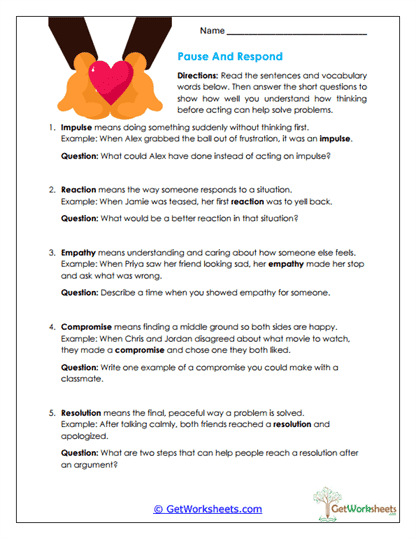
Pause and Respond
Students explore key concepts such as impulse control, empathy, compromise, and calm responses. They read definitions and apply each idea to real-life examples in writing. The activity teaches learners to reflect before acting and consider others' perspectives. It strengthens both emotional regulation and written expression.
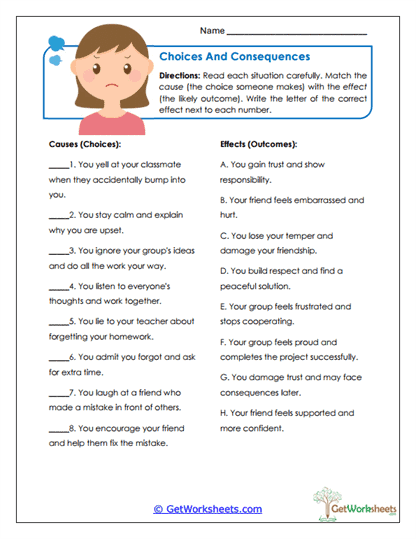
Choices and Consequences
Learners match different choices with likely outcomes, analyzing how behavior influences relationships. Scenarios highlight how positive actions lead to better results than reactive ones. This activity reinforces cause-and-effect reasoning and responsible decision-making. It helps students see how small choices impact group dynamics.
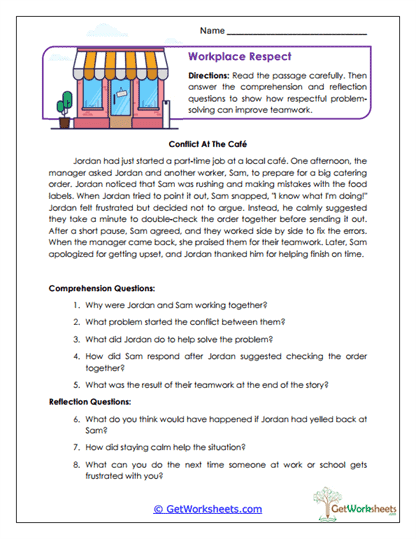
Workplace Respect
Students read a narrative about coworkers resolving a conflict at a café. They answer comprehension and reflection questions that examine communication, patience, and cooperation. The worksheet shows how school problem-solving skills translate to real-world environments. It strengthens reading comprehension and career readiness.
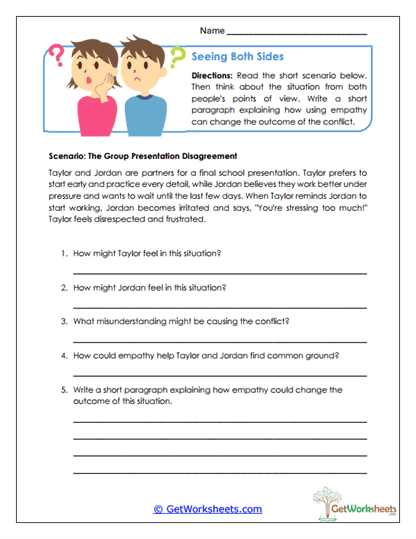
Seeing Both Sides
Learners read a conflict scenario and analyze it from each person's perspective. They explore feelings, misunderstandings, and how empathy supports resolution. Students then write a paragraph explaining how considering multiple viewpoints can change outcomes. This worksheet builds perspective-taking, emotional literacy, and thoughtful communication.
Bookmark Us Now!
New, high-quality worksheets are added every week! Do not miss out!