Problem and Solution Worksheets
About This Worksheet Collection
The Problem and Solution collection helps students recognize how challenges and resolutions shape both stories and informational texts. Each worksheet focuses on identifying problems, analyzing how they are resolved, and understanding the logical relationships that connect events. Through reading, writing, and reasoning exercises, learners explore how authors use conflict and resolution to build structure, tension, and meaning.
These activities go beyond identification-students evaluate the effectiveness of solutions, create alternative outcomes, and trace multi-step problem chains. By blending comprehension with creativity, the collection strengthens analytical thinking, cause-and-effect reasoning, and narrative understanding. Learners also practice empathy and flexibility by examining how characters or real-life situations can be resolved in multiple ways.
Detailed Descriptions Of These Worksheets
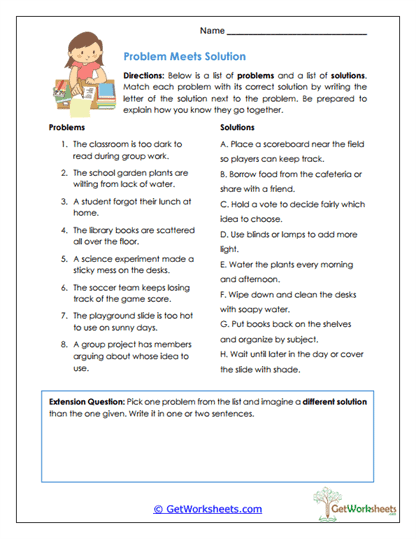
Problem Meets Solution
Students match a list of everyday problems with logical solutions using context clues and reasoning. After connecting each pair, they create an alternate solution to one scenario, encouraging creativity and analysis. The task develops comprehension of cause-and-effect relationships and decision-making vocabulary. It promotes flexible thinking and real-world problem-solving awareness.
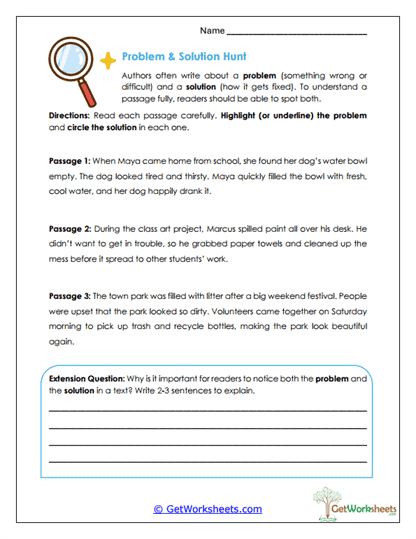
Problem and Solution Hunt
Learners identify and underline problems and solutions in short narrative passages. They answer follow-up questions to show comprehension of story structure and character motivation. The worksheet uses relatable, real-world examples to make abstract structure concrete. It builds inference and analysis skills essential to narrative understanding.
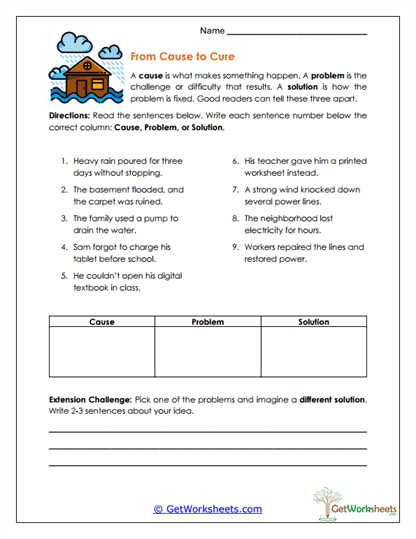
From Cause to Cure
Students classify short sentences into three categories-cause, problem, or solution-within a chart. This visual organization helps clarify the differences between related but distinct ideas. Learners then brainstorm alternative resolutions, deepening logical reasoning and sequence comprehension. The exercise reinforces how events interconnect in both fiction and nonfiction.
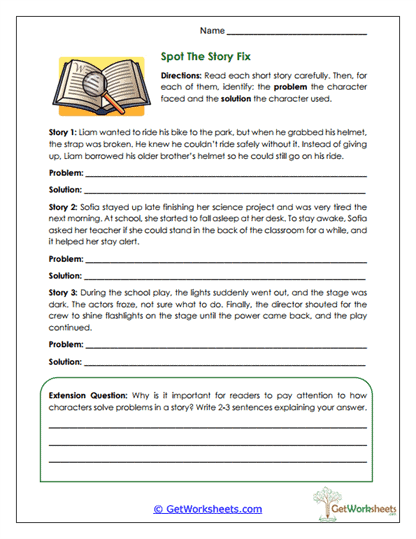
Spot the Story Fix
Learners read three short stories, identify each problem and its solution, and explain how the resolution affects the characters. An extension prompt encourages reflection on why noticing solutions matters in storytelling. This worksheet strengthens comprehension of narrative structure and reinforces how conflict drives plot progression.
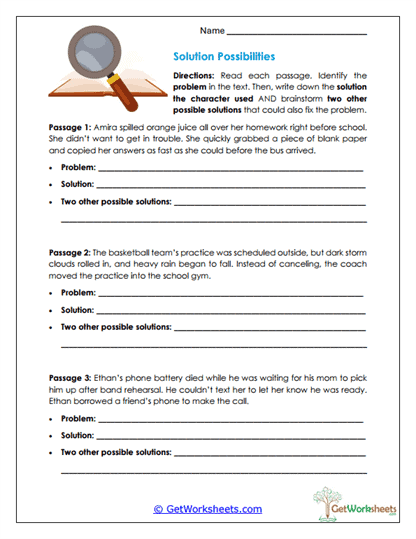
Solution Possibilities
Students find the stated problem and its solution in each short scenario, then invent two alternative resolutions. The task builds creative reasoning and promotes the understanding that problems often have multiple valid outcomes. It encourages flexible thinking, problem evaluation, and evidence-based justification. Learners also enhance comprehension through situational analysis.
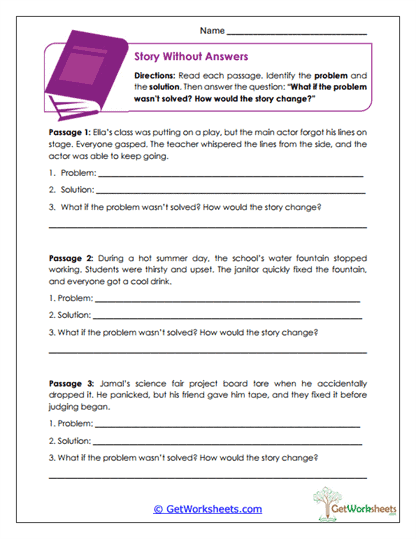
Story Without Answers
Learners analyze stories to identify problems and solutions, then imagine how events might change if the problem remained unresolved. This reflective exercise helps students understand how solutions influence plot direction and theme. It promotes hypothetical reasoning, comprehension, and deeper narrative insight. The activity connects cause, consequence, and creativity.
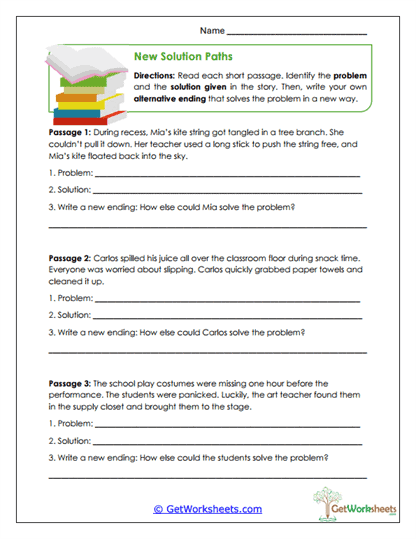
New Solution Paths
Students read brief passages, identify the main problem and solution, and write a new ending with a different resolution. This hands-on task emphasizes flexible problem-solving strategies and narrative creativity. Learners explore how varied outcomes can shift tone and meaning. It builds comprehension, imagination, and critical reasoning.
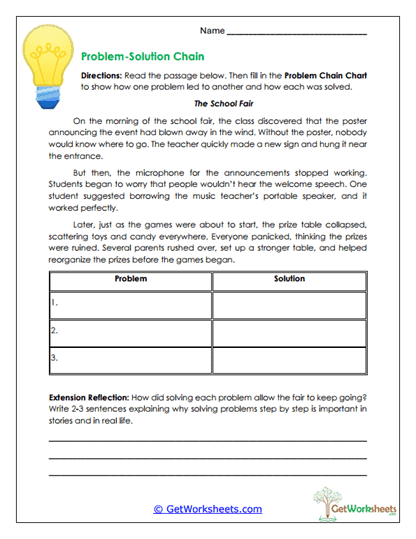
Problem-Solution Chain
Learners analyze a passage with multiple linked problems and solutions, recording each step in a chart. They observe how one fix often leads to a new challenge, reinforcing the concept of sequence and continuity. A reflection question connects this concept to real-world problem solving. The worksheet strengthens logical reasoning and organizational skills.
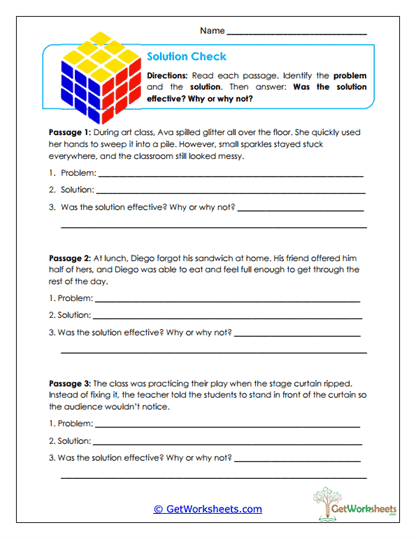
Solution Check
Students evaluate whether each story's solution is effective, citing context clues and reasoning to support their conclusions. This worksheet moves beyond recognition to analysis of quality and outcome. It builds critical thinking and comprehension by encouraging justification with textual evidence. Learners practice evaluation rather than simple recall.
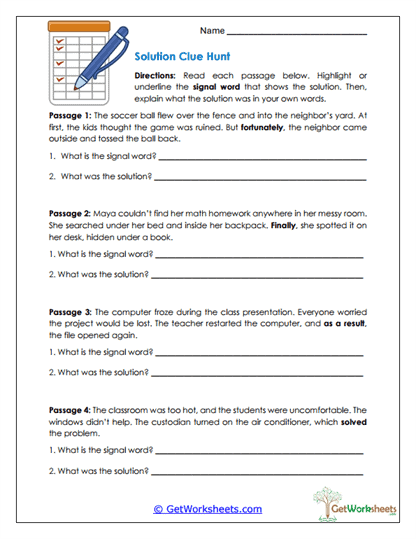
Solution Clue Hunt
Learners focus on identifying transition words that signal problem-and-solution relationships, such as finally, as a result, or which solved. They underline these clues and summarize each resolution in their own words. This activity strengthens awareness of structural language and text organization. It builds vocabulary, reading fluency, and analytical precision.
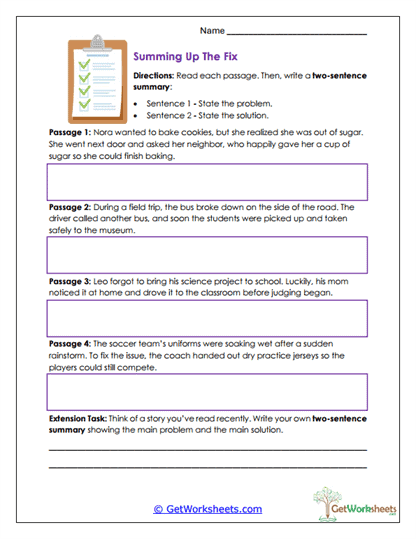
Summing Up the Fix
Students write concise two-sentence summaries capturing both problem and solution from short passages. They practice condensing complex information while maintaining clarity. The reflection prompt extends learning by asking them to summarize a story of their choice. This worksheet develops summarization, synthesis, and structural comprehension.
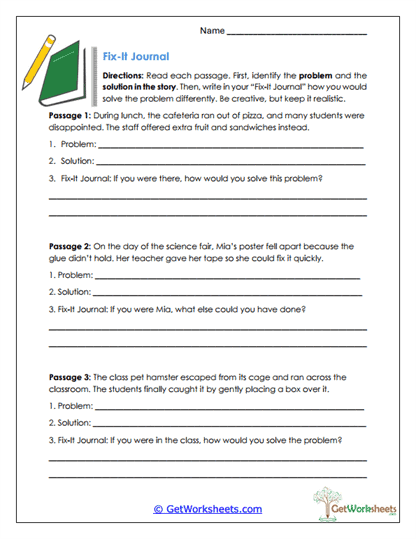
Fix-It Journal
Learners analyze short passages to identify the problem and solution, then write creative journal entries proposing alternative fixes. The real-world scenarios encourage empathy and practical reasoning. This engaging activity combines analytical reading with expressive writing. It strengthens comprehension, creativity, and applied problem-solving skills.
Bookmark Us Now!
New, high-quality worksheets are added every week! Do not miss out!