Presidents Day Worksheets
-
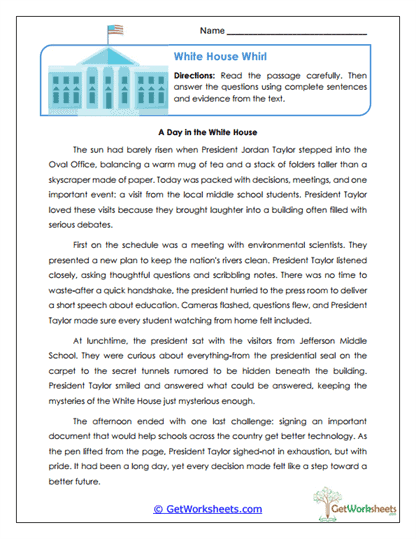
A Day in the White House
-
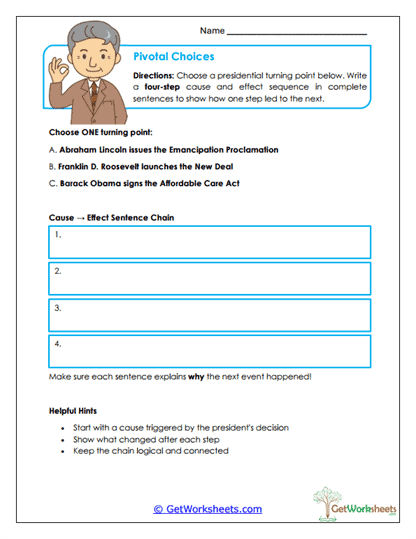
Cause and Effect in History
-
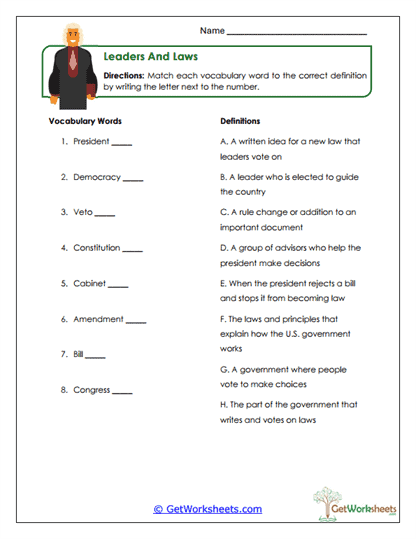
Government Vocabulary Match
-
-
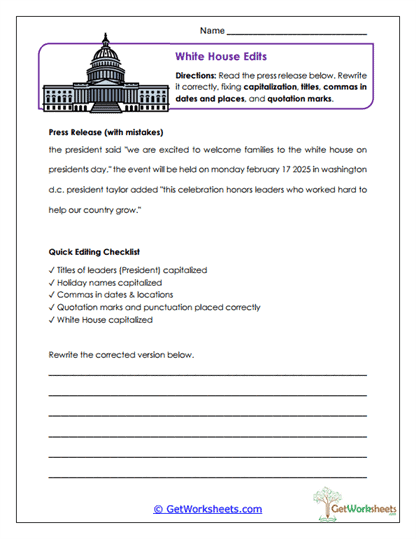
Grammar Editing Practice
-
Inaugural Speech Analysis
-
Letter to the President

-
Presidential Character Traits
-
Presidential Decision Debate
-
Presidential Decision-Making
-
Presidential Facts or Myths
-
Presidential Firsts Quiz
-
Presidential Vocabulary Cloze
About This Worksheet Collection
The Presidents Day collection helps students explore U.S. history, civics, and leadership through engaging literacy and critical thinking activities. Each worksheet connects reading comprehension, writing, and vocabulary development to key themes of democracy, decision-making, and character. Learners study presidential roles, analyze historical actions, and reflect on leadership qualities that have shaped the nation. The collection blends academic learning with civic education, inspiring students to appreciate responsible leadership, informed citizenship, and the power of ethical decision-making in American history.
Detailed Descriptions Of These Worksheets
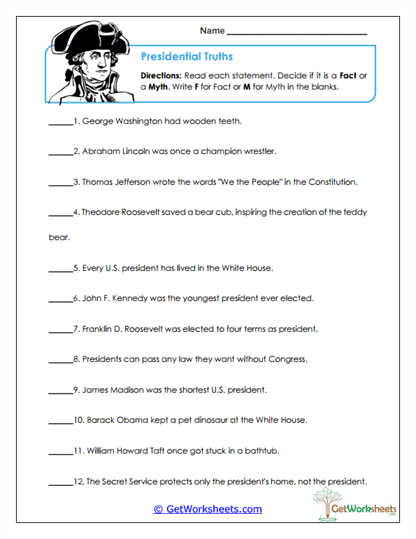
Presidential Facts or Myths
Students evaluate twelve statements about U.S. presidents to determine whether they are factual or myths. Examples include common stories about George Washington and William Taft that test knowledge of presidential history and popular culture. The activity encourages careful reading, fact-checking, and reasoning while promoting curiosity about the lives and legacies of America's leaders. It builds comprehension and historical accuracy through a fun, engaging format.
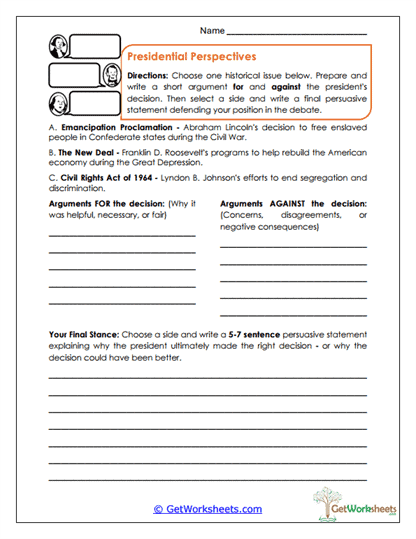
Presidential Decision Debate
Learners choose one major presidential decision-the Emancipation Proclamation, the New Deal, or the Civil Rights Act of 1964-and write arguments for and against it before stating their own viewpoint. This persuasive writing activity develops reasoning, evidence use, and awareness of historical impact. Students learn how leaders face complex choices and how their decisions influence future generations. The task supports civic literacy and balanced argumentation.
Government Vocabulary Match
In this vocabulary-building worksheet, students match key government terms-such as democracy, veto, constitution, and president-with their correct definitions. The exercise reinforces civics language and comprehension while clarifying how government systems operate. Learners strengthen vocabulary through context and gain insight into the structure and responsibilities of U.S. leadership.
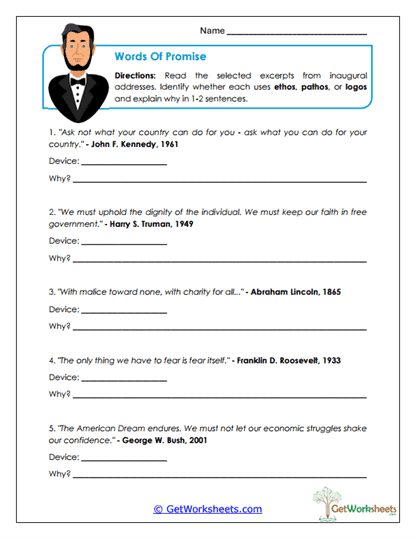
Inaugural Speech Analysis
Students read excerpts from famous inaugural addresses and identify rhetorical appeals-ethos, pathos, or logos-used to persuade or inspire audiences. They explain their reasoning for each example, analyzing how presidents communicate unity and vision. This worksheet sharpens analytical reading and interpretation of historical texts while teaching the power of language in leadership and persuasion.
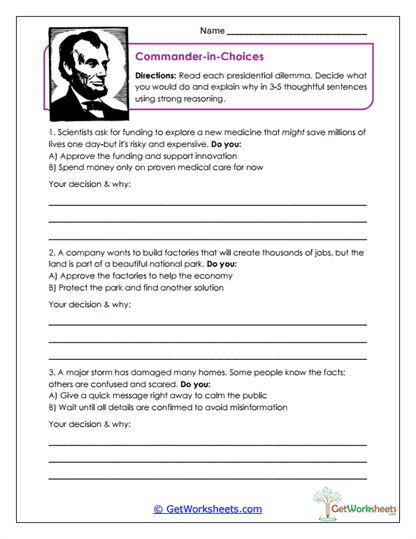
Presidential Decision-Making
Through realistic leadership scenarios, students step into the president's role and choose between challenging policy options. They justify each decision in short written responses, practicing reasoning, prioritization, and ethical reflection. The activity fosters civic understanding, empathy, and critical thinking by showing that leadership requires thoughtful judgment and responsibility.
Letter to the President
In this letter-writing activity, students compose a respectful message to any U.S. president-past or present. They may express gratitude, ask questions, or share opinions about an issue that matters to them. The worksheet reinforces formal letter structure, tone, and conventions while encouraging active citizenship and clear communication. It builds confidence in using writing as a form of civic engagement.
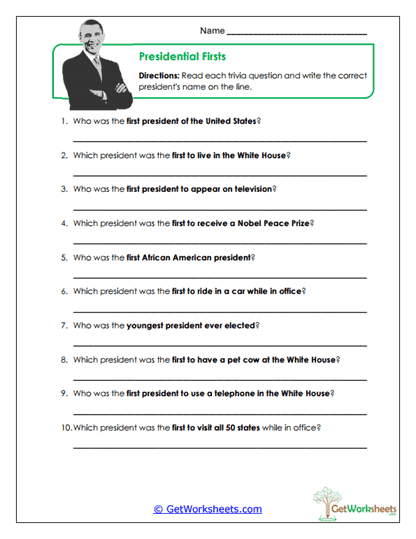
Presidential Firsts Quiz
Students answer trivia questions about presidential "firsts," such as the first to appear on television or the first to travel abroad. The activity makes learning about history interactive and memorable while reinforcing recall and reading for detail. Learners discover milestones that reveal how each president contributed uniquely to the nation's story.
Cause and Effect in History
This sequencing and reasoning activity helps students understand how presidential actions create lasting change. Learners select a historical event-such as the Emancipation Proclamation or the New Deal-and build a four-step cause-and-effect chain showing its outcomes. The task strengthens comprehension of historical connections, logical reasoning, and clear explanatory writing.
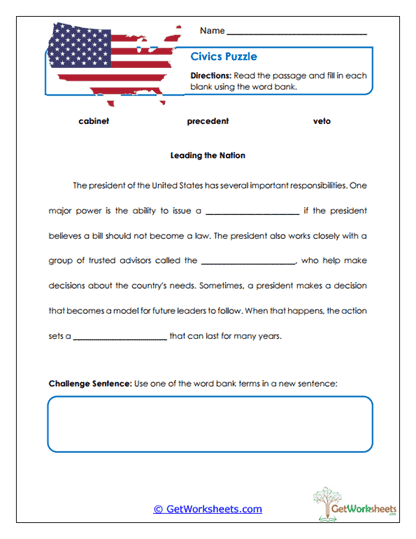
Presidential Vocabulary Cloze
In this fill-in-the-blank reading passage, students use a word bank of government terms like cabinet and precedent to complete an informational text about presidential powers. The activity enhances vocabulary, context clue application, and comprehension. It provides a concise overview of the executive branch's functions while reinforcing academic language.
Grammar Editing Practice - Presidents Day
Students edit a short press release filled with grammatical and punctuation errors related to a Presidents Day announcement. They correct issues involving capitalization, quotation marks, and comma placement using an editing checklist. This hands-on task strengthens proofreading and attention to detail while connecting grammar practice to real-world writing contexts.
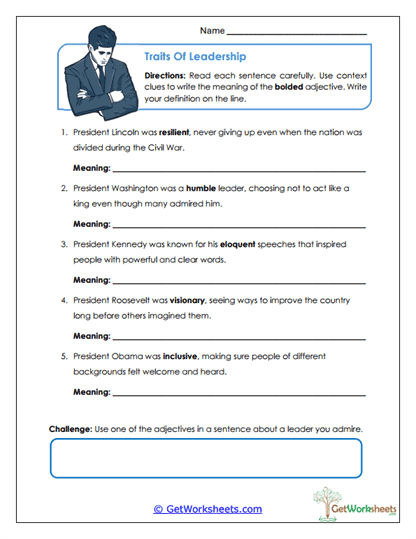
Presidential Character Traits
This worksheet highlights adjectives describing leadership qualities-such as resilient, visionary, and humble. Students use context clues to define each word, then write an original sentence applying one to a leader they admire. The activity builds vocabulary, comprehension, and social-emotional awareness by exploring how personal character shapes effective leadership.
A Day in the White House
In this reading comprehension activity, White House Whirl, students follow a fictional president through a busy day of speeches, meetings, and decisions. They answer questions requiring recall, inference, and evidence-based reasoning. The passage provides an engaging look at the daily responsibilities of a president while developing literacy and civic understanding. It helps learners connect abstract government concepts to relatable, real-world experiences.
Bookmark Us Now!
New, high-quality worksheets are added every week! Do not miss out!