Pre-Writing Strokes Practice Worksheets
About This Worksheet Collection
This collection of pre-writing stroke practice worksheets is designed to strengthen the essential motor movements children need before beginning formal handwriting. Each activity introduces a specific stroke type-vertical lines, horizontal bars, circles, curves, and mixed-motion paths-within playful themes that keep young learners motivated. Whether students are "growing" carrots with vertical lines, tracing bubbles, or completing ladders for animals, every page offers purposeful fine motor practice wrapped in engaging visuals.
By working through these worksheets, students develop stroke fluency, pencil grip stability, hand-eye coordination, and spatial awareness. These skills support the formation of letters, numbers, and early drawing shapes. The combination of fine motor control, visual-motor integration, and directional understanding prepares learners for confident handwriting and stronger overall pre-literacy development.
Detailed Descriptions Of These Worksheets
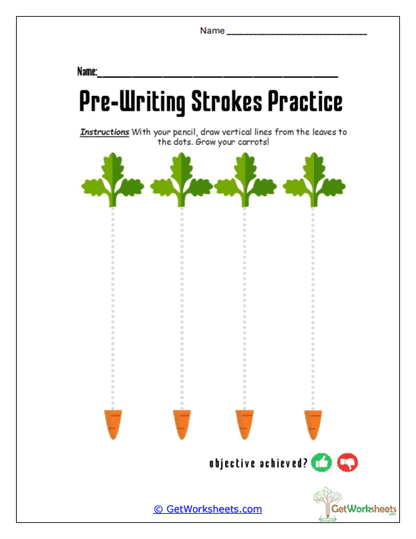
Carrot Line Drawing
Students draw straight downward lines from the carrot tops to the dots below, reinforcing early vertical stroke formation. This motion mirrors the strokes used in letters such as l and i, helping children build foundational handwriting habits. The gardening theme adds visual interest as learners "grow" each carrot with their pencil. The activity also strengthens grip control and encourages consistent, steady movements.
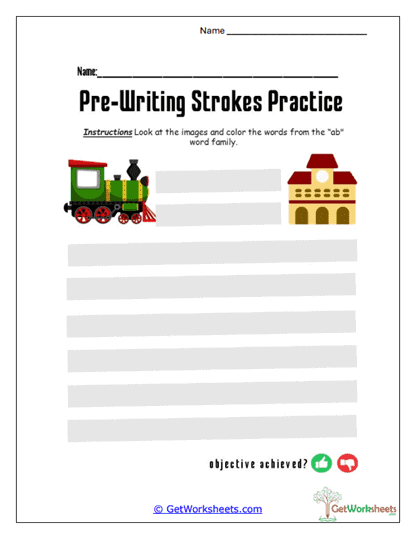
Train Line Coloring
Children identify and color only the words that belong to the "ab" word family, blending early literacy practice with pre-writing readiness. Staying inside the horizontal bars requires careful control and helps support pencil steadiness. The train-themed imagery keeps students engaged while they practice discriminating word patterns. This worksheet ties fine motor development directly to phonics learning.
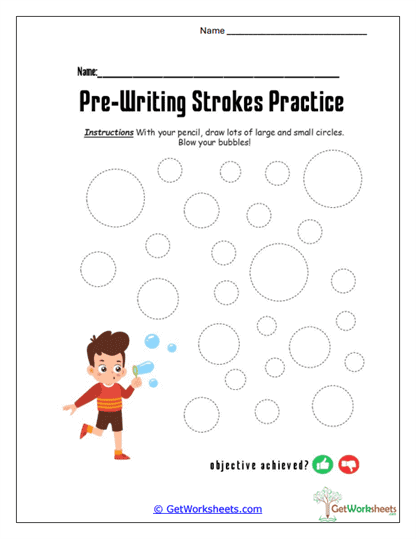
Bubble Circle Drawing
Students trace circles of different sizes to create floating bubbles across the page. The varied sizes encourage learners to adapt their wrist motion and finger pressure as they draw. Circular tracing prepares children for rounded letter formations such as a, o, and g. The bubble-blowing theme makes the repetition playful and imaginative.
Ant Path Tracing
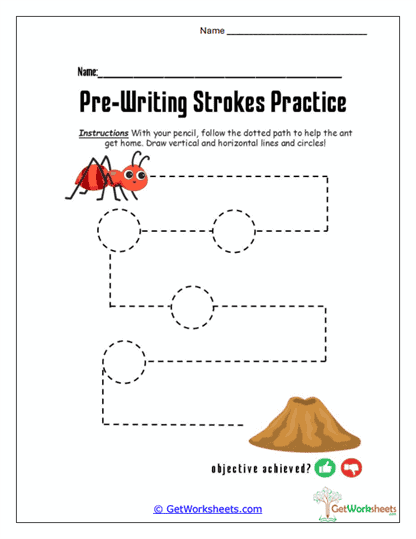
Students follow a dotted trail made of straight, curved, and circular strokes to help an ant reach its home. This worksheet guides learners through important pre-writing motions in a single sequence. Moving through different stroke types improves directional awareness and controlled transitions. The ant adventure theme motivates children to complete each stage carefully.
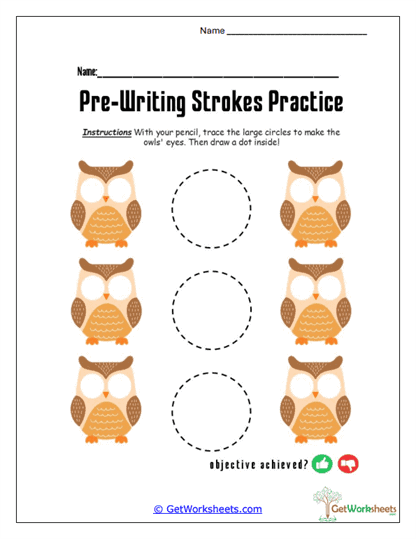
Owl Eye Circles
Children trace large circles to form owl eyes, then finish each with a centered dot. This combination of large and tiny motions helps refine both broad curved strokes and small precision movements. The repeated tracing supports curved stroke mastery essential for many handwriting skills. The owl illustrations give purpose to the shapes students create.
Rolling Ball Circles
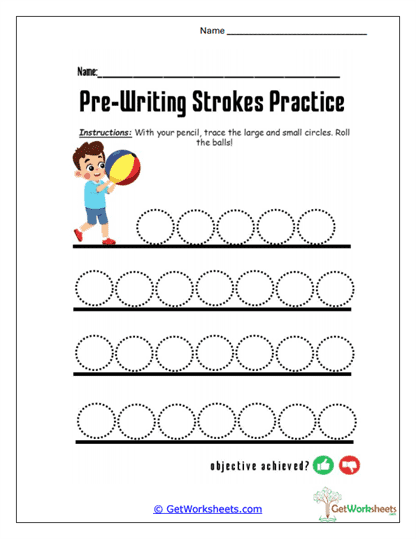
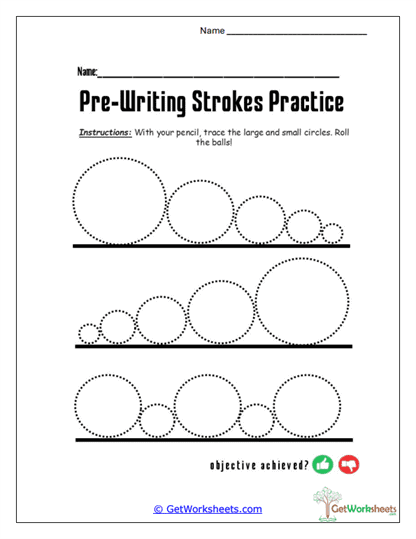
Students trace large and small circles arranged like rolling balls across the page. Switching between the circle sizes strengthens hand flexibility and rotation control. The wide arcs help develop movement patterns for rounded handwriting strokes. This upbeat design turns tracing practice into a lively, motivating task.
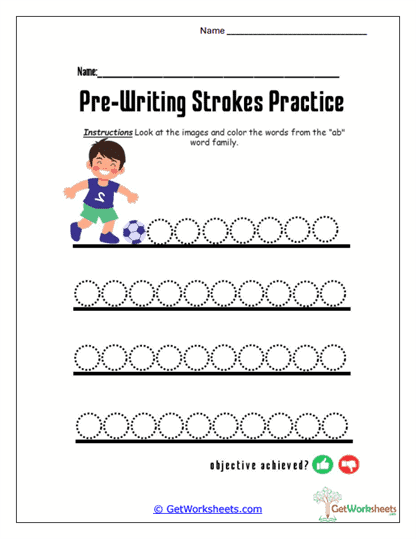
Ball Lines
Students trace multiple rows of circles, building muscle memory for smooth, rounded motion. The repeated outlines help learners become more consistent in grip pressure and stroke formation. A playful child-with-ball illustration adds context and excitement. This worksheet provides ample practice for developing endurance in circular tracing.
Word Family Circles
Learners trace rows of circles while identifying which accompanying images relate to the "ab" word family. The combined literacy and motor practice supports early reading alongside handwriting readiness. The circular tracing strengthens curved strokes needed for confident letter formation. This integrated approach helps reinforce phonics skills and fine motor control simultaneously.
Birdcage Line Drawing
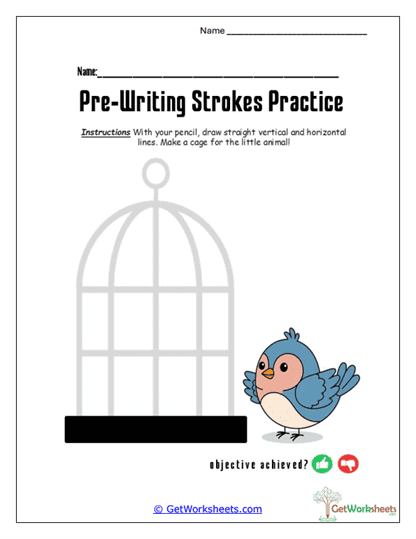
Students complete a birdcage by adding vertical and horizontal lines to the partial shape. This teaches how straight strokes work together to create structured forms. Drawing these lines reinforces control over direction and spacing, qualities essential for letters with straight components. The bird inside the cage offers a meaningful visual anchor.
Sunflower Seed Circles
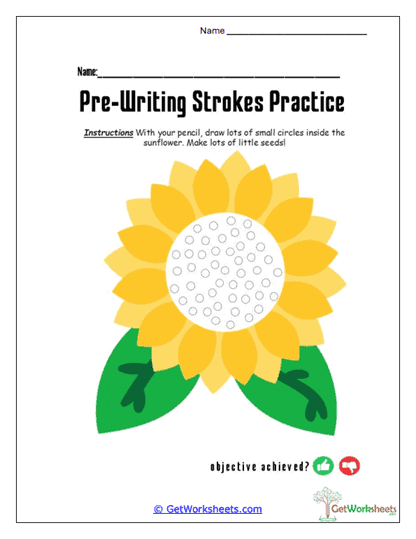
Students fill each sunflower center with many small, hand-drawn circles to represent seeds. This fine-detail task encourages controlled micro-movements and precise spacing. Repetitive tiny circles build accuracy for punctuation and small handwriting elements. The natural sunflower theme makes the detailed work enjoyable.
Single Sunflower Seed
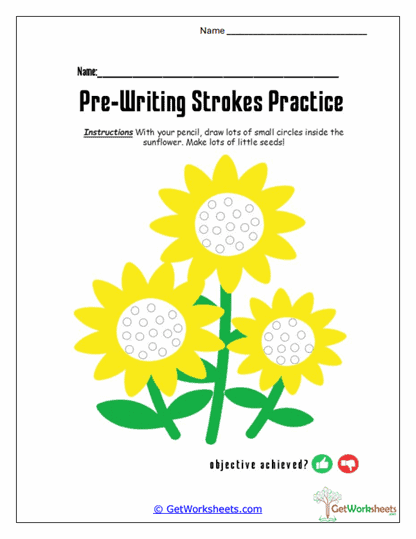
Just like the first version, students fill the sunflower center with repeated small circles, refining precise finger control. The limited space encourages careful placement and steady pressure. This reinforces micro-motor skills used in tight handwriting and detailed drawing. The bright design keeps students engaged as they complete each flower.
Sunshine Line Rays
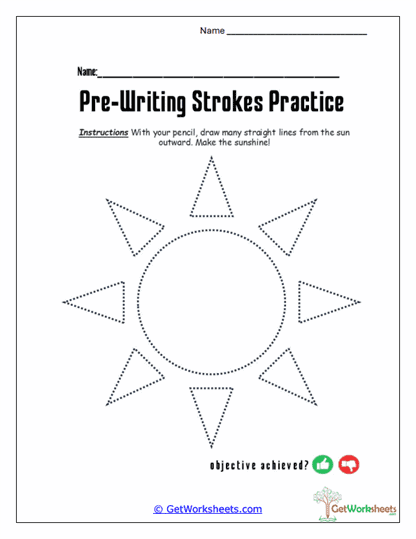
Students draw straight lines radiating outward from the central sun, strengthening directional control and start-stop accuracy. Repeating the rays helps reinforce strokes used in letters with vertical or diagonal lines. Children enjoy creating the rays as they "make sunshine" across the page. This worksheet supports spatial alignment and consistent line placement.
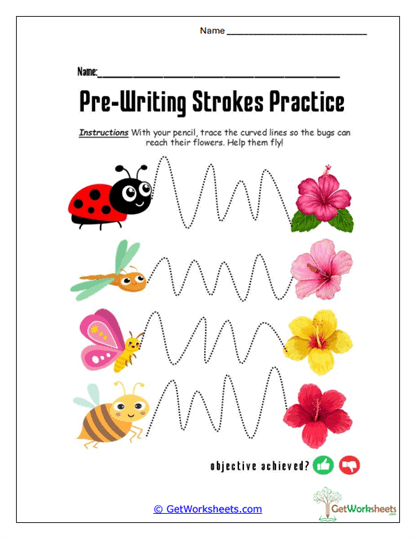
Bug Curves
Students trace curved lines that help insects reach nearby flowers, reinforcing fluid wrist motion and steady curved strokes. The multiple bends require learners to adjust direction smoothly as they trace. The insect-flower pairing provides a playful goal that sustains attention. This practice is especially helpful for letters with loops or sweeping curves.
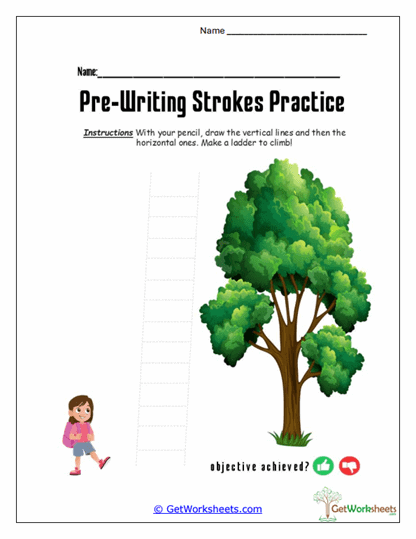
Tree Ladder Lines
Students form a ladder beside a tree by drawing vertical lines first, then adding horizontal bars. This sequencing mirrors how many letters are built from combined strokes. Evenly spacing the rungs strengthens spatial planning and fine motor precision. The nature background adds a sense of purpose as students complete the ladder.
Bear Ladders
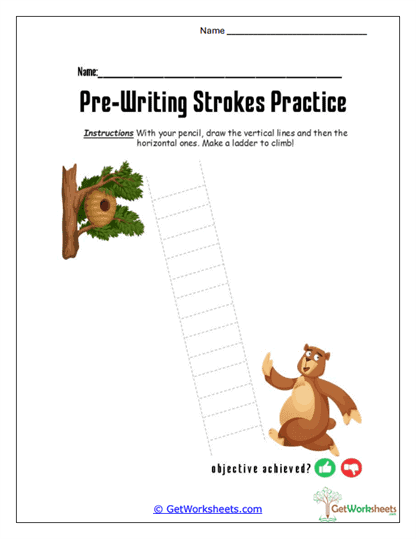
Learners draw a slanted ladder by creating vertical lines and then adding horizontal connectors for a bear to climb. The angled orientation challenges students to manage direction and orientation carefully. This supports handwriting that includes slanted or angled strokes. The bear story element adds charm and encourages students to complete the design.
Bookmark Us Now!
New, high-quality worksheets are added every week! Do not miss out!