Pearl Harbor Remembrance Day Worksheets
About This Worksheet Collection
This Pearl Harbor Remembrance Day worksheet collection helps students understand one of the most defining moments in U.S. history while building strong literacy, critical-thinking, and civic-awareness skills. Through sequencing activities, historical writing tasks, media-literacy exercises, biography analysis, persuasive writing, and rhetorical interpretation, learners examine both the events of December 7, 1941, and their lasting impact on the United States. The worksheets support respectful remembrance while making complex historical themes accessible to students.
Across the collection, students practice close reading, historical reasoning, vocabulary development, comparative thinking, and evidence-based writing. They analyze how news traveled in different eras, explore the causes and consequences of Pearl Harbor, evaluate bias in headlines, and reflect on themes of courage, unity, and national resolve. The varied formats help teachers integrate U.S. history, English language arts, civics, and media literacy into meaningful lessons centered on remembrance and reflection.
Detailed Descriptions Of These Worksheets
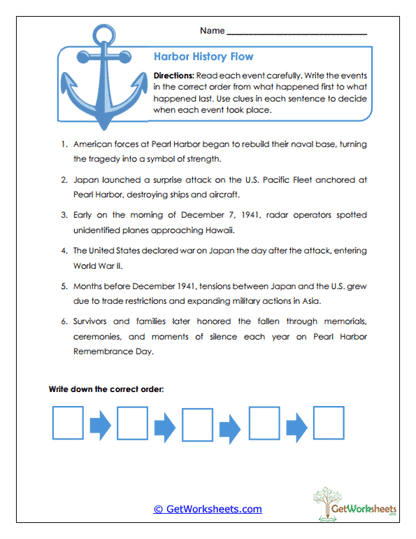
Harbor History Flow
Learners read six major events connected to the attack on Pearl Harbor and place them in chronological order. The activity strengthens historical sequencing, reading comprehension, and understanding of World War II causes. Students analyze dates and cause-and-effect clues to correctly order events. This reinforces temporal reasoning and foundational historical knowledge.
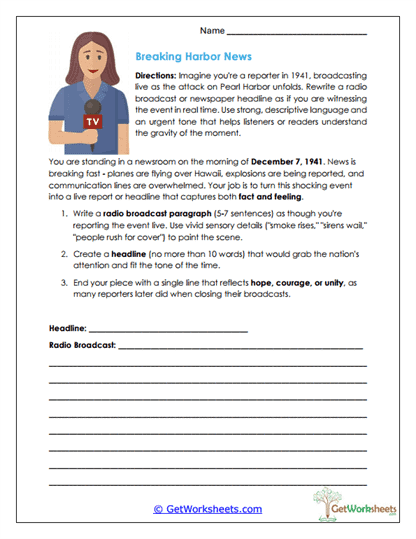
Breaking Harbor News
Students imagine themselves as 1941 radio reporters and write a descriptive broadcast or headline conveying the urgency of the attack. They use vivid details, emotional tone, and journalistic structure to capture both fact and feeling. This worksheet strengthens narrative writing and perspective-taking. It helps students understand how breaking news was communicated during wartime.
How News Echoes
This comparison task asks students to explain how news of Pearl Harbor spread in 1941 versus how similar news would spread today. Students consider communication speed, media sources, emotional impact, and accuracy. The activity strengthens analytical writing and historical comparison skills. It encourages reflection on the role of technology in shaping public awareness.
Pearl Harbor Chains
Learners read a short summary and create three cause-and-effect chains, explaining key events before and after the attack. This reinforces understanding of historical relationships and why Pearl Harbor marked a major turning point. Students practice writing clear explanatory sentences. It strengthens comprehension of World War II causes and consequences.
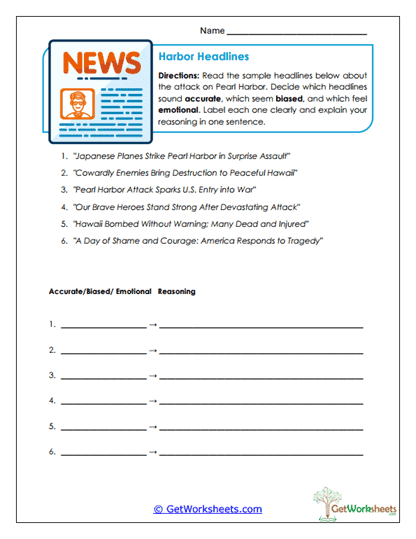
Harbor Headlines
Students read six sample headlines and label each as accurate, biased, or emotional, then justify their choice. This worksheet teaches media literacy and bias detection. Learners strengthen critical thinking by evaluating how wording affects interpretation. It connects historical reporting with modern news-analysis skills.
Harbor Truth Check
Students evaluate ten statements about Pearl Harbor, deciding whether each is fact, fiction, or exaggeration. This worksheet helps learners correct common myths and distinguish historical truth from dramatization. It strengthens credibility assessment and historical accuracy. The activity builds critical thinking and media-literacy awareness.
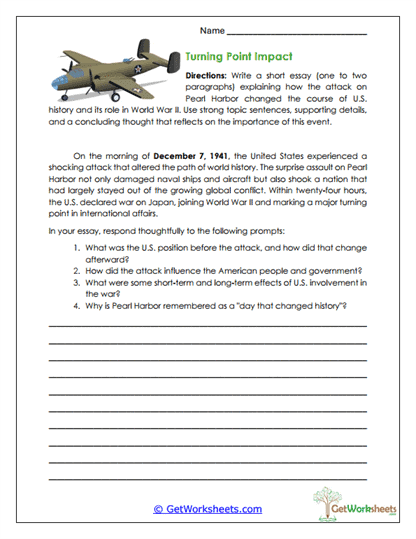
Turning Point Impact
Learners write a short informative essay explaining how Pearl Harbor changed U.S. history. They address U.S. foreign policy, public reaction, and long-term outcomes. This activity strengthens essay structure, historical reasoning, and evidence-based explanation. It deepens understanding of why Pearl Harbor remains a pivotal event.
Harbor's Unsung Heroes
Students read two biographical excerpts-about Doris Miller and Admiral Husband E. Kimmel-and answer close-reading questions. This activity encourages analysis of leadership, courage, and responsibility during crisis. It strengthens comprehension of diverse perspectives within historical events. Students also practice responding to text-dependent questions.
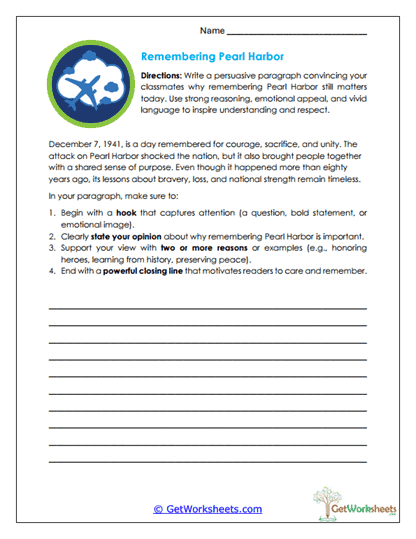
Remembering Pearl Harbor
Learners write a persuasive paragraph explaining why Pearl Harbor should still be remembered today. They craft a hook, state an opinion, provide reasons, and end with a meaningful closing idea. This supports persuasive writing and civic understanding. It reinforces the importance of remembrance.
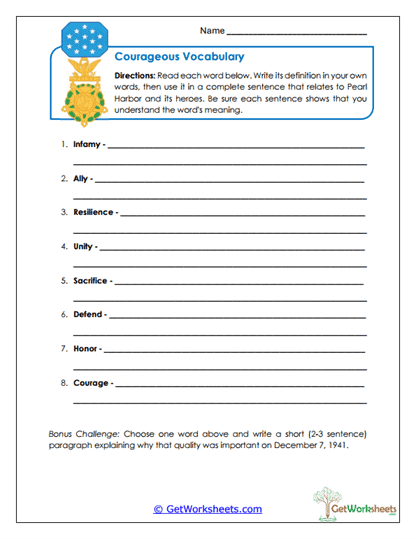
Courageous Vocabulary
Students define eight vocabulary words-such as sacrifice, unity, courage, and honor-and use each in a complete, historically relevant sentence. A bonus prompt deepens reflection on why one word was especially important on December 7, 1941. This worksheet strengthens vocabulary acquisition and contextual usage. It integrates language skills with historical themes.
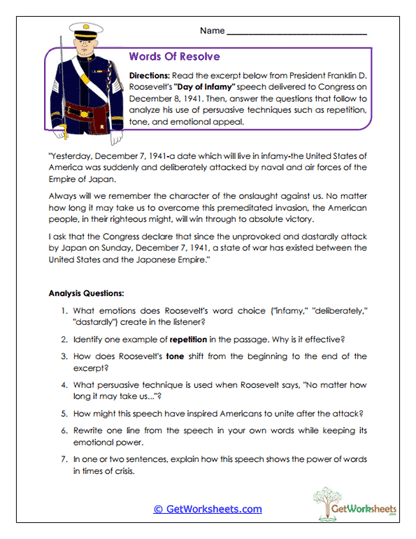
Words of Resolve
Learners read an excerpt from President Roosevelt's "Day of Infamy" speech and analyze how rhetorical devices-repetition, tone, word choice-build national resolve. Students answer questions requiring textual evidence and interpretation. This activity strengthens close reading and rhetorical analysis. It deepens understanding of persuasive wartime communication.
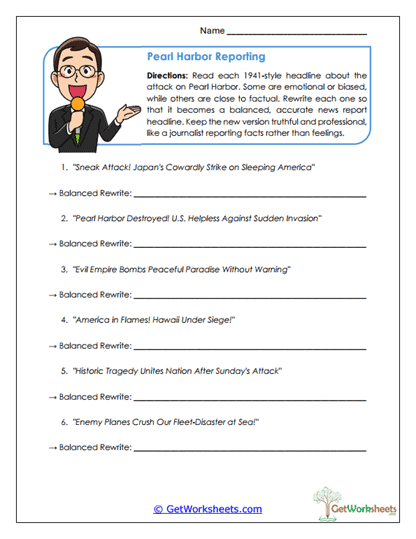
Pearl Harbor Reporting
Students examine six historical-style headlines and determine whether each is factual, emotional, or biased. They then rewrite each headline to make it balanced and objective. This strengthens media-literacy skills and helps students recognize how language shapes public perception. It reinforces the importance of responsible, accurate reporting.
Bookmark Us Now!
New, high-quality worksheets are added every week! Do not miss out!