Nonverbal Communication Worksheets
About This Worksheet Collection
This Nonverbal Communication collection helps students develop essential skills for interpreting emotions, reading body language, and understanding the silent signals people use every day. Through scenario analysis, vocabulary work, text annotation, dialogue revision, and comprehension tasks, learners explore how facial expressions, posture, gestures, and tone shape communication. These worksheets offer relatable examples that teach students to look beyond words and consider the full message someone may be sending.
As students move through the collection, they strengthen their emotional literacy, critical thinking, and inferencing abilities. They learn how to interpret feelings accurately, understand mixed signals, and recognize when nonverbal cues differ across cultures. The activities also reinforce academic skills such as reading comprehension, writing, descriptive language use, and vocabulary development. Together, these worksheets support clearer communication, healthier relationships, and stronger social awareness.
Detailed Descriptions Of These Worksheets
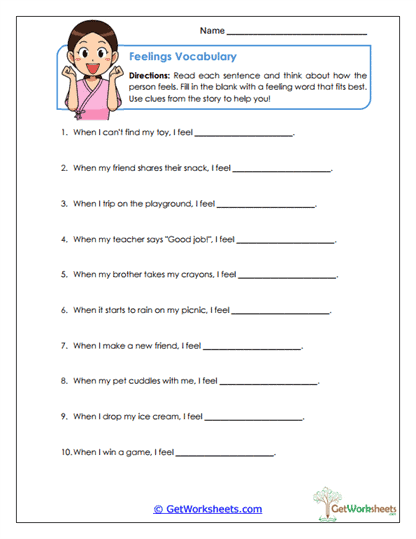
Feelings Vocabulary
Students read everyday situations and choose emotion words that best match each scenario. The activity encourages learners to use context clues and connect real experiences to emotional responses. It expands emotional vocabulary and strengthens comprehension. Students build foundational emotional awareness by identifying how events influence feelings.
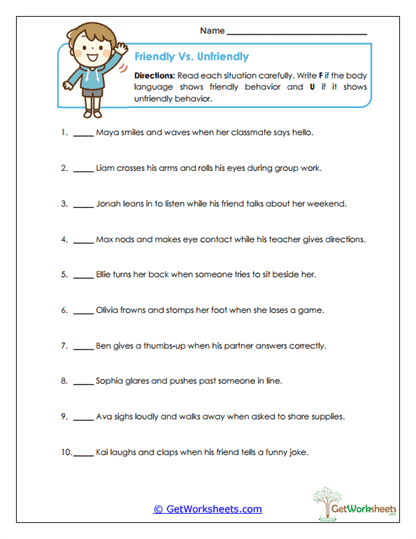
Friendly vs. Unfriendly
Learners examine short scenarios and label behaviors as friendly or unfriendly based on body language and reactions. They analyze gestures such as waving, turning away, or making eye contact. The worksheet strengthens observation skills and understanding of nonverbal intentions. It promotes healthy peer interactions through improved social awareness.
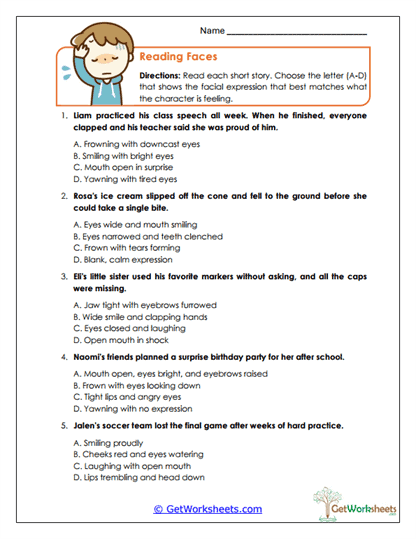
Reading Faces
Students read passages and choose which facial expression matches a character's feelings. They interpret clues from the text and relate them to visual emotion cues like smiling or frowning. The activity deepens inferencing skills and empathy. It helps students connect emotional experiences to outward expressions.
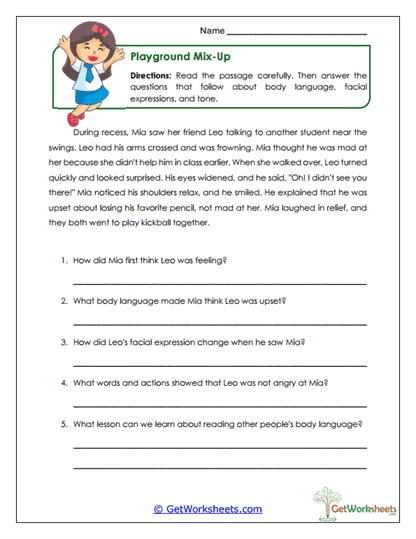
Playground Mix-Up
Learners read a story involving a misunderstanding caused by misread body language. They answer questions about expressions, posture, and tone to understand how the confusion happened. This worksheet teaches students to interpret nonverbal cues accurately. It encourages clarification and stronger communication strategies.
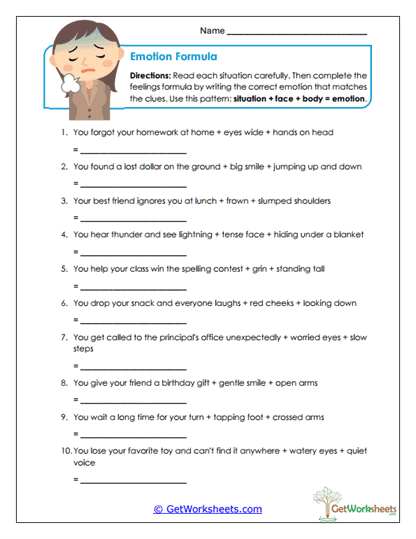
Emotion Formula
Students analyze situations supported by facial and body language clues to determine the correct emotion. The "situation + face + body = emotion" format helps learners synthesize multiple pieces of evidence. It reinforces holistic emotional interpretation. Students build vocabulary and deepen emotional reasoning.
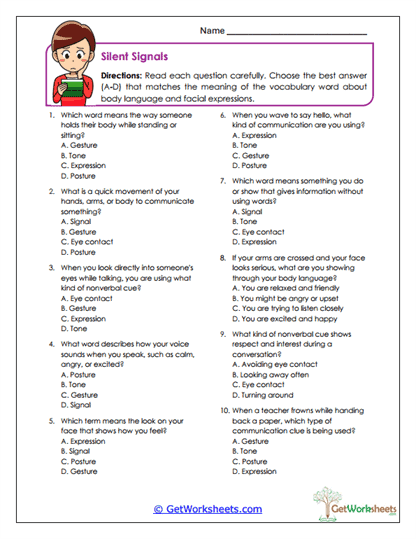
Silent Signals
Learners match vocabulary terms to descriptions of gestures, posture, tone, and other nonverbal elements. They explore how communication extends beyond spoken words. The activity supports precise language use and stronger comprehension. Students gain awareness of the many ways people communicate without speaking.
Nonverbal Cue Finders
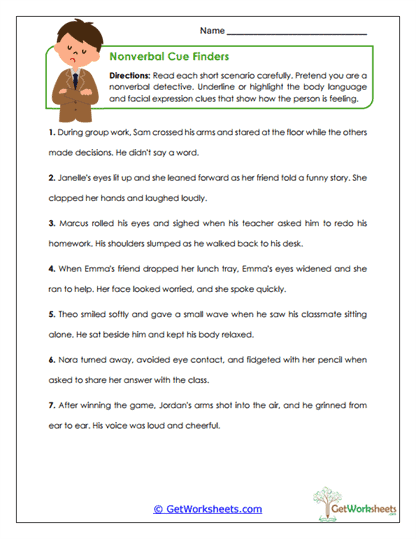
Students identify and underline body language and facial expression clues in short scenarios. They look for signs of emotions such as embarrassment, excitement, or frustration. This worksheet builds detailed observation and annotation skills. It helps learners interpret feelings through physical behaviors.
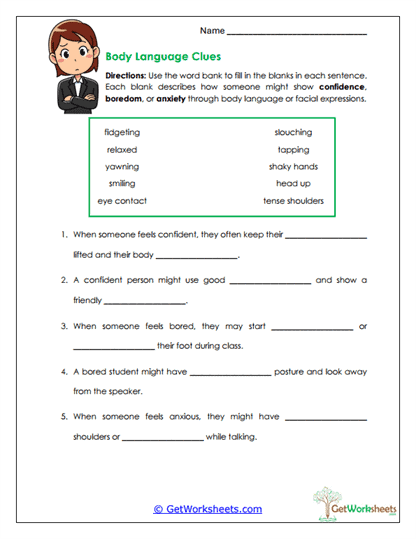
Body Language Clues
Learners fill in blanks using vocabulary words that describe confidence, boredom, anxiety, and more. They connect behaviors like fidgeting or relaxed posture to emotional states. The activity reinforces descriptive language and context-based reasoning. It emphasizes the role of body language in emotional understanding.
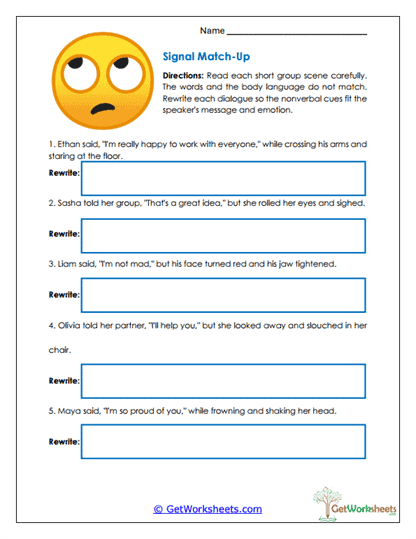
Signal Match-Up
Students read dialogues where verbal and nonverbal messages don't align and rewrite them so they match. They evaluate emotional cues and adjust wording accordingly. This strengthens expressive writing and understanding of communication clarity. Students learn how aligned cues make messages more authentic.
Hidden Meanings
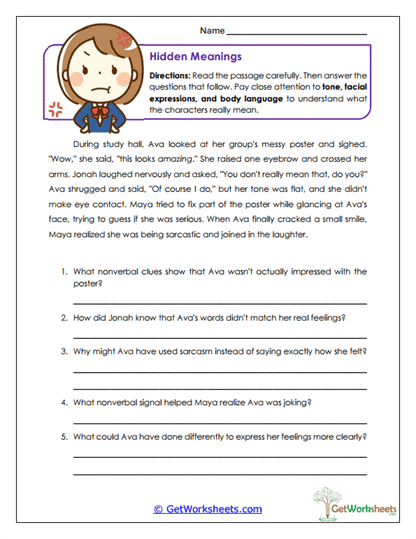
Learners analyze a passage containing sarcasm and mixed nonverbal signals. They answer comprehension questions about facial expressions, gestures, and tone to uncover characters' true intentions. This worksheet bolsters inferencing, critical reading, and emotional insight. It teaches students to read between the lines.
Gesture Meanings
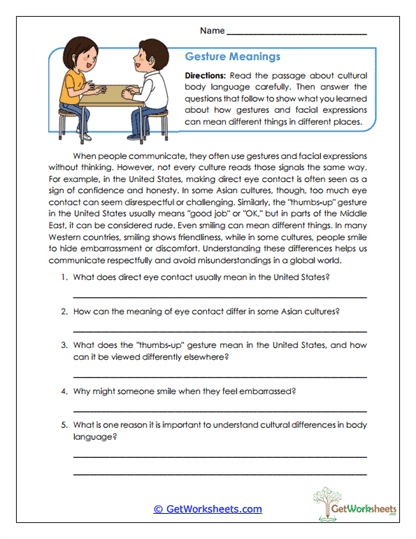
Students read about cultural differences in gestures and answer comprehension questions. They explore how eye contact, smiling, and various hand signals convey different meanings around the world. The activity builds global awareness and cross-cultural communication skills. It encourages respect for diverse nonverbal norms.
Mixed Messages
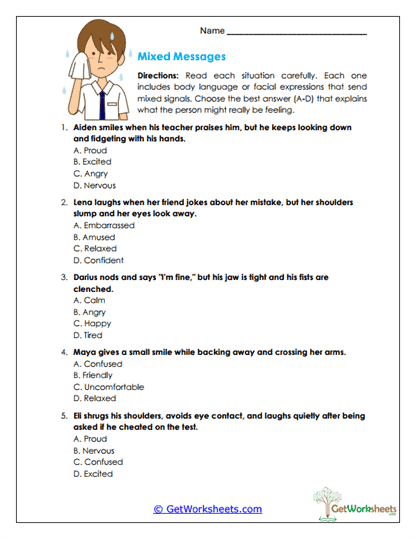
Learners examine scenarios where body language and words send conflicting signals. They choose what the character is actually feeling based on clues like clenched fists or avoiding eye contact. This activity boosts emotional inference and comprehension of subtle cues. It helps students navigate complex social interactions accurately.
Bookmark Us Now!
New, high-quality worksheets are added every week! Do not miss out!