Myths About AI Worksheets
About This Worksheet Collection
This collection helps students distinguish between accurate information about artificial intelligence and the many exaggerated myths that circulate in media and popular culture. Through activities that include annotation, sorting, rewriting, ranking, and scenario analysis, learners engage deeply with claims about AI and practice determining what is realistic, what is misleading, and why these distinctions matter. The worksheets present age-appropriate explanations and structured tasks that turn complex AI topics into accessible, thoughtful learning experiences.
As students move through the set, they strengthen key skills such as text analysis, evidence-based reasoning, cause-and-effect evaluation, and myth correction. They learn to identify misconceptions, articulate factual explanations, and consider the social consequences of believing inaccurate ideas. This collection builds digital literacy, improves informational reading skills, and supports responsible, critical engagement with emerging technologies.
Detailed Descriptions Of These Worksheets
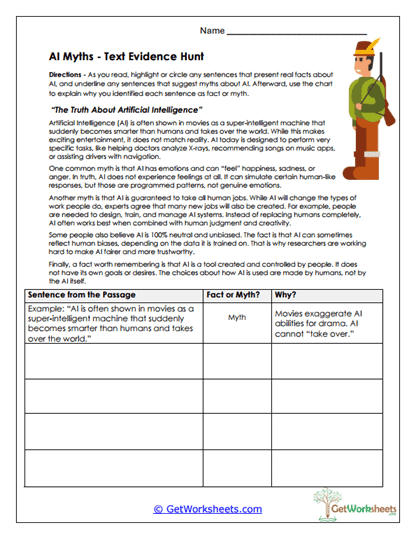
Text Evidence Hunt
Students read an informational passage about AI and highlight or circle sentences that express facts or myths. They sort these statements into a chart and explain their classifications using direct text evidence. The worksheet builds comprehension and strengthens students' ability to analyze and justify their thinking. It also teaches learners how to recognize exaggerated or inaccurate claims about AI.
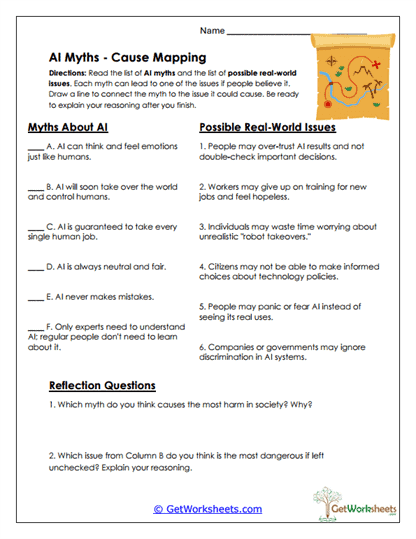
Cause Mapping
Learners match common AI myths with their potential real-world consequences, drawing lines between each belief and its corresponding societal impact. They answer reflection questions exploring how misinformation can influence emotions, decisions, and public understanding. The task encourages thoughtful cause-and-effect reasoning and emphasizes the importance of accurate knowledge about technology.
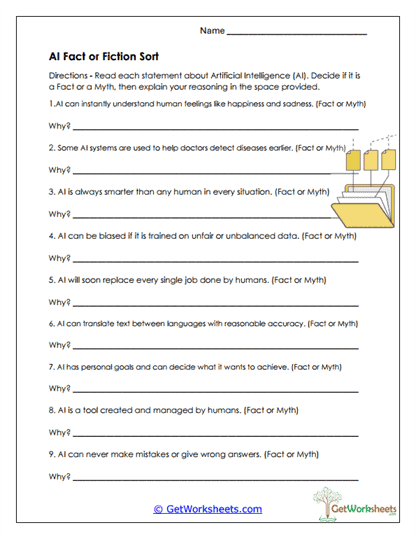
Fact or Fiction Sort
Students evaluate a set of statements to determine whether each one is a fact or a myth about AI. They write explanations defending their choices, promoting deeper engagement with technological concepts. This worksheet helps learners separate realistic capabilities from misunderstandings and strengthens critical-thinking and scientific literacy skills.
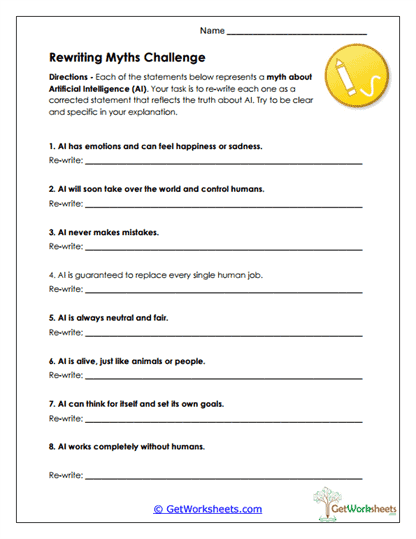
Myth Rewriting
In this activity, students transform common AI myths into accurate, fact-based statements. They practice expressing technical ideas clearly and correcting misconceptions in their own words. The worksheet reinforces responsible information sharing and improves clarity in writing.
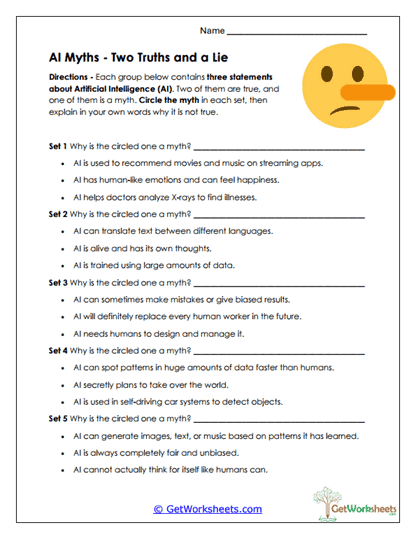
Two Truths and a Lie
Students examine groups of three statements about AI-two true and one false-and determine which is the myth. They explain their reasoning, developing stronger analytical reading skills. The activity highlights subtle misconceptions and encourages evidence-based explanations.
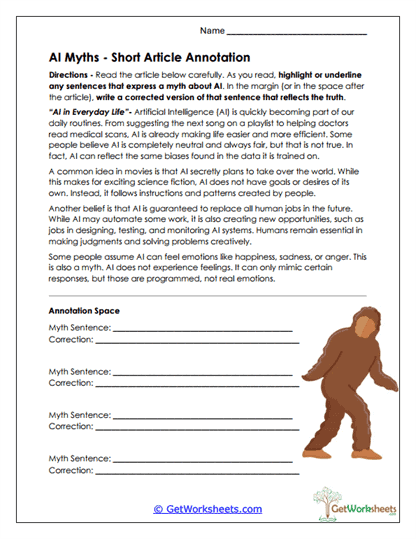
Article Annotation
Learners annotate a short article, highlighting sentences that express AI myths and rewriting them as factual statements in the margins. They compile the myths and corrections in a designated space. This worksheet builds close-reading skills and encourages precise identification of inaccurate claims about AI.
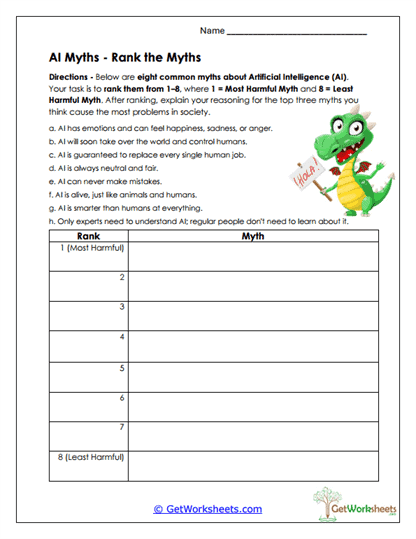
Rank the Myths
Students order several AI myths from most harmful to least harmful and justify their top rankings. They consider how misinformation affects emotions, trust, jobs, and decision-making. The activity promotes thoughtful comparison and supports students in evaluating broader societal impacts.
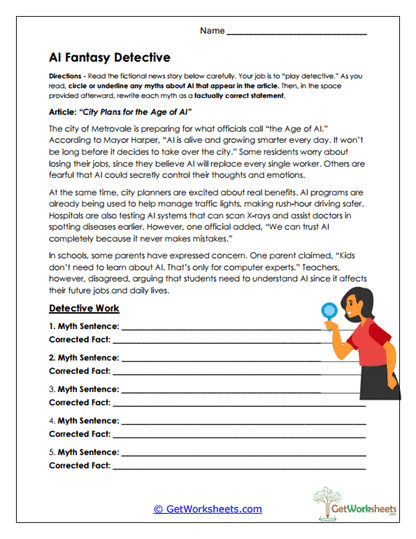
Fantasy Detective
This worksheet features a fictional narrative containing AI myths that students must identify. They rewrite each myth as an accurate statement, encouraging careful reading and evidence-based correction. The task develops analytical thinking and teaches students to separate fictional exaggeration from real AI capabilities.
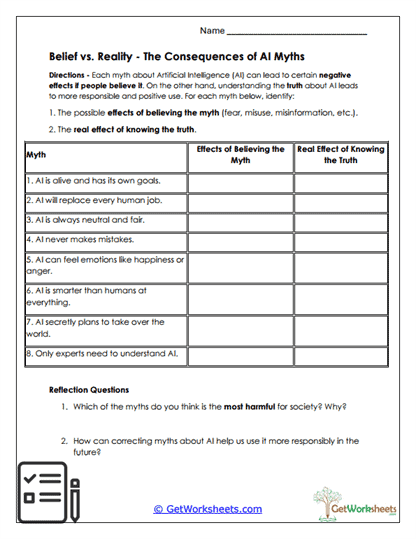
Consequences of Myths
Students complete a chart outlining the harmful outcomes of believing certain AI myths and the benefits of understanding the truth instead. Reflection questions prompt learners to think about responsible technology use. The activity emphasizes media literacy, informed decision-making, and awareness of how misconceptions spread.
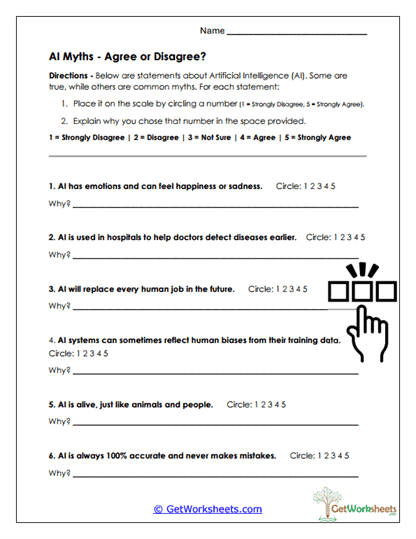
Agree or Disagree
This worksheet presents statements about AI that students evaluate on a scale from 1 to 5. They explain their reasoning in writing, developing opinion-writing skills grounded in evidence. The activity strengthens students' ability to evaluate claims and differentiate between accurate information and misconceptions.
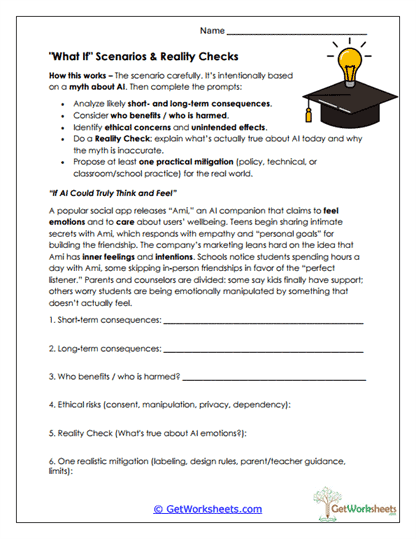
Scenario Reality Check
Learners analyze a fictional scenario that exaggerates an AI myth and identify potential consequences of believing it. They compare the scenario with real AI capabilities and explain why the myth is inaccurate. Students then propose practical mitigation strategies, building ethical reasoning and realistic understanding of AI limitations.
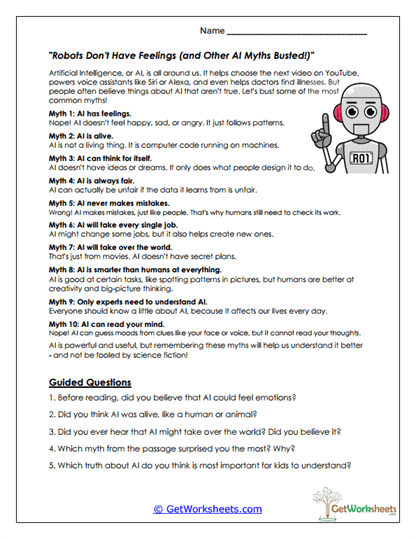
Myths Busted
Students read an informative article that debunks several widespread AI myths and explains the truths behind them. They answer reflection questions exploring which facts were new or surprising and why they matter. The activity strengthens comprehension, encourages metacognition, and supports responsible interpretation of technology claims.
Bookmark Us Now!
New, high-quality worksheets are added every week! Do not miss out!