Multiplying with Area Models Worksheets
-
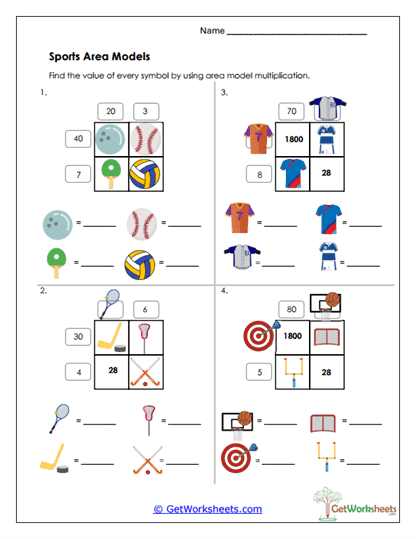
A Sports-Themed Area Model
-
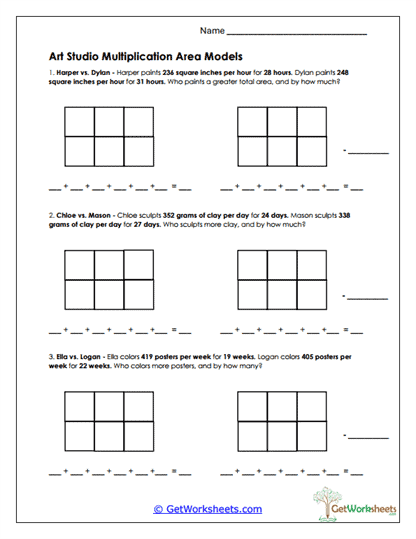
Art-Themed Word Problems
-
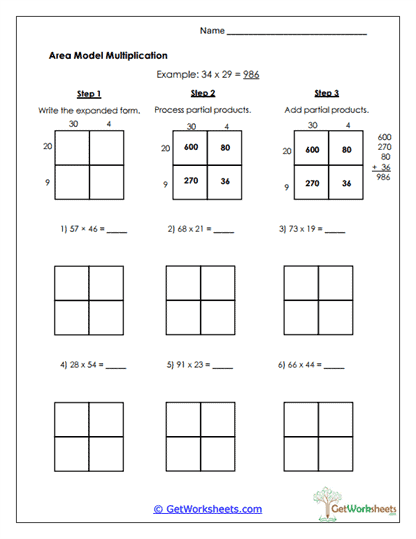
Basic Area Models
-
-
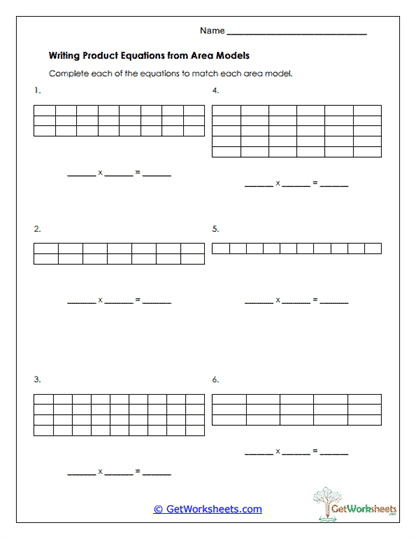
Equations from Area Models
-
Expanded Area Model
-
Guided Model Practice
-
Monster-Themed Area Model
-
Single and Triple Digit Area Models
-
Single and Triple-Digit Area Models
-
Two-Digit Area Model Practice
-
Word Problems with Area Models
-
Writing Equations from Models
About This Worksheet Collection
This Multiplying with Area Models worksheet collection helps students build a deep conceptual understanding of multiplication by visualizing factors, partial products, and the distributive property. Through structured grids, decomposed factors, word problems, themed puzzles, and equation-interpretation tasks, learners strengthen both conceptual reasoning and procedural fluency. These worksheets guide students from foundational representation skills to more advanced multi-digit multiplication using area models, bridging the gap between concrete visualization and the standard algorithm.
Students learn to break numbers into tens, ones, and even hundreds, see how each partial product contributes to the whole, and use these insights to solve multiplication problems accurately. The format encourages strong place-value reasoning, clear organization, and flexible problem-solving. This collection supports warm-ups, skill reinforcement, intervention work, and conceptual instruction for grades where multi-digit multiplication is introduced or expanded.
Detailed Descriptions Of These Worksheets
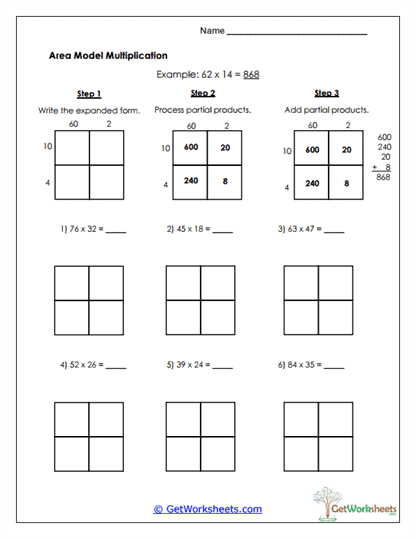
Basic Area Models
Students follow a three-step process-expand, compute, add-to complete each area model. The four-part grid helps learners visualize partial products and apply the distributive property. This worksheet builds foundational understanding for two-digit multiplication.
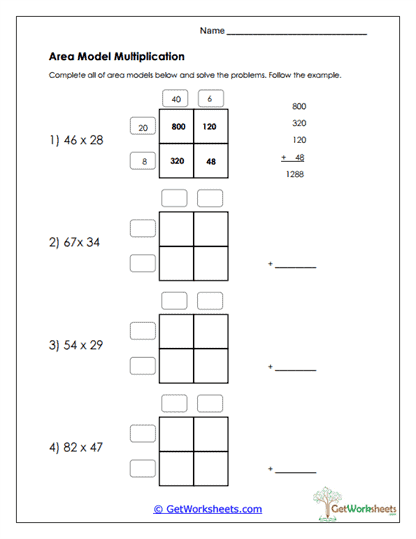
Guided Model Practice
With scaffolded examples, students decompose numbers into tens and ones, fill in partial products, and sum them. The guided structure reinforces place value and helps students understand how area models support accurate multi-digit multiplication.
Word Problems with Area Models
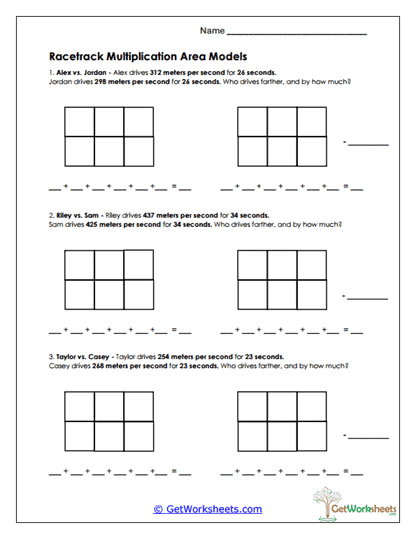
Learners read real-world scenarios, represent each multiplication with an area model, compute partial products, and compare results. This worksheet strengthens conceptual modeling, reading comprehension, and comparative reasoning.
Sports-Themed Area Models
Students determine hidden symbol values by interpreting decomposed area models. This puzzle-like activity reinforces factor relationships, decomposition, and the distributive property through an engaging sports theme.
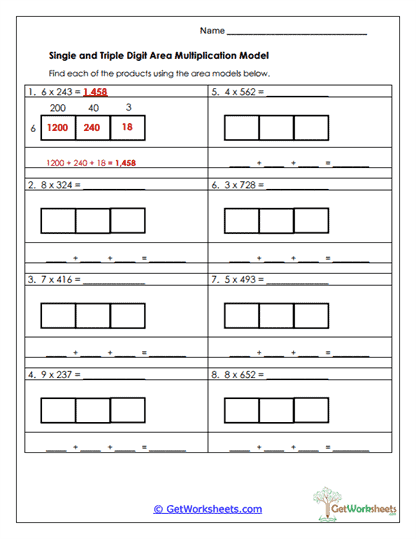
Single and Triple Digit Area Models
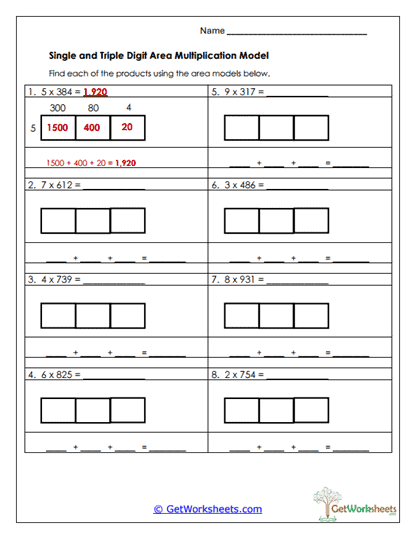
This worksheet focuses on multiplying single-digit numbers by triple-digit numbers using a three-panel decomposition grid. Students fill in hundreds, tens, and ones partial products to compute totals, reinforcing structured multi-step multiplication.
Writing Equations from Models
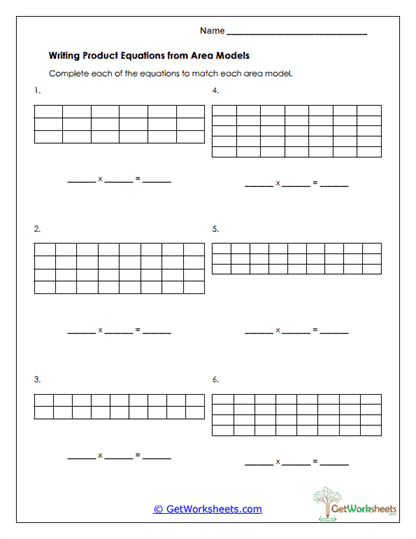
Learners interpret rectangular arrays to identify factors and write matching multiplication equations. This worksheet strengthens understanding of area as a model for multiplication and supports the transition from visual representations to symbolic expressions.
Expanded Area Model
Students expand two-digit numbers, compute partial products, and combine them to find final products. With a clear example included, this worksheet helps learners gain confidence applying the distributive property.
Two-Digit Area Model Practice
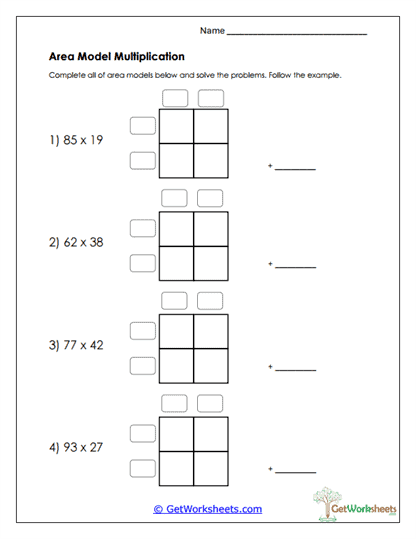
This repeated format has students fill in tens and ones for both factors, compute partial products, and sum them. The layout strengthens place-value reasoning and the conceptual link between area models and standard algorithms.
Art-Themed Area Model Word Problems
Students use area models to compare product values in creative real-world art scenarios. This worksheet blends reading comprehension with conceptual multiplication, promoting analytical thinking.
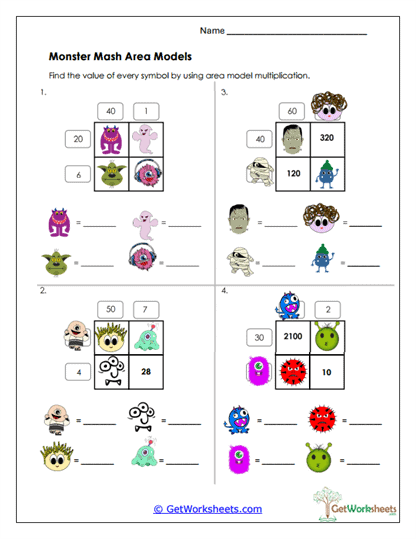
Monster-Themed Area Model
Learners decode monster symbols by interpreting partial products in area models. This fun puzzle format reinforces factor decomposition, distributive reasoning, and visual problem solving.
Single- and Triple-Digit Area Models
Students multiply single-digit numbers by three-digit numbers using structured decomposition boxes. The modeled example supports independence, and the layout strengthens place-value-based partial product organization.
Writing Equations from Area Models
This worksheet provides additional practice identifying rows, columns, and factors from area models. Students convert visual models into multiplication sentences, deepening understanding of arrays and the meaning of area in multiplication contexts.
Bookmark Us Now!
New, high-quality worksheets are added every week! Do not miss out!