Matching Text to Structure Type Worksheets
About This Worksheet Collection
The Matching Text to Structure Type collection helps students bridge the gap between recognizing and applying text structures. Each worksheet presents short passages, topic sentences, or real-world texts that demonstrate one of the five key informational structures-cause/effect, compare/contrast, chronological, problem/solution, and description. Learners analyze signal words, organizational clues, and author intent to determine how information is arranged. By matching examples to structure types, students build comprehension, critical thinking, and structural awareness across a range of reading and writing tasks.
Through visual organizers, signal-word practice, and writing extensions, students develop metacognitive insight into how text organization shapes meaning. These activities strengthen their ability to read analytically and write coherently, preparing them for academic and real-world literacy demands. The collection emphasizes both recognition and application, ensuring learners can identify, interpret, and use text structures purposefully.
Detailed Descriptions Of These Worksheets
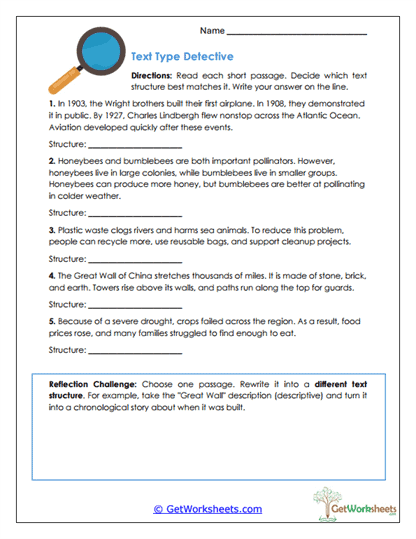
Text Type Detective
Students act as "text detectives," reading short passages to determine which organizational pattern each one follows. They use signal words and context clues to identify structures such as cause/effect, chronological, or compare/contrast. A reflection challenge asks learners to rewrite one passage in a new structure, promoting flexibility and understanding. The task encourages both analytical reasoning and creative application.
Text Structure and Signals
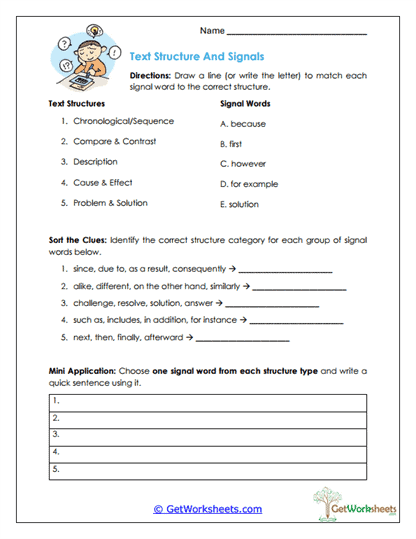
Learners connect signal words and phrases to their matching text structures through sorting and sentence creation. They analyze transitions like because, both, and next to see how language reflects organization. The mini writing task reinforces structural understanding through vocabulary practice. This worksheet deepens comprehension by linking linguistic cues to text meaning.
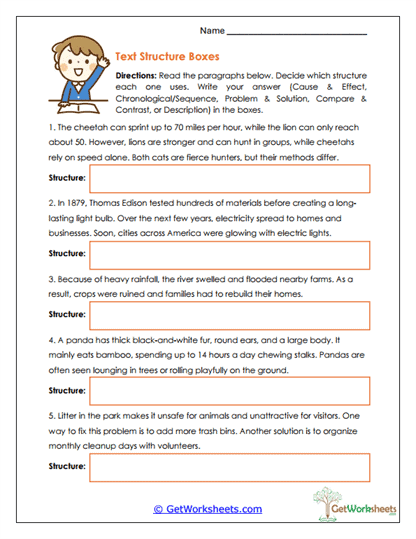
Text Structure Boxes
Students read brief paragraphs and record which text structure each represents, using context and signal words as evidence. The passages cover all five common patterns to ensure balanced practice. Learners strengthen comprehension and reasoning by identifying how details are logically arranged. This task builds pattern recognition and confidence in analyzing informational writing.
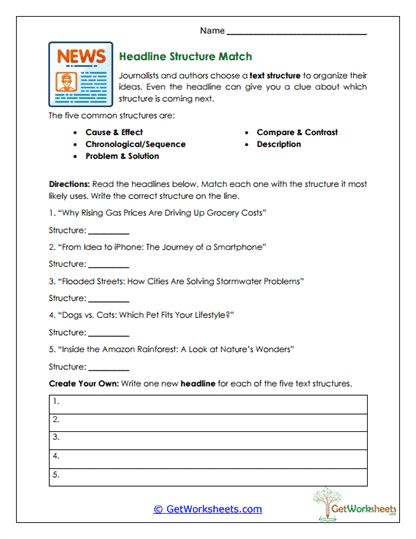
Headline Structure Match
In a journalism-themed activity, students match newspaper headlines to their underlying text structures. They infer how structure influences message and tone even in concise statements. A creative extension invites learners to craft their own headlines for each type. The worksheet combines media literacy with critical interpretation and creative thinking.
Patterns in Everyday Texts
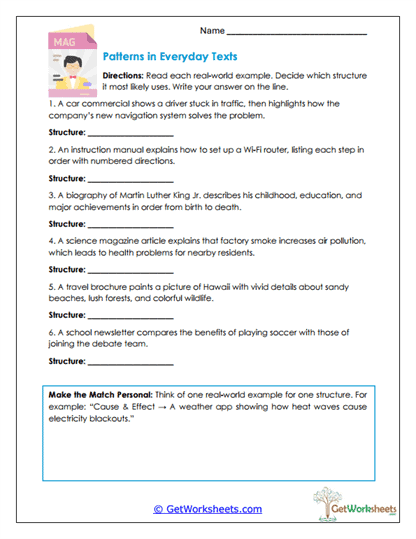
Students explore how cause/effect, chronological, and descriptive structures appear in real-world examples like commercials and science articles. They identify organization in familiar contexts and reflect on its impact. The activity connects classroom skills to authentic reading, emphasizing transfer and real-life literacy. It promotes comprehension and critical thinking through meaningful application.
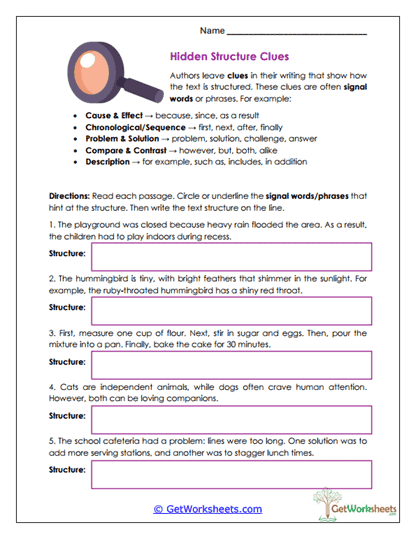
Hidden Structure Clues
Learners underline signal words that reveal each passage's organizational pattern. They justify their choices with brief written explanations, linking vocabulary to structure. This close-reading task reinforces attention to linguistic evidence. The activity cultivates analytical reading habits and deepens understanding of how authors connect ideas.
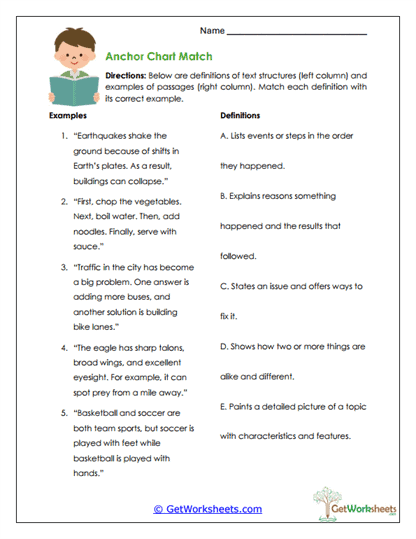
Anchor Chart Match
Students pair informational passage examples with matching text structure definitions in a visual "anchor chart" format. The side-by-side layout helps solidify recognition of structural features. Learners practice classifying organization through direct comparison and reasoning. The worksheet strengthens foundational knowledge for future reading analysis.
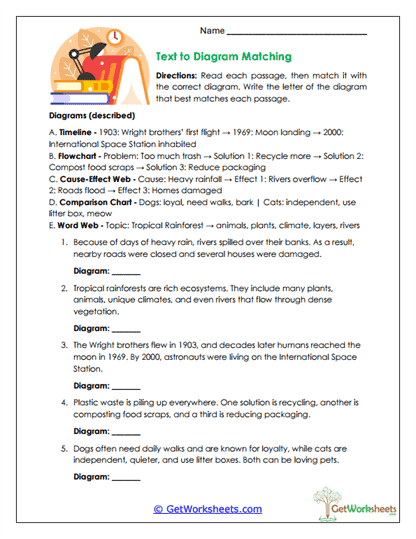
Text to Diagram Matching
Students connect passages to diagrams such as timelines, flowcharts, or cause/effect webs that represent each structure visually. By linking written and graphic forms, they develop dual literacy skills. The activity highlights how visual models clarify relationships between ideas. It reinforces comprehension and promotes cross-modal understanding.
Structure Pair-Up
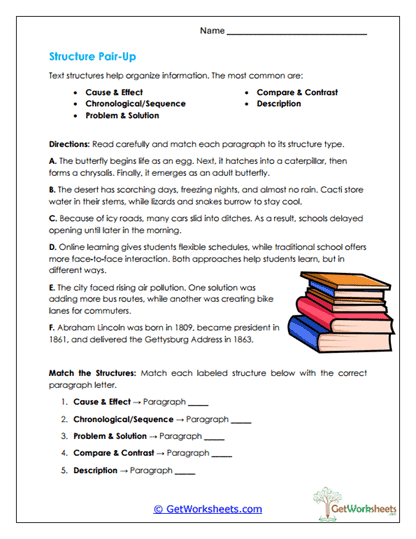
Learners read a set of paragraphs and match each to the correct structural label, referencing signal words for support. A summary exercise follows, connecting numbered passages to labeled categories. This systematic approach reinforces identification and classification skills. It builds analytical precision through structured matching and review.
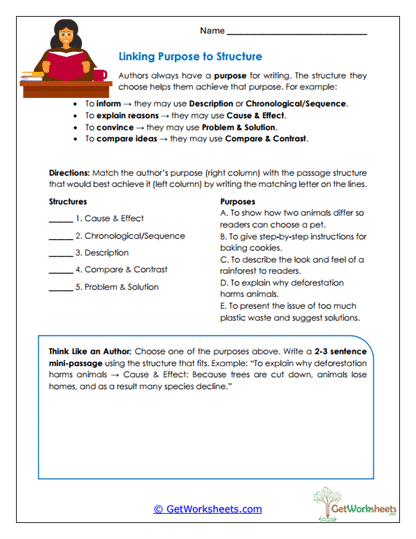
Linking Purpose to Structure
Students match authors' purposes-such as to inform, compare, or solve-with the text structures best suited for each goal. A short writing prompt asks them to create a mini-passage that aligns structure and purpose. The task fosters awareness of how organization supports intent. It enhances comprehension, creativity, and purposeful writing.
Structure in Documents
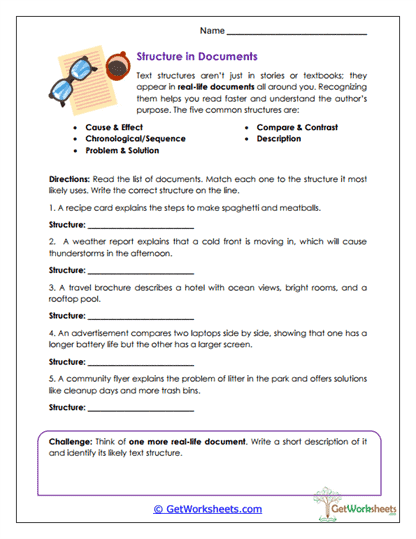
Learners identify text structures in real-world formats such as recipes, brochures, and advertisements. They analyze how informational organization supports clarity and reader understanding. The challenge prompt extends learning by connecting structure to documents from daily life. This worksheet builds practical literacy and critical reasoning through authentic application.
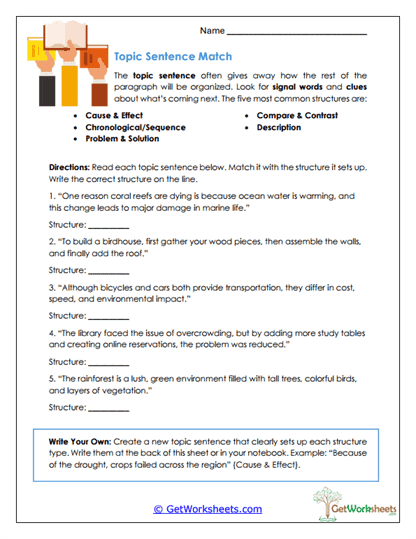
Topic Sentence Match
Students analyze topic sentences to determine which text structure each introduces. They use contextual and signal-word clues to infer organization, then compose their own topic sentences for each pattern. This exercise links reading analysis with structured writing practice. It builds comprehension, vocabulary, and paragraph organization skills in tandem.
Bookmark Us Now!
New, high-quality worksheets are added every week! Do not miss out!