Martin Luther King Jr. Day Worksheets
About This Worksheet Collection
This Martin Luther King Jr. Day worksheet collection offers students a rich blend of literacy, history, civics, and social-emotional learning. Through vocabulary practice, quote analysis, biography comprehension, persuasive and reflective writing, debate preparation, and cause-and-effect reasoning, students explore Dr. King's life, leadership, and enduring message of justice and nonviolence. The worksheets help learners understand both the historical significance of the Civil Rights Movement and the modern relevance of King's teachings.
Across the collection, students strengthen key academic skills such as reading comprehension, interpreting primary sources, analyzing figurative language, sequencing historical events, and constructing evidence-based written responses. They also practice empathy, ethical reasoning, and civic engagement as they reflect on fairness, equality, and peaceful change. The activities encourage students to see themselves as active participants in building a more just and compassionate world.
Detailed Descriptions Of These Worksheets
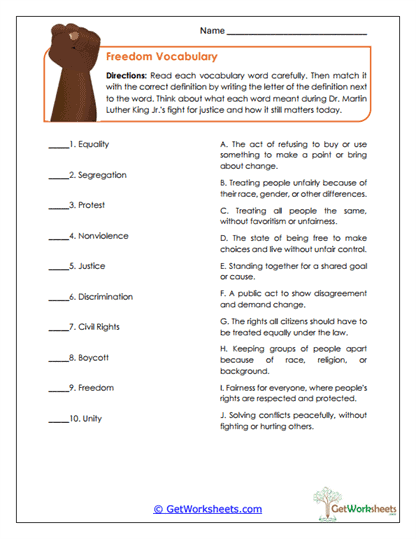
Freedom Vocabulary
Students match ten Civil Rights-related vocabulary terms-such as segregation, equality, protest, and justice-to their correct definitions. The task builds domain-specific vocabulary and strengthens students' ability to interpret and apply key terms related to fairness and social change. It reinforces understanding of the language central to Dr. King's work. The worksheet supports concept recognition and civil rights literacy.
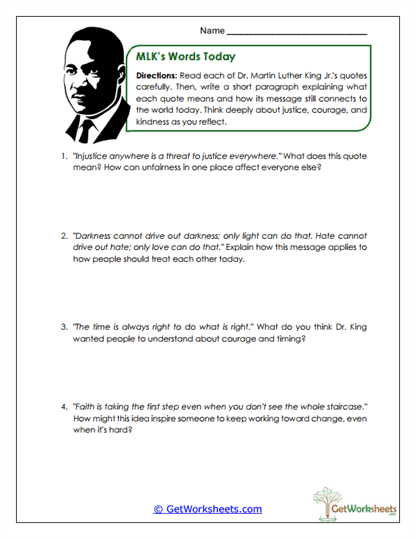
MLK's Words Today
Learners read four powerful quotes from Dr. King and write short explanations of their meaning and modern relevance. They analyze inspiring language, interpret figurative ideas, and connect King's messages to issues people face today. This worksheet strengthens primary source interpretation and reflective writing. It encourages empathy and deeper civic understanding.
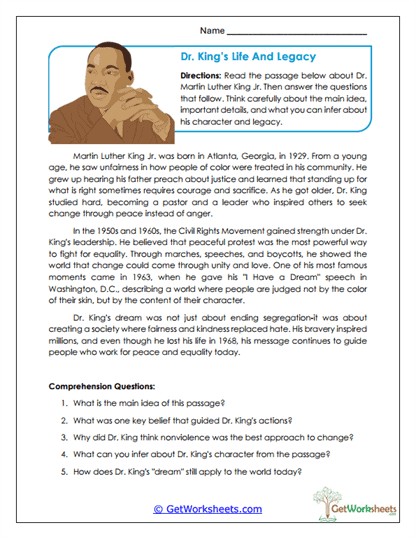
Dr. King's Life and Legacy
Students read an informational passage covering Dr. King's childhood, leadership, activism, and impact. Comprehension questions assess understanding of the main idea, important details, beliefs, and legacy. This activity supports biography analysis and evidence-based responses. It reinforces understanding of how King shaped the Civil Rights Movement.
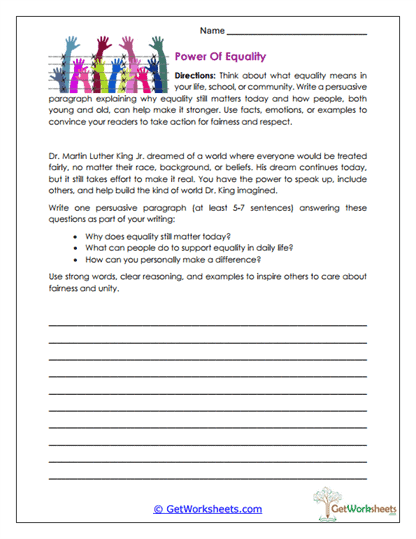
Power of Equality
Learners write a persuasive paragraph explaining why equality remains important today and how people can promote fairness. Students practice argument development, reasoning, and structured writing. The worksheet strengthens civic awareness and encourages personal responsibility for supporting justice. It promotes strong paragraph organization.
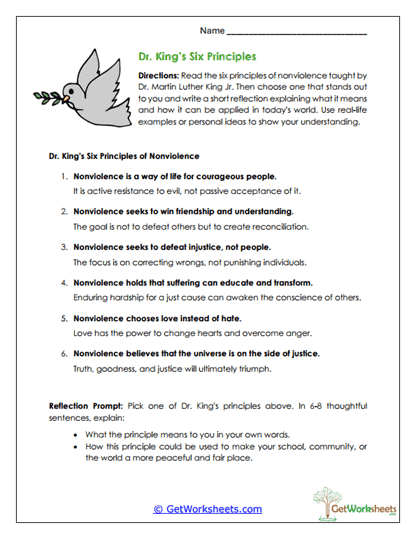
Dr. King's Six Principles
Students read Dr. King's six principles of nonviolence and choose one to explore through reflective writing. They explain the principle in their own words and describe how it can be applied in real life. This activity supports ethical reasoning, character development, and thoughtful writing. It helps students connect nonviolence to everyday actions.
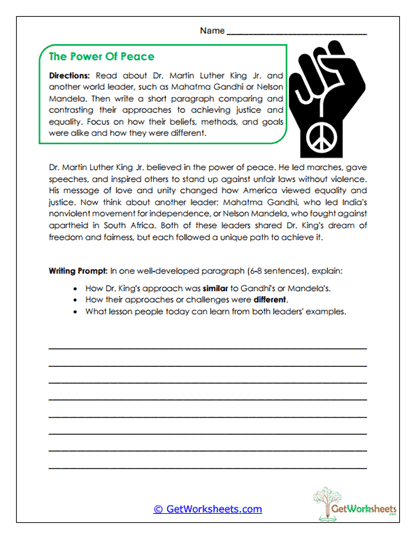
The Power of Peace
Learners compare and contrast Dr. King with another nonviolent leader such as Gandhi or Mandela. They write about similarities, differences, and lessons learned. The worksheet supports compare-and-contrast writing, global awareness, and higher-level reasoning. It deepens understanding of peaceful leadership across cultures.
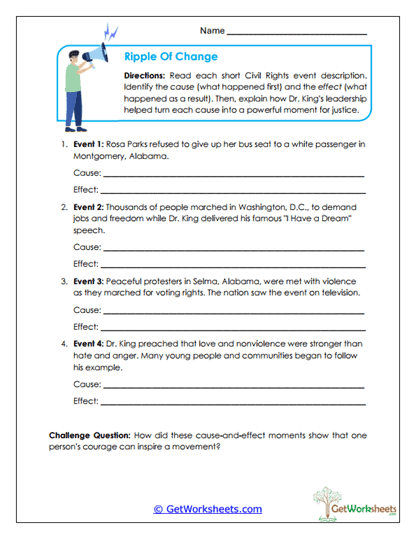
Ripple of Change
Students analyze four key Civil Rights events by identifying the cause and effect of each one and describing Dr. King's influence on the outcome. This worksheet strengthens comprehension of historical movements and the role of leadership. It helps learners understand how individual events fit into broader struggles for justice. It builds cause-and-effect reasoning and evidence-based explanation.
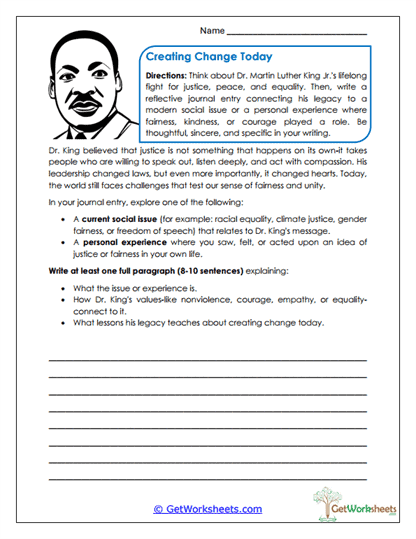
Creating Change Today
Learners write a reflective paragraph connecting Dr. King's legacy to a modern social issue or personal experience. They explore themes of fairness, courage, and equality through self-reflection. This worksheet promotes expressive writing and social-emotional growth. It helps students connect historical values to their own lives.
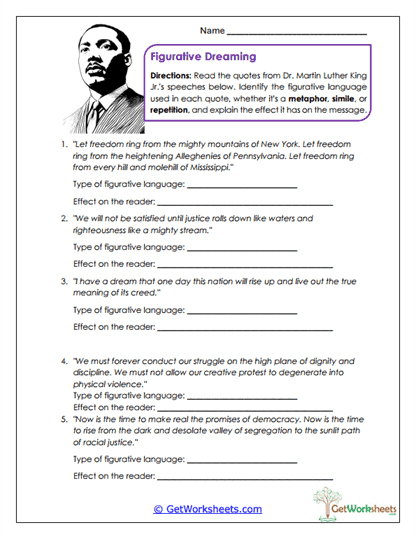
Figurative Dreaming
Students identify figurative language-metaphor, simile, repetition-in famous lines from Dr. King's speeches and explain its effect on the reader. The activity builds understanding of rhetorical devices and persuasive techniques. It strengthens appreciation for King's powerful writing style. Learners practice explaining how language inspires and motivates.
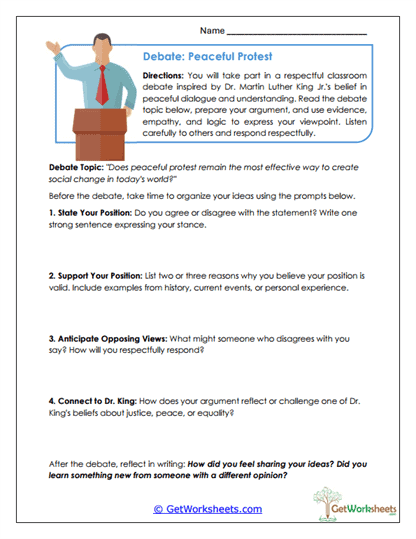
Debate: Peaceful Protest
Students prepare for a classroom debate on peaceful protest by forming an argument, identifying evidence, anticipating counterarguments, and connecting their ideas to Dr. King's beliefs. A reflection section encourages respectful listening and civil discourse. This worksheet strengthens argumentative reasoning and civic dialogue skills. It models constructive engagement with complex issues.
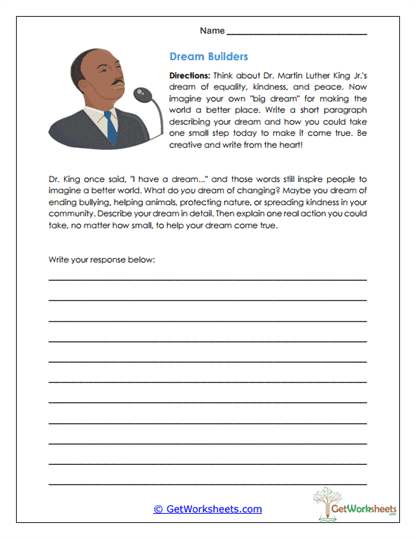
Dream Builders
Learners write about their own "big dream" for improving the world, inspired by Dr. King's vision. They describe their dream and identify a real action they can take to help achieve it. This activity promotes creativity, goal-setting, and personal responsibility. It helps students connect inspiration to meaningful action.
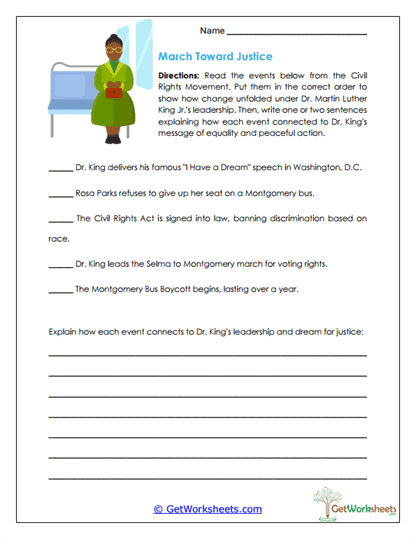
March Toward Justice
Students place five major Civil Rights events in chronological order and explain how each relates to Dr. King's leadership and message. This strengthens understanding of historical sequence and the interconnected nature of the movement. The worksheet reinforces written explanation and thematic analysis. It helps students see how key events advanced equality through peaceful action.
Bookmark Us Now!
New, high-quality worksheets are added every week! Do not miss out!