Mardi Gras Worksheets
About This Worksheet Collection
The Mardi Gras collection invites students to explore the rich history, artistry, and cultural significance of one of the world's most colorful celebrations. Through reading, writing, vocabulary, and creative activities, learners discover the traditions, music, and values behind Mardi Gras-from parades and masks to the deeper meanings of faith, unity, and joy. Each worksheet blends literacy skills with social studies and cultural awareness, encouraging both critical thinking and creative expression. Students build academic fluency while celebrating diversity, community, and the vibrant spirit of festivity.
Detailed Descriptions Of These Worksheets
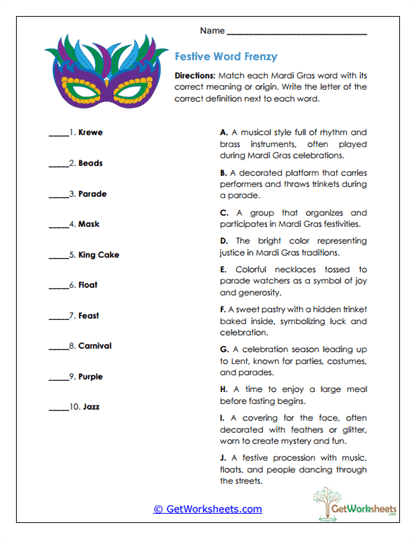
Festive Word Frenzy
Students match Mardi Gras vocabulary words such as krewe, jazz, and king cake with their correct definitions. The activity helps learners decode meaning through context while deepening their understanding of cultural traditions and symbols. By connecting language to history, students strengthen both reading comprehension and word association. This vocabulary task promotes curiosity about the heritage and customs that make Mardi Gras unique.
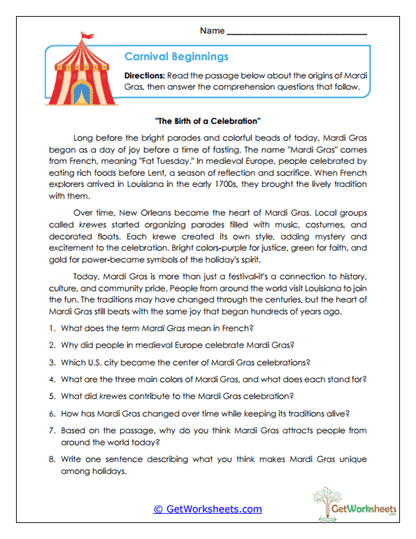
Carnival Beginnings
In this informational reading worksheet, students trace Mardi Gras' journey from medieval Europe to New Orleans. The passage explains key ideas such as "Fat Tuesday," the meaning of its colors, and how celebrations evolved over time. Comprehension questions assess understanding of main ideas and details, encouraging historical thinking. The exercise builds reading fluency while connecting geography, culture, and history.
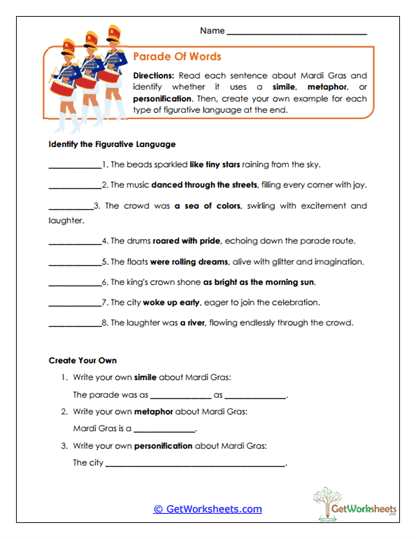
Parade of Words
Students identify examples of simile, metaphor, and personification in Mardi Gras-themed sentences, then write their own creative comparisons. The worksheet reinforces understanding of figurative language and shows how it adds rhythm and excitement to writing. Learners combine grammar with artistry, creating vivid imagery inspired by parade scenes and celebration energy.
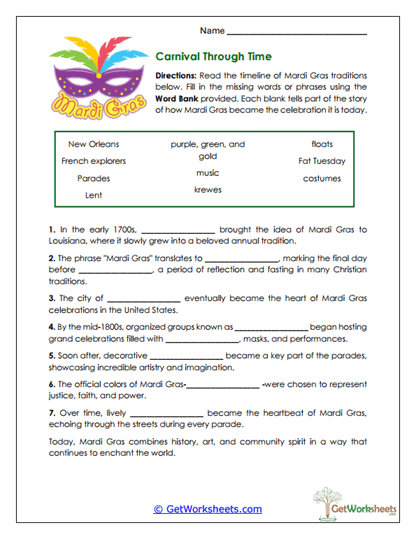
Carnival Through Time
This cloze-style passage takes students through a timeline of Mardi Gras history, from its early French roots to the parades of modern Louisiana. Learners fill in missing words using a word bank, applying vocabulary and context clues. The activity strengthens sequencing, comprehension, and historical awareness. It helps students visualize how tradition evolves and endures across centuries.
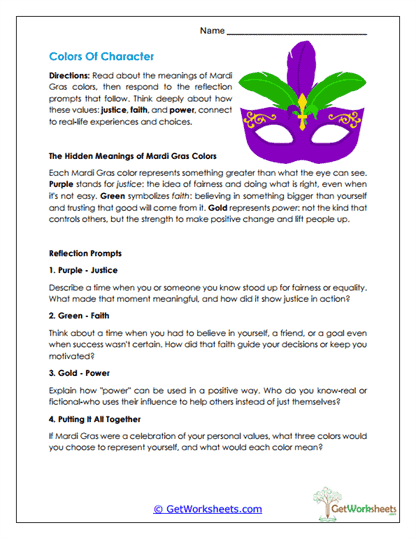
Colors of Character
Students learn about the meanings behind Mardi Gras' signature colors-purple for justice, green for faith, and gold for power. Through guided prompts, they reflect on how these values relate to their own lives and communities. The worksheet promotes moral reasoning, writing fluency, and emotional connection. It links cultural symbolism with personal growth and reflection.
Parade Press Report
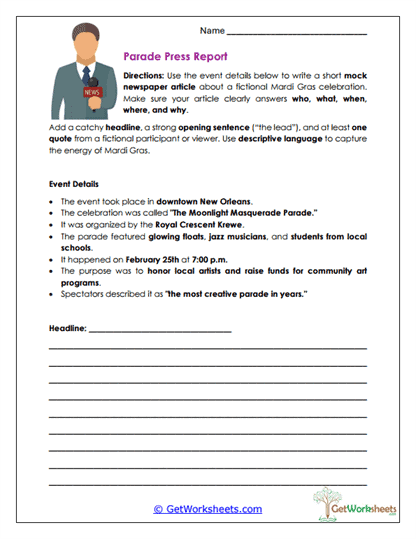
In this journalistic writing task, learners take on the role of parade reporters. Using given event details, they write a short article with a headline, opening lead, and descriptive quote. The assignment strengthens organization, clarity, and voice while building understanding of how writing captures real-world events. Students practice concise, vivid communication through a fun cultural lens.
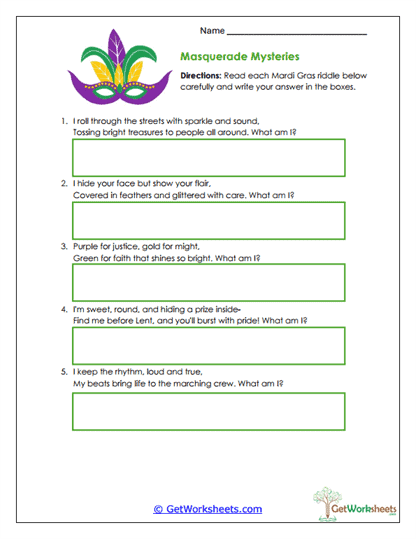
Masquerade Mysteries
Students solve creative riddles that describe Mardi Gras symbols like masks, beads, and floats. Each clue uses figurative or poetic language, prompting inference and reasoning. The puzzle-style format encourages engagement while teaching vocabulary and cultural significance. This worksheet merges reading comprehension with critical thinking in an enjoyable, game-based way.
Rhythms of Mardi Gras
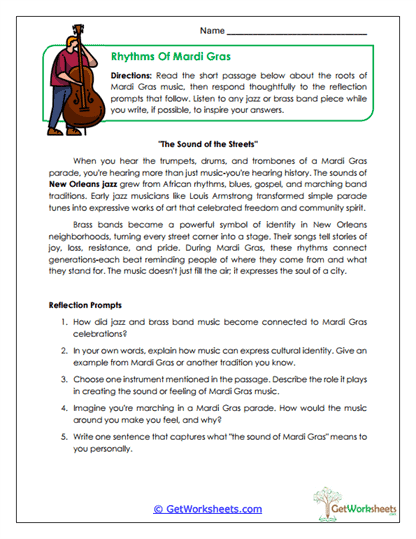
Learners read about the musical heartbeat of Mardi Gras-the jazz and brass bands that fill New Orleans streets. Reflection questions ask them to consider how music builds identity, connection, and celebration. The activity integrates arts, culture, and literacy by examining how rhythm expresses emotion and unity. It highlights the power of music as both cultural heritage and creative expression.
Parade Perspectives
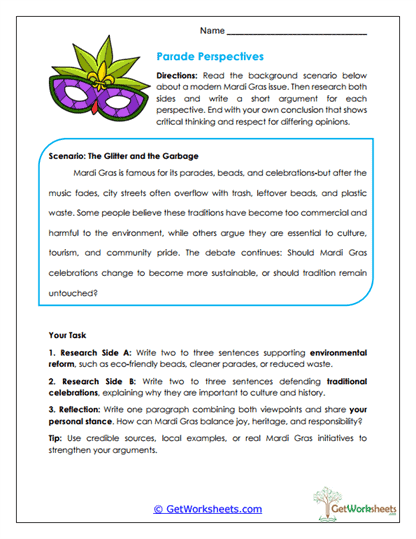
In this critical thinking and writing activity, students evaluate Mardi Gras' environmental impact. They research or reason through both sides of a debate about balancing sustainability and tradition. Learners then write short arguments for each perspective and conclude with their personal opinion. The worksheet builds argumentation, empathy, and civic awareness, connecting cultural pride with environmental responsibility.
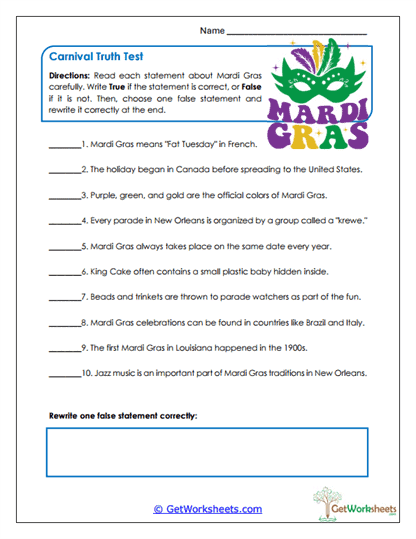
Carnival Truth Test
Students read factual and false statements about Mardi Gras, identifying which are true or false and correcting any inaccuracies. The exercise improves historical accuracy, reading comprehension, and fact-checking skills. It encourages learners to think critically about information sources while reinforcing understanding of Mardi Gras' origins and global influence.
Parade Proofreading Party
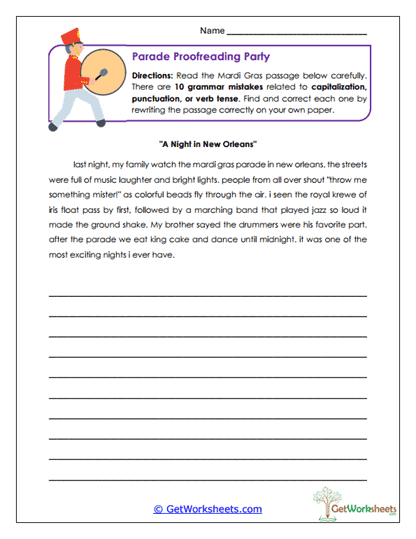
In this grammar-based worksheet, students edit a short Mardi Gras passage for capitalization, punctuation, and verb tense errors. The lively context of parades and music makes grammar practice fun and memorable. The activity builds proofreading accuracy, reinforces language conventions, and strengthens writing mechanics in a joyful and practical format.
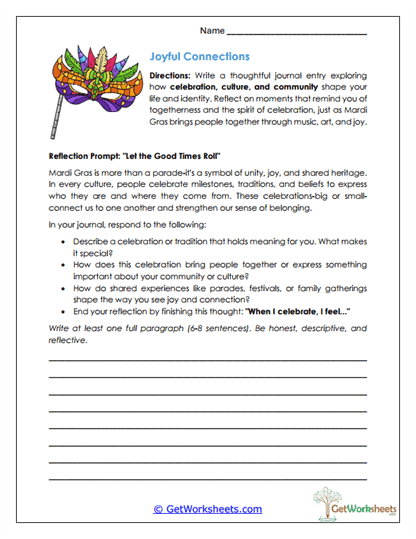
Joyful Connections
This reflective writing worksheet invites students to explore how celebrations foster belonging and unity. Learners write a journal-style response connecting Mardi Gras' themes of joy and community to their own experiences. The activity builds expressive writing and empathy while emphasizing the universal importance of shared cultural traditions. It promotes mindfulness and appreciation of how festivities bring people together.
Bookmark Us Now!
New, high-quality worksheets are added every week! Do not miss out!