Manners and Politeness Worksheets
About This Worksheet Collection
This Manners and Politeness collection offers a wide range of activities that teach students how courteous behavior strengthens relationships and creates positive learning environments. Through stories, matching tasks, rewriting exercises, cultural explorations, and reflective writing, students learn how polite words, thoughtful actions, and respectful communication influence everyday interactions. The worksheets provide realistic scenarios that help children practice kindness, cooperation, and empathy in ways that feel meaningful and easy to understand.
As students progress through the collection, they build important social-emotional skills such as self-regulation, social awareness, responsible decision-making, and respectful communication. They also strengthen core academic skills including vocabulary development, reading comprehension, context clue usage, letter writing, and explanatory sentence construction. These worksheets support teachers in fostering a classroom culture rooted in respect while preparing students to demonstrate courtesy both in person and online.
Detailed Descriptions Of These Worksheets
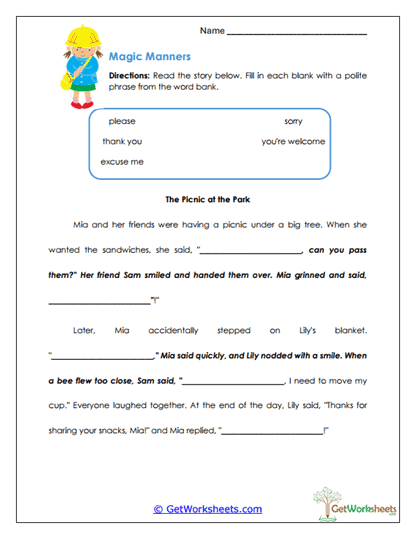
Magic Manners
Students read a short picnic-themed story and fill in missing polite phrases from a word bank. By choosing words like "please," "thank you," and "excuse me," learners see how manners make conversations smoother and interactions kinder. This exercise reinforces respectful language in realistic situations. It supports context clue use and helps students practice everyday courtesy.
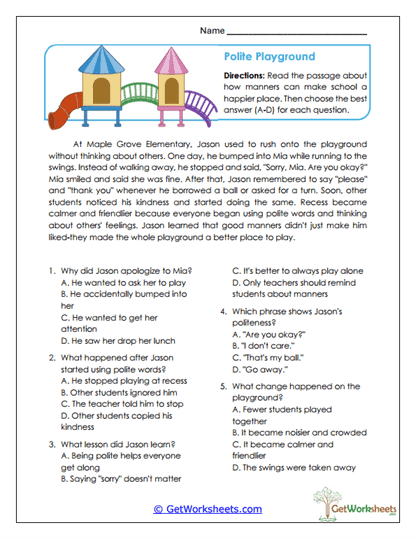
Polite Playground
Learners read a story about practicing manners on the playground and answer comprehension questions. The activity highlights how actions such as sharing, apologizing, and taking turns contribute to a positive environment. Students gain insight into how courtesy encourages kindness in others. It strengthens reading comprehension and responsible decision-making.
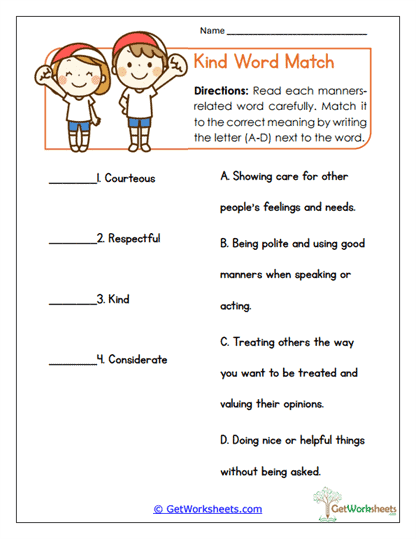
Kind Word Match
Students match manners-related vocabulary words with their definitions. This builds understanding of terms like courteous, considerate, and respectful. The activity expands learners' social-emotional vocabulary and deepens their awareness of positive behavior. It promotes stronger communication and relationship skills.
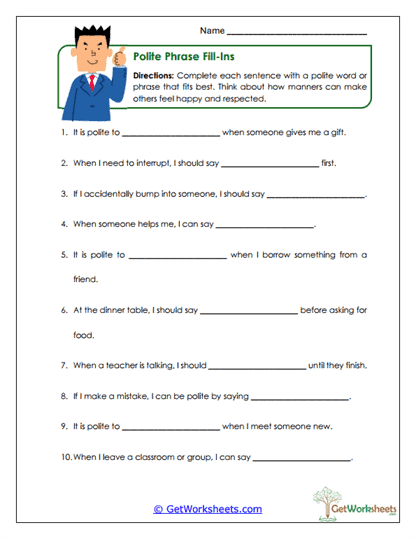
Polite Phrase Fill-Ins
Learners complete sentences with polite phrases suited to everyday situations. They practice choosing language that shows respect when asking for help, joining conversations, or borrowing items. This worksheet reinforces sentence construction and effective social communication. It builds understanding of appropriate, responsible behavior.
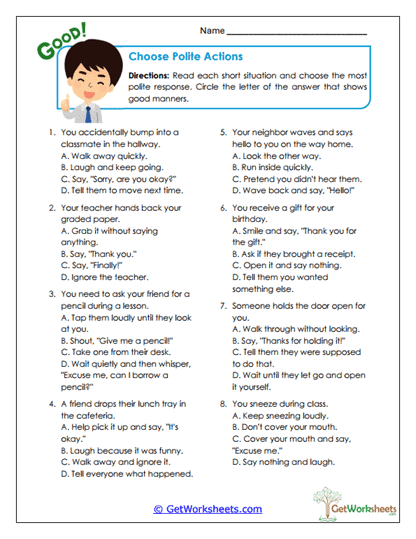
Choose Polite Actions
Students read social scenarios and select the most polite response from multiple-choice options. The activity encourages learners to think about how their choices affect others. It builds social awareness and decision-making skills. Students practice identifying positive social norms.
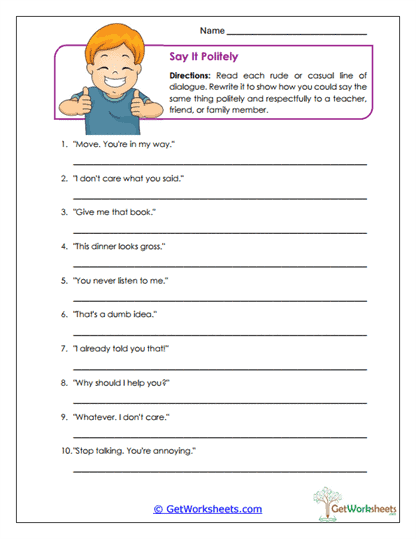
Say It Politely
Learners rewrite rude or blunt statements to make them polite and respectful. This activity teaches students how tone and word choice influence communication. It helps students regulate emotions and express needs kindly. The exercise strengthens sentence rewriting and empathy.
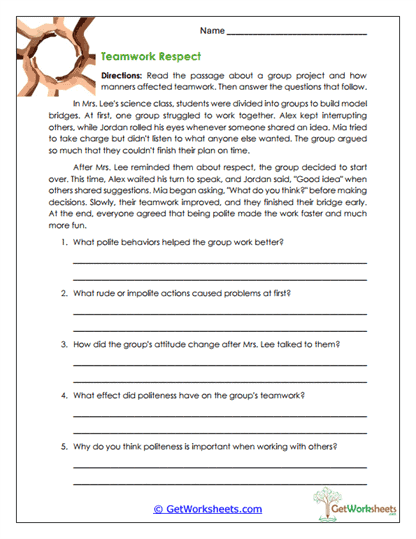
Teamwork Respect
Students read a story about a group project that improves once students begin using good manners. They answer comprehension questions exploring how respect supports teamwork. The worksheet reinforces the connection between courtesy and successful collaboration. It helps learners understand how polite behavior benefits groups.
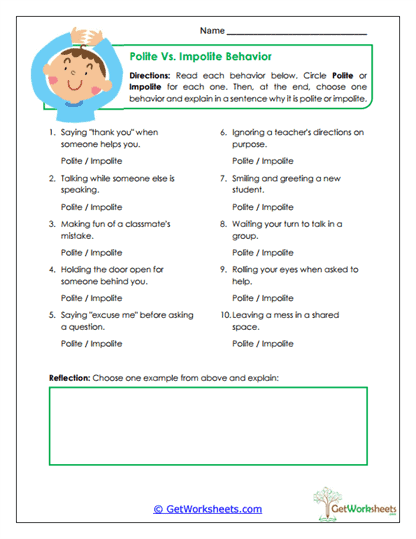
Polite vs. Impolite Behavior
Learners decide whether behaviors are polite or impolite and explain one example in writing. This activity builds awareness of social norms and respectful conduct. It encourages students to reflect on the impact of everyday actions. Students also practice writing clear explanatory sentences.
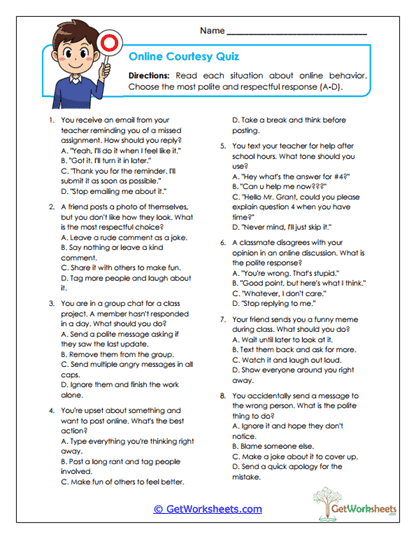
Online Courtesy Quiz
Students evaluate digital communication scenarios and select the most polite response. This worksheet teaches learners how to extend manners into online spaces. It builds digital citizenship skills and responsible decision-making. The activity reinforces safe, respectful online behavior.
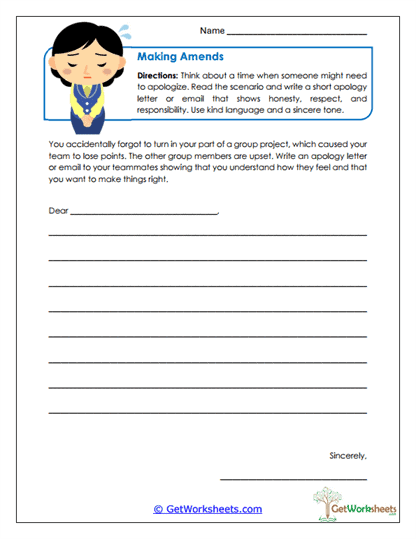
Making Amends
Learners read a scenario about a group project issue and write an apology letter. They practice expressing responsibility, empathy, and sincere regret. The activity builds letter-writing skills while encouraging reflection on repairing relationships. It highlights how polite communication can resolve conflict.
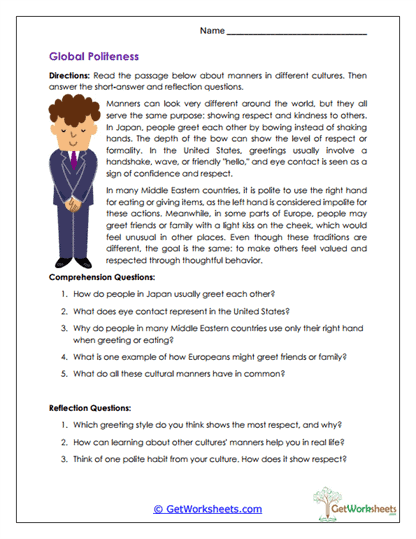
Global Politeness
Students read a nonfiction passage comparing greeting customs and polite behaviors across different cultures. They answer questions that promote cultural curiosity, respect, and awareness of global traditions. The worksheet helps learners appreciate similarities and differences in manners around the world. It strengthens comprehension and broadens global understanding.
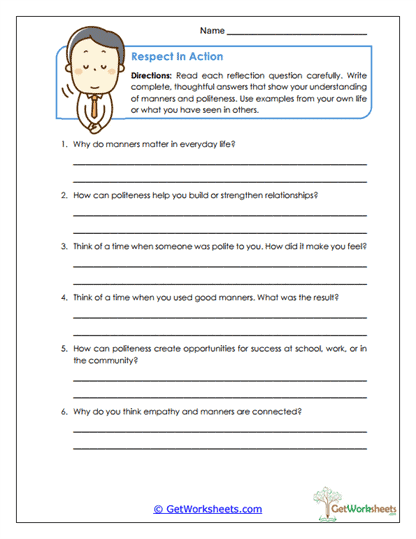
Respect in Action
This reflection worksheet invites students to write about personal experiences with manners, kindness, and empathy. Learners consider how polite behavior reduces conflict, builds friendships, and supports emotional well-being. The activity promotes self-awareness and responsible social behavior. It also improves written expression through thoughtful, detailed responses.
Bookmark Us Now!
New, high-quality worksheets are added every week! Do not miss out!