Making Predictions Worksheets
About This Worksheet Collection
The Making Predictions Worksheets collection teaches students how to anticipate what might happen next using text clues, illustrations, dialogue, context, character traits, and background knowledge. These worksheets strengthen comprehension by encouraging readers to stay actively engaged-constantly checking, revising, and justifying their predictions as new information appears. Students learn to think like detectives, authors, and critical readers, building essential inferential reasoning skills that support success in narrative reading, informational text analysis, and writing development.
These activities support metacognition, evidence-based thinking, and flexible reasoning-core elements of high-level literacy instruction.
Detailed Descriptions of These Worksheets
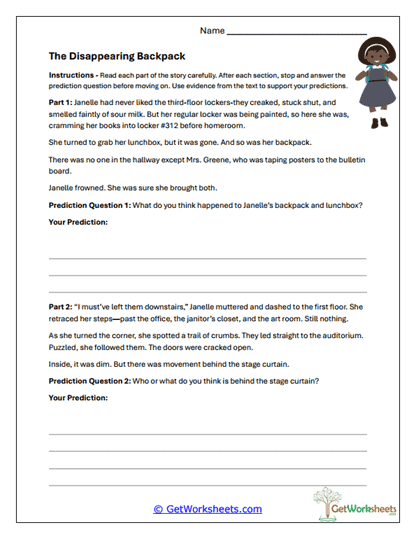
Vanishing Clues Case File
Students explore a two-part mystery full of intriguing hints-crumbs on a counter, missing belongings, silent hallways-and must stop after each section to make a thoughtful prediction. The story is intentionally structured to slow readers down and encourage close observation of details. Students justify each prediction with textual clues, strengthening analytical reading and evidence-based reasoning. This detective-style format builds suspense, encouraging students to read with focus and purpose.
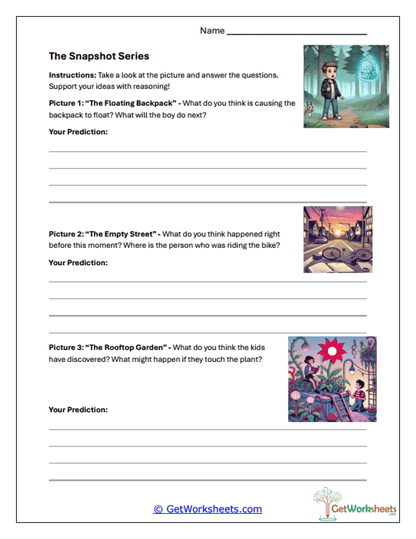
Snapshot Sleuths
By studying mysterious photographs-hovering backpacks, empty city streets, rooftop gardens-students make predictions grounded in visual evidence. This worksheet strengthens visual literacy and inference skills by requiring students to identify subtle details in images before crafting predictions. As students write their ideas, they learn to support visual observations with logical reasoning. The open-ended nature of the images encourages creativity while reinforcing careful interpretation.
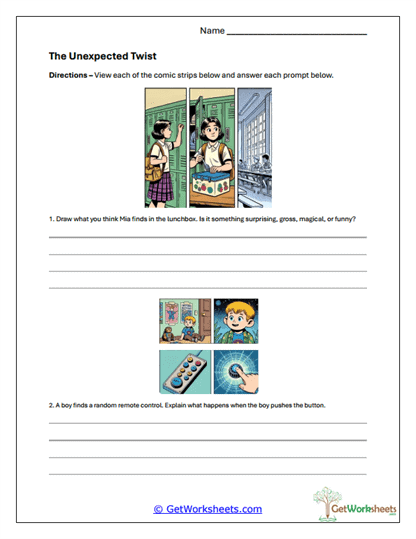
Twist Panel Predictions
Using short comic-strip panels, students infer what might happen in the next scene. Expressions, gestures, and background details help them craft predictions that are logical yet imaginative. This blend of visual storytelling and written reasoning deepens comprehension by showing students how narrative clues are embedded in art as well as text. The structure helps students explain their thinking clearly while practicing the habit of anticipating story direction.
Ending Investigator Lab
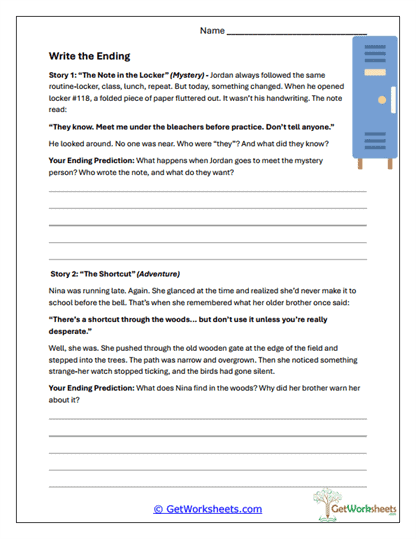
Students read the beginning of two story excerpts and predict the endings using clues from dialogue, tone, and early plot development. Each story offers just enough intrigue for students to build strong, text-supported conclusions. This activity strengthens comprehension by teaching students how authors set up future events and how early details foreshadow narrative outcomes. The reflection component encourages metacognition as students analyze why their predictions make sense.
Choose-the-Outcome Challenge
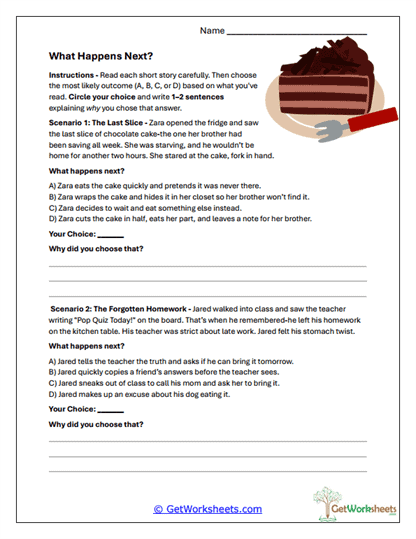
In this quick, engaging worksheet, students select the most likely outcome from multiple options, then explain their reasoning. Each scenario contains clues that point toward the most logical prediction, training students to eliminate unrealistic choices and focus on evidence. This strengthens assessment readiness by reinforcing prediction reasoning in a multiple-choice format while still requiring justification.
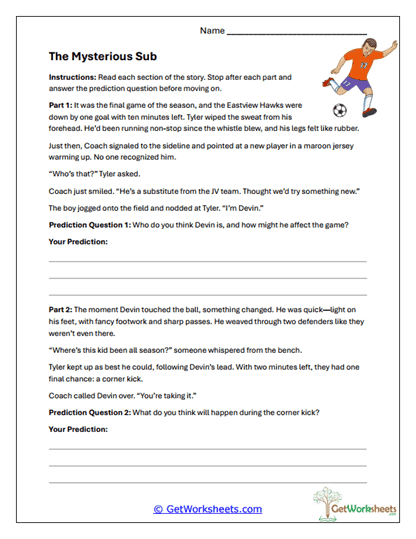
Mystery Sub Forecast
This sports-themed worksheet presents a suspenseful two-part narrative involving a mysterious substitute player and an intense final play. Students make predictions after each section, using tone, behavior, and plot clues to justify their thinking. This structure helps students track rising action, recognize how events influence future outcomes, and practice constructing supported predictions in dynamic story contexts.
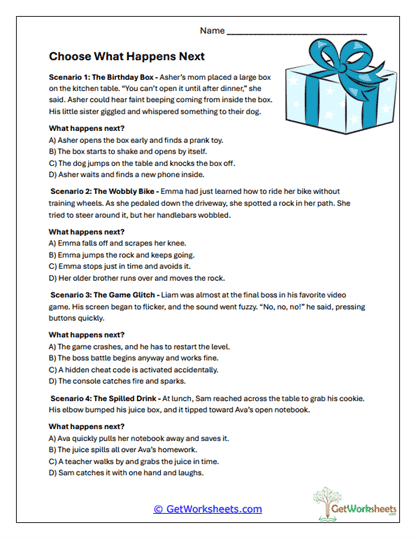
Next Move Selector
Students read four short, everyday scenarios-each containing subtle hints about what will likely happen next-and choose the most reasonable outcome. Option choices intentionally range from realistic to silly, encouraging students to think critically about plausibility. With each prediction, students write a short explanation, strengthening comprehension and logical reasoning.
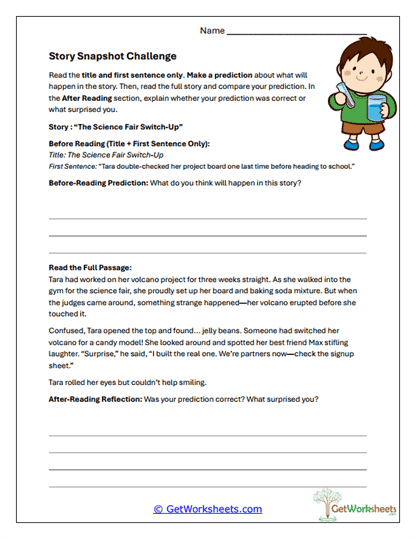
Story Snapshot Challenge
Students make two predictions for each story: one based only on the title and first sentence, and another after reading the full passage. This two-step structure teaches students to revise their thinking as new information emerges, a key component of metacognitive reading. Comparing initial predictions with final ones helps students understand how authors shape expectations and how early clues relate to story direction.
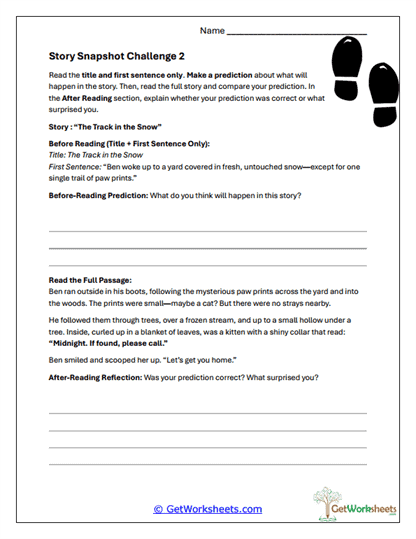
Trail Tracker Predictions
Similar to the previous worksheet, this companion task asks students to predict based on the title and first sentence, then check their reasoning after reading the full text. In a story involving mysterious paw prints, students form early hypotheses and then reflect on how the complete passage supported or changed their predictions. This reinforces careful reading, prediction accuracy, and flexible reasoning.
Code Crack Prediction Mission
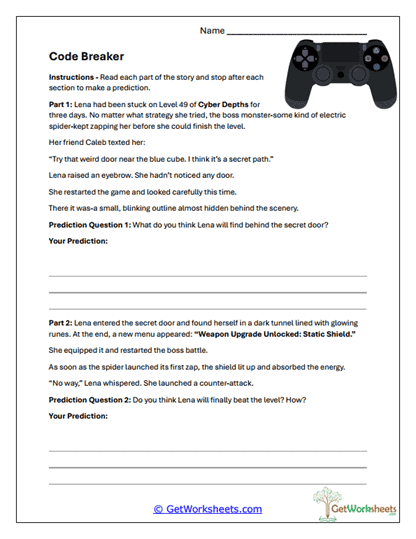
This video-game-inspired worksheet features hidden doors, glowing runes, and boss-level clues that students must analyze at two prediction checkpoints. The energetic theme motivates students while encouraging evidence-guided forecasting. Students explain each prediction clearly, learning to defend their ideas using strong text-based reasoning. This activity is excellent for building engagement, reading stamina, and close observation.
Dialogue Outcome Predictor
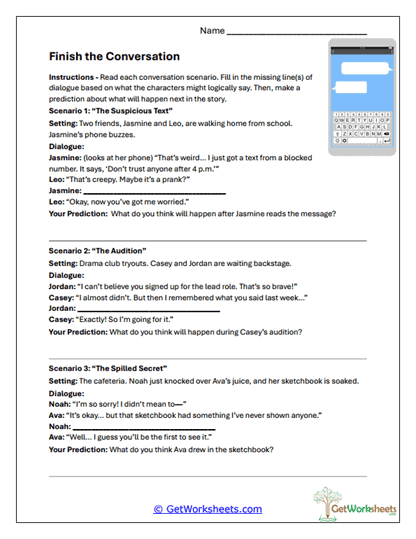
Students complete missing lines of dialogue based on conversational clues, then predict what will happen next in the scenario. This worksheet strengthens inferential thinking by asking students to interpret character relationships, tone, and context. Writing dialogue that fits naturally into the scene helps students understand subtext, while the prediction step requires justification using evidence from the conversation.
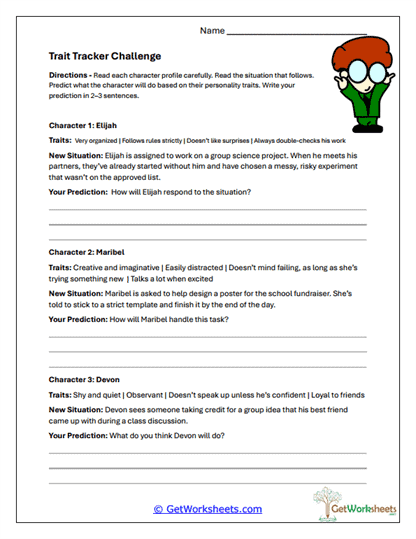
Personality-Driven Predictions
Students read character profiles followed by realistic scenarios, then predict how each character will respond based on personality traits. This worksheet deepens understanding of characterization by showing how traits influence decisions. Students write 2-3 sentence predictions supported by specific evidence from the profiles, reinforcing inferential thinking, logical reasoning, and comprehension of character motivation. It is especially valuable for literature units that require analysis of complex characters.
Bookmark Us Now!
New, high-quality worksheets are added every week! Do not miss out!