Making Inferences Worksheets
About This Worksheet Collection
The Making Inferences Worksheets collection helps students master one of the most essential (and often challenging) comprehension skills: figuring out what the author is showing but not saying outright. These worksheets guide learners through scenarios rich with emotional cues, symbolic objects, hidden motives, implied events, and real-world contexts. Students piece together clues, draw logical conclusions, support their thinking with evidence, and deepen their understanding of how meaning operates beneath the surface of a text.
These worksheets progress from simple emotional inference to complex scene analysis, multi-step reasoning, and creative prediction-making the set ideal for scaffolding, intervention groups, comprehension test practice, and daily warm-ups.
Detailed Descriptions of These Worksheets
Clue-Based Conclusions
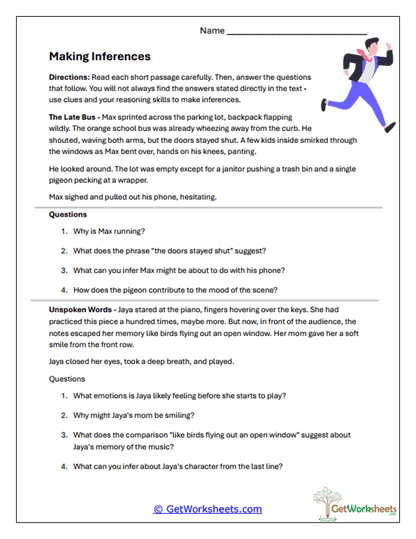
Students read two vivid short stories that require them to infer character motivations, emotional states, and implied events. Rather than offering direct answers, the passages rely on subtle hints-tone, body language, pacing, and suggestive descriptions-to guide student reasoning. Learners justify their interpretations using specific text evidence, strengthening deep comprehension and the ability to articulate why an inference makes sense. The scenarios-like racing to catch a bus or performing nervously-resonate with students, making inference practice intuitive and meaningful.
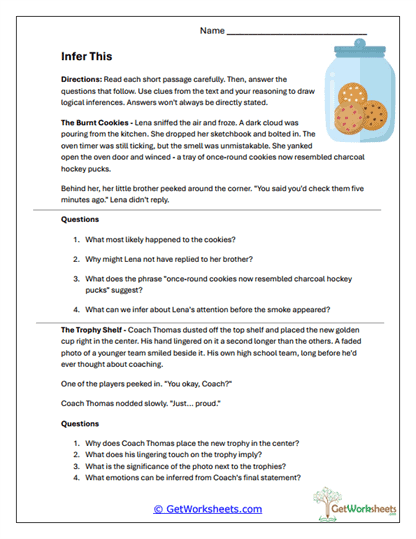
Hidden Hint Analyzer
This worksheet features short passages packed with understated clues. Students must interpret what has occurred (burnt cookies, forgotten trophies), what characters are thinking, and why certain details matter. With sensory imagery, symbolic objects, and emotional reactions driving meaning, students explore how authors embed implications beneath the literal text. This type of inference builds strong narrative comprehension and encourages careful, attentive reading.
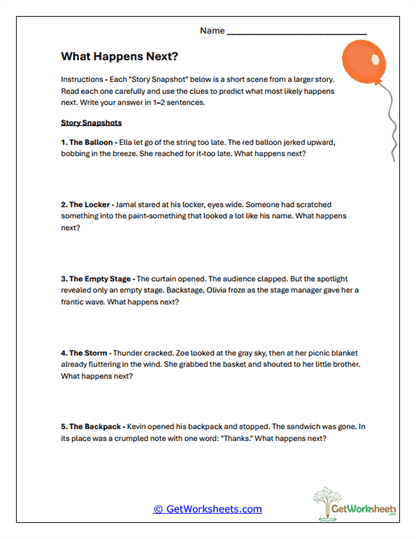
Next-Step Predictor
Students read brief narrative "snapshots," then infer what will likely happen next based on context clues and prior knowledge. Each scenario pauses at a suspenseful moment, requiring students to extend the story logically. Lost items, suspicious locker scratches, storm warnings, and backstage jitters give learners engaging opportunities to practice prediction grounded firmly in textual evidence. This worksheet improves narrative sequencing skills and strengthens the habit of reading ahead with purpose.
Emotion Decoder Scenes
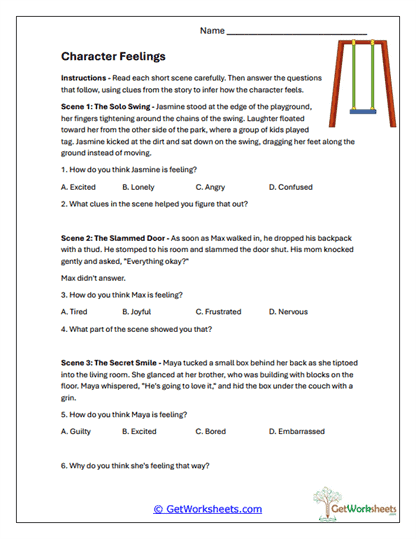
Students analyze small but emotionally rich scenes-loneliness on a playground, frustration after school, secretive behavior-to infer the feelings characters are experiencing. With a mix of multiple-choice and short written responses, learners must cite evidence such as gestures, tone, dialogue, and setting details. This task strengthens emotional comprehension, text interpretation, and empathy, making it valuable for both literacy and SEL instruction.
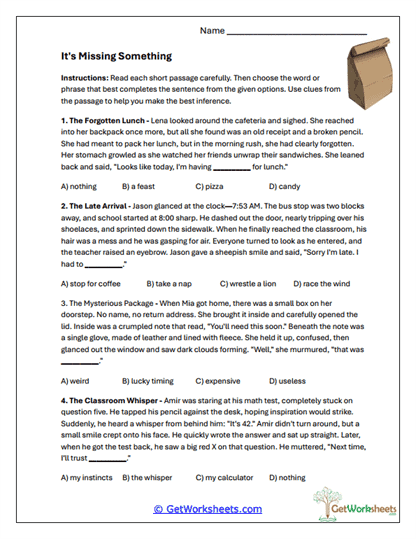
Missing-Word Investigator
In this puzzle-style worksheet, key words or phrases have been removed from short passages. Students must choose the missing word by inferring meaning from contextual clues. Each scenario-lost lunches, rushed mornings, mysterious packages, or whispering classmates-requires students to analyze tone, implied actions, and narrative logic. This activity builds inferential vocabulary skills and reinforces the ability to use context to determine meaning.
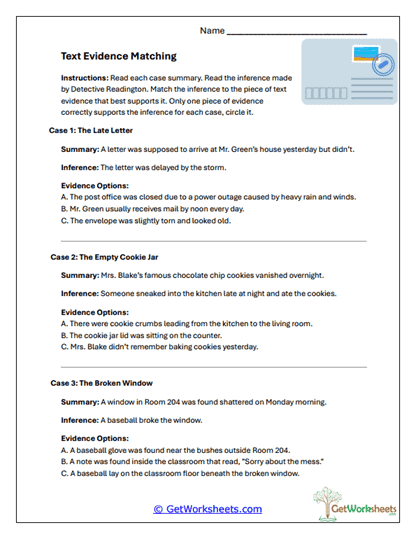
Evidence Match Detective
Students receive three short "cases," each containing clues and potential conclusions. Their job is to match the correct inference to its appropriate evidence. Whether analyzing storm delays, cookie crumbs, or broken windows, learners practice identifying which textual detail actually supports the inference. With distractors included, this worksheet teaches precision, close reading, and justification skills crucial for deeper comprehension assessments.
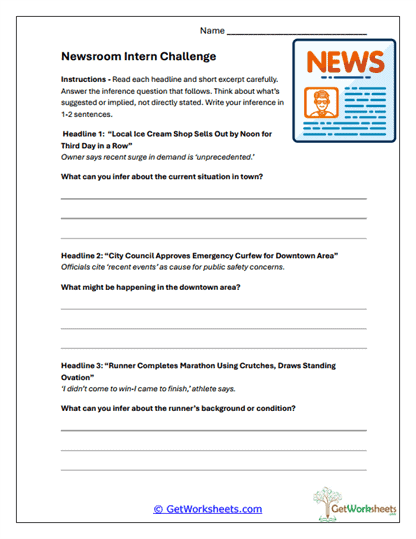
Headline Inference Lab
Using short news-style excerpts and headlines, students infer details not directly stated-what happened, why it matters, or who was involved. This provides authentic practice with informational text and teaches students how real-world readers interpret headlines, report summaries, and condensed writing. The contemporary format helps students develop skills needed for critical media literacy and advanced nonfiction comprehension.
Dialogue Insight Detective
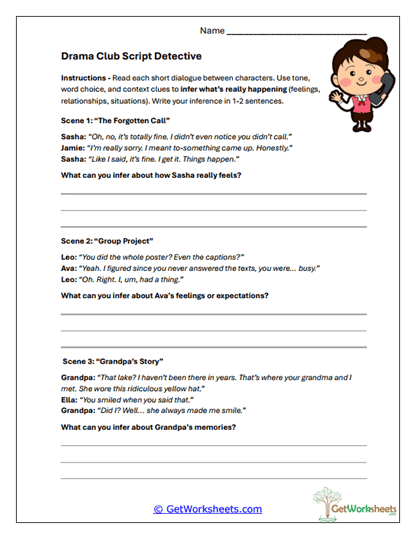
This worksheet focuses on dialogue and subtext. Students read conversation snippets and infer what characters really think, feel, or intend-even when their words appear simple or polite. Tone, word choice, hesitations, and implied tension help students uncover deeper meaning. Scenarios such as forgotten calls, unfair group work, or treasured family stories teach how dialogue reveals hidden emotions and relationships. This supports both inference skills and character analysis.
Cliffhanger Inference Builder
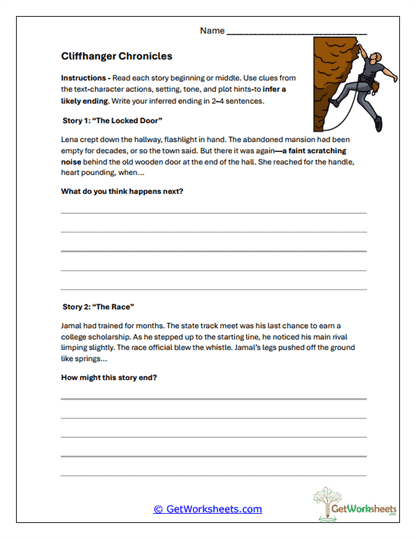
Students are given the beginning or middle of a suspenseful scene-an eerie old mansion, a high-stakes track race-and must infer the most logical ending. The open-ended responses require them to combine creativity with evidence-based reasoning. This worksheet is powerful for teaching how authors plant clues that guide the reader toward an implied resolution. It also builds prediction, narrative structure understanding, and thematic insight.
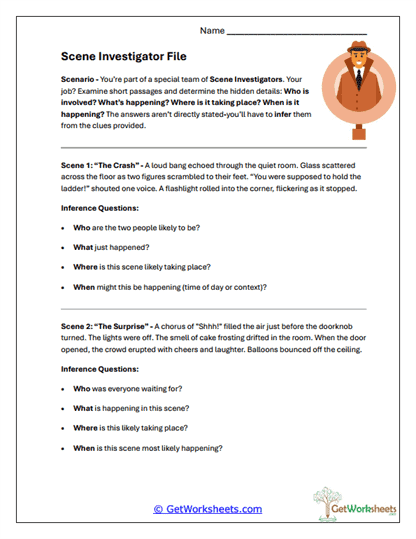
Scene Analysis Investigator
This worksheet turns students into detectives who must infer who, what, where, and when based solely on clues embedded in short scenes. None of these answers are stated outright-students must interpret environmental details, character behavior, and situational hints. Thrilling contexts like household accidents or surprise parties make the task engaging while strengthening multi-layered inference skills required for higher-level comprehension and standardized testing.
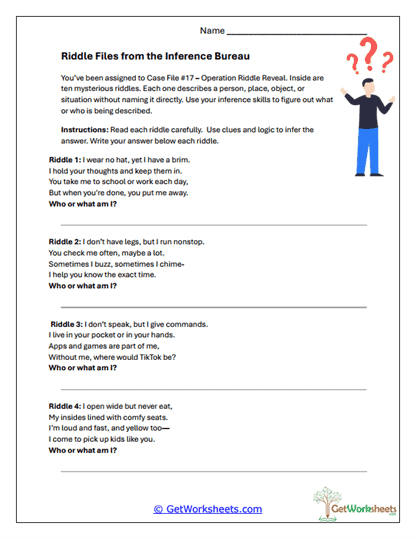
Riddle Inference Bureau
Ten clever riddles challenge students to infer everyday objects or concepts from poetic clues. Each riddle contains suggestive imagery and descriptive hints that must be decoded logically. This activity blends figurative language, reasoning, and textual clue interpretation. As riddles become gradually more complex, learners naturally progress in inference sophistication-while enjoying the playful, puzzle-like experience.
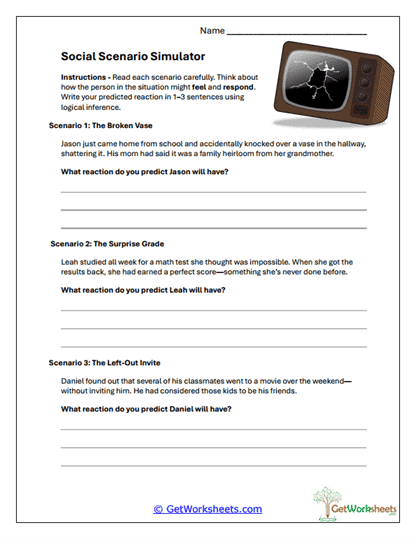
Scenario Reaction Predictor
This worksheet presents relatable real-life scenarios-breaking an heirloom, receiving a high grade, exclusion by friends-and asks students to infer emotional and behavioral reactions. Students write complete-sentence responses, blending comprehension, empathy, and clear written communication. This worksheet strengthens social-emotional understanding, builds evidence-based reasoning, and deepens inferential thinking with personally relevant contexts.

Bookmark Us Now!
New, high-quality worksheets are added every week! Do not miss out!