Main Idea & Supporting Details Worksheets
About This Worksheet Collection
The Main Idea & Supporting Details Worksheets collection helps students build one of the most essential comprehension skills in reading: identifying what a text is mostly about and determining which details genuinely support that central idea. Across activities that include mystery passages, reorganizing paragraphs, comparing texts, locating evidence, and crafting main idea sentences, students learn to separate key points from side details-while developing critical thinking, close reading skills, and clearer writing habits.
The worksheets progress from foundational identification tasks to higher-level inference, synthesis, and paragraph construction, making this collection ideal for scaffolding instruction or providing differentiated practice.
Detailed Descriptions Of These Worksheets
Mystery Message Finder
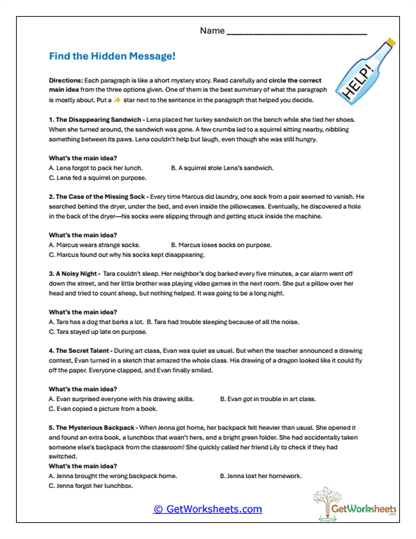
Students explore five short, humorous mystery-style paragraphs and select the best main idea from three choices. Each passage contains vivid clues, small surprises, and red herrings that require students to distinguish the true key idea from amusing but less important details. After choosing, learners highlight the specific sentence that helped them decide, reinforcing the link between main ideas and textual evidence. This worksheet builds confidence with lighthearted scenarios-such as vanishing snacks or puzzling noises-while strengthening analytical reading.
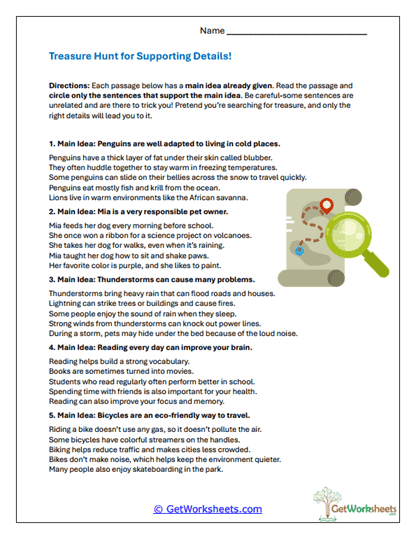
Detail Treasure Hunt
Students begin with a clearly stated main idea, then comb through each passage to identify which sentences support it-and which do not. By circling or highlighting only the relevant details, learners practice filtering out distractions and focusing on meaningful information. The "treasure hunt" format gives students a sense of discovery as they uncover the details that truly matter. The varied, relatable topics keep interest high while building accuracy in recognizing supporting evidence.
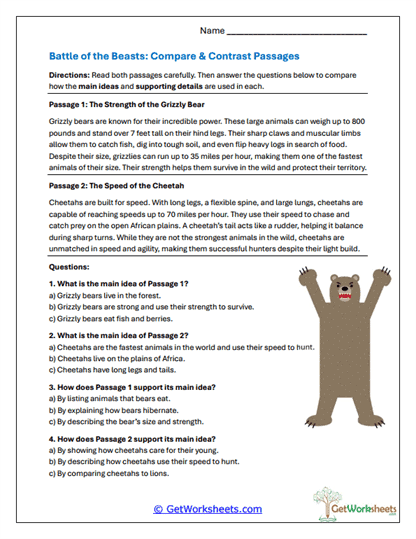
Beast Battle Breakdown
Using two lively informational passages-one about grizzly bears and one about cheetahs-students compare how authors present and support different main ideas. Learners analyze characteristics, strengths, and behaviors to understand how facts build toward a central message. Multiple-choice questions guide close reading and cross-text comparison, strengthening nonfiction comprehension. This worksheet is especially engaging for animal-loving students and is ideal preparation for standardized test-style analysis.
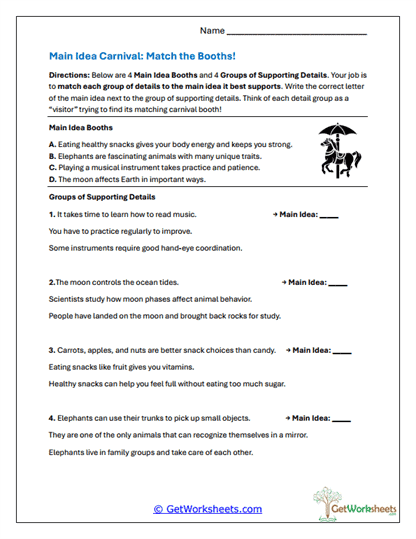
Carnival Booth Matcher
Students visit "main-idea booths" at a carnival-themed worksheet and match sets of supporting details to the correct booth. Each cluster of details contains both obvious and subtle clues, requiring students to blend deductive reasoning with conceptual understanding. The playful carnival theme keeps the task fun while reinforcing logical classification and the ability to synthesize multiple details into a clear central idea.
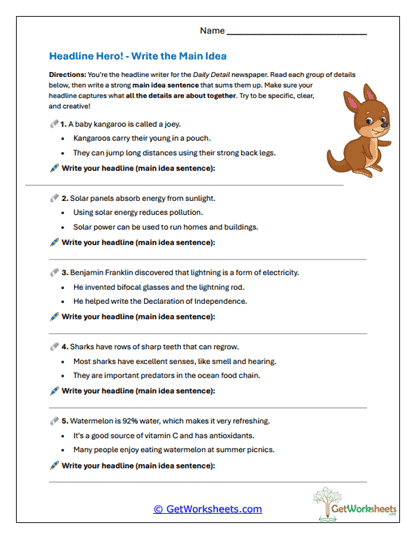
Headline Builder Challenge
As newspaper headline writers, students review groups of factual details and craft a strong main-idea sentence to summarize each cluster. They must distill several facts into a single, clear, concise statement-a powerful skill for both reading and writing instruction. Topics range from historical figures to animals, keeping the content dynamic. Students practice summarizing, vocabulary selection, and precise communication as they refine each headline.
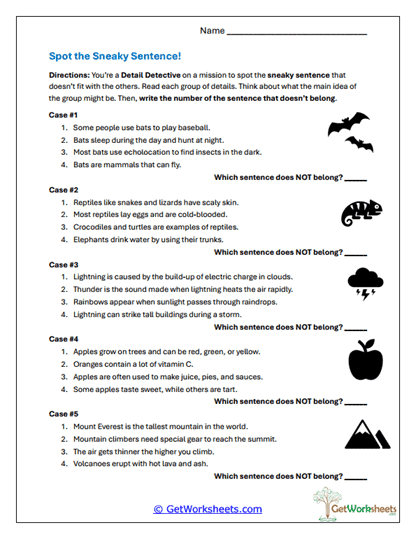
Sneaky Sentence Detective
Students step into the role of detectives identifying the "sentence that doesn't belong" within groups of details. Each set supports a clear main idea-except for one irrelevant or subtly off-topic sentence planted to test close reading skills. Learners must detect the odd detail, then identify the main idea supported by the remaining sentences. This worksheet strengthens comprehension, logical consistency, and attention to detail, all within an exciting mystery-themed format.
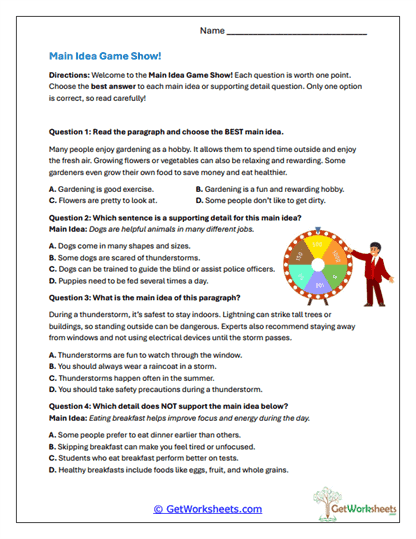
Game Show Main Idea
This high-energy worksheet transforms main-idea practice into a game show challenge. Through multiple-choice questions, students identify central ideas, select correct supporting details, and determine which details do not support the idea. The lively design keeps students engaged while offering strong repetition of key concepts. It's ideal for centers, test prep, or whole-class review games.
Library Drawer Sort
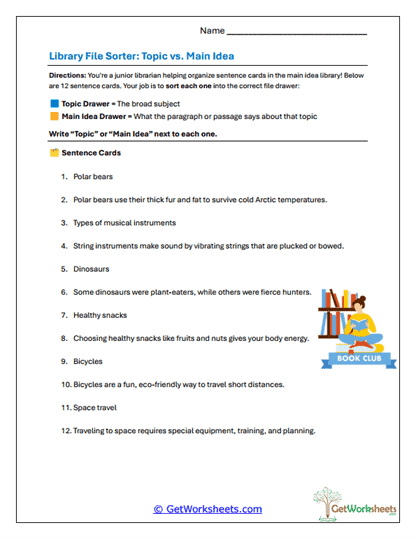
Students sort sentence cards into two categories: topic (broad subject) or main idea (the author's central point). This distinction is crucial for comprehension, yet often confusing for learners. The library-themed drawer system adds visual organization and fun. By examining differences in specificity and purpose, students develop a deeper understanding of how writers structure information.
Paragraph Repair Clinic
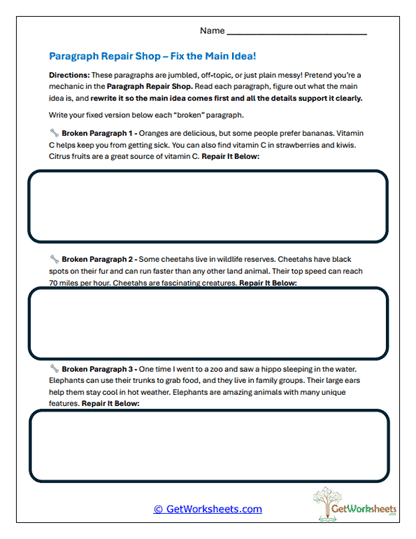
Students become "paragraph doctors," fixing three disorganized or unclear paragraphs by rewriting them with strong main-idea statements followed by logically ordered supporting details. The topics-animals like elephants and cheetahs-are engaging and accessible for young readers. This worksheet helps students understand how paragraph structure communicates meaning and how to revise for clarity and coherence.
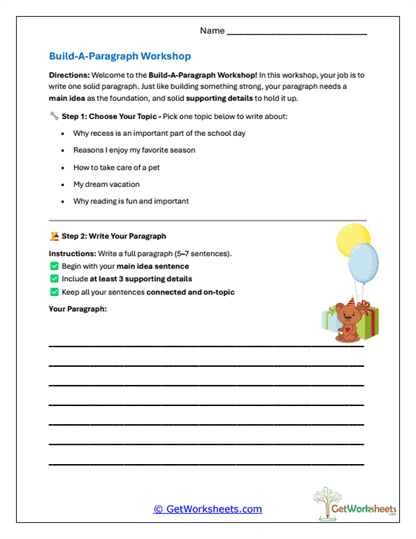
Build-A-Paragraph Studio
This structured writing activity guides students through creating a full paragraph (5-7 sentences). First, they select a topic; then they write a clear main-idea statement followed by at least three supporting details. This format builds independence while still offering a scaffolded approach to paragraph construction. Students strengthen both writing stamina and comprehension by applying main-idea concepts in their own writing.
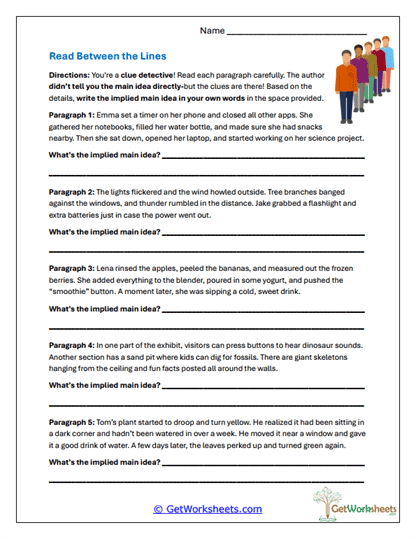
Implied Idea Detective
Students analyze paragraphs where the main idea is not explicitly stated. Instead, they infer meaning from behaviors, descriptions, actions, and context clues. After synthesizing details, they write the main idea in their own words. These relatable scenarios-storms, science projects, museums, smoothies-help students deepen inferential comprehension and strengthen the ability to detect implied meaning across content areas.
Robot Feature Comparison
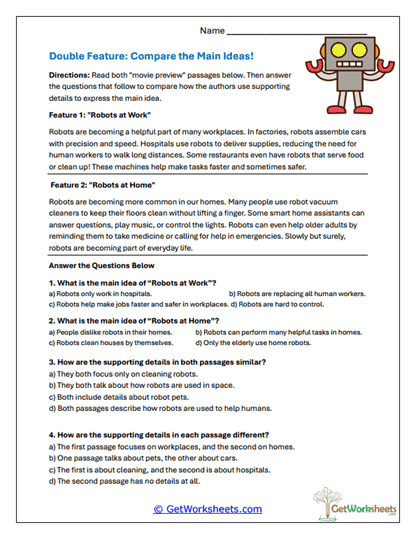
Students read two engaging robot-themed "movie preview" passages-one describing robots at work, the other robots at home-and answer questions comparing their main ideas and supporting details. Multiple-choice questions emphasize careful evaluation of how authors develop ideas, keeping the task accessible while still rigorous. This worksheet builds skills in cross-text analysis and evidence-based interpretation, with a modern, motivating theme.
Bookmark Us Now!
New, high-quality worksheets are added every week! Do not miss out!