Language Worksheets
-
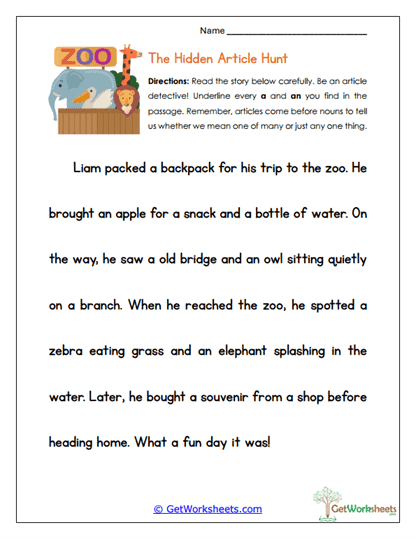
A vs. An
-
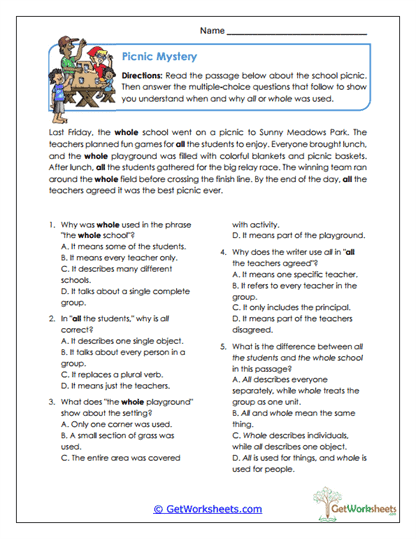
All vs. Whole
-
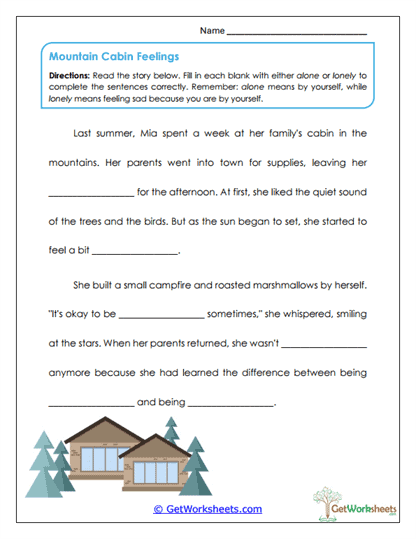
Alone vs. Lonely
-

-
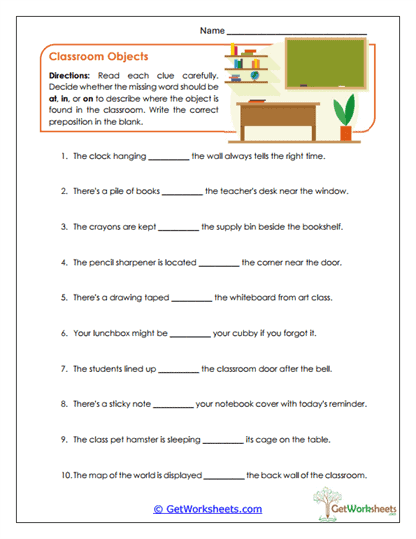
At vs. In vs. On
-
Bad vs. Badly
-
Because vs. Because Of
-
-
Behind vs. In Back Of
-
Beside vs. Besides
-
Between vs. Among
-
By vs. With
-
Despite vs. In Spite Of
-
Each vs. Every
-
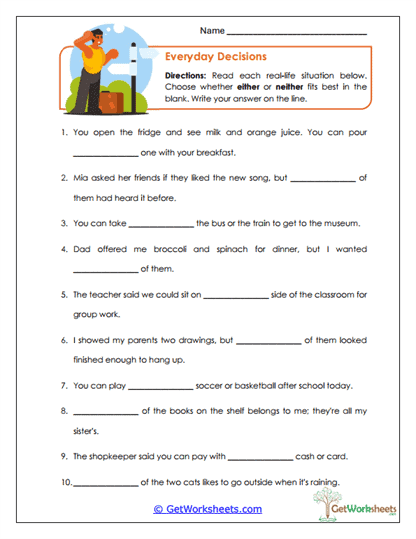
Either vs. Neither
-
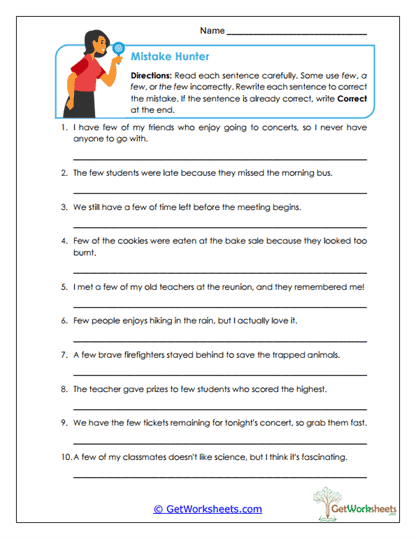
Few vs. A Few vs. The Few
-
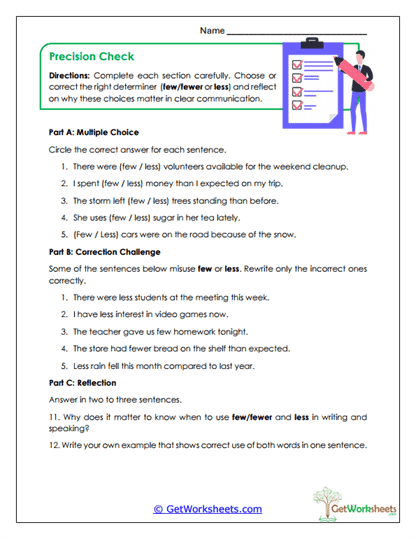
Few vs. Less
-
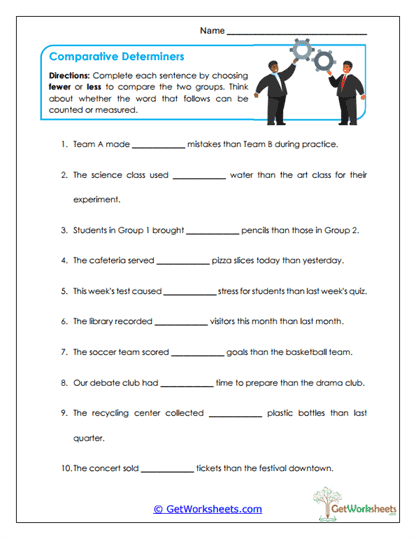
Fewer vs. Less
-
For vs. During
-
For vs. Since
-
Little vs. A Little vs. The Little
-
Then vs. Than
-
Was vs. Were
English Language Worksheets Collection
Understanding the nuances of English grammar helps learners communicate clearly and confidently in both writing and speech. This Language Worksheets collection focuses on common word pairs, tricky prepositions, and frequently confused expressions that students encounter in everyday communication. By breaking these topics into simple explanations and engaging practice exercises, learners can develop stronger grammar instincts and more accurate word choice.
Each worksheet set includes examples, short practice activities, sentence rewrites, and comparison tasks that help students notice patterns and apply rules effectively. Learners build skills in precision, clarity, and proper structure while becoming more aware of how small word choices can change meaning. These exercises support reading comprehension, writing fluency, and overall language mastery for learners of all levels.
To support targeted skill-building, educators and families can explore each of the subtopic worksheet collections listed below. Each one focuses on a specific word pair or grammatical concept, making instruction simple to customize. Together, these sets create a comprehensive resource for strengthening English grammar, usage, and communication.
Subtopic Worksheet Collection Descriptions
A vs. An
These worksheets teach learners when to use "a" and when to use "an" based on sound, not spelling. This strengthens foundational grammar and sentence fluency. Clear article usage makes writing smoother and easier to read.
All vs. Whole
Students practice distinguishing between "all" and "whole" in different contexts. This improves accuracy in descriptions and quantity expressions. Using the right term helps learners express ideas more naturally.
Alone vs. Lonely
Learners explore the difference between a factual state and an emotional experience. This supports vocabulary understanding and sensitive word choice. It helps students describe feelings and situations with clarity.
At vs. In vs. On
These worksheets help learners choose the correct preposition for time and place. This strengthens essential grammar for everyday communication. Correct usage makes sentences sound more natural and precise.
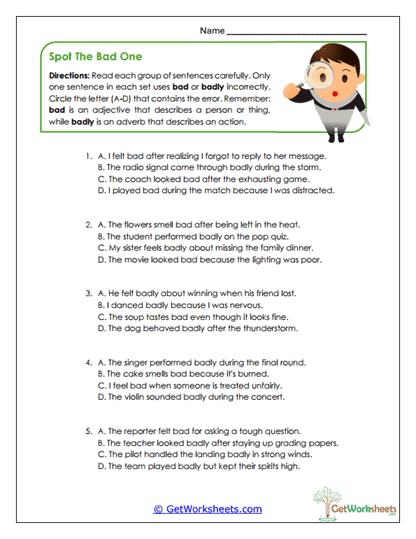
Bad vs. Badly
Students learn how to use "bad" as an adjective and "badly" as an adverb. This supports understanding of word functions and sentence structure. Accurate use improves both speaking and writing quality.
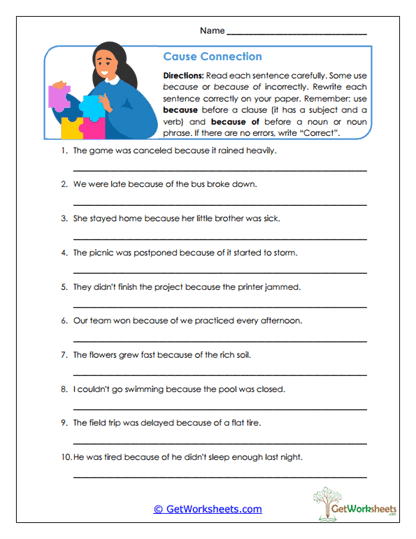
Because vs. Because Of
Learners practice choosing the correct form for expressing reasons. This enhances sentence construction and logical organization. Using the right phrase helps students explain ideas more clearly.
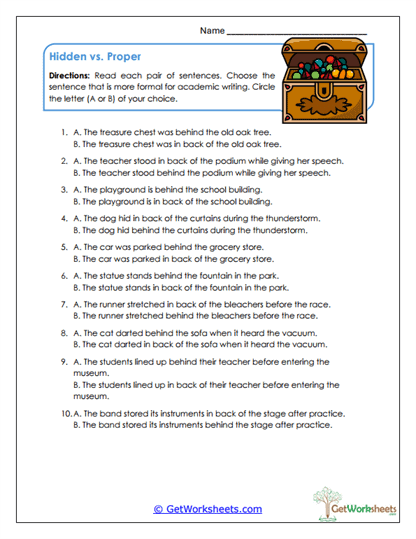
Behind vs. In Back Of
These worksheets clarify subtle differences in meaning and context. This builds nuanced vocabulary skills. Understanding both terms helps learners choose wording that fits the situation.
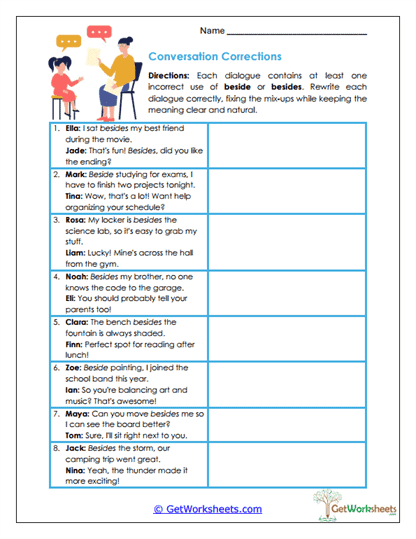
Beside vs. Besides
Students learn the difference between physical placement and additional information. This supports clearer communication and reading comprehension. Using these words correctly makes messages easier to understand.
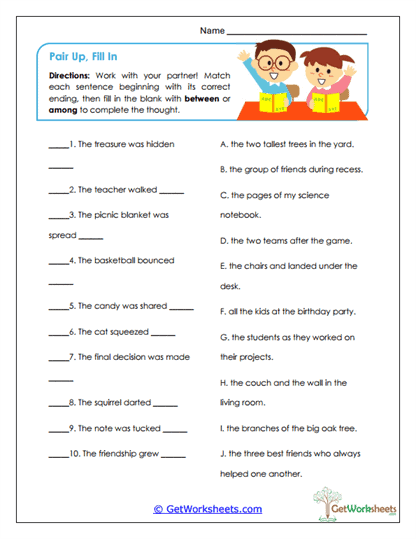
Between vs. Among
Learners explore how "between" relates to individual items while "among" refers to groups. This strengthens grammatical reasoning and precision. Correct usage helps students craft clearer descriptive sentences.
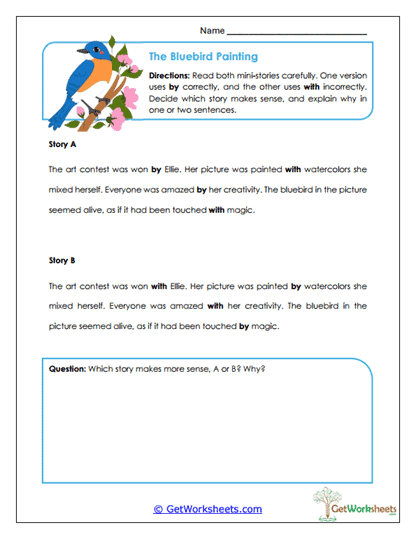
By vs. With
These worksheets teach how to express method, proximity, and tools accurately. This supports strong prepositional understanding. Choosing the right word helps students communicate actions more effectively.
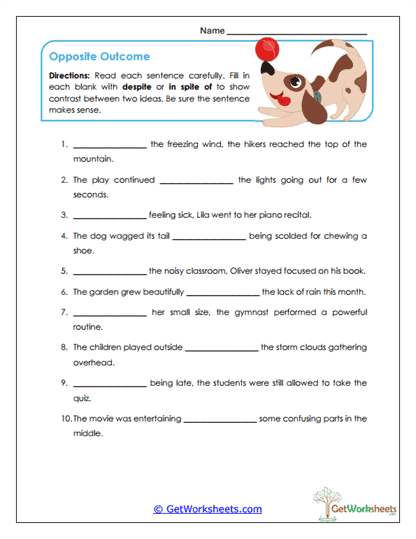
Despite vs. In Spite Of
Students practice using these terms interchangeably but with correct structure. This improves sentence variety and formal writing skills. Knowing both forms helps learners express contrast smoothly.
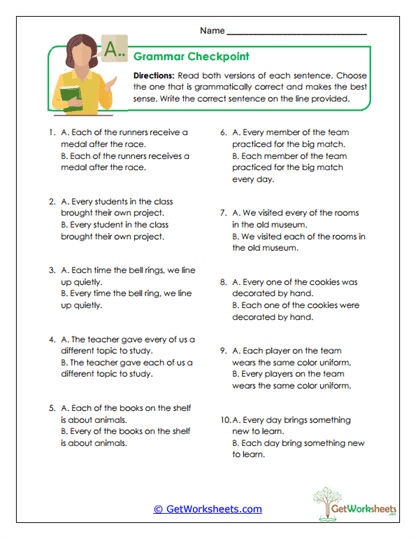
Each vs. Every
Learners compare the meanings and uses of these similar but distinct terms. This builds accuracy in descriptions and generalizations. Clear usage helps students communicate more precisely about groups and individuals.
Either vs. Neither
These worksheets help students choose the correct term for positive or negative pairings. This supports logical sentence construction. Mastering this distinction makes explanations clearer and more accurate.
Few vs. A Few vs. The Few
Learners explore how small differences in phrasing change meaning significantly. This deepens understanding of quantity expressions. Knowing these forms helps students express nuance in writing.
Few vs. Less
These worksheets teach when to use "few" for countable nouns and "less" for uncountable nouns. This strengthens grammatical clarity and proper usage. Using the correct form improves reading and writing precision.
Fewer vs. Less
Students practice distinguishing between the two terms in practical examples. This supports accurate grammar and measurable descriptions. Correct usage helps learners communicate quantities more effectively.
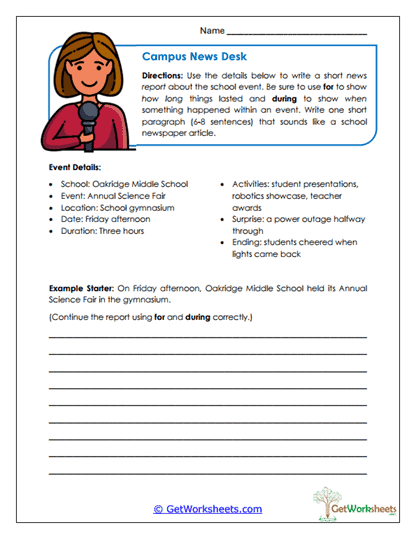
For vs. During
Learners explore how these prepositions relate to time and duration. This improves sentence structure and meaning. Using them correctly helps students describe events more clearly.
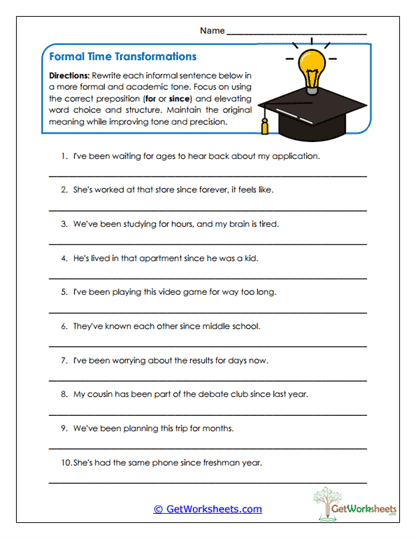
For vs. Since
These worksheets teach the difference between duration ("for") and starting points ("since"). This supports proper tense use and time expressions. Mastering these terms improves everyday communication.
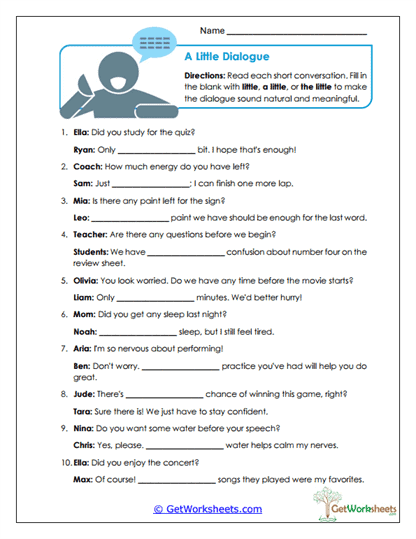
Little vs. A Little vs. The Little
Students learn how each form communicates a slightly different meaning. This builds vocabulary precision and descriptive accuracy. Understanding these distinctions helps learners express subtle differences.
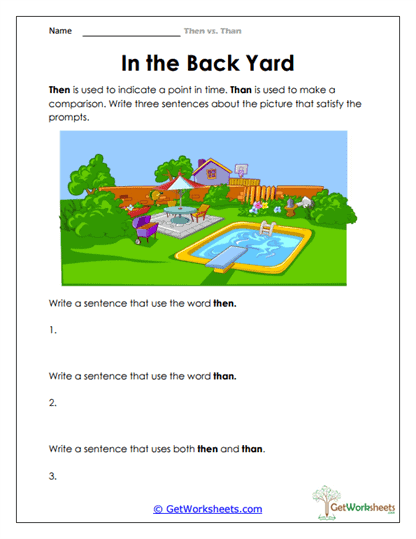
Then vs. Than
Learners practice identifying whether a sentence expresses time or comparison. This strengthens editing skills and overall clarity. Using the correct term helps prevent common writing mistakes.
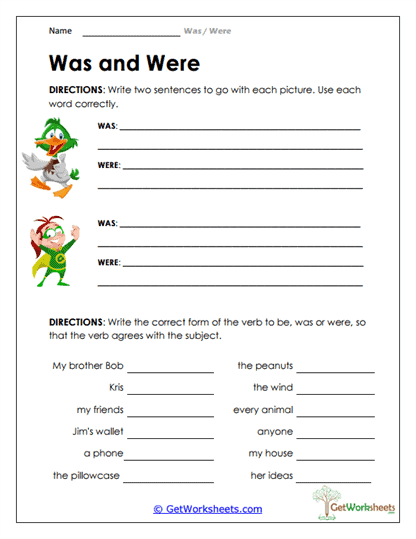
Was vs. Were
These worksheets teach when to use each verb form, including the subjunctive mood. This supports strong grammar and sentence correctness. Clear verb usage improves confidence in both speaking and writing.

Bookmark Us Now!
New, high-quality worksheets are added every week! Do not miss out!