Independence Day Worksheets
About This Worksheet Collection
This Independence Day worksheet collection blends U.S. history, civics, literacy, and writing skills into a high-interest set of activities focused on the founding of the United States and the values celebrated on July 4th. Through timelines, historical passages, symbol matching, paraphrasing activities, debates, creative writing tasks, and vocabulary work, students explore both the events of the American Revolution and the ongoing meaning of independence in modern life. These worksheets give teachers a versatile mix of factual, analytical, and expressive tasks suitable for cross-curricular instruction during patriotic units.
As students work through the collection, they strengthen essential academic skills such as reading comprehension, historical sequencing, fact evaluation, vocabulary application, persuasive writing, and summarizing. Learners analyze foundational documents, interpret motivations behind key events, and reflect on how ideals like liberty and equality continue to influence civic life today. The variety of worksheet formats encourages critical thinking, creativity, and meaningful connections between history and personal experience.
Detailed Descriptions Of These Worksheets
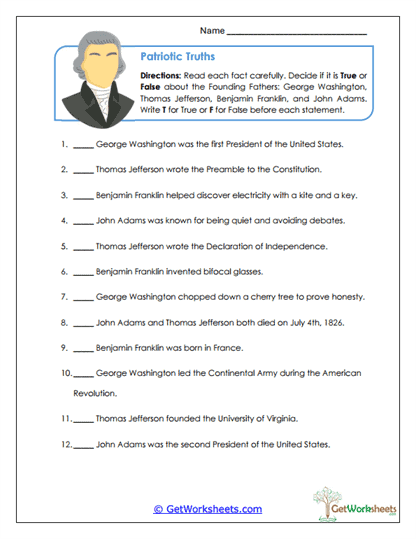
Patriotic Truths
Students evaluate twelve statements about major Founding Fathers and label each as True or False. They practice distinguishing facts from myths by drawing on background knowledge and close reading. This activity builds historical understanding and strengthens critical reasoning. It helps learners correct common misconceptions about early American leaders.
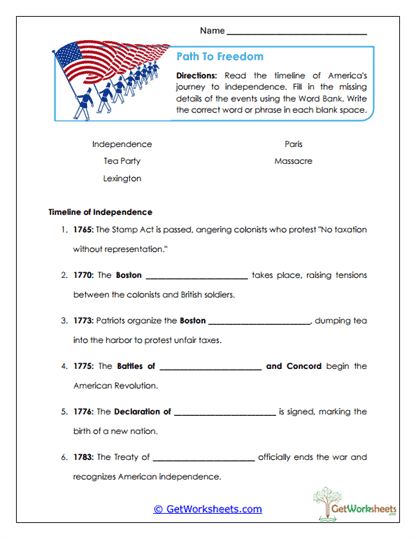
Path to Freedom
Learners complete a fill-in-the-blank timeline using terms from a word bank to identify events such as the Stamp Act, Boston Tea Party, and Treaty of Paris. The activity reinforces understanding of the American Revolution's chronology and turning points. Students practice reading for detail and connecting cause-and-effect events. It supports vocabulary building and historical sequencing skills.
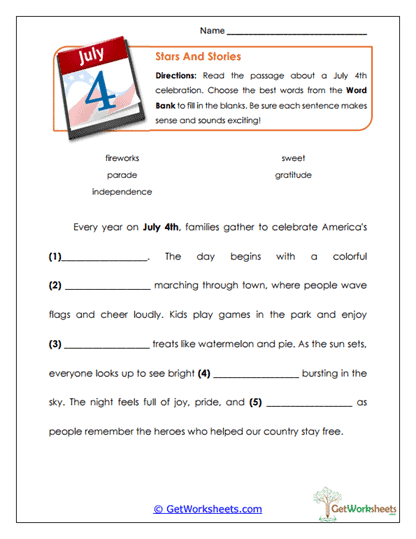
Stars and Stories
Students fill in missing words in a short July 4th narrative using a holiday-themed word bank. The worksheet helps learners use context clues to ensure vocabulary selections make sense within the passage. It reinforces comprehension, fluency, and thematic vocabulary. The activity creates a meaningful connection between reading skills and cultural traditions.
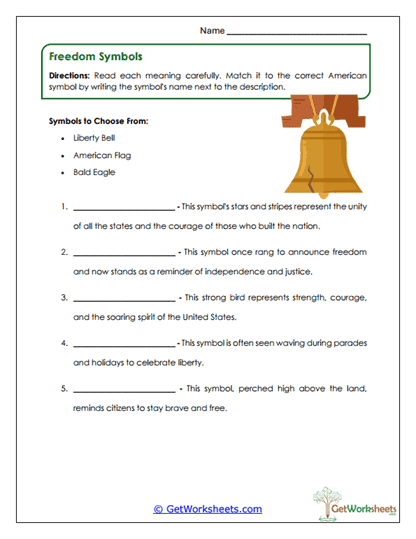
Freedom Symbols
Learners read five descriptions and match each one to an American symbol such as the Liberty Bell, the American Flag, or the Bald Eagle. They use detail recognition and prior knowledge to determine the correct match. This worksheet strengthens comprehension and civics literacy. It reinforces understanding of national identity and symbolism.
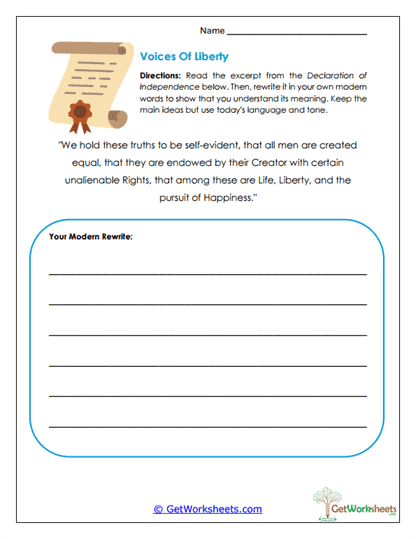
Voices of Liberty
Students paraphrase an excerpt from the Declaration of Independence in modern language. The activity teaches simplification of complex historical text while preserving meaning. Learners build interpretation skills and deepen understanding of foundational civic principles. It promotes clear writing and historical comprehension.
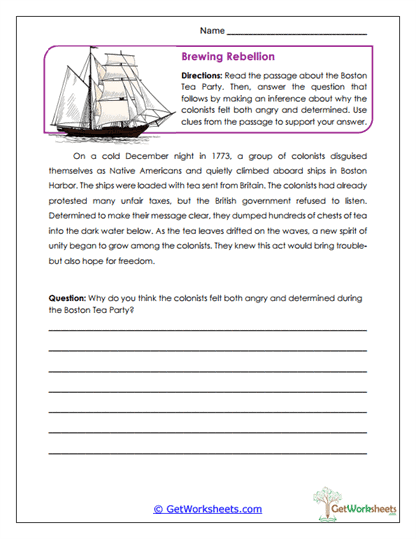
Brewing Rebellion
Learners read a passage about the Boston Tea Party and answer an inferential question requiring text-based evidence. This worksheet fosters deeper comprehension of motivations behind colonial protest. Students strengthen inferencing and historical reasoning. It encourages thoughtful engagement with events leading to revolution.
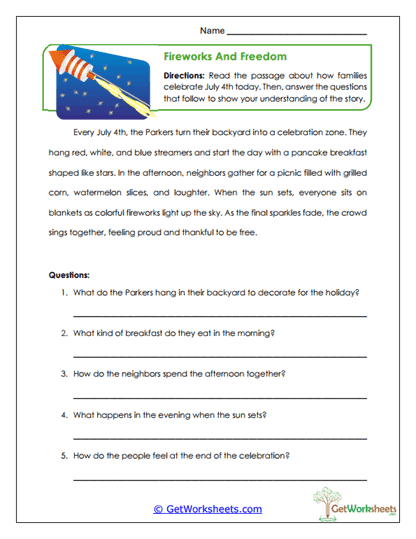
Fireworks and Freedom
Students read about a family's July 4th celebration and answer comprehension questions involving recall, sequencing, and detail interpretation. The activity reinforces narrative reading skills and builds understanding of holiday customs. It helps learners connect textual information to cultural experiences. Written responses support clarity and complete-sentence usage.
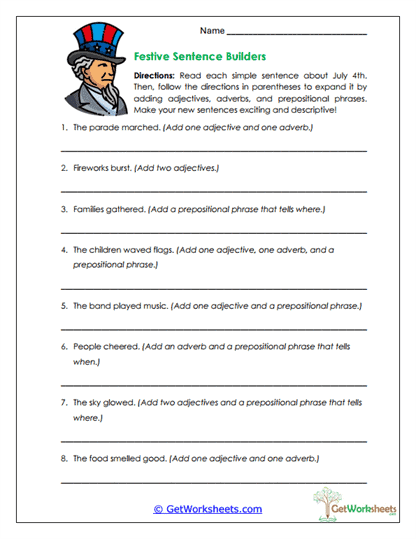
Festive Sentence Builders
Learners expand simple Independence Day-themed sentences by adding adjectives, adverbs, and prepositional phrases. The activity supports grammar practice, expressive writing, and sentence-level creativity. Students enhance descriptive detail and improve syntactic variety. It builds confidence in crafting vivid language.
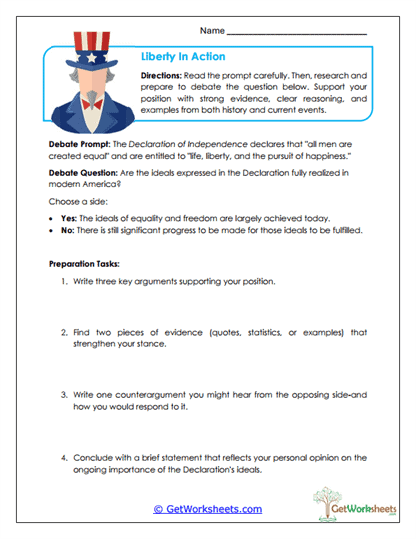
Liberty in Action
Students prepare for a structured debate about whether the ideals of the Declaration of Independence are fully realized today. They develop arguments, gather evidence, consider counterarguments, and write a concluding statement. This worksheet strengthens persuasive writing and civic reasoning. It helps students connect historical ideals to contemporary issues.
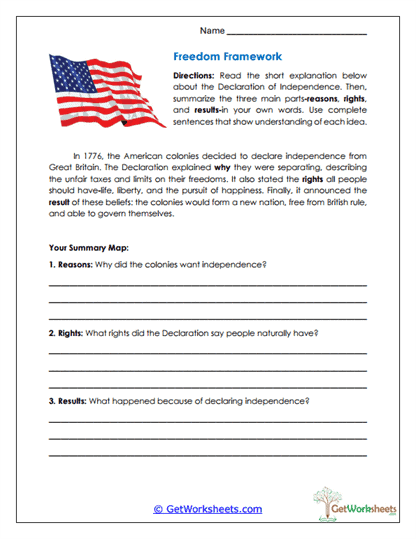
Freedom Framework
Learners read an informational paragraph about the Declaration of Independence and complete a three-part summary map. They identify reasons for independence, stated rights, and outcomes. The activity supports summarization skills and comprehension of foundational U.S. history. It helps students organize information clearly in writing.
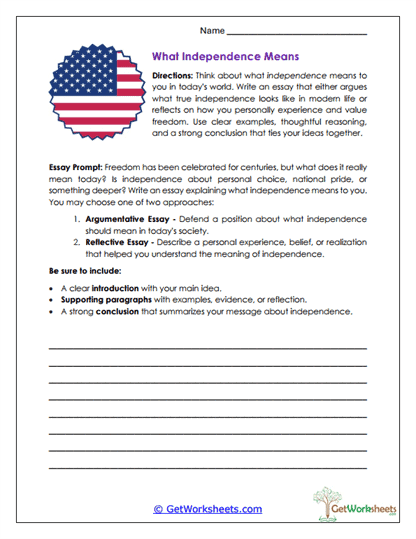
What Independence Means
Students write either an argumentative or reflective essay about the meaning of independence in today's world. They craft an introduction, support their claims, and conclude with a meaningful final message. This activity builds composition skills and encourages personal connection to civic concepts. It fosters thoughtful reasoning and expressive writing.
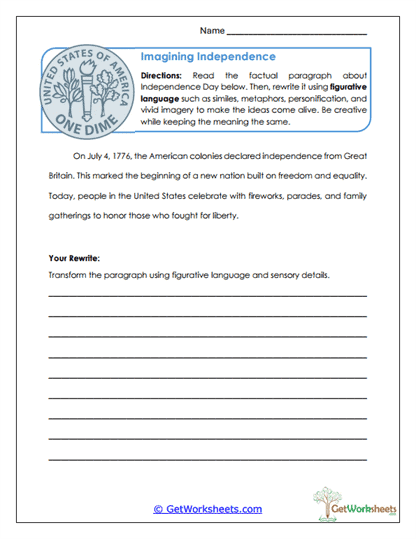
Imagining Independence
Learners rewrite a factual paragraph using figurative language such as similes, metaphors, imagery, and personification. The task blends creative writing with informational comprehension. Students practice transforming style while maintaining meaning. It strengthens expressive language and reinforces understanding of Independence Day themes.
Bookmark Us Now!
New, high-quality worksheets are added every week! Do not miss out!