Great Gatsby Worksheets
About This Worksheet Collection
The Great Gatsby worksheet collection guides students through a layered examination of Fitzgerald's iconic novel, blending literary analysis with historical context, creative writing, argumentation, and reflective thinking. These activities allow learners to explore the novel's central tensions-illusion vs. reality, hope vs. disillusionment, and aspiration vs. moral decay-while developing sophisticated reading and writing skills.
Across the collection, students analyze quotes, map character development, classify conflicts, trace cause-and-effect patterns, explore Jazz Age themes, and evaluate moral complexities. They also write from character perspectives, practice historically grounded vocabulary, and construct argumentative essays. The combination of textual interpretation, contextual reasoning, and creative engagement equips students with a richer understanding of the novel's enduring impact.
Detailed Descriptions Of These Worksheets
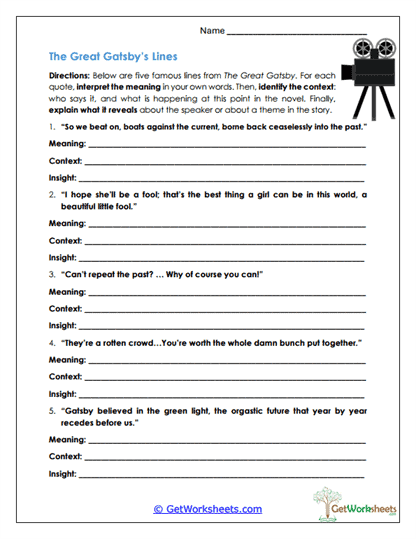
Gatsby Quote Analysis
Students analyze five iconic quotes by interpreting meaning, identifying context, and explaining what each reveals about characters or themes such as longing, illusion, or unattainable dreams. This encourages close reading and deep literary insight. Learners build skills in contextual reasoning and theme development.
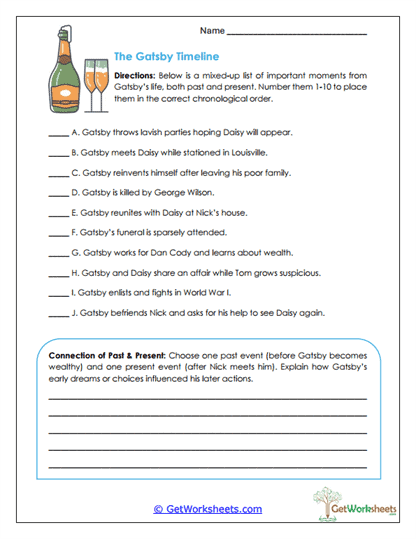
Gatsby Life Timeline
Learners sequence ten events from Gatsby's life to understand his transformation from James Gatz to the legendary Gatsby. A reflection prompt asks students to connect early experiences to later choices, reinforcing cause-and-effect reasoning in character development. This supports structural analysis and analytical writing.
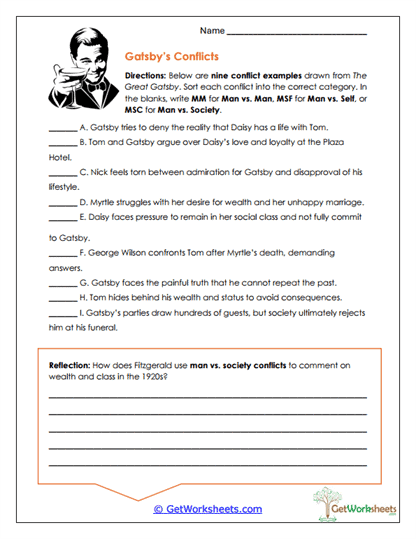
Conflict Sorting
Students categorize nine conflicts as Man vs. Man, Man vs. Self, or Man vs. Society. They explore how conflicts expose character motivations and broader social tensions. This activity connects conflict to theme and encourages reflective reasoning about Fitzgerald's social commentary.
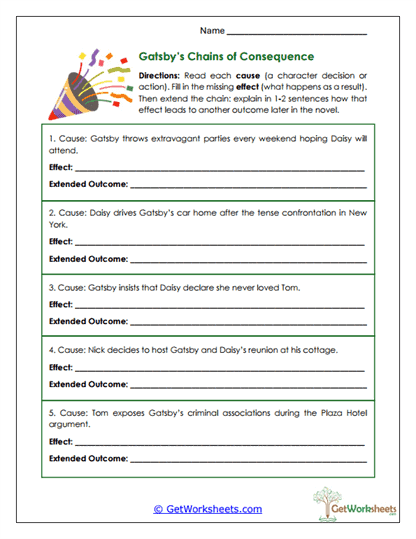
Consequence Chains
Learners trace chains of consequences from key character decisions, showing how actions lead to escalating tension or tragedy. This builds understanding of plot structure as a network of interdependent events. Students practice analytical writing and character motivation analysis.
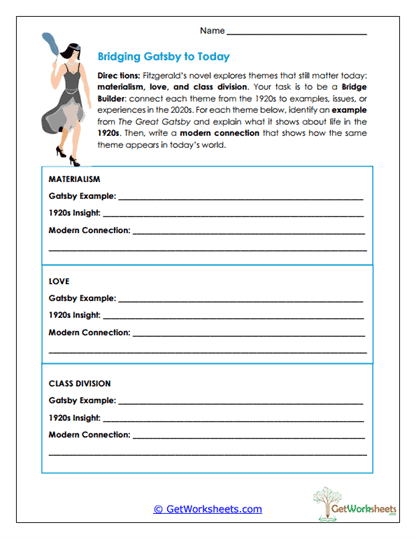
Gatsby Then & Now
Students examine three major themes-materialism, love, and class division-by pairing textual examples with modern parallels. This task reinforces theme interpretation and cultural analysis. Learners see the novel's continued relevance in contemporary society.
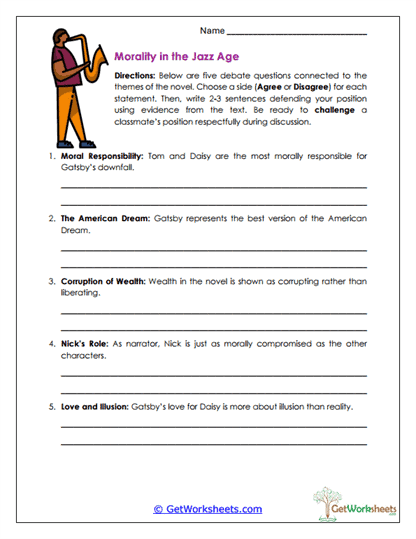
Jazz Age Morality Debate
Using five debate prompts, students craft short evidence-based arguments about moral responsibility, wealth, the American Dream, narration, and the nature of Gatsby's love. This strengthens argumentation and promotes evaluation of complex character dynamics.
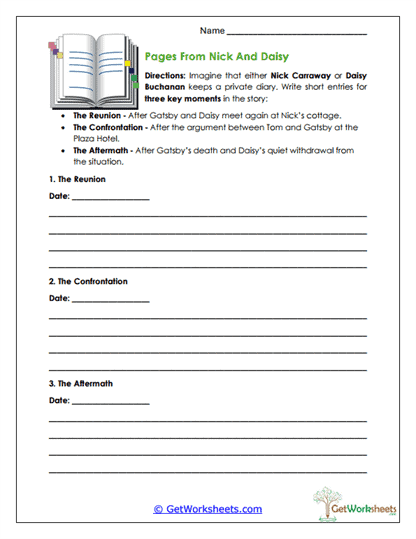
Nick or Daisy's Diary
Students write diary entries from Nick's or Daisy's point of view for three major events, developing narrative voice and perspective-taking. This creative task deepens psychological insight and highlights character bias and emotional nuance.
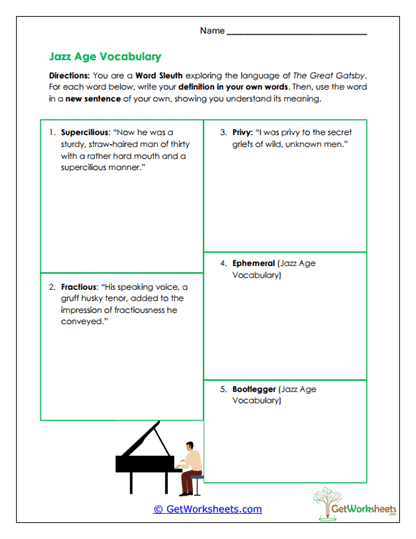
Jazz Age Vocabulary
Learners define historically grounded vocabulary and use each word in an original sentence. This supports understanding of tone, characterization, and cultural context within Fitzgerald's stylistic choices. It enhances literary vocabulary mastery.
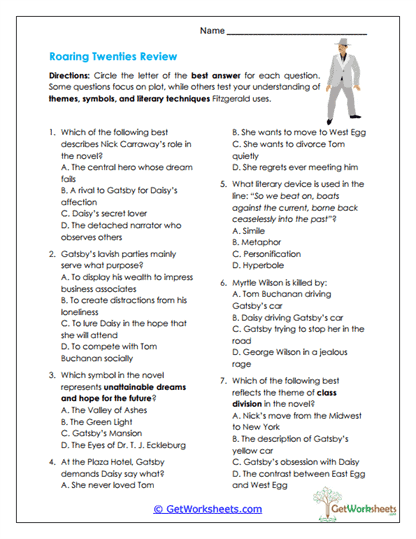
Roaring Twenties Review
A multiple-choice review assessing comprehension of plot, characters, symbols, and themes. Students apply their understanding of literary devices and Fitzgerald's critique. This serves as a formative or summative check on critical interpretation.
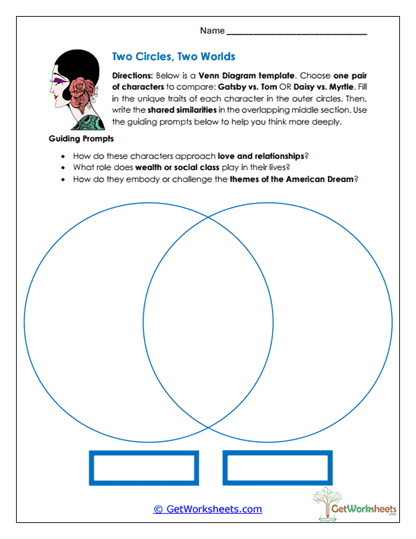
Character Comparison Venn
Students compare character pairs-Gatsby vs. Tom or Daisy vs. Myrtle-to explore contrasts in values, love, wealth, and the American Dream. This visual activity strengthens compare-and-contrast thinking and thematic insight.
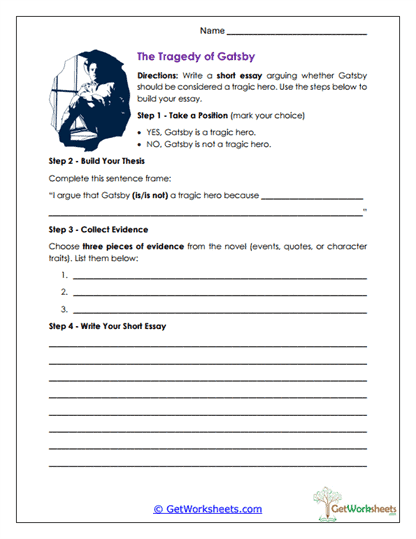
Tragic Hero Essay
Learners write a structured argumentative paragraph evaluating whether Gatsby fits the tragic hero archetype. They build a thesis, gather evidence, and present a reasoned argument. This develops analytical writing, thesis construction, and evidence-based reasoning.
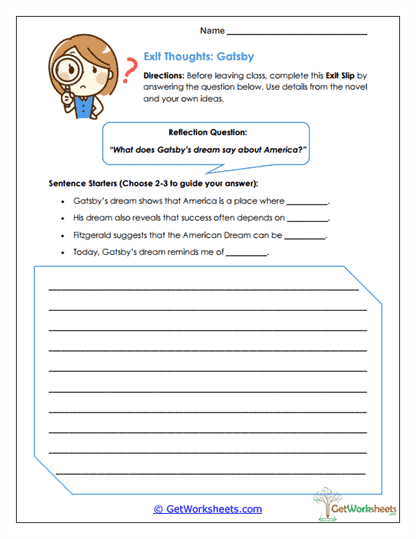
Gatsby Exit Reflection
Students respond to the reflective question, "What does Gatsby's dream say about America?" They write a thoughtful paragraph blending personal interpretation with textual evidence. This activity deepens theme analysis and fosters text-to-world connections.
Bookmark Us Now!
New, high-quality worksheets are added every week! Do not miss out!