Glossary & Dictionary Skills Worksheets
About This Worksheet Collection
This collection of glossary and dictionary skills worksheets is designed to help learners become more independent and strategic readers. Each activity guides students in understanding how to use reference tools, interpret word meanings in context, and build stronger vocabulary knowledge across subject areas. The worksheets are especially useful for teachers integrating language skills into science and informational texts, as well as for parents supporting academic vocabulary development at home. With a focus on practical application, the collection helps transform vocabulary learning into an active and meaningful process.
As learners work through these exercises, they develop essential skills such as using context clues, navigating dictionaries, analyzing word relationships, and applying new vocabulary in writing. The activities promote critical thinking by encouraging students to compare meanings, verify predictions, and classify words based on function and structure. Educators will appreciate how these resources support comprehension alongside vocabulary growth, while families can use them to reinforce language skills in a clear and accessible way. Together, the worksheets build a strong foundation for confident reading, writing, and academic success.
Detailed Descriptions Of These Worksheets
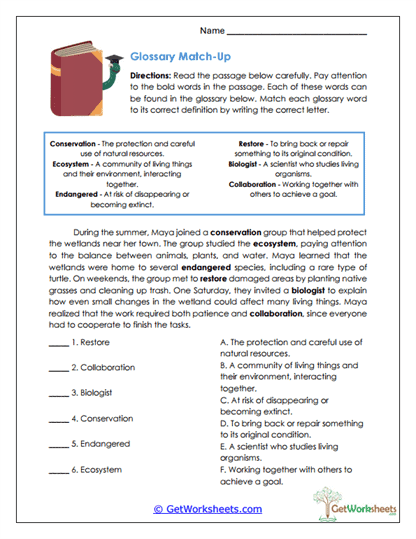
Glossary Match-Up
This worksheet supports academic vocabulary development by guiding learners to connect highlighted terms with their correct glossary definitions. By working within the context of an informational passage, readers learn to rely on surrounding clues while confirming meaning through reference tools. Teachers can use it to reinforce content-area literacy, particularly in science and social studies. The matching format provides structured support for building both comprehension and word knowledge.
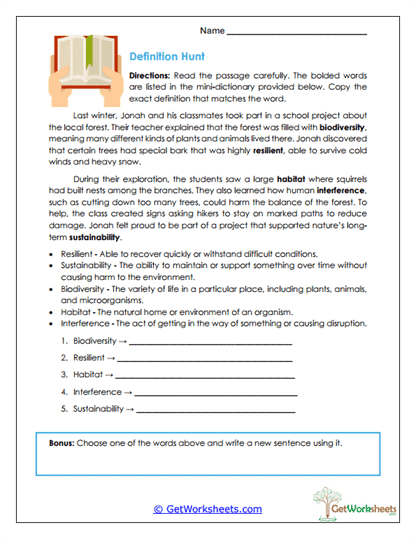
Definition Hunt
Context-driven vocabulary work takes center stage as learners determine meanings of unfamiliar words before pairing them with accurate glossary entries. The activity encourages careful reading and thoughtful analysis of how terms function within a passage. Educators will find it especially helpful for teaching students how to independently unpack new vocabulary. It also reinforces habits that support long-term reading comprehension.
Double Duty
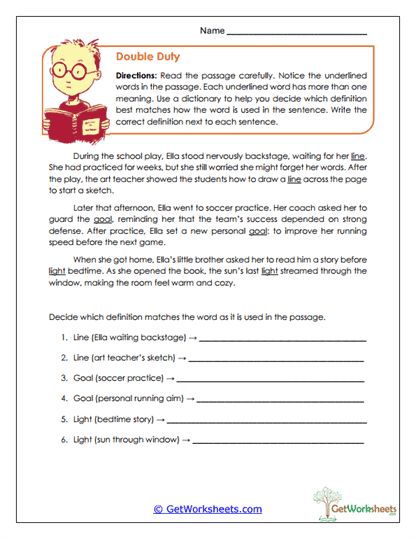
Focusing on multiple-meaning words, this worksheet helps learners recognize how a single term can take on different definitions depending on context. By comparing usage across sentences, students develop flexibility in interpreting language. Teachers can use this resource to strengthen comprehension and reduce confusion with commonly misunderstood words. It also builds a more nuanced understanding of vocabulary in real reading situations.
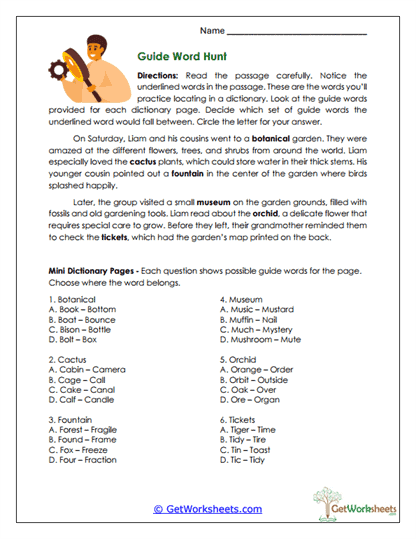
Guide Word Hunt
Dictionary navigation becomes more accessible as learners practice identifying correct guide words for locating entries. The worksheet strengthens alphabetical awareness while introducing practical reference skills. Educators can use it to prepare students for research tasks that require efficient word lookup. Its focused approach helps build confidence in using traditional dictionary tools.
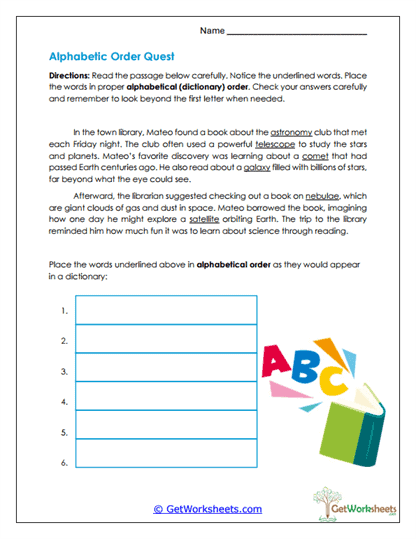
Alphabetic Order Quest
Sequencing words accurately is the primary focus of this activity, which goes beyond simple first-letter sorting. Learners compare multiple letters within words to determine correct placement, strengthening attention to detail. Teachers will find it useful for reinforcing foundational dictionary readiness skills. The exercise supports both reading organization and writing accuracy.
Glossary Guess
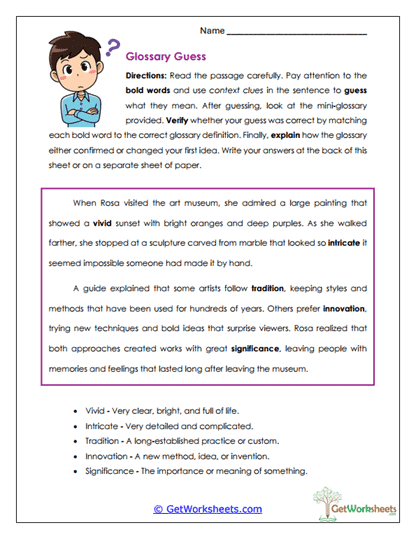
Prediction and verification work together in this worksheet, encouraging learners to infer word meanings before checking definitions. This process builds active reading habits and strengthens confidence when encountering unfamiliar vocabulary. Educators can use it to model effective comprehension strategies in real time. The reflective component helps students evaluate and refine their thinking.
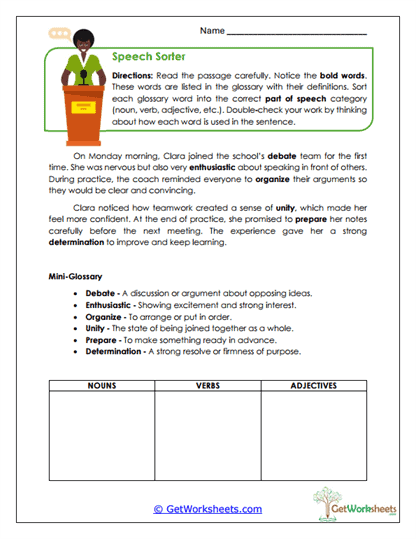
Speech Sorter
Grammar and vocabulary intersect in this activity as learners categorize words into nouns, verbs, and adjectives based on usage. The worksheet reinforces understanding of how word meaning and function work together within sentences. Teachers can use it to connect language structure with comprehension skills. It also supports clearer and more effective writing.
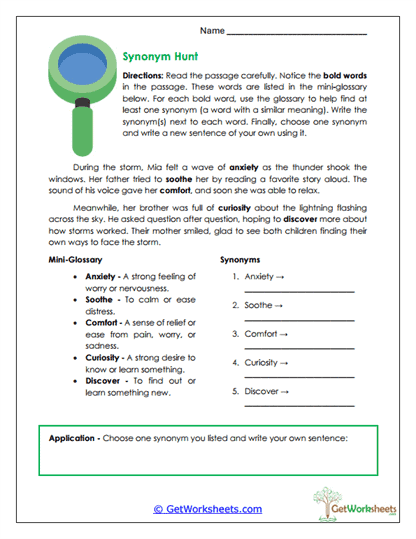
Synonym Hunt
Expanding vocabulary through word relationships, this worksheet guides learners in identifying synonyms using glossary support. The activity encourages students to think about subtle differences in meaning and appropriate usage. Educators may find it especially helpful for improving both reading comprehension and writing variety. It promotes more precise and flexible language use.
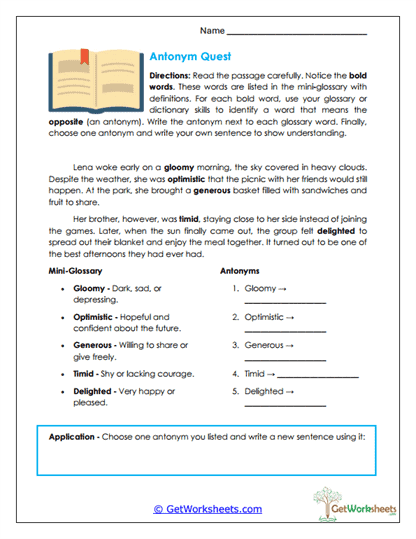
Antonym Quest
Opposite meanings are explored through this activity, helping learners build a deeper understanding of word relationships. By applying antonyms in sentences, students move beyond recognition into practical usage. Teachers can use this worksheet to strengthen both comprehension and expressive language skills. It also reinforces critical thinking about how meaning shifts in context.
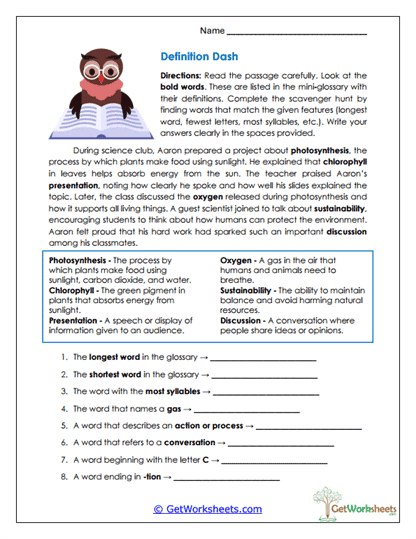
Definition Dash
This worksheet takes vocabulary study further by asking learners to analyze and classify words based on specific features. The task encourages close examination of definitions, structure, and meaning. Educators will find it valuable for promoting higher-level thinking within vocabulary instruction. It supports a more analytical approach to language development.
Glossary in Action
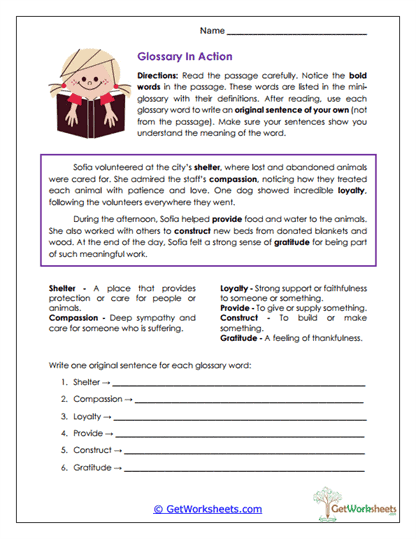
Application is the focus here, as learners use glossary definitions to create original sentences for each vocabulary word. This process reinforces true understanding by requiring students to use words accurately in context. Teachers can use it to assess both comprehension and writing skills simultaneously. It also helps students retain new vocabulary through meaningful use.
Glossary Builder
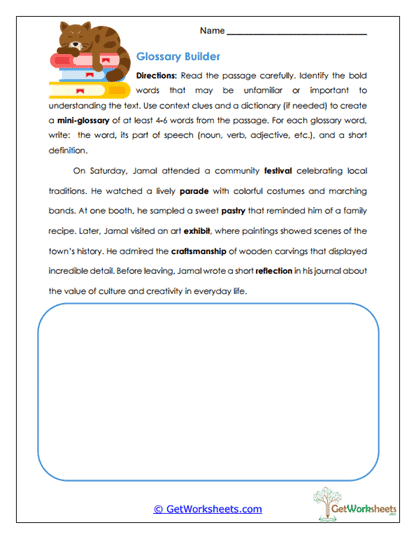
This worksheet encourages independent learning by guiding students to create their own mini glossary from a passage. Learners identify unfamiliar words, determine meanings, and organize their findings clearly. Educators can use it to build research skills and promote ownership of vocabulary learning. The activity supports long-term retention and deeper engagement with language.
Bookmark Us Now!
New, high-quality worksheets are added every week! Do not miss out!