Genres of Literature Worksheets
About This Worksheet Collection
The Genres of Literature Worksheets collection introduces students to the rich variety of literary categories they encounter in reading. Rather than simply memorizing genre names, students learn to recognize the deeper traits that shape each category-such as tone, setting, plot structure, character types, stylistic markers, and thematic purpose. Across the worksheets, learners explore how authors' choices create meaning and how genre expectations guide readers' interpretations.
Through activities that involve sorting, classifying, matching, comparing, and justifying responses, students practice reading analytically and applying genre knowledge in diverse contexts. Many worksheets also simulate real-world literacy tasks-such as working as a librarian, decoding summaries, analyzing excerpts, and identifying purpose-helping students build practical comprehension skills. The entire collection reinforces close reading, critical thinking, and confident genre identification across fiction, nonfiction, and poetry.
Detailed Descriptions Of These Worksheets
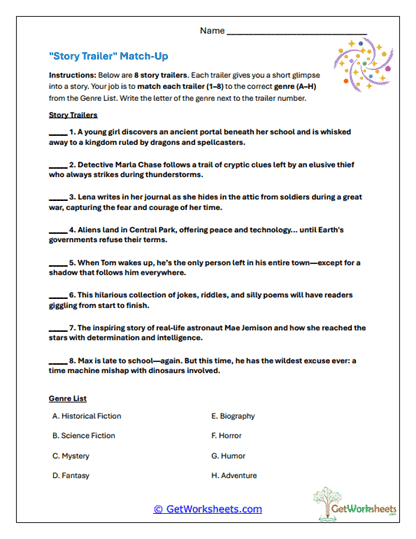
Story Trailer Sort
Students read eight short "story trailer" descriptions, each modeled after a movie preview or book teaser. These mini-summaries include clues about setting, character roles, conflicts, and narrative tone. Learners identify which genre each description represents-fantasy, horror, adventure, biography, realistic fiction, and more-based on key features. This task strengthens students' understanding of genre conventions and enhances their ability to detect subtle genre cues within short text snippets. It also helps them practice classification skills using concise but information-rich descriptions.
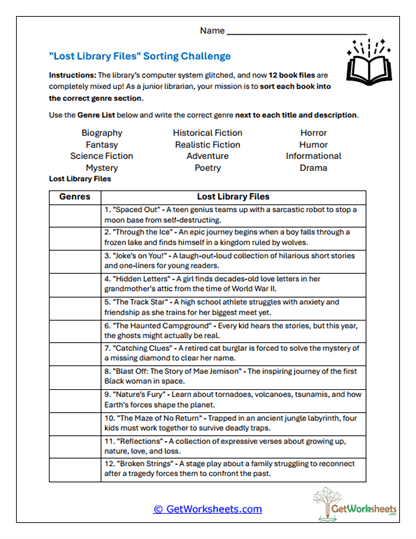
Lost Library Sorter
Acting as junior librarians, students sort twelve mixed-up book descriptions into correct genre categories. Each blurb includes distinguishing elements such as time period, emotional tone, level of realism, and the presence of magical, humorous, mysterious, or historical traits. Students must interpret each summary carefully and apply their understanding of genre markers to organize the texts logically. This worksheet mirrors a real-world categorizing task, reinforcing analytical thinking and improving students' ability to recognize genre-specific patterns.
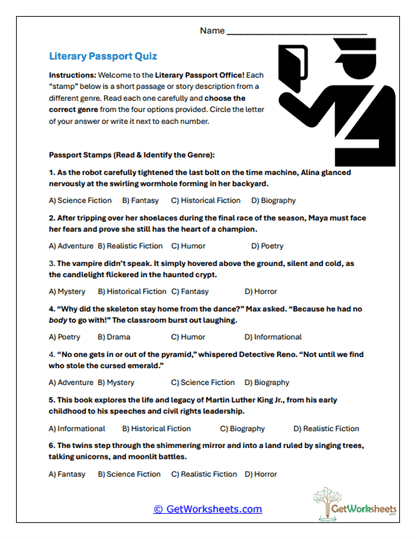
Passport Genre Quiz
Using a travel-themed "passport" format, students read six short narrative excerpts, each representing a different literary genre. The task requires learners to examine contextual clues such as world-building details, scientific elements, poetic devices, or biographical facts. Students compare multiple genre options before choosing the correct match. This worksheet sharpens genre recognition skills by prompting students to make evidence-based decisions and carefully justify their genre choices. Its creative passport theme keeps the activity visually engaging and skill-driven.
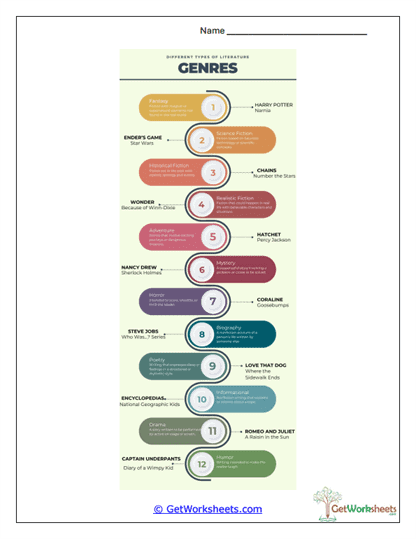
Genre Infographic Guide
This visually organized infographic introduces students to twelve common genres, pairing each one with well-known book examples. The chart supports visual learners by presenting genre characteristics, examples, and brief descriptions in an easy-to-reference format. Students can use the page as a study tool during genre lessons or as an anchor chart throughout a unit. The guide helps learners build foundational genre familiarity, strengthening their ability to connect genre traits to real books they may have encountered.
Genre Choice Analyzer
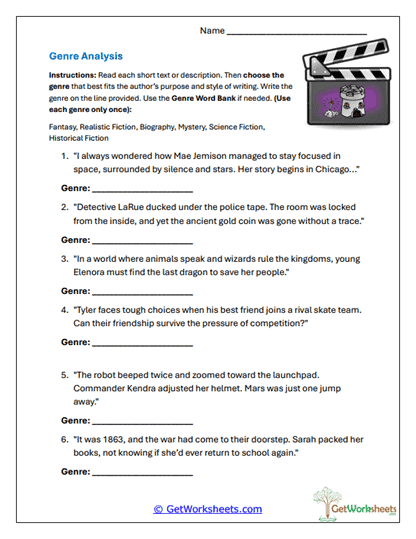
Students read six short excerpts or descriptions and select the genre that best fits each one using a genre word bank for guidance. To make accurate choices, learners must examine narrative elements such as magical features, scientific concepts, mystery structures, historical settings, or true-to-life realism. This worksheet develops students' close reading and deductive reasoning skills as they evaluate evidence and compare it against their genre knowledge. It reinforces confidence in genre identification and encourages analytical thinking.
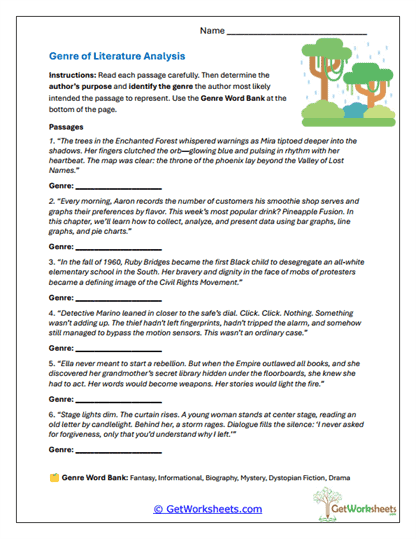
Purpose & Genre Assessment
This dual-focus worksheet asks students to determine both the genre and the author's purpose for six passages. Texts include fantasy, biography, dystopian fiction, informational writing, and drama. Students must analyze tone, character intentions, plot direction, and writing structure to make accurate classifications. This deeper level of interpretation teaches learners how genre supports an author's goal and how purpose influences style. The combined task builds sophisticated comprehension and strengthens reasoning about why authors choose specific genres.
Genre Context Reviewer
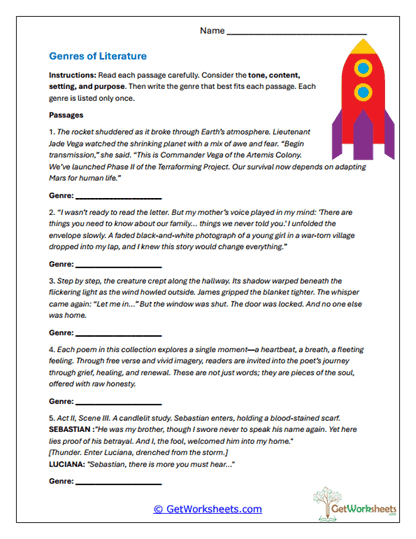
Learners read six detailed passages and determine the appropriate genre for each. They analyze elements such as poetic structure, suspenseful pacing, stage direction cues, fantastical descriptions, or informational tone. This worksheet helps students recognize signature genre markers-verse rhythms in poetry, formatting elements in drama, sensory tension in horror, or evidence-driven structure in nonfiction. By distinguishing between similar genres, students build sharper analytical reading habits and deepen their understanding of how genres operate.
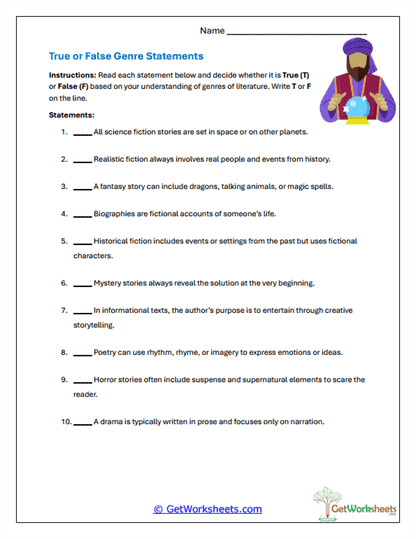
Genre Knowledge Check
Students evaluate ten true-or-false statements about literary genres, testing their understanding of genre characteristics and common misconceptions. The statements cover science fiction, historical fiction, biography, realistic fiction, fantasy, poetry, drama, and mystery. This worksheet supports conceptual review and helps learners identify misunderstandings about genre rules. By reflecting on each statement, students strengthen their accuracy and clarify their genre knowledge.
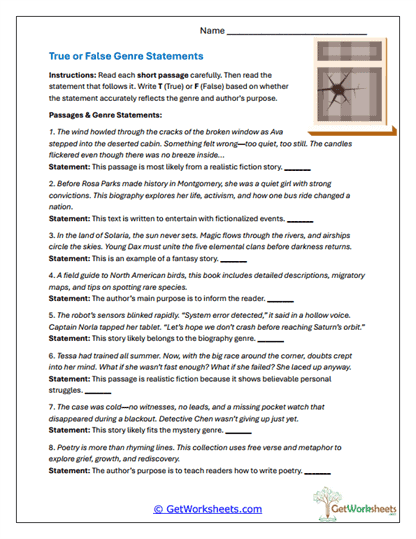
Genre Verification Task
In this analytic activity, students read eight passage-and-statement pairs and decide whether the genre label provided is correct. Learners must justify their decisions based on narrative features, descriptive clues, structural elements, and thematic indicators. This worksheet reinforces precise genre classification and teaches students how to refute incorrect labels by citing features that do not match. It deepens genre awareness by prompting close reading and careful comparison.
Genre Detective Files
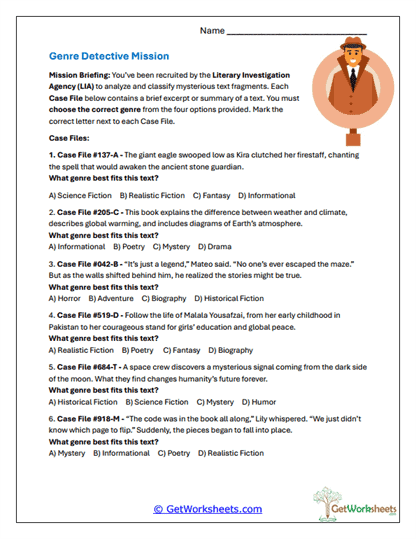
Students take on the role of genre detectives reviewing six case files, each containing a brief story summary. By examining clues such as world-building elements, protagonist goals, scientific vocabulary, or real-life details, learners determine the correct genre for each file. This scenario-based format encourages critical thinking and engages students in problem-solving. It strengthens their ability to classify stories quickly based on core literary features.
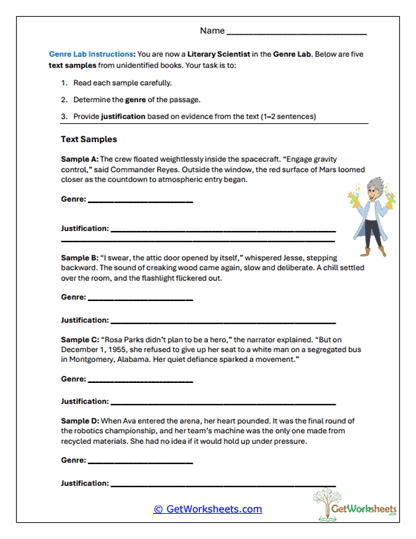
Genre Lab Investigation
Here, students become "Literary Scientists," analyzing five unidentified text samples and writing genre justifications for each. Learners identify specific genre traits-such as futuristic technology, real-life factual detail, supernatural elements, or suspenseful dialogue-and explain how these clues support their classification. This worksheet builds evidence-based reasoning, deeper comprehension, and the ability to articulate analytical conclusions clearly.
Genre Decoder Manual
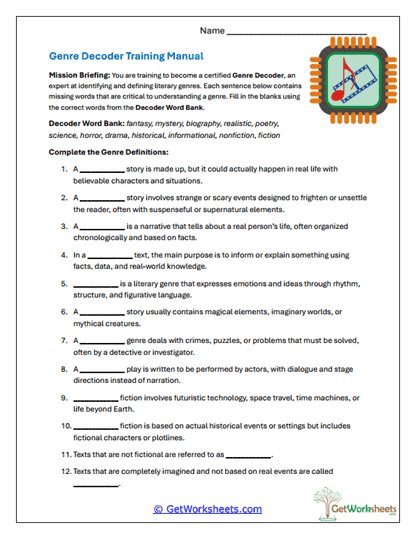
Functioning like a training manual, this worksheet asks students to complete definitions of twelve different genres using a provided word bank. Learners analyze sentence context to determine which genre label fits each description. This activity strengthens genre vocabulary, reinforces the structural differences between fiction and nonfiction, and improves students' ability to use precise language when discussing literary categories. The manual format also makes it an effective reference and vocabulary-building tool.

Bookmark Us Now!
New, high-quality worksheets are added every week! Do not miss out!