Friendship Skills Worksheets
About This Worksheet Collection
This Friendship Skills collection offers educators a comprehensive set of activities designed to help students understand, develop, and strengthen positive peer relationships. Through stories, matching tasks, reflective writing, scenario analysis, and tone interpretation, the worksheets encourage learners to explore what it means to be kind, inclusive, supportive, and empathetic. Each activity provides students with relatable experiences that promote thoughtful communication and emotional awareness while reinforcing essential academic skills.
As students work through the collection, they learn to identify healthy friendship behaviors, navigate common social challenges, and reflect on how their choices affect others. They build empathy, responsible decision-making, and emotional literacy while sharpening reading comprehension, writing fluency, and critical-thinking skills. These worksheets support a welcoming classroom community by helping students practice the qualities that make friendships strong and meaningful.
Detailed Descriptions Of These Worksheets
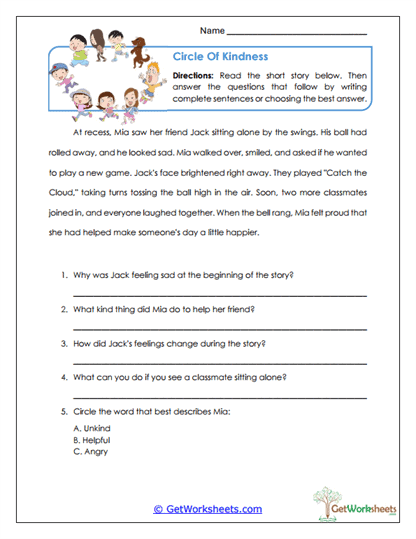
Circle of Kindness
Students read a narrative about a child comforting a classmate and answer both open-ended and multiple-choice questions. The activity encourages learners to reflect on emotions, identify acts of kindness, and connect the story to their own experiences. It builds comprehension and supports thoughtful written responses. Students gain insight into the value of compassion and supportive friendship behavior.
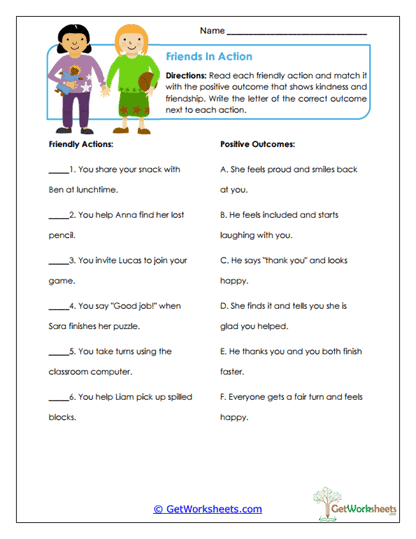
Friends in Action
Learners match friendly actions to their positive outcomes, reinforcing how kindness leads to gratitude, teamwork, or shared happiness. The activity emphasizes cause-and-effect relationships within social interactions. Students practice reading and critical thinking as they determine which outcomes best fit each action. It encourages reflection on everyday prosocial behaviors.
Friendship Choices
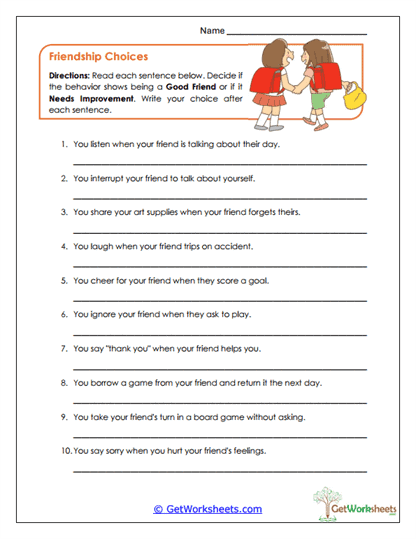
Students read statements about common social behaviors and decide whether each reflects being a "Good Friend" or "Needs Improvement." As they classify each example, learners think critically about empathy, honesty, and responsibility. This activity helps students understand how actions can strengthen or strain friendships. It also promotes written expression and self-reflection.
Friendship Dilemmas
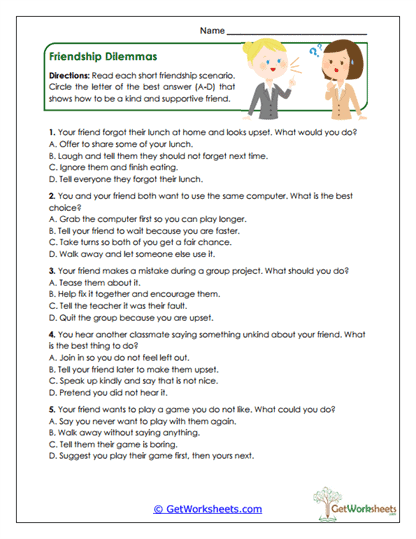
This worksheet presents short friendship challenges with multiple-choice responses. Students analyze each scenario and choose the action that best demonstrates fairness, kindness, and supportive behavior. The activity teaches problem-solving and encourages learners to consider the consequences of different choices. It helps students navigate disagreements respectfully.
Friendship Reflections
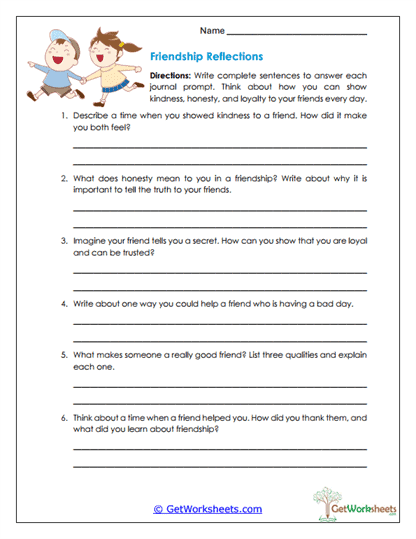
Students respond to journal prompts about honesty, loyalty, kindness, and other important friendship qualities. They write complete sentences that describe personal experiences or explain what makes friendships meaningful. The activity encourages emotional expression and self-awareness. It strengthens writing fluency and thoughtful reflection.
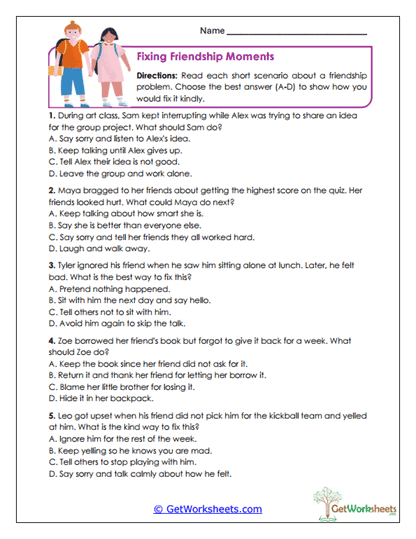
Fixing Friendship Moments
Learners read scenarios involving common friendship problems and choose the best solution from multiple-choice options. They explore how empathy, communication, and responsible decision-making can mend conflicts. The activity promotes understanding of how to repair harm and rebuild trust. Students gain confidence in handling friendship challenges with care.
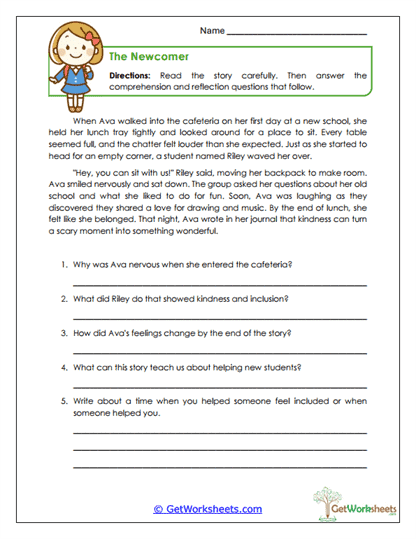
The Newcomer
In this reading comprehension worksheet, students read a story about welcoming a new classmate and answer questions that explore feelings, important details, and inclusive actions. The activity highlights empathy and belonging. Students practice written responses using text evidence. It supports deeper thinking about how kindness builds friendships.
Online Friendship Check
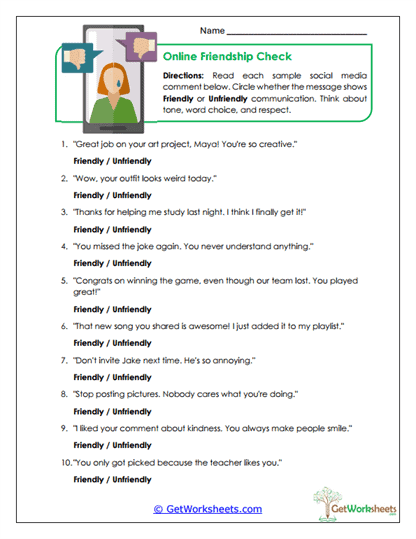
Students examine sample social media comments and determine whether each one is "Friendly" or "Unfriendly." They analyze tone, respect, and word choice to understand the impact of digital communication. This worksheet builds digital citizenship skills and promotes thoughtful online behavior. It helps learners distinguish between supportive and harmful virtual interactions.
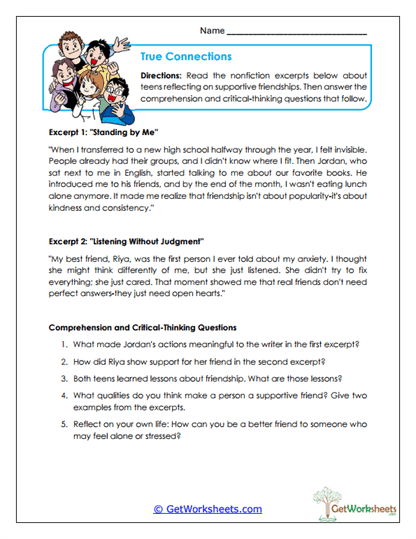
True Connections
Learners read two nonfiction excerpts about supportive friendships and answer comprehension and critical-thinking questions. They compare the passages, analyze characters' actions, and identify key traits of healthy relationships. The activity strengthens reading comprehension and emotional insight. Students reflect on how to apply these lessons in their own lives.
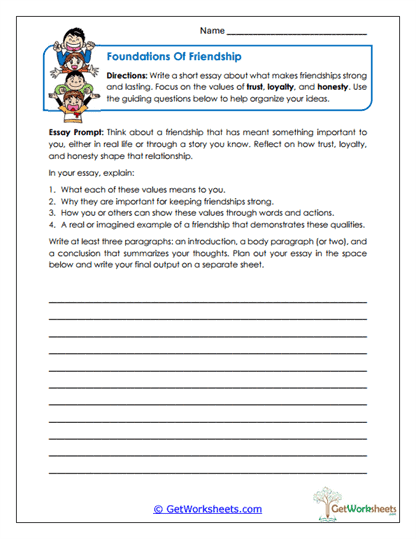
Foundations of Friendship
Students plan and write a short essay about qualities like trust, honesty, and loyalty. Guiding questions help them organize their ideas into clear paragraphs. The activity supports structured writing and deep reflection on relationship values. It encourages learners to connect personal experiences to meaningful friendship principles.
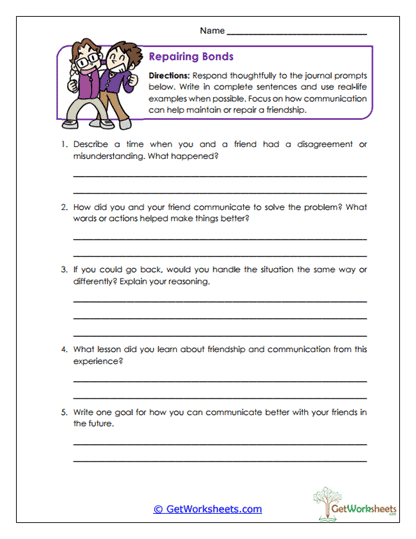
Repairing Bonds
This worksheet offers journal prompts that help students reflect on how communication can mend disagreements or misunderstandings. Learners write about real experiences, evaluate their choices, and consider how to respond more effectively in the future. The activity builds self-awareness, empathy, and responsible problem-solving. It also strengthens expressive writing skills.
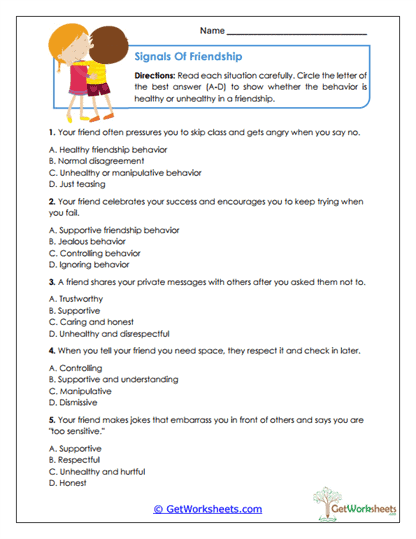
Signals of Friendship
Students evaluate scenarios to determine whether each depicts healthy or unhealthy friendship behavior. They learn to recognize supportive actions as well as problematic patterns like disrespect or manipulation. The activity promotes emotional literacy and responsible decision-making. It helps students develop a clearer understanding of safe, positive relationships.
Bookmark Us Now!
New, high-quality worksheets are added every week! Do not miss out!