Finn Worksheets
About This Worksheet Collection
These Finn by Jon Clinch worksheets are designed to help high school students explore a complex and morally challenging novel through structured, skill-based activities. The collection guides learners through key elements such as character development, plot structure, setting, theme, and author's purpose. Each worksheet focuses on a specific analytical or creative skill, making it easier for students to unpack the novel's layered narrative. This set works well for classroom instruction, small group discussions, or independent literary analysis.
As students move through these worksheets, they strengthen close reading, critical thinking, and evidence-based writing skills. The activities also encourage deeper reflection on difficult themes like identity, violence, and moral responsibility. By analyzing character choices, exploring narrative perspective, and engaging in both analytical and creative writing, students build a more complete understanding of the text. Altogether, this collection supports thoughtful interpretation, confident expression, and meaningful engagement with literature.
Detailed Descriptions Of These Worksheets
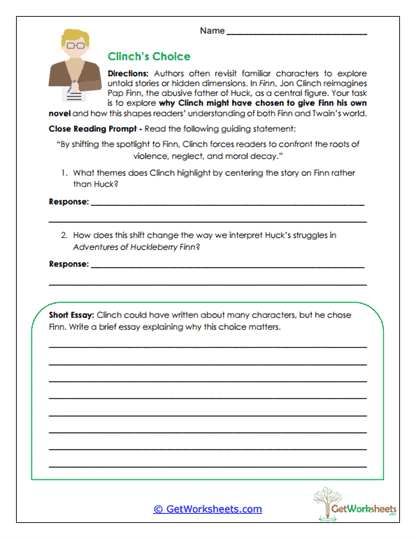
Clinch's Choice - Author Perspective & Literary Interpretation
Students analyze why Jon Clinch chose to tell the story from Finn's perspective rather than Huck's. They explore how this decision changes the tone, themes, and reader understanding. This builds skills in author's purpose and perspective analysis. It's a strong activity for deeper literary interpretation.
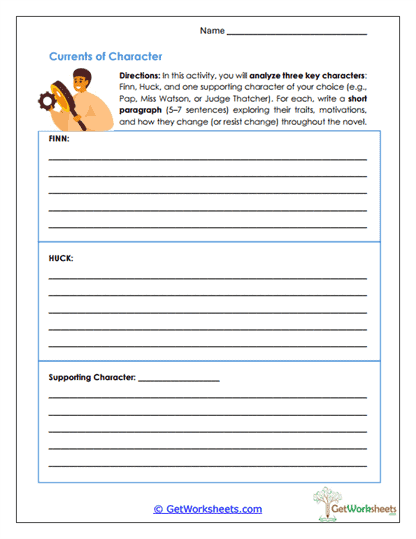
Currents of Character - Character Analysis & Development
Students examine key characters, including Huck and Finn, by analyzing traits, motivations, and internal conflicts. They write structured paragraphs to explain how each character changes or resists change. This strengthens close reading and written expression skills. It's a valuable activity for understanding complex personalities.
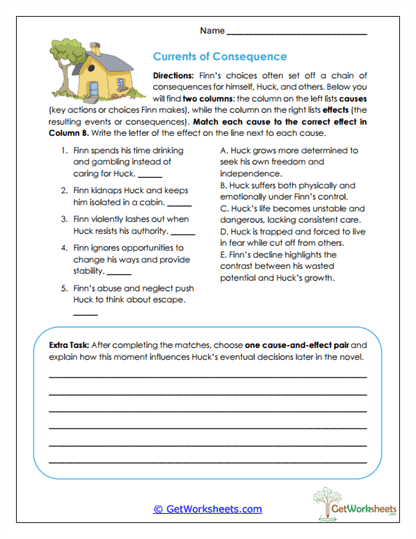
Currents of Consequence - Cause and Effect Analysis
Students match important actions to their consequences, focusing on how Finn's decisions impact Huck and the story. This helps build cause-and-effect reasoning and comprehension. It also highlights how choices shape outcomes in meaningful ways. This worksheet supports deeper analysis of character relationships.
Final Reflections on Finn - Personal Insight & Literary Response
Students respond to reflective prompts about the novel's themes, characters, and overall message. They connect ideas from the story to their own interpretations and experiences. This strengthens writing and critical thinking skills. It's a meaningful way to process complex ideas.
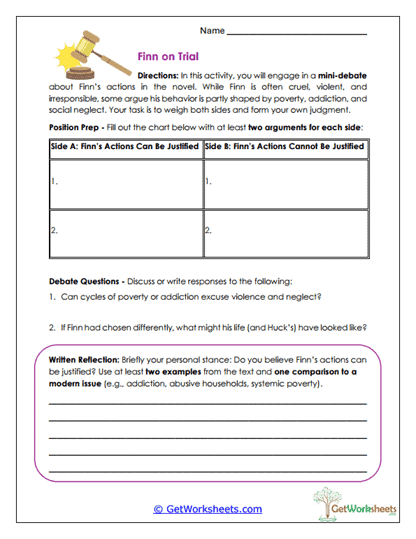
Finn on Trial - Argument Writing & Evidence-Based Reasoning
Students evaluate Finn's actions by building arguments supported with textual evidence. They consider multiple perspectives and defend their position. This strengthens reasoning, argument writing, and communication skills. It's a strong activity for discussion and debate.
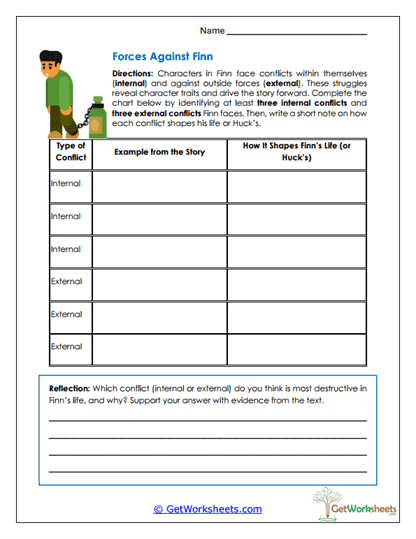
Forces Against Finn - Conflict Analysis & Character Impact
Students identify internal and external conflicts that shape Finn's life. They analyze how these conflicts influence behavior and outcomes. This builds understanding of how conflict drives the narrative. It's a key activity for literary analysis.
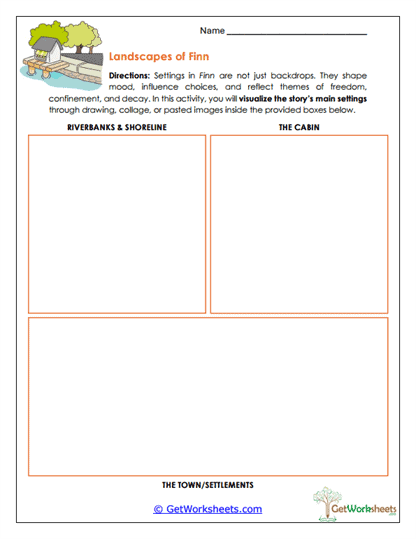
Landscapes of Finn - Setting Analysis & Visual Interpretation
Students explore how setting shapes meaning by analyzing and representing key locations. They connect environment to mood, character behavior, and theme. This strengthens visualization and interpretive thinking. It's a great blend of creative and analytical work.
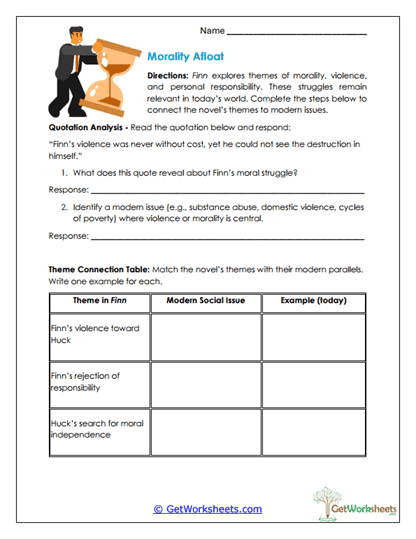
Morality Afloat - Theme Analysis & Real-World Connections
Students examine complex moral questions from the novel and connect them to real-world issues. They analyze themes like violence and responsibility through guided prompts. This strengthens critical thinking and thematic understanding. It encourages meaningful discussion and reflection.
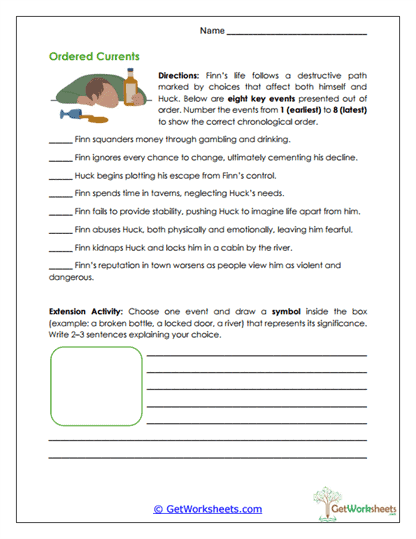
Ordered Currents - Plot Sequencing & Character Decline
Students organize key events in chronological order to track Finn's decline. This helps them understand how decisions build over time. It strengthens sequencing and comprehension skills. It's especially useful for analyzing cause-and-effect in the narrative.
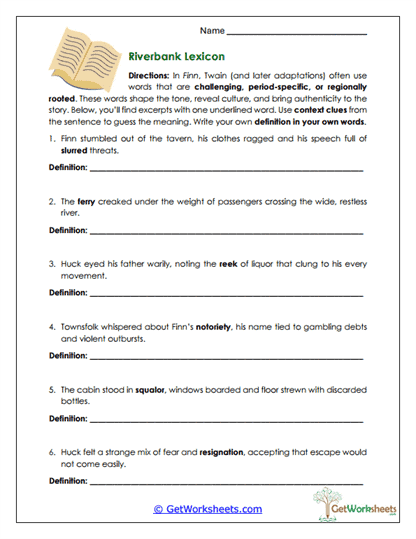
Riverbank Lexicon - Vocabulary & Context Clues
Students use context clues to determine the meaning of challenging words from the text. They analyze excerpts and define terms in their own words. This builds vocabulary and close reading skills. It's a practical way to strengthen comprehension.
Themes Beneath the Surface - Theme Identification & Analysis
Students identify and analyze major themes such as identity, violence, and moral decay. They connect events and details to these larger ideas. This strengthens comprehension and critical thinking skills. It helps students move beyond surface-level reading.
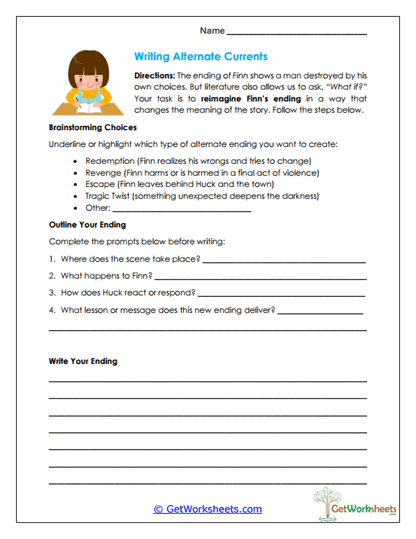
Writing Alternate Currents - Creative Writing & Narrative Revision
Students create an alternate ending to the novel, exploring how different outcomes change the story's meaning. They plan and write their version while considering character and theme. This strengthens creative writing and analytical thinking. It's an engaging way to explore authorial choices.
Bookmark Us Now!
New, high-quality worksheets are added every week! Do not miss out!