Fact vs Fiction Worksheets
About This Worksheet Collection
The Fact vs. Fiction Worksheets collection teaches students how to evaluate information critically-an essential skill in a world filled with media, opinions, and rapid information sharing. These worksheets help learners identify factual statements, fictional ideas, opinions, myths, exaggerations, and questionable claims across a variety of contexts, from stories and science to media posts and real-world conversations.
Students learn to analyze clues, apply background knowledge, recognize reliable sources, and justify their reasoning with clear explanations. Many worksheets also ask learners to reflect on how they would verify information, promoting strong fact-checking habits and information literacy. This collection builds critical thinking, media awareness, and the ability to differentiate truth from invention-skills that support academic reading, research, and responsible digital citizenship.
Detailed Descriptions Of These Worksheets
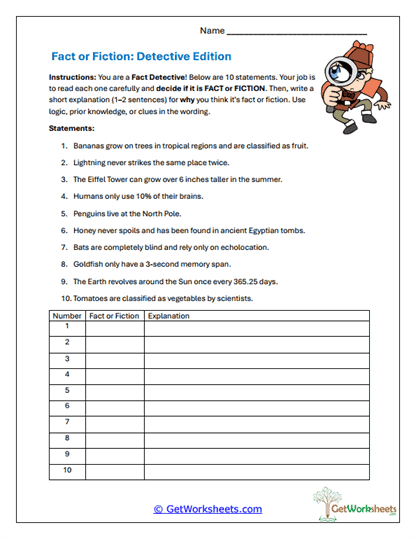
Fact Detective Review
Students examine ten statements and decide whether each is fact or fiction, supporting their decision with a written explanation. Statements cover broad topics such as science, geography, and history. This worksheet strengthens fact-checking skills, encourages logical reasoning, and promotes organized evaluation.
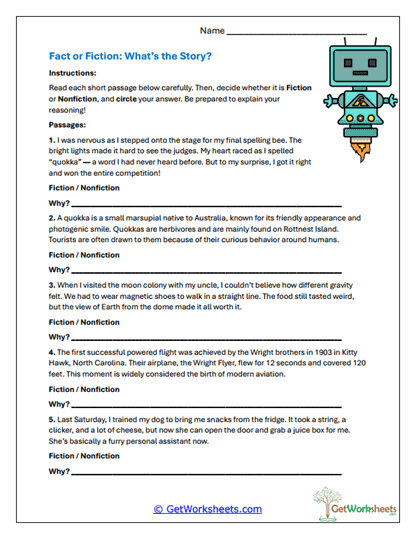
Story Truth Analyzer
Learners read short passages and determine whether each is fiction or nonfiction. By analyzing tone, detail, and realism, students practice identifying genre features. They explain their reasoning, reinforcing evidence-based conclusions about text types.
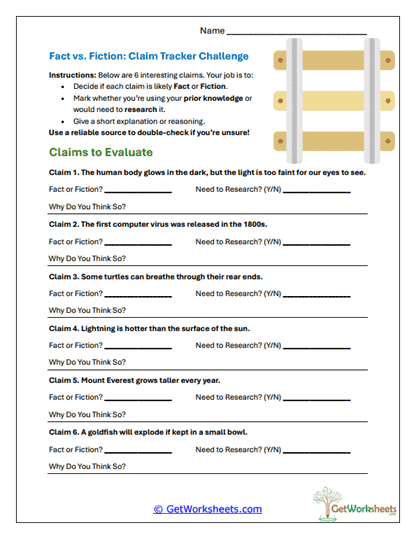
Claim Verification Challenge
Students evaluate unusual claims and decide whether they are factual or fictional. They also reflect on whether more research is needed, helping them recognize limits to their own knowledge. This worksheet encourages curiosity, skepticism, and investigative thinking.
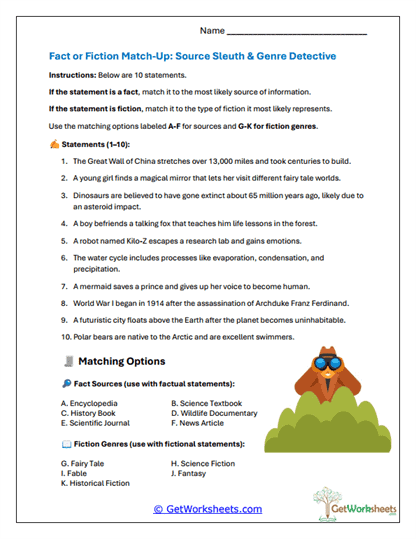
Source & Genre Sorter
Students classify statements as fact or fiction and then match them to appropriate sources or genres. This two-step activity teaches where accurate information comes from and how fictional content typically appears. It supports source literacy and critical analysis.
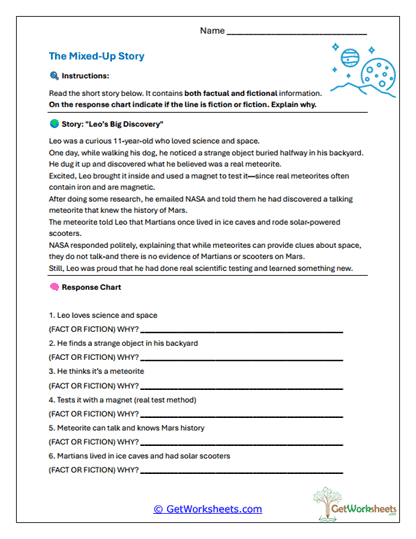
Mixed-Up Fact Finder
Learners read a narrative blending factual and fictional elements. They identify which details are real and which are invented, citing clues from the text. This worksheet promotes careful reading and distinction between scientific fact and imaginative storytelling.
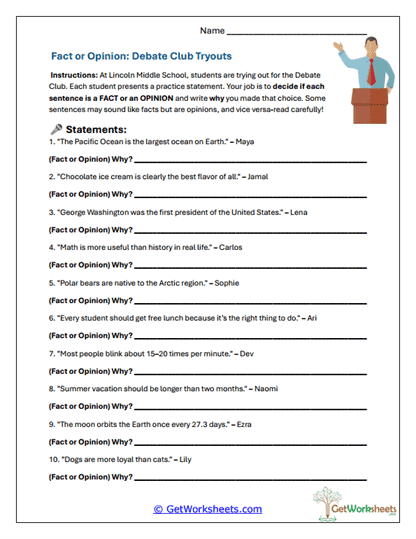
Opinion or Evidence Detector
Students distinguish fact from opinion within statements from a school debate scenario. They explain how tone, wording, and phrasing signal either viewpoint or verifiable information. This activity builds argument-analysis and reasoning skills.
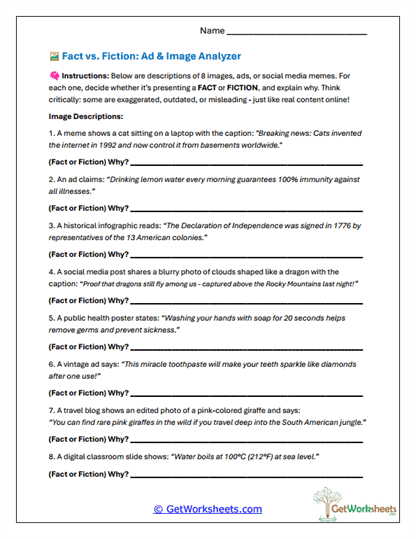
Media Claim Analyzer
Learners review descriptions of ads, memes, or online images and determine whether each claim is fact or fiction. They analyze how media can distort or exaggerate information. This worksheet builds digital citizenship and critical media literacy.
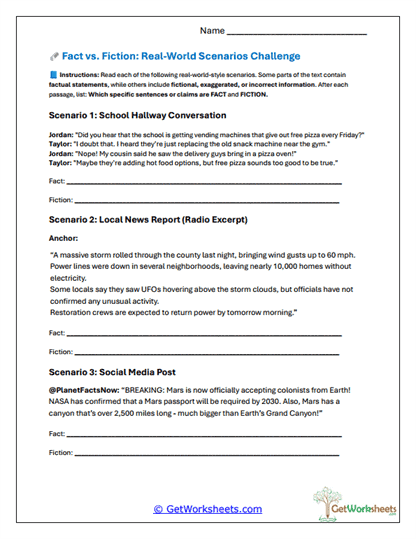
Scenario Truth Checker
Students evaluate real-life style scenarios containing both factual and fictional statements. They must separate truth from exaggeration and justify their choices. This worksheet connects critical thinking to everyday contexts like conversations and news blurbs.
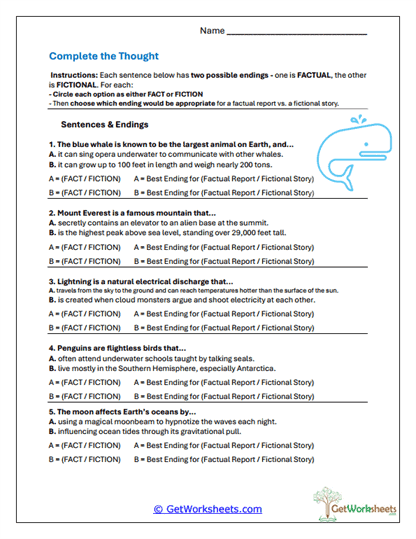
Ending Choice Analyzer
Learners evaluate paired sentence endings to determine which represents factual content and which represents fiction. This activity teaches students how realistic information differs from imaginative embellishment and helps them match content to its appropriate context.
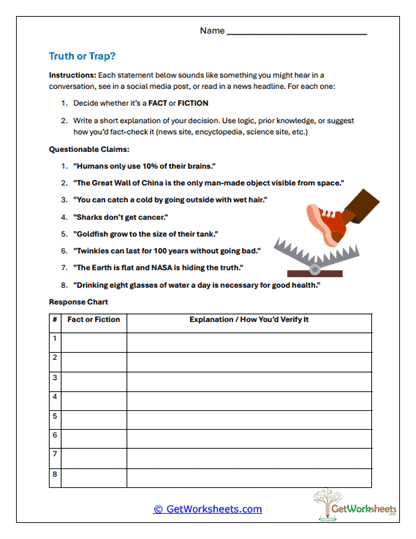
Claim Reality Test
Students decide whether commonly repeated claims are factual or fictional and explain how they would verify each one. This worksheet reinforces fact-checking strategies and responsible research habits.
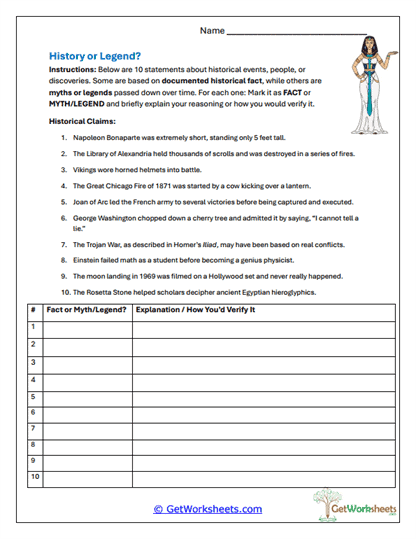
Legend or Reality Review
Learners classify historical statements as factual or myth-based. They examine how folklore and legends evolve and learn to distinguish between evidence-based history and widely accepted stories that lack factual support.
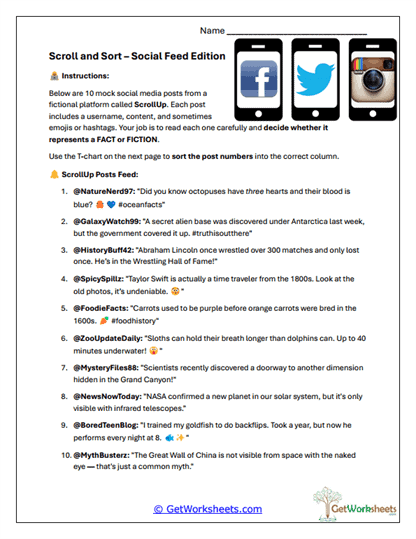
Social Feed Fact Check
Students evaluate fictional social media posts to determine which contain factual statements and which include exaggeration, satire, or misinformation. This worksheet builds strong digital literacy skills by training students to analyze online content critically.

Bookmark Us Now!
New, high-quality worksheets are added every week! Do not miss out!