Earth Day Worksheets

About This Worksheet Collection
The Earth Day collection inspires students to think critically about environmental care and their role in protecting our planet. Through a mix of science, literacy, and creative expression, learners explore sustainability topics such as recycling, renewable energy, and habitat preservation. Each worksheet connects knowledge with action, helping students understand that everyday choices can have lasting impacts on ecosystems and communities worldwide. The collection promotes eco-awareness, empathy, and global citizenship while reinforcing key academic skills in reading, writing, and critical thinking.
Detailed Descriptions Of These Worksheets
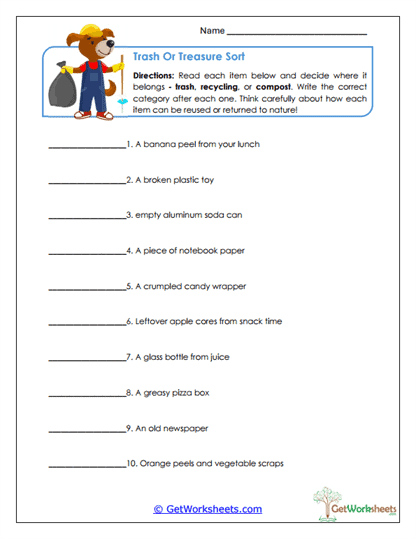
Trash or Treasure Sort
Students classify items into categories of trash, recycling, or compost, learning how to manage waste responsibly. This practical activity builds environmental awareness and reinforces real-world application of science concepts. Learners gain decision-making skills and a deeper appreciation of how sorting materials protects natural systems. It encourages responsibility and eco-friendly habits in daily life.
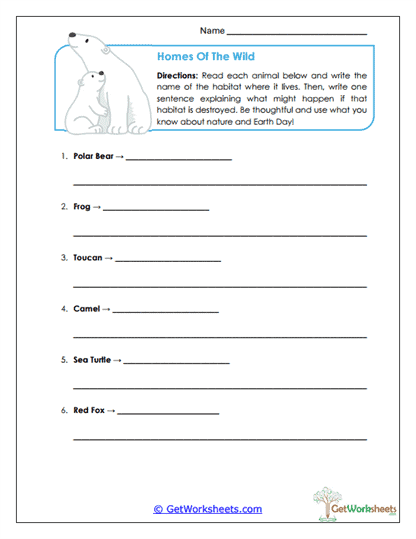
Homes of the Wild
In this worksheet, students match animals such as polar bears and frogs to their correct habitats, then write a sentence explaining how habitat destruction affects them. The task develops empathy and environmental understanding by connecting animal survival to human activity. Learners practice writing complete sentences while exploring global ecosystems. It encourages care for wildlife and critical thinking about environmental balance.
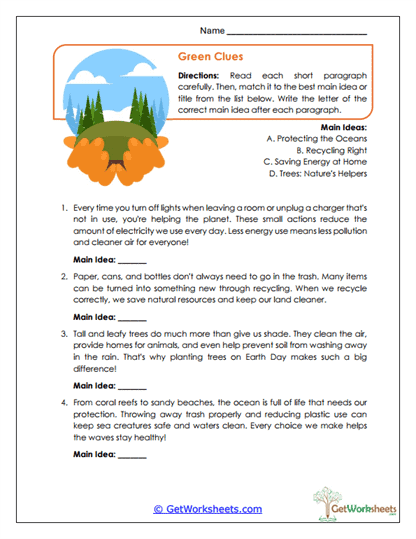
Green Clues
Students read short passages about saving energy, recycling, and protecting oceans, then match each to its main idea. The exercise builds reading comprehension and reinforces understanding of environmental actions that promote sustainability. Learners learn to summarize key details and connect them to practical conservation efforts. It encourages active reading and real-world awareness.
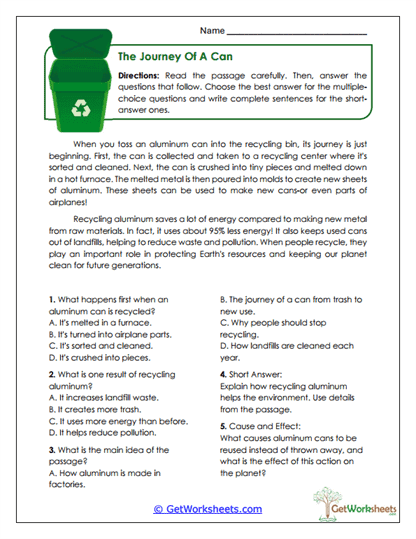
The Journey of a Can
This reading passage follows an aluminum can's life cycle through the recycling process, illustrating how reuse reduces pollution. Students answer comprehension questions and reflect on environmental benefits of recycling. The task strengthens cause-and-effect reasoning and analytical reading skills. It encourages learners to recognize the importance of sustainable choices in everyday life.
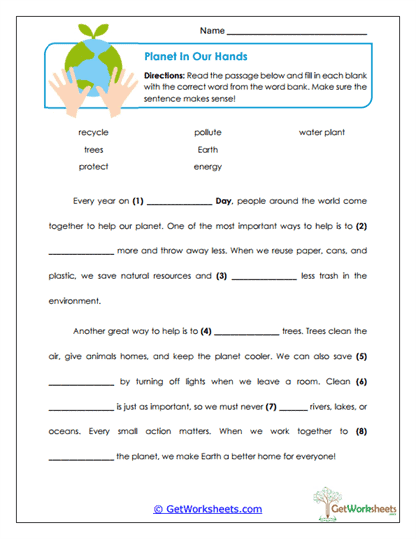
Planet in Our Hands
Using a word bank, students fill in missing words in a passage about Earth Day's purpose and small actions that protect the planet. This cloze activity builds vocabulary and reinforces comprehension of key environmental concepts. It emphasizes how individual efforts, like saving energy or planting trees, contribute to a global impact. Learners develop environmental vocabulary alongside reading fluency.
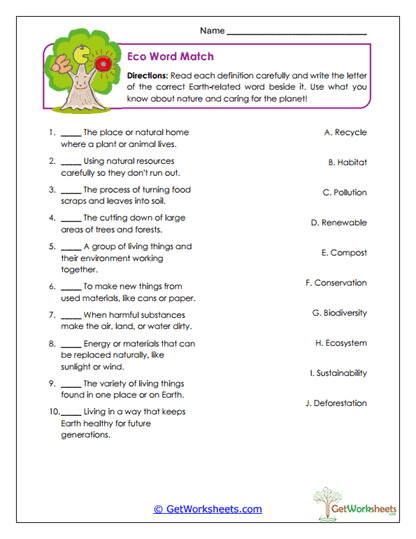
Eco Word Match
Students match essential environmental terms such as recycle, biodiversity, and habitat with their definitions. This vocabulary-building task strengthens students' understanding of ecological relationships and key science concepts. It promotes literacy and conceptual accuracy in discussing sustainability. Learners improve their ability to apply terminology in both academic and real-world contexts.
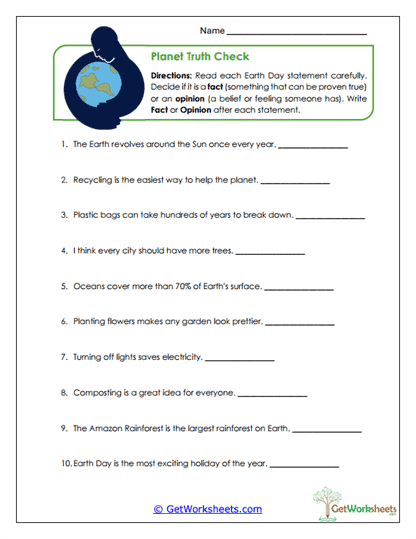
Planet Truth Check
In this fact-or-opinion worksheet, students evaluate statements about recycling, pollution, and conservation to decide which are factual. The activity sharpens reasoning and reading analysis skills. Learners learn to differentiate evidence-based information from opinions, a key step in developing scientific literacy. It encourages thoughtful discussion about truth and belief in environmental topics.
Forests Falling Silent
Students read an informational passage about deforestation and answer cause-and-effect questions linking human activity to climate and wildlife changes. The text connects science knowledge to real-world responsibility. Learners strengthen comprehension, analytical thinking, and environmental empathy. The activity encourages students to reflect on how conservation actions can protect forest ecosystems.
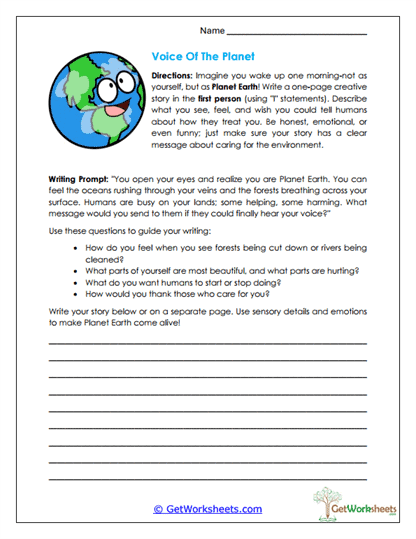
Voice of the Planet
In this creative writing prompt, students imagine themselves as Earth, expressing emotions and experiences through a first-person narrative. The task blends descriptive writing with empathy-based environmental awareness. Learners build voice and tone while personifying nature's perspective. It fosters creativity and a deep emotional connection to planetary well-being.
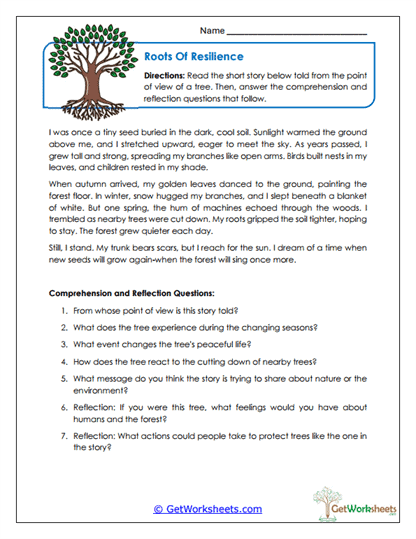
Roots of Resilience
Told from the perspective of a tree, this story teaches lessons about endurance and environmental change. Students answer comprehension and reflection questions exploring themes of growth, hope, and renewal. The worksheet builds literary analysis skills while nurturing environmental empathy. It reminds learners of nature's strength and the importance of caring for living systems.
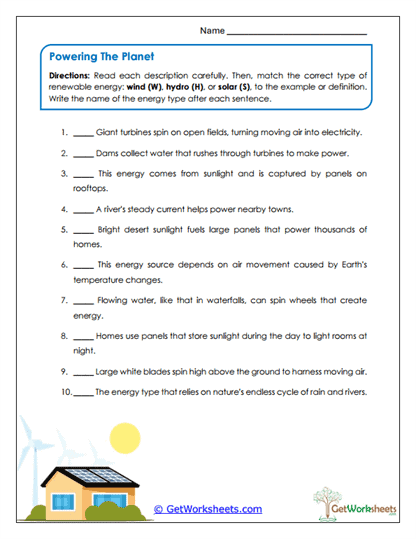
Renewable Energy Matching
Students identify and match forms of renewable energy-solar, wind, and hydro-to short descriptive clues about how each produces power. This exercise strengthens science vocabulary and comprehension of sustainable energy. Learners explore how renewable resources help reduce pollution and protect the environment. The activity promotes critical thinking about innovation and environmental solutions.
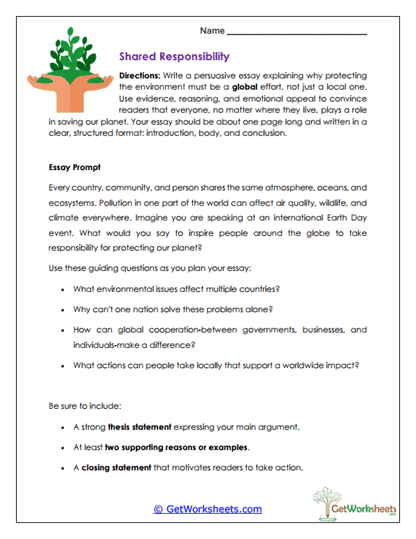
Global Environmental Essay
This writing task challenges students to compose a persuasive essay on why protecting the planet is a global responsibility. Learners develop a clear argument supported by evidence and logical reasoning. The structured format builds strong essay organization and writing fluency. It empowers students to think critically, express opinions confidently, and advocate for global cooperation in environmental care.
Bookmark Us Now!
New, high-quality worksheets are added every week! Do not miss out!