Describing Objects and Artifacts Worksheets
About This Worksheet Collection
The Describing Objects and Artifacts worksheet collection invites students to look closely, think historically, and write vividly. Each worksheet transforms simple observation into literary discovery-students learn how to make a pocket watch gleam with memory, a clay pot whisper of ancient hands, and an everyday item glow with meaning. Through sensory language, inference, and imagination, learners practice seeing not just what an object is, but what story it tells.
By blending descriptive writing, historical imagination, and analytical reasoning, this collection helps students master the language of detail. They practice turning facts into feeling, transforming texture, age, and purpose into words that both inform and enchant. Whether reimagining a museum label or inventing an artifact's secret past, these exercises bridge creativity with critical thought-helping students become writers who observe, interpret, and evoke.
Detailed Descriptions of These Worksheets
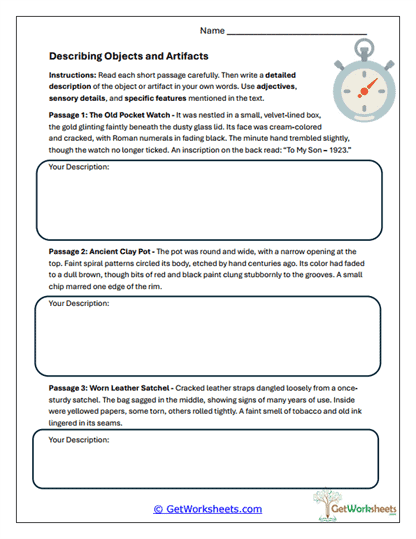
Analyze Passages
Students begin by reading short, sensory-rich passages about historical objects-like a cracked compass or a weathered satchel-and analyzing how description reveals both form and story. They then craft their own descriptive paragraphs, focusing on color, shape, and tone. This worksheet teaches students to balance observation with imagination: not just describing what they see, but sensing the time, care, and history embedded in an object.
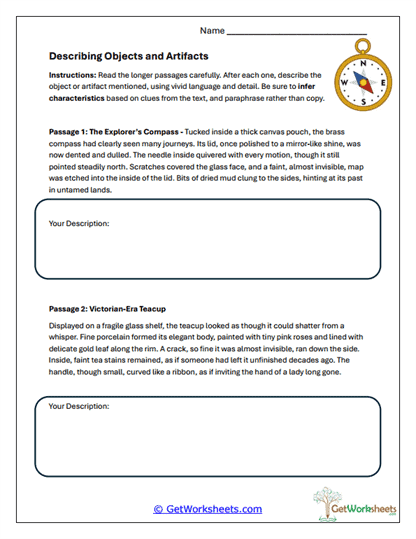
Artifacts Passages
Building on earlier lessons, learners read longer, more layered artifact descriptions such as The Explorer's Compass or Victorian-Era Teacup. They analyze figurative language and inferred meaning before writing their own interpretations. The task guides students to see description as analysis-how craftsmanship, age, and material speak about culture and purpose. It deepens their understanding of how writers blend factual observation with emotional resonance.
Who Might Have Owned This?
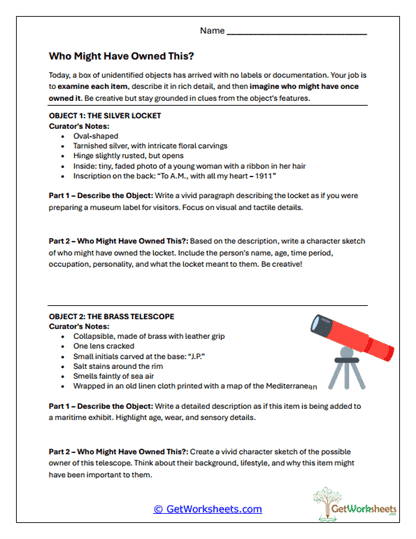
Acting as historical detectives, students infer the possible owners of mysterious artifacts based on descriptive clues. A tarnished locket or a soldier's torn glove becomes a springboard for character creation. Learners write two parts: a detailed description of the object and a short profile of its imagined owner. This worksheet merges storytelling and analytical reasoning, showing how objects reflect identity, memory, and human experience.
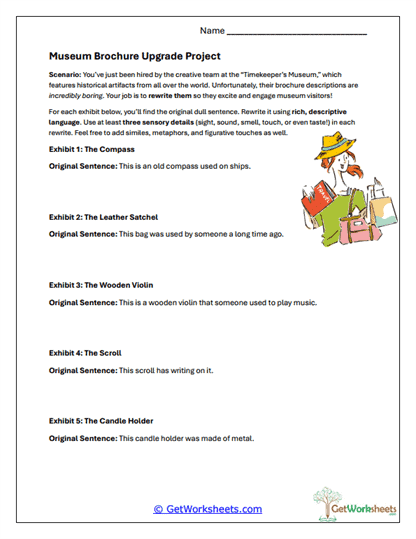
Museum Brochure Upgrade Project
Students take on the role of museum exhibit writers tasked with improving dull labels into captivating descriptions. For instance, "A silver cup from 1800" becomes "A dented silver goblet, dulled by centuries of celebration." Through revision, students explore voice, tone, and sensory language. The activity teaches how strong description transforms information into invitation, drawing readers into the artifact's story.
Time Traveler's Trunk
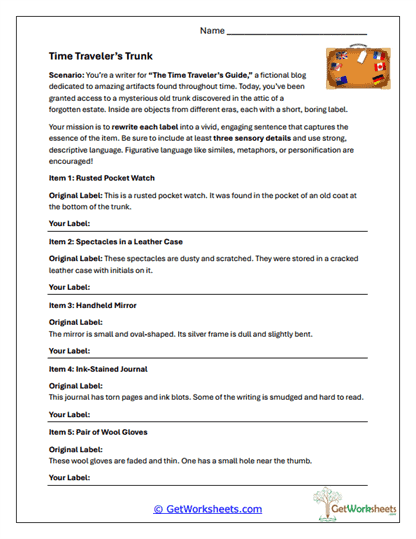
This imaginative task asks students to rewrite plain, factual labels for objects found in a "time traveler's trunk"-perhaps a quill, a compass, or a torn letter-using figurative and sensory language. They reimagine how each item feels, smells, or carries history. The exercise fosters historical empathy and creative engagement, showing how descriptive precision breathes life into forgotten worlds.
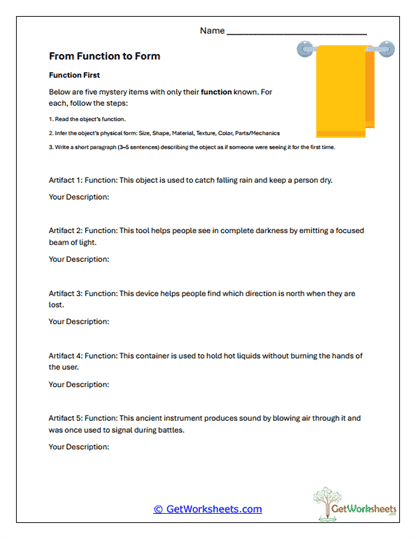
From Function to Form
Learners are challenged to describe unfamiliar artifacts based only on what they do, not what they look like. For example, given the function "used to measure stars," they must infer design, material, and texture. This reversal of logic-imagining appearance from purpose-builds inferential thinking, analytical reasoning, and language that bridges science, art, and storytelling.
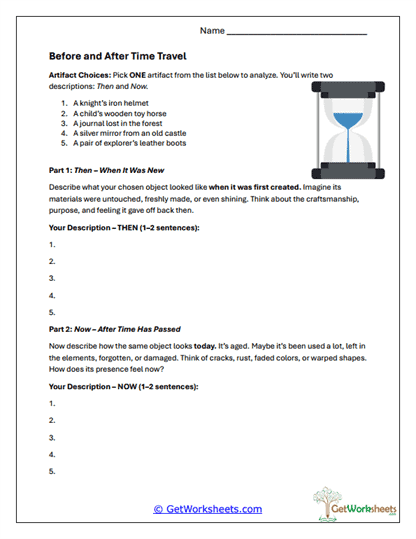
Before and After Time Travel
Students write dual descriptions of an artifact: one from the moment it was new, gleaming and perfect, and another from the present day, aged and worn. This comparative writing exercise highlights how time alters both material and meaning. Learners develop historical awareness and descriptive contrast, learning to write with sensitivity to change, decay, and the passage of years.
Tactile Archive
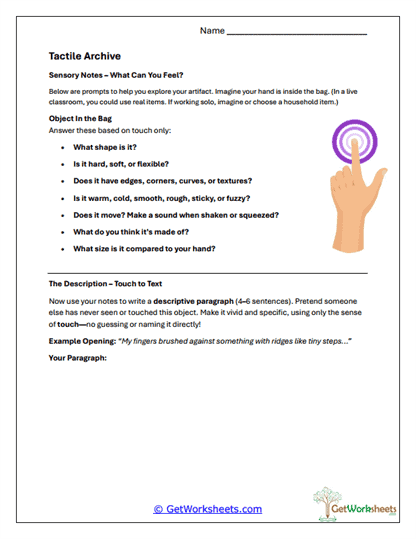
In this sensory-based exercise, students describe an unseen object using only touch. Through guided prompts-texture, temperature, shape-they build a paragraph that conveys the object's essence without naming it. This "hands-only" description strengthens sensory imagination and expressive precision, teaching writers to trust physical detail as a storytelling tool.
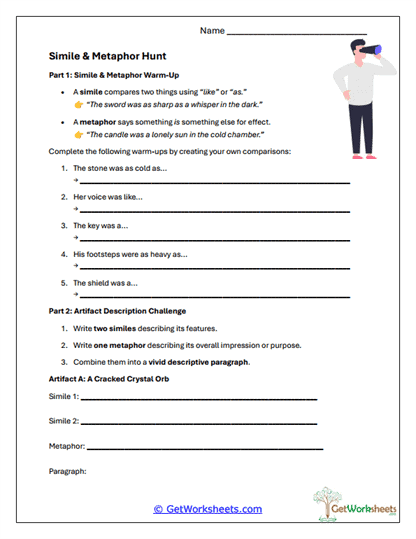
Simile and Metaphor Hunt
Students practice turning plain descriptions into poetic ones by crafting similes and metaphors for everyday or historical artifacts. A teacup might be "as fragile as a whisper," a compass "a patient heart that always finds north." By blending figurative language with concrete imagery, learners elevate their descriptive style and expand creative expression through comparison.
Through the Microscope
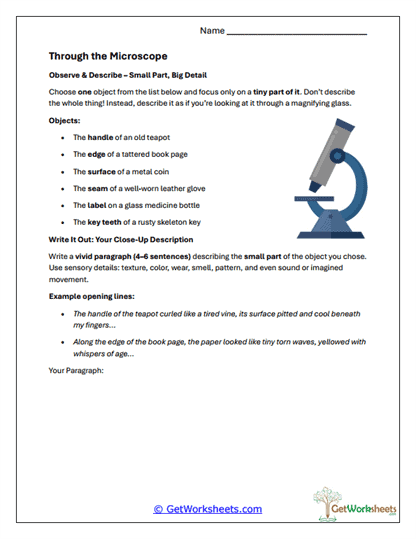
Here, observation becomes magnified-literally. Students select a small object detail (a hinge, feather, or coin edge) and describe it as if under a microscope. They must zoom in to notice minute patterns and textures, practicing focus and precision in language. This close-writing technique helps students translate scientific observation into literary description.
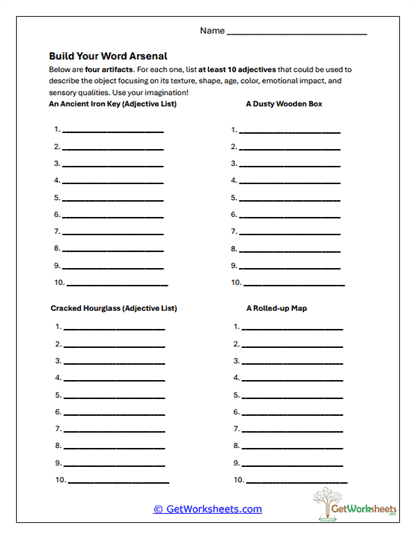
Build Your Word Arsenal
Students create adjective banks for different artifacts-ancient vase, worn leather journal, gilded frame-expanding their vocabulary and sharpening word precision. By brainstorming sensory and emotional descriptors, they learn to see how word choice affects tone and imagery. This worksheet serves as both warm-up and reference tool, giving students the "verbal palette" for richer descriptive writing.
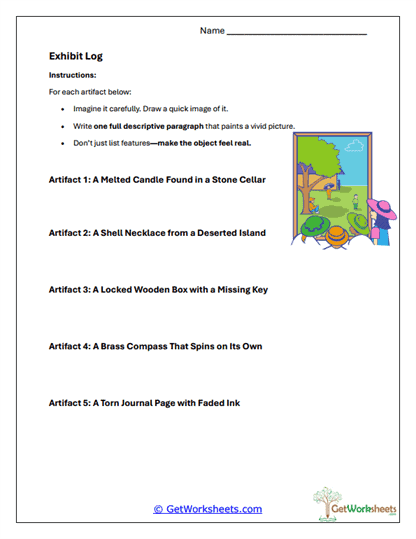
Exhibit Log
Acting as museum curators, students document a collection of mysterious objects. For each, they sketch, visualize, and describe it in vivid prose, blending observation with creative storytelling. This final activity synthesizes skills from the entire collection-sensory language, inference, figurative writing, and narrative imagination-turning description into discovery.
Bookmark Us Now!
New, high-quality worksheets are added every week! Do not miss out!