Decodable Text Fluency Worksheets
About This Worksheet Collection
This collection of decodable text fluency worksheets is designed to support early readers as they build confidence with phonics-based reading. Each activity provides structured opportunities for learners to connect sounds to letters, recognize patterns, and apply those skills in meaningful reading contexts. The materials are especially valuable for teachers implementing systematic phonics instruction or parents supporting beginning readers at home. With a balance of decoding practice, fluency-building routines, and simple comprehension tasks, the collection offers a comprehensive approach to early literacy development.
As learners engage with these worksheets, they strengthen phonemic awareness, decoding accuracy, word recognition, and reading fluency. Repetition, pattern recognition, and contextual reading help build automaticity, allowing students to focus more on meaning. Educators will appreciate how these resources integrate foundational skills with comprehension, while caregivers can use them to reinforce reading habits in a supportive and approachable way. Together, the activities lay the groundwork for confident, capable readers who can smoothly transition to more complex texts.
Detailed Descriptions Of These Worksheets
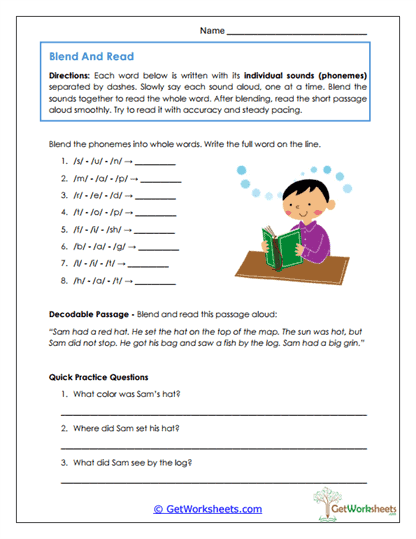
Blend and Read
This worksheet introduces learners to the essential process of combining individual sounds into complete words and then applying that skill within a short decodable passage. The structured progression from phoneme blending to connected reading supports both accuracy and comprehension. Teachers can use it to reinforce CVC word patterns during phonics instruction, while parents may find it helpful for guided practice at home. Its step-by-step format builds confidence in early decoding.
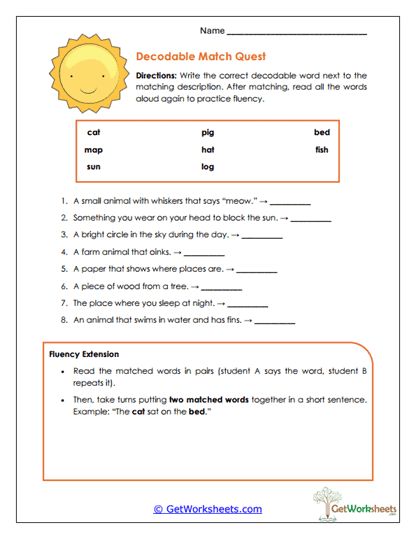
Decodable Match Quest
A matching format is used here to connect simple phonetic words with their meanings, reinforcing both recognition and understanding. By pairing decoding with vocabulary development, the activity encourages learners to see reading as meaningful rather than mechanical. Educators can incorporate it into literacy centers or independent work routines. The clear structure supports early readers who are still developing automatic word recognition.
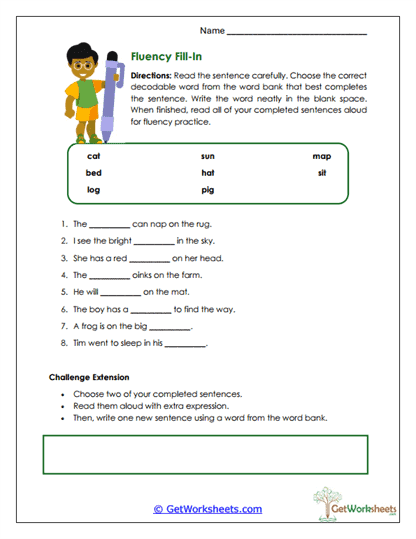
Fluency Fill-In
This worksheet encourages learners to apply phonics knowledge within sentence-level reading by selecting appropriate words from a decodable bank. The task promotes the use of context clues alongside decoding skills, strengthening comprehension and accuracy together. Teachers can use it to assess how well students transfer phonics skills into real reading situations. It also provides a manageable challenge that supports independent practice.
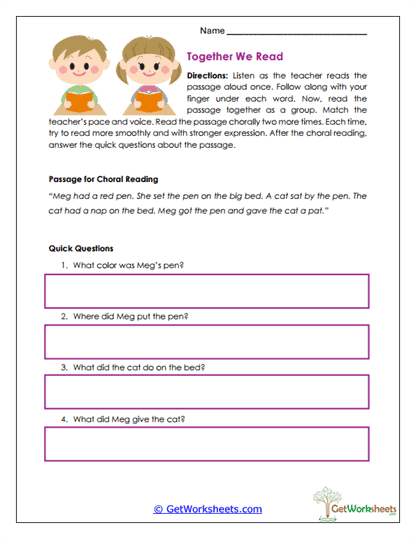
Together We Read
Guided choral reading provides a supportive environment for building fluency, allowing learners to follow a model and then read in unison. The shared reading experience reduces anxiety while reinforcing pacing, expression, and comprehension. Educators will find it particularly effective for small-group instruction or whole-class fluency practice. The addition of follow-up questions helps ensure that understanding accompanies accurate reading.
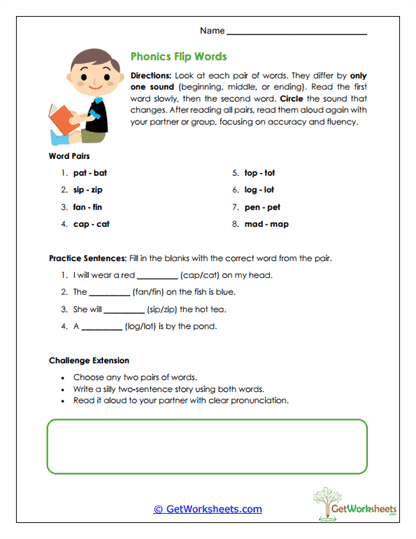
Phonics Flip Words
By examining word pairs that differ by a single sound, this worksheet helps learners see how small phoneme changes can completely alter meaning. The activity strengthens phonemic awareness and sharpens attention to detail in decoding. Teachers can use it to reinforce sound manipulation skills that are critical for both reading and spelling. Its focused format makes it ideal for targeted phonics intervention.
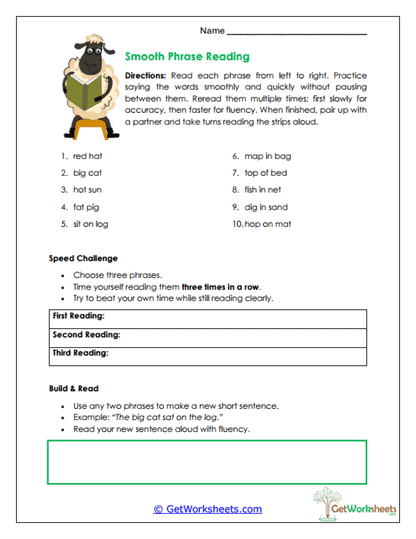
Smooth Phrase Reading
This worksheet shifts the focus from isolated words to grouped phrases, helping learners develop more natural reading patterns. Repeated practice with short phrases supports pacing, expression, and comprehension. Educators can use it as a fluency warm-up or as part of guided reading sessions. It is especially helpful for students transitioning from word-by-word reading to more fluent delivery.
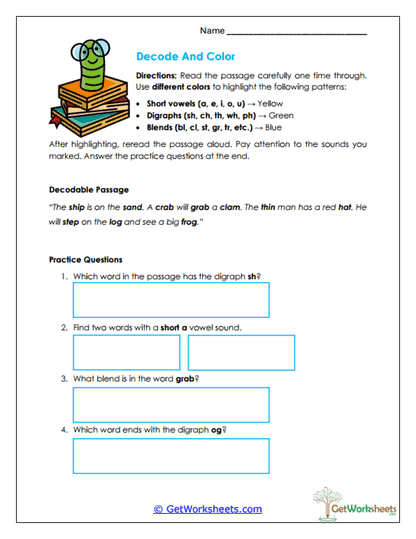
Decode and Color
Color coding is used as a visual strategy to help learners identify phonics patterns within a decodable passage. By highlighting vowels, blends, or digraphs, students reinforce pattern recognition while reading for meaning. Teachers can use this worksheet to make phonics instruction more interactive and visually engaging. It also supports learners who benefit from multisensory approaches to reading.
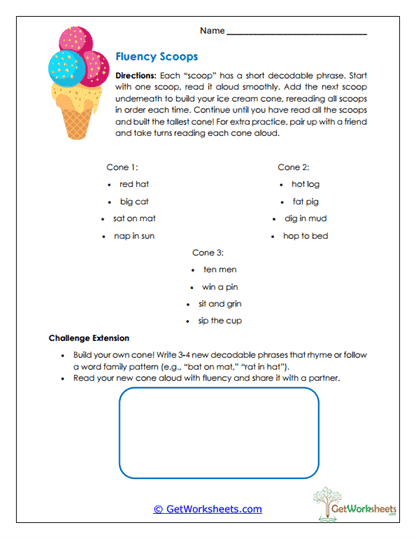
Fluency Scoops
Short phrases are grouped into "scoops" to encourage smooth reading and repeated practice. This structure helps learners build speed and confidence while maintaining accuracy. The creative extension of generating their own phrases adds an element of ownership and deeper learning. Educators may find it especially useful for reinforcing phrasing and fluency in small groups.
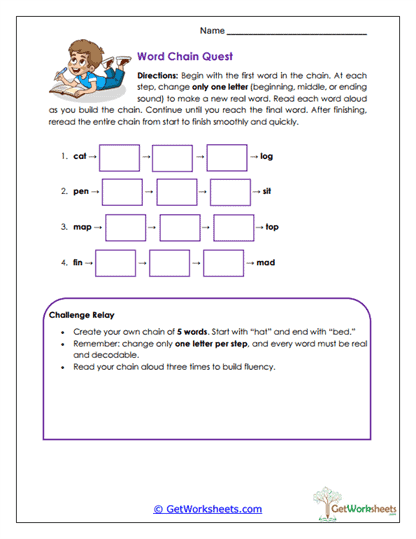
Word Chain Quest
This activity turns word building into a problem-solving task by asking learners to change one letter at a time to create new words. The process reinforces phonics patterns, spelling, and decoding in a highly interactive way. Teachers can use it to strengthen understanding of how words are connected through sound changes. It also supports flexible thinking and engagement with language.
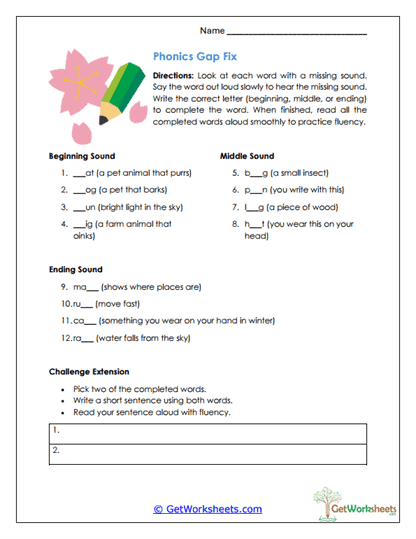
Phonics Gap Fix
Filling in missing sounds helps learners focus on the structure of words and the role of each phoneme. The worksheet supports both decoding and spelling by encouraging careful analysis of beginning, middle, and ending sounds. Educators can use it for targeted practice with students who need additional support in phonemic awareness. Its straightforward format makes it easy to implement in any setting.
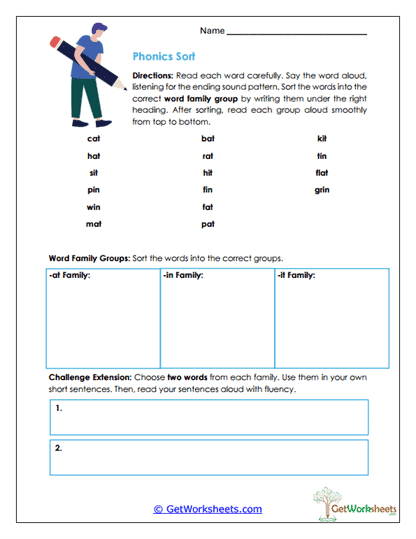
Phonics Sort
Sorting words into families based on shared vowel patterns helps learners recognize spelling patterns and sound relationships. The categorization process reinforces decoding while also supporting early spelling skills. Teachers can use it to build pattern recognition in a hands-on, meaningful way. The added sentence application encourages transfer of skills into writing.
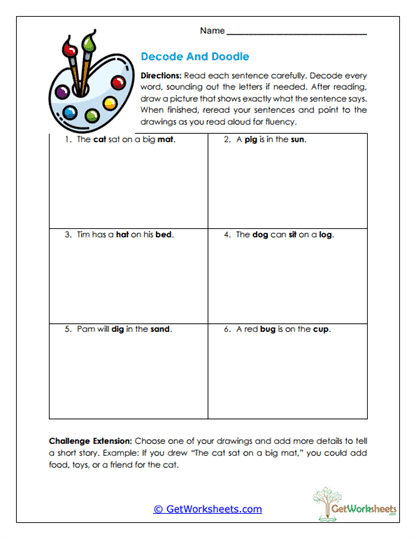
Decode and Doodle
This worksheet combines reading with drawing, allowing learners to demonstrate comprehension through visual representation. By translating simple sentences into illustrations, students reinforce their understanding of meaning while practicing decoding. Educators will find it especially engaging for young learners who benefit from creative expression. It provides a balanced approach to phonics, comprehension, and engagement.
Bookmark Us Now!
New, high-quality worksheets are added every week! Do not miss out!