Conversational Skills Worksheets
About This Worksheet Collection
The Conversational Skills worksheet collection helps students build confidence, awareness, and empathy in everyday communication. Through creative scenarios, themed activities, and reflective exercises, learners practice listening, turn-taking, kindness, and self-control-skills essential for forming positive relationships. The worksheets are designed to make communication engaging and relatable, guiding students to understand that good conversation relies as much on respect and timing as it does on words.
Across this collection, students strengthen their ability to initiate and sustain meaningful dialogue, adapt to different settings, and interpret tone, emotion, and social cues. Whether analyzing text-message exchanges, acting as talk-show hosts, or writing supportive responses, learners develop emotional intelligence, verbal fluency, and empathy. These lessons prepare students to communicate clearly, listen actively, and contribute thoughtfully to classroom and social conversations.
Detailed Descriptions Of These Worksheets
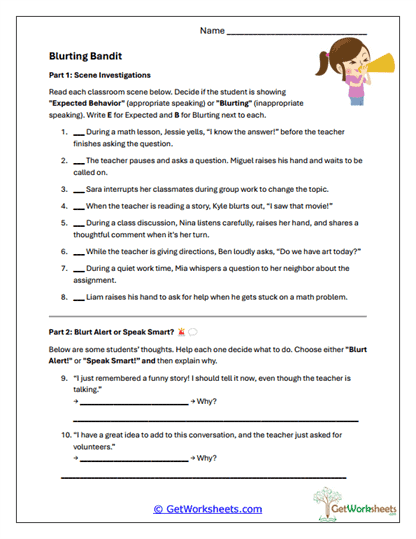
Blurting Bandit
Students explore the difference between appropriate speaking and impulsive blurting through short "scene investigations." They decide when to stay silent and when to speak up respectfully. The exercise builds self-control, awareness of group dynamics, and reflection on tone and timing. It's a fun and interactive way to reinforce respectful classroom communication.
Conversation Road Trip
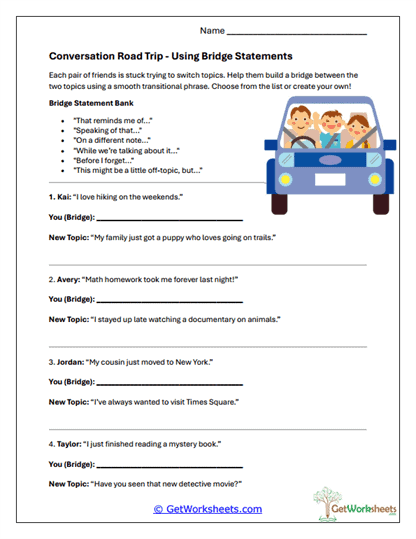
This activity teaches students how to use "bridge statements" to shift topics naturally. Learners connect unrelated ideas through transitional phrases, practicing conversational flow and flexibility. It encourages creative thinking and smooth dialogue skills. The worksheet helps students become more adaptable and engaging conversationalists.
Talk Show Time
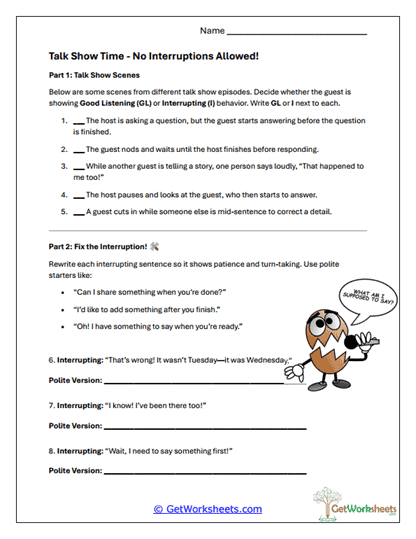
With a lively talk-show theme, students examine dialogue scenes to determine whether participants are listening or interrupting. They then rewrite interruptions into polite statements. The task strengthens patience, empathy, and understanding of turn-taking in conversations. It's a playful way to reinforce polite, inclusive communication.
The Notice Game
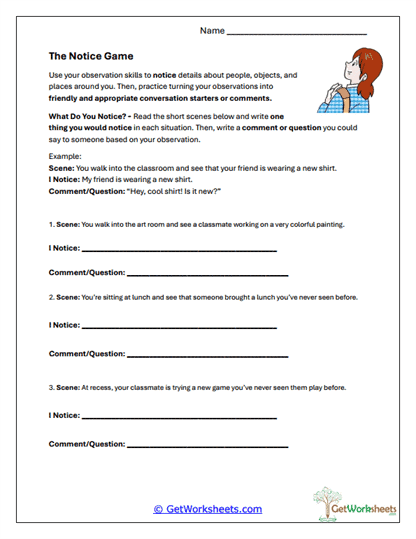
Students read short scenes and identify something they notice, turning their observation into a friendly comment or question. The activity encourages curiosity, connection, and positive conversation initiation. It helps learners develop awareness of their surroundings and build confidence in starting meaningful discussions.
Conversation Court
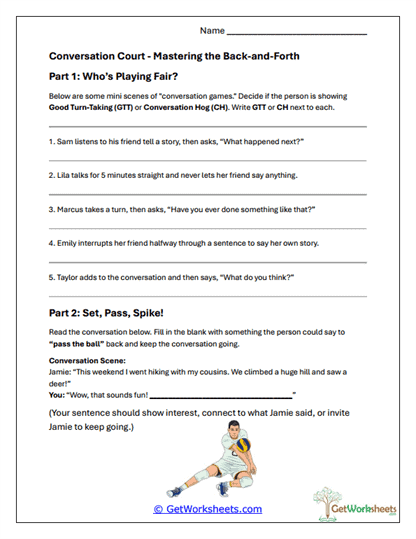
In this sports-themed worksheet, learners evaluate dialogue exchanges to see if someone is a "Good Turn-Taker" or a "Conversation Hog." They practice writing balanced responses that keep dialogue fair and engaging. The exercise builds respect, teamwork, and awareness of conversational give-and-take.
The Conversation Orchestra
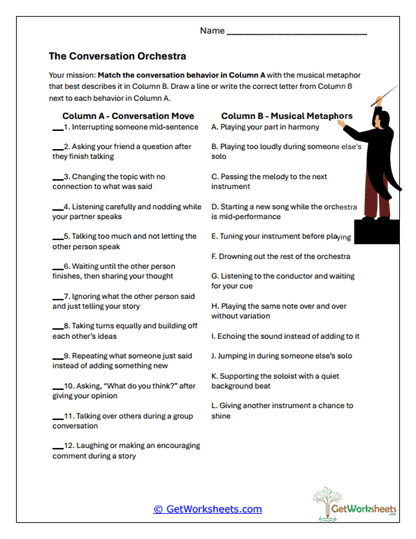
Using a music metaphor, students connect conversation behaviors to orchestra roles, learning how listening, rhythm, and timing create harmony in dialogue. The worksheet reinforces cooperation and mutual respect while illustrating how effective communication depends on everyone's participation.
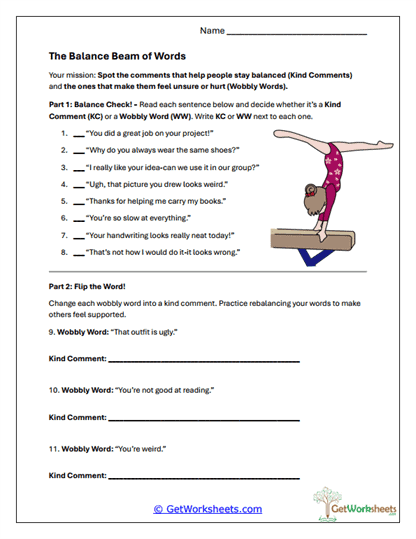
The Balance Beam of Words
Students practice distinguishing between kind and unkind comments. They label each example as a "Kind Comment" or "Wobbly Word" and rewrite negative language into positive alternatives. This activity builds empathy, emotional vocabulary, and awareness of how words impact others.
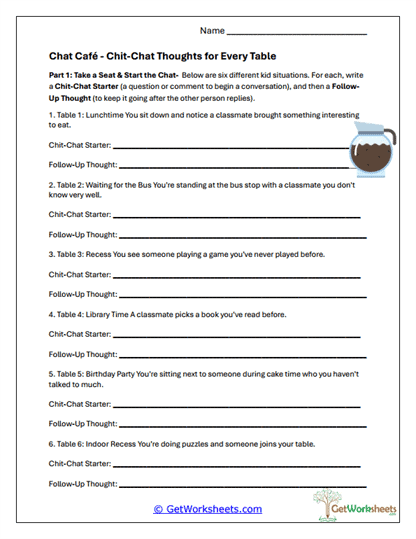
Chat Café
Learners imagine sitting at themed "chat tables" such as the lunchroom or library and write conversation starters and follow-up questions suited to each setting. This imaginative exercise promotes confidence, adaptability, and awareness of social context. It helps students practice maintaining friendly, inclusive conversations.
The Conversation Classroom
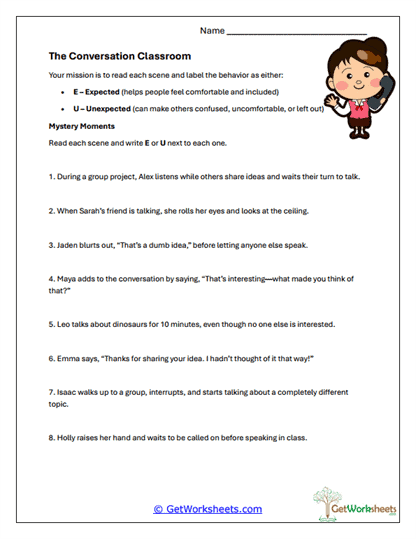
Students label peer interactions as "Expected" or "Unexpected" behavior, reflecting on how actions and words affect group comfort. The activity reinforces awareness of social norms, cooperation, and respect. It's an effective resource for encouraging self-monitoring and social sensitivity.
Grow Your Talk
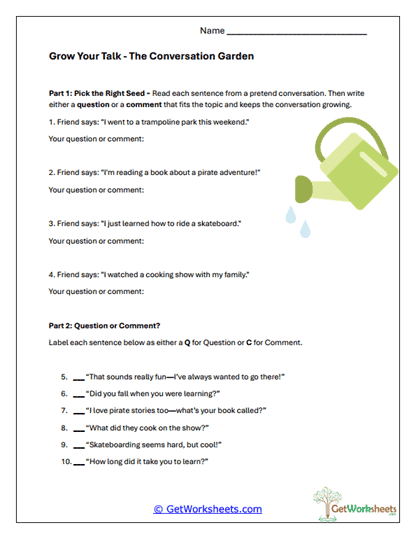
Through a garden metaphor, students learn to "grow" conversations by asking questions and making comments that build on others' ideas. They practice distinguishing between questions and comments while crafting thoughtful replies. The exercise promotes conversational flow, curiosity, and empathy.
Tune In Like a Scientist
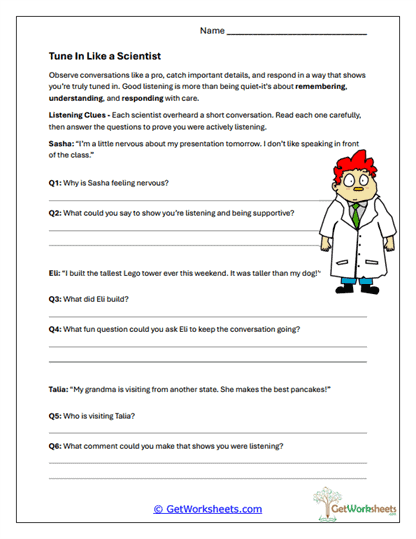
Learners read brief dialogue exchanges and answer comprehension questions that require them to recall details and infer feelings. The activity emphasizes careful listening and observation. By thinking like "conversation scientists," students strengthen empathy and social understanding.
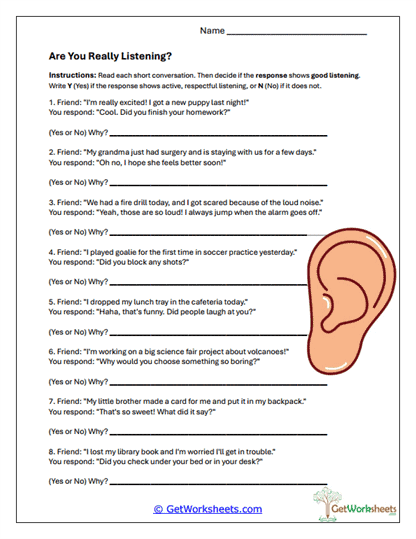
Are You Really Listening?
Students decide whether dialogue examples show genuine listening and empathy. They explain why certain responses succeed or fail in communication. The worksheet builds self-awareness, emotional intelligence, and respectful listening habits. It's an ideal conclusion for reinforcing how empathy transforms everyday conversation.
Bookmark Us Now!
New, high-quality worksheets are added every week! Do not miss out!