Compare and Contrast Worksheets
About This Worksheet Collection
The Compare and Contrast collection helps students sharpen their analytical reading, reasoning, and writing skills by exploring how two texts, ideas, or experiences relate to one another. Whether comparing city and country life, classic stories, or renewable energy sources, each worksheet guides learners to identify similarities and differences using clear evidence and organized thinking. Through structured charts, Venn diagrams, and short writing responses, students learn how comparison deepens comprehension and perspective-taking.
Across the collection, learners practice organizing information logically, interpreting author choices, and expressing relationships in their own words. These exercises develop higher-level literacy skills-from understanding character motivations to evaluating tone and audience. By examining how ideas align or diverge, students build critical thinking, textual analysis, and confident writing for both academic and real-world contexts.
Detailed Descriptions Of These Worksheets
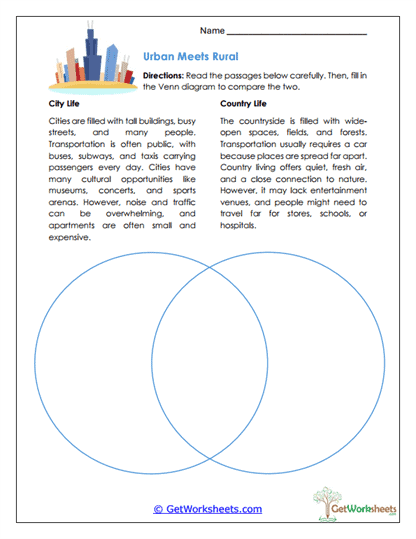
Urban Meets Rural
Students read two informational passages about city and country living, using a Venn diagram to record similarities and differences. The exercise builds comprehension and organization while helping learners analyze environments and lifestyles. It's a strong introduction to compare-and-contrast thinking in nonfiction reading.
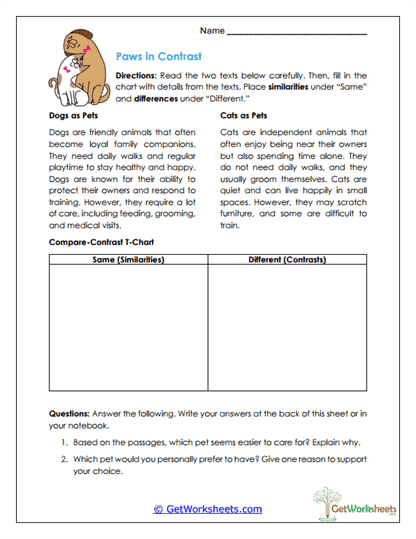
Paws in Contrast
Learners read paired passages about cats and dogs, comparing traits such as behavior and companionship. A T-chart helps them organize ideas clearly. Reflection questions encourage personal connection, critical thinking, and writing fluency.
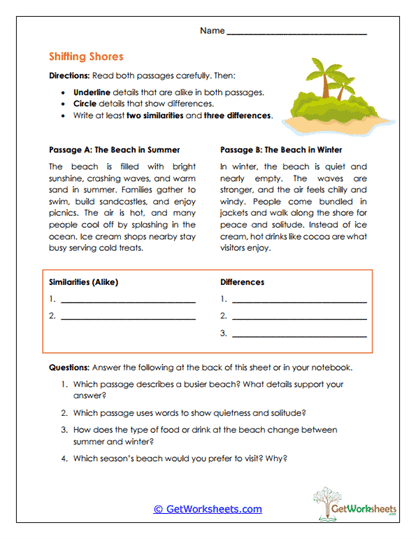
Shifting Shores
Students explore descriptive passages about the beach in summer and winter, noting similarities and differences supported by textual evidence. The task enhances attention to sensory details and builds understanding of how setting shapes description and tone.
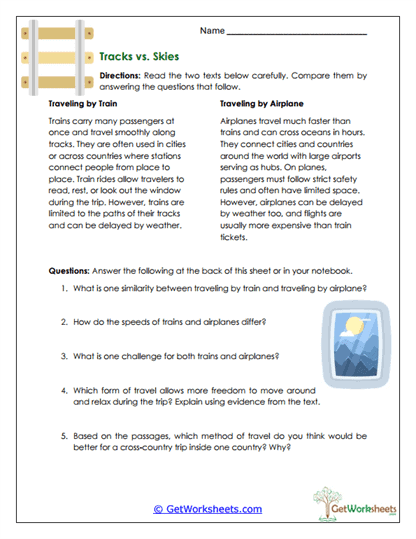
Tracks vs. Skies
This worksheet compares train and airplane travel through paired informational texts. Learners analyze differences in technology, experience, and environmental impact. The questions develop comprehension and reasoning while introducing real-world applications of compare-and-contrast reading.
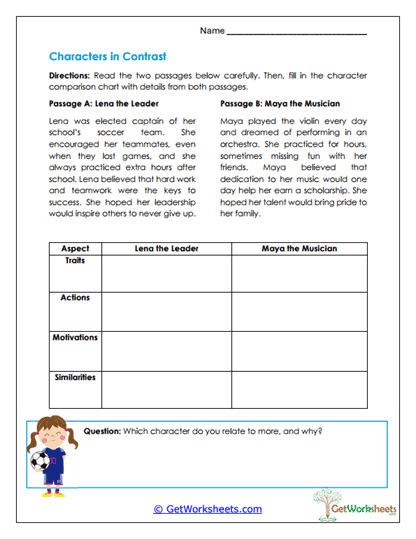
Characters in Contrast
Students analyze two short character sketches-a driven athlete and a devoted musician-to compare personality traits, motivations, and shared themes. The exercise reinforces literary analysis and the concept of universal qualities like perseverance.
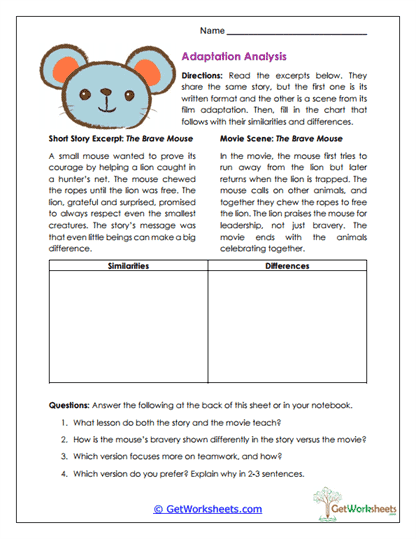
Adaptation Analysis
Learners compare a story excerpt with its movie version to examine similarities and differences in characters, plot, and message. The task introduces media literacy by exploring how themes can stay consistent across formats while details change.
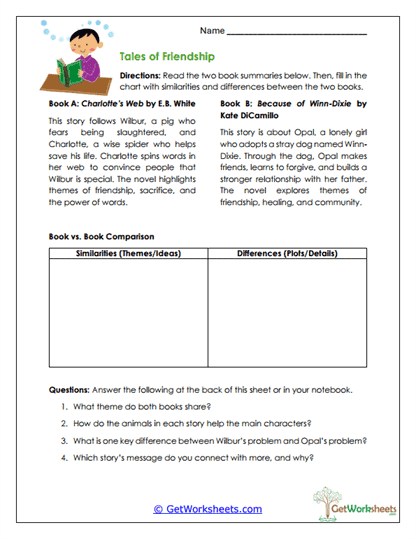
Tales of Friendship
Students compare Charlotte's Web and Because of Winn-Dixie, analyzing how both stories express friendship and belonging. Using a chart and reflection prompts, they connect themes across classic literature, enhancing comprehension and empathy.
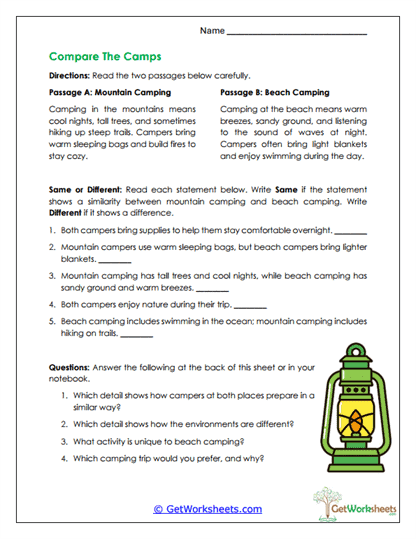
Compare the Camps
Learners read about mountain and beach camping, labeling statements as similarities or differences. The classification task strengthens attention to context clues, reading accuracy, and environmental comparison skills.
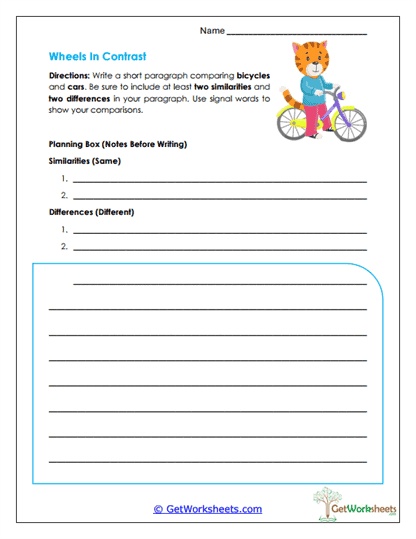
Wheels in Contrast
Students plan and write a paragraph comparing bicycles and cars. Using signal words and a planning box, they practice organizing ideas and transitions. This worksheet builds structured writing and logical reasoning skills.
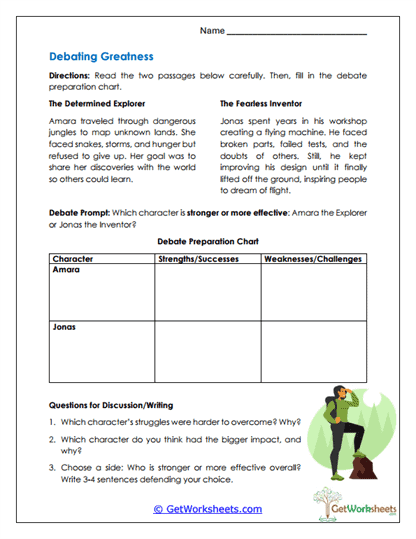
Debating Greatness
Learners compare two biographies-one of an explorer and one of an engineer-to evaluate who had the greater impact. The activity integrates reading, argument writing, and critical evaluation of evidence, promoting persuasive reasoning.
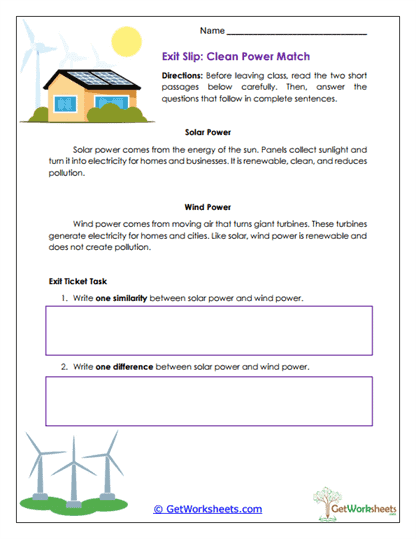
Exit Slip: Clean Power Match
In this quick exit slip, students compare solar and wind power, listing one similarity and one difference. The task reinforces environmental literacy and conciseness in comparative writing. It's perfect for short, formative assessment.
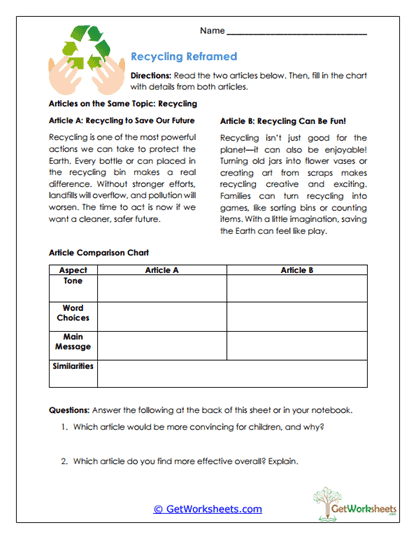
Recycling Reframed
Students read two recycling articles written with different tones and purposes. They analyze word choice, audience, and effectiveness through a chart and reflection questions. The worksheet blends language analysis with environmental awareness, deepening critical reading and evaluation skills.

Bookmark Us Now!
New, high-quality worksheets are added every week! Do not miss out!