Chronological Order Worksheets
About This Worksheet Collection
The Chronological Order collection teaches students how to follow, organize, and write events in logical sequence - a cornerstone of clear reading comprehension and effective writing. Each worksheet blends narrative and procedural texts, guiding learners to recognize time-order transitions, build timelines, and reconstruct stories or processes step by step. Through stories, instructions, and hands-on activities, students learn how sequence affects understanding, coherence, and cause-and-effect relationships.
By identifying clue words, arranging events, and writing ordered summaries, learners develop reading fluency and organizational skills that extend into academic writing. This collection bridges literacy with real-world applications - from storytelling to science procedures - while reinforcing logical thinking and temporal awareness. Students leave with a stronger grasp of how events connect and how order shapes meaning.
Detailed Descriptions Of These Worksheets
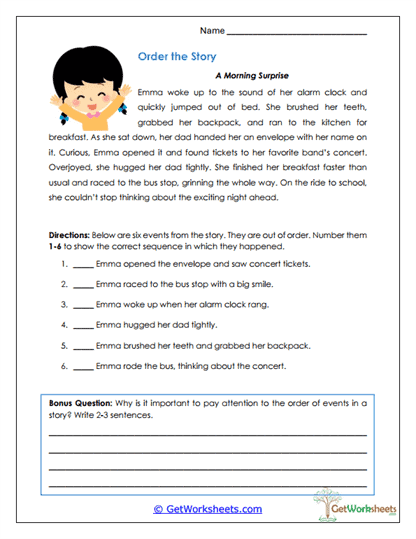
Order the Story
Students read a short narrative about Emma's morning and reorder six mixed-up events into their proper sequence. The task develops comprehension and critical reasoning while illustrating how event order shapes story meaning. A reflection prompt deepens understanding of why sequence matters in storytelling.
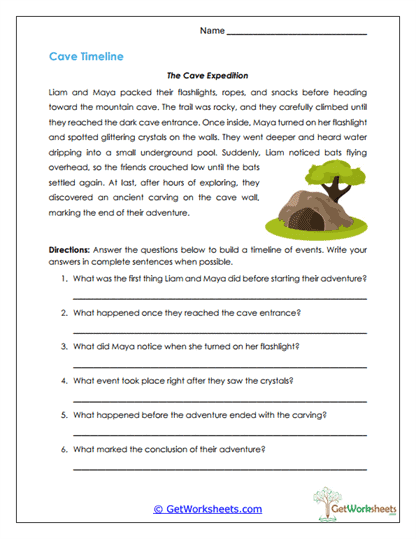
Cave Timeline
Learners read a passage about a cave adventure and construct a timeline of key events. Each comprehension question reinforces what happened first, next, and last, emphasizing cause-and-effect relationships. The exercise strengthens detail recall, narrative awareness, and sentence writing skills.
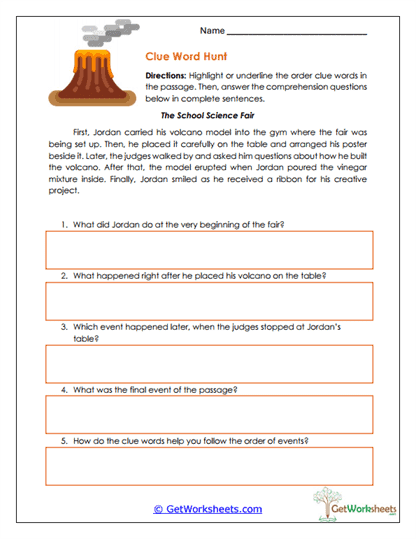
Clue Word Hunt
Students highlight order signal words such as first, next, and finally in a passage about a school science fair. By identifying these temporal cues, learners improve reading comprehension and event tracking. The follow-up questions connect signal words to story progression and structure.
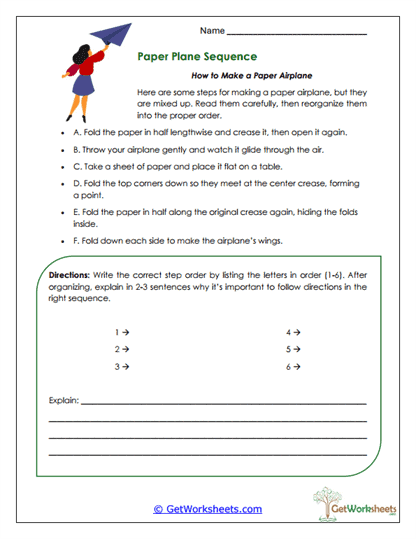
Paper Plane Sequence
Learners reorganize scrambled directions for making a paper airplane and explain why following steps in order is important. This procedural reading task builds logic, comprehension, and real-world reasoning. It helps students connect sequential order to success in following directions.
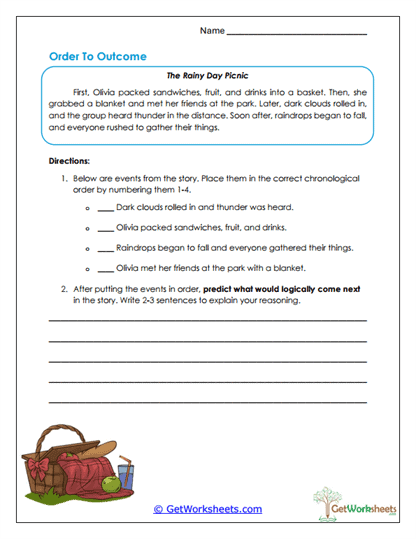
Order to Outcome
Students place events from a picnic story in chronological order, then predict what could happen next. This engaging combination of sequencing and inference supports comprehension, creative thinking, and cause-and-effect reasoning.
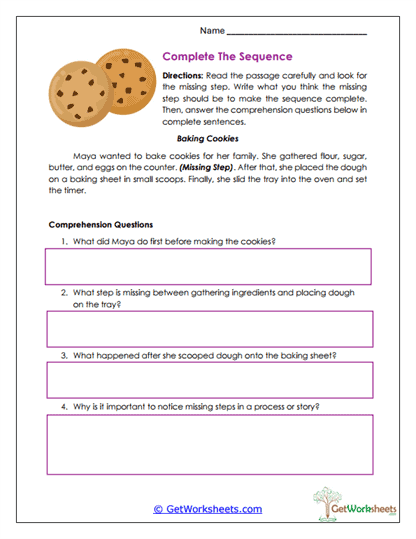
Complete the Sequence
Learners identify a missing step in a cookie-baking passage that disrupts its logical order. They answer questions that emphasize sequence awareness and process integrity. This worksheet promotes careful reading and comprehension of procedural flow.
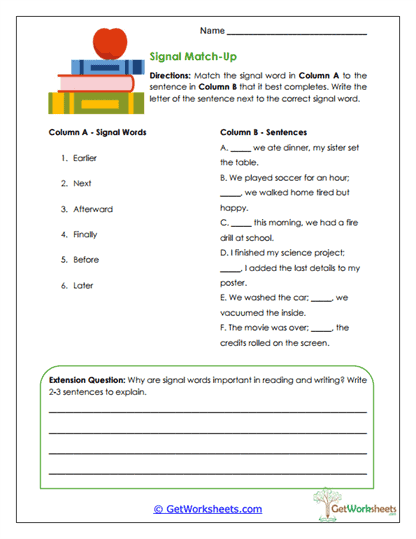
Signal Match-Up
Students pair sequence words like before and finally with sentences that fit logically. This activity reinforces grammar, vocabulary, and coherence through temporal connections. The reflection question highlights how signal words improve writing clarity and flow.
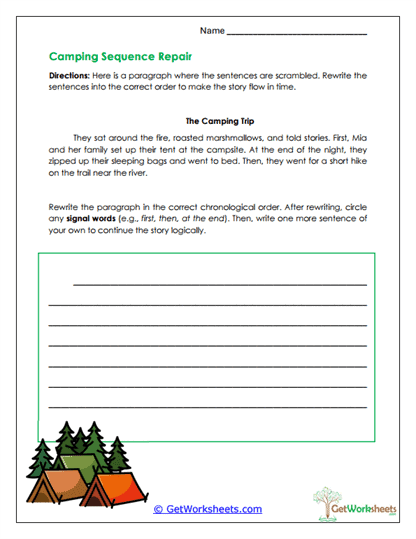
Camping Sequence Repair
In this reordering task, students rewrite a scrambled paragraph about a camping trip in the correct order. After sequencing, they add signal words and a new sentence to enhance the story. The activity improves organization, transition use, and narrative fluency.
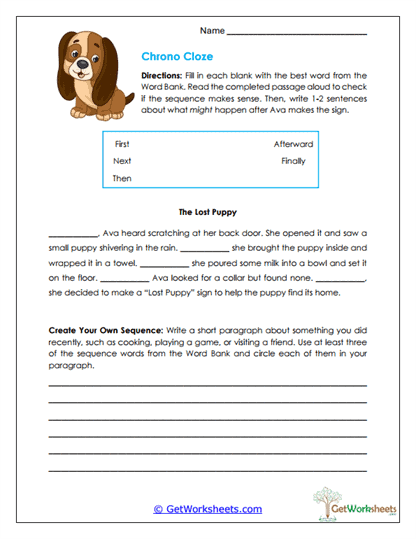
Chrono Cloze
Students fill blanks in a short story with the correct sequence words from a word bank, then write a short paragraph about a real-life event using similar transitions. This cloze-style task reinforces temporal vocabulary and structured writing practice.
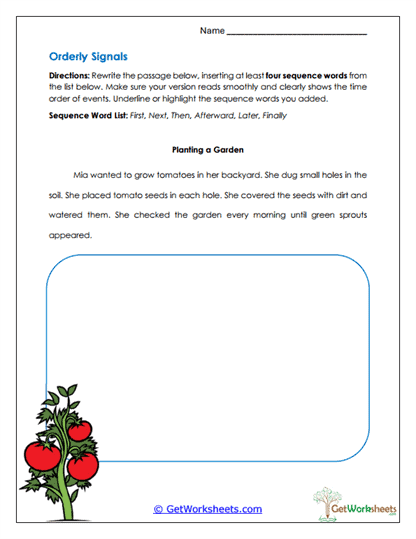
Orderly Signals
Learners rewrite a short passage about planting a garden, adding time-order transitions from a provided list. By underlining the signal words, they visualize how transitions clarify sequence. The task builds sentence flow and paragraph coherence.
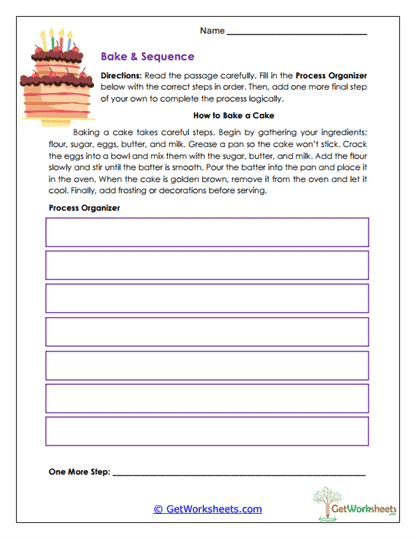
Bake & Sequence
Students read a process passage about baking a cake and complete an organizer showing the steps in correct order. They then add a logical final step to complete the procedure. This activity strengthens reading comprehension and writing organization through real-world application.
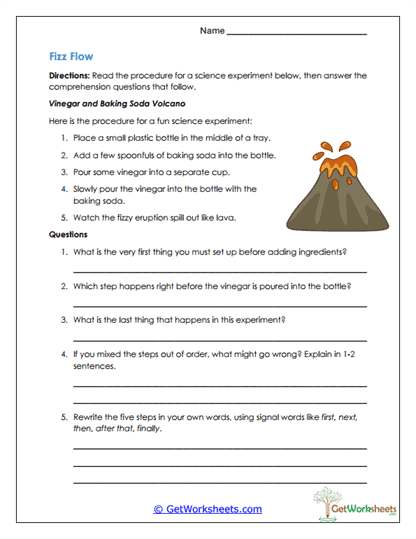
Fizz Flow
Learners follow directions for a baking soda volcano experiment and answer sequencing questions about what happens first, next, and last. They rewrite the steps with signal words to demonstrate mastery of procedural order. This cross-curricular task blends science literacy, reasoning, and structured writing.
Bookmark Us Now!
New, high-quality worksheets are added every week! Do not miss out!