Character Analysis Worksheets





About This Worksheet Collection
This collection of character analysis worksheets helps students understand how authors reveal personality, motivation, emotion, and growth through a character's actions, thoughts, dialogue, and choices. Across a wide range of narrative passages, learners practice examining evidence carefully, drawing inferences, and supporting their interpretations with clear textual details. These worksheets guide students from identifying simple character traits all the way to analyzing complex motivations, social dynamics, emotional cues, and character comparisons.
As students work through the collection, they strengthen essential reading skills such as inferencing, evidence-based reasoning, and understanding cause and effect within stories. They also learn to look beyond surface-level details, noticing how subtle clues-like body language, tone, or hesitation-reveal deeper insights. By comparing characters, evaluating motivations, and analyzing emotional responses, learners develop thoughtful comprehension skills that transfer to both literature study and real-world empathy.
Detailed Descriptions Of These Worksheets
Character Trait Analysis
Students read about Maya helping a neighbor by picking up fallen trash. They identify a character trait that fits her actions and explain their reasoning with text evidence. This worksheet teaches students to analyze what characters do to infer who they are, strengthening evidence-based thinking and comprehension.
Reasoning With Evidence
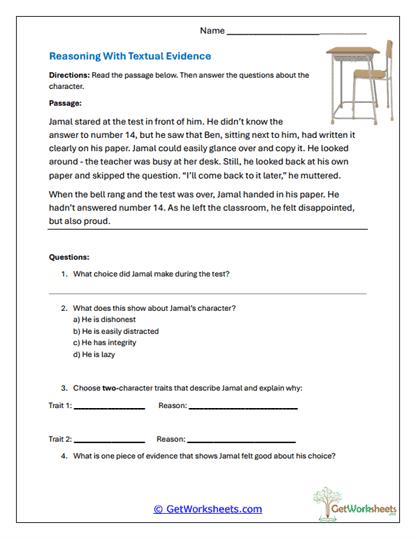
Learners examine Jamal's behavior during a classroom test and determine his most fitting character trait. They evaluate his decision, explain two selected traits, and justify each with textual details. This activity develops strong inferential reasoning and highlights how choices reveal character.
Analyzing Multiple Traits
Students read about Elena helping another runner during a race. They identify two traits she demonstrates and provide evidence for each. The worksheet encourages reflection on values, motivations, and real-life connections while emphasizing that characters can display multiple traits.
Character Motivations
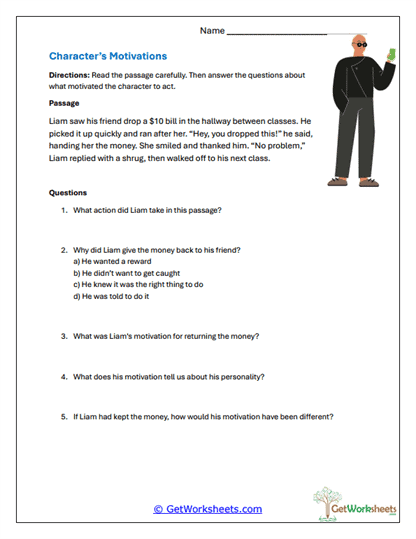
Learners read a passage about Liam returning a lost bill and determine what motivates his actions. They analyze cause and effect, reflect on how motivations shape personality, and consider how a different choice might reveal different traits. This worksheet deepens understanding of character-driven reasoning.
Explaining Motivations
Students analyze Maria's internal conflict as she prepares for a speaking contest despite her fear. They identify motivations, cite supporting evidence, and explain how emotions influence choices. This activity builds inference skills and helps learners interpret complex emotional responses.
Evaluating Complex Motivations
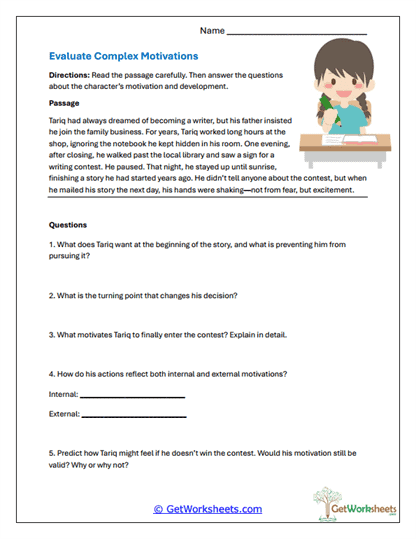
Students examine Tariq's conflicting desires-becoming a writer vs. joining the family business. They identify internal and external motivations, explore turning points, and predict alternative outcomes. This worksheet builds advanced comprehension by analyzing layered motivations and character growth.
Inferring Emotions and Thoughts
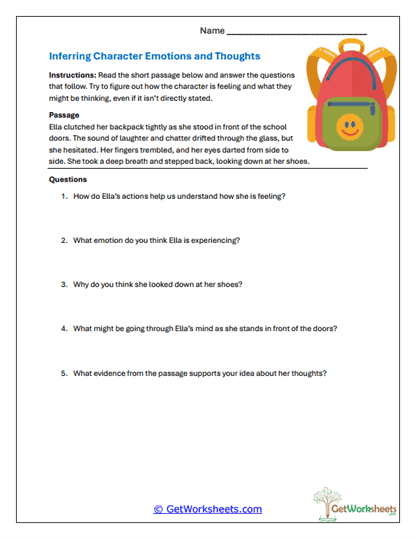
Learners read about Ella's nervous first day at school and infer her thoughts and feelings from actions and sensory clues. This worksheet emphasizes how authors show emotion indirectly, strengthening inferential comprehension and evidence-supported analysis.
Inferring Emotions
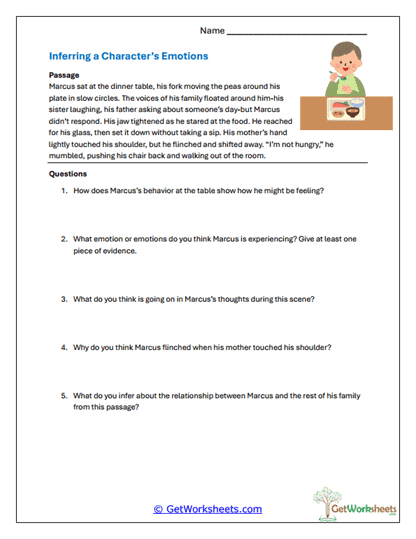
Students analyze Marcus's behavior during a tense family dinner. They infer his emotions and relationships through body language, dialogue, and reactions. The worksheet deepens understanding of social dynamics and encourages careful interpretation of emotional cues.
Comparing Characters
Learners compare Lena and Jamie's attitudes toward learning by examining their classroom behaviors. They evaluate responsibility, work habits, and likely group-work dynamics using evidence. This encourages comparative analysis and thoughtful reasoning.
Character Comparisons
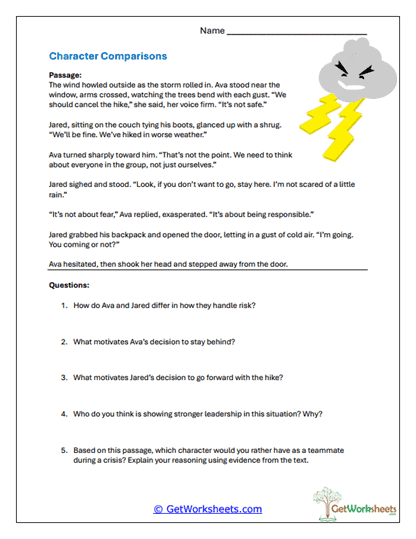
Students compare Ava and Jared's decision-making during a stormy hike. They analyze leadership qualities, motivations, and which character they would choose as a partner. The activity strengthens comparative reasoning and evidence-based justification.
Supporting Character Insights
Learners analyze Nina's reactions to a party invitation, inferring her deeper feelings and interpreting the significance of her choices. Students cite subtle details to explain her emotional state, promoting careful, nuanced reading.
Analyzing Inner Feelings
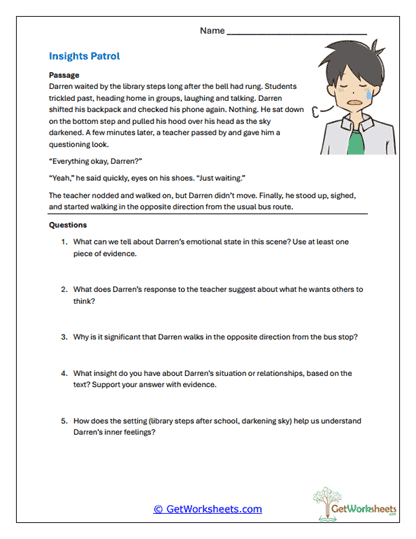
Students read about Darren waiting by the library steps and infer his emotions and motivations from actions and setting. They analyze how environment shapes mood and draw evidence-based conclusions about his state of mind. This worksheet strengthens interpretation of complex emotional contexts.
Bookmark Us Now!
New, high-quality worksheets are added every week! Do not miss out!