Cause and Effect Worksheets
About This Worksheet Collection
The Cause and Effect collection helps students understand how one event leads to another - a core reading and reasoning skill across all subjects. Through matching, labeling, revising, and creative writing, learners explore how causes produce effects and how signal words reveal those connections in text. Each worksheet combines reading comprehension with hands-on activities, allowing students to move from identifying simple relationships to analyzing complex, multi-step scenarios.
As students progress, they strengthen analytical thinking, logical sequencing, and sentence clarity while building stronger connections between reading and writing. They learn to detect cue words like because, so, and as a result and apply them effectively in their own compositions. Whether reading short passages or writing full paragraphs, learners develop the ability to explain relationships, predict outcomes, and communicate ideas with precision and coherence.
Detailed Descriptions Of These Worksheets
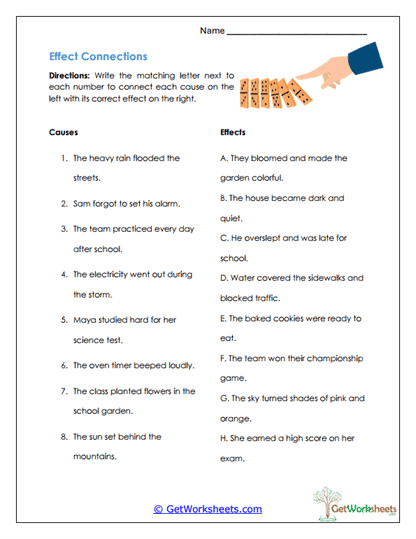
Effect Connections
Students match causes to their corresponding effects, practicing logical reasoning in real-world situations such as weather changes or daily routines. Each pair reinforces understanding of how one action leads to another. Learners develop contextual comprehension and inference skills while improving recognition of cause-and-effect structures.
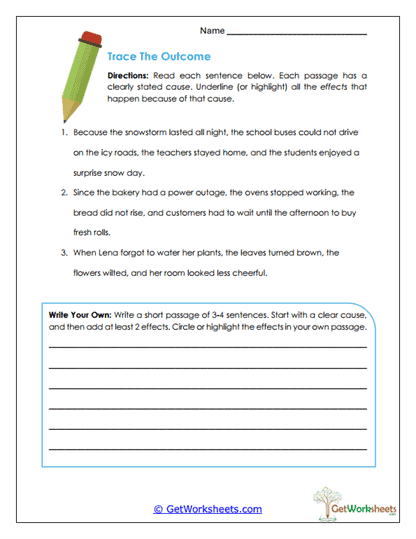
Trace the Outcome
This worksheet focuses on identifying multiple effects of a single cause. Students underline each effect in sample passages before writing their own short example. The creative writing extension deepens understanding of how a single event can have varied outcomes, improving both comprehension and organization.
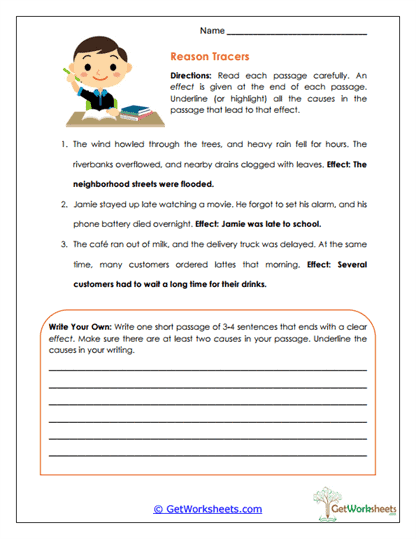
Reason Tracers
Learners identify all possible causes that lead to a given effect in passages about realistic events such as delays or natural phenomena. By reading closely, they learn to detect contributing details and link them logically. The writing task encourages them to apply this reasoning by creating their own cause-driven explanation.
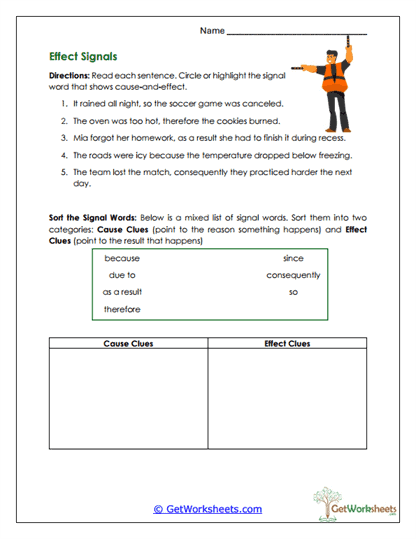
Effect Signals
Students identify and circle cause-and-effect signal words in sentences, such as because, so, and therefore. They then sort these into cause and effect categories, learning how transitions convey relationships. The exercise strengthens grammar awareness and prepares readers to interpret complex texts with confidence.
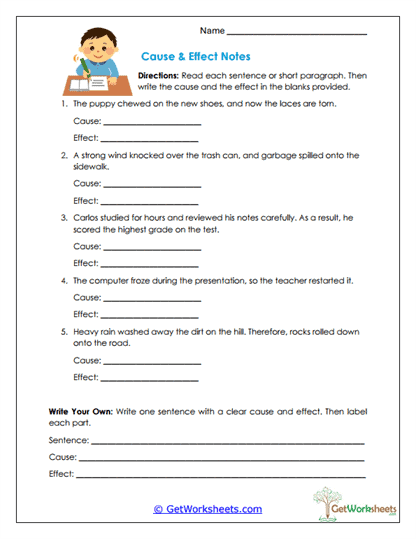
Cause & Effect Notes
In this worksheet, students read short sentences or paragraphs and label each cause and effect. They then compose an example of their own, reinforcing application and comprehension. The clear structure helps learners practice sentence-level analysis and logical connection building.
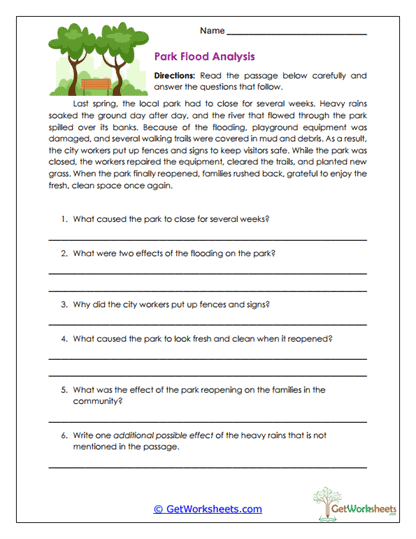
Park Flood Analysis
Learners read a short passage describing a park flood and analyze the causes and effects within the story. Guided questions prompt them to distinguish between direct and indirect consequences. The task integrates literacy and science concepts, encouraging deeper inference and vocabulary growth.
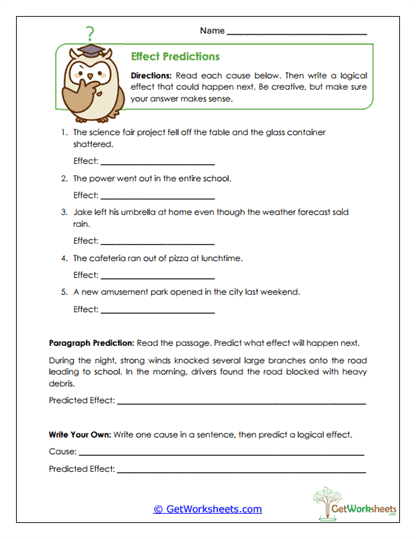
Effect Predictions
Students are given causes and asked to predict logical effects, then extend a paragraph with additional possible outcomes. This activity strengthens inferential reasoning and encourages flexible thinking. The open-ended writing prompt allows learners to express creativity while maintaining logical structure.
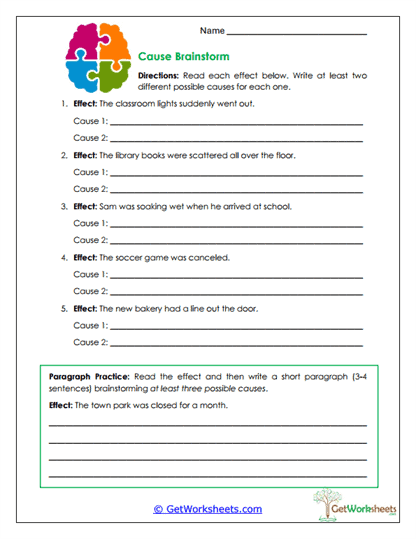
Cause Brainstorm
Learners identify multiple potential causes for given effects, broadening their understanding of complex relationships. They then expand one effect into a paragraph with several causes, promoting critical thinking and explanatory writing. The task builds comprehension of how events interact within real-world and narrative contexts.
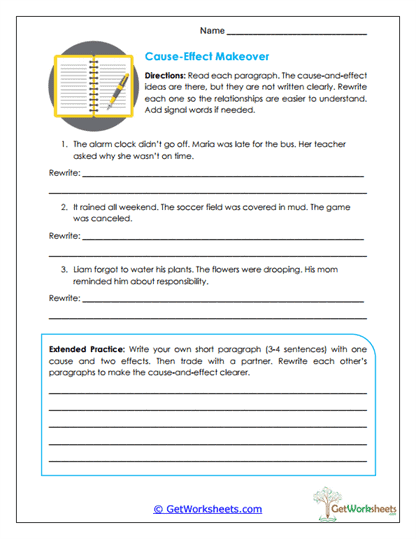
Cause-Effect Makeover
Students revise unclear or incorrect cause-and-effect sentences to clarify meaning and sequence. They add signal words and rewrite examples for smoother flow and precision. This worksheet strengthens editing, grammar, and reasoning while reinforcing the importance of logical sentence structure.
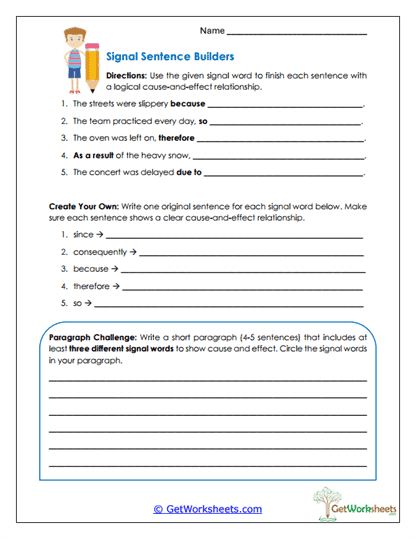
Signal Sentence Builders
Students use signal words to complete sentences that demonstrate cause-and-effect relationships. They then create their own examples and paragraph using multiple connectors. The focus on transitional language enhances cohesion and fluency in academic writing.
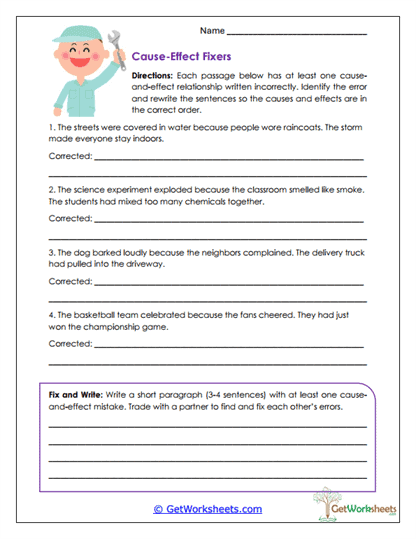
Cause-Effect Fixers
Learners review passages containing incorrect or reversed causal relationships and rewrite them correctly. They practice identifying logic errors and revising for clarity, sequencing, and coherence. The extension activity encourages peer editing and self-correction for deeper understanding.
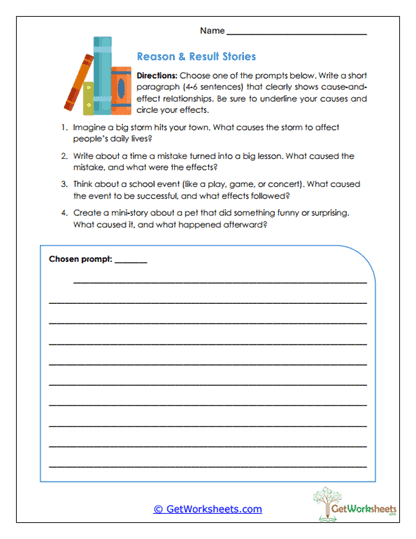
Reason & Result Stories
Students respond to creative prompts by writing short paragraphs that show clear cause-and-effect relationships. They underline the causes and circle the effects within their writing. This open-ended exercise blends storytelling with analytical skills, building both creativity and comprehension in writing structured, logical narratives.
Bookmark Us Now!
New, high-quality worksheets are added every week! Do not miss out!