Beginning Sounds Worksheets
About This Worksheet Collection
The Beginning Sounds collection introduces young learners to the foundational skill of connecting letters with their initial sounds. Through matching, circling, and coloring activities, students practice identifying the first sound in familiar words while improving their ability to recognize and name letters. Each worksheet provides visual cues, simple instructions, and engaging illustrations that strengthen auditory discrimination, early decoding, and alphabet mastery. By combining sound awareness with fun, hands-on tasks, this collection helps children develop the phonemic foundation needed for confident, fluent reading.
Detailed Descriptions Of These Worksheets
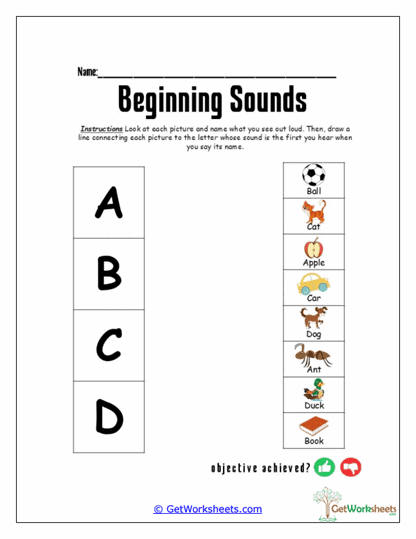
A-D
Students match pictures like apple, ball, cat, and dog to their beginning letters. This simple activity reinforces alphabet sequencing and sound-letter connection. Learners strengthen both visual and auditory recognition as they link images to initial sounds. It's a foundational exercise for pre-readers developing phonological awareness.
E-H
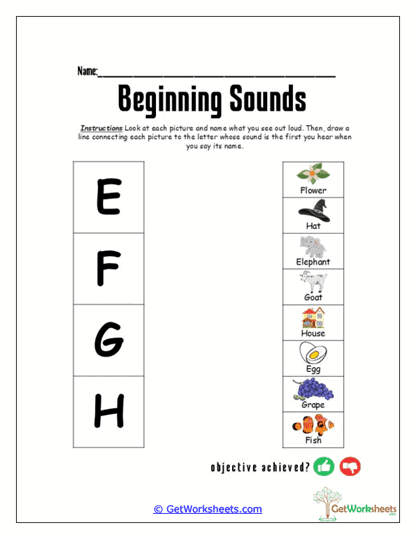
Learners connect each picture to the correct starting letter between E and H. The visual examples-elephant, goat, and hat-encourage sound isolation and letter identification. The clear illustrations support comprehension while promoting phonemic discrimination. Students develop confidence identifying letters and their sounds through visual association.
I-L
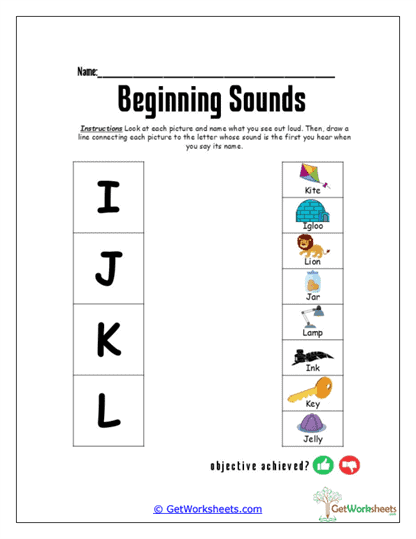
Students look at pictures like igloo, jar, key, and lion and connect them to the right letters. The worksheet builds recognition of letter sounds and strengthens early decoding. As learners match letters to initial sounds, they reinforce vocabulary and pronunciation skills. This task provides excellent practice for beginning readers.
M-P
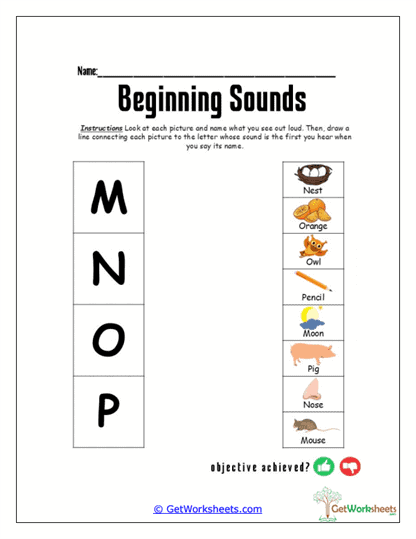
Children identify words that begin with M, N, O, and P and match them to their correct letters. The familiar visuals make sound association intuitive and fun. Learners strengthen alphabet mastery and listening discrimination. It's a great way to transition from sound recognition to reading readiness.
Q-T
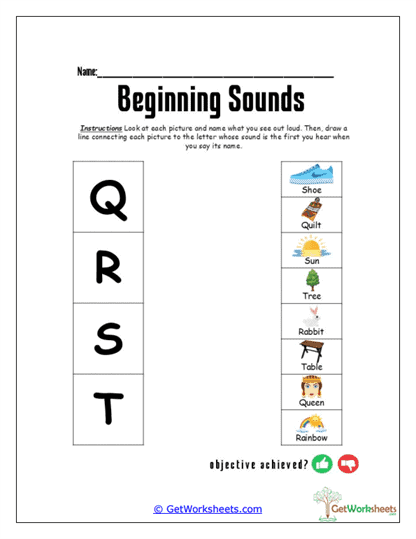
Students identify beginning sounds in words such as queen, rabbit, sun, and tree. The visual clues help children connect each letter to its sound naturally. This worksheet fosters both phonemic and visual awareness. Learners build stronger recognition of consonant sounds while practicing early reading skills.
U-X
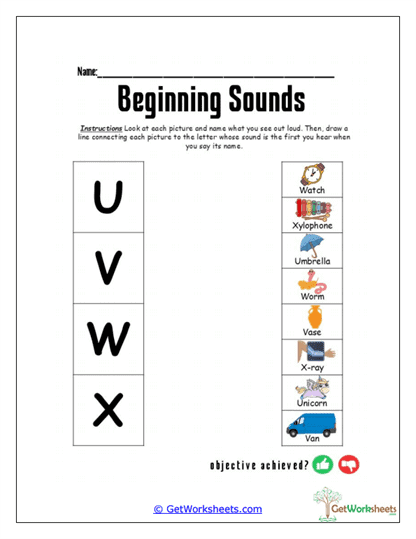
This activity features pictures for umbrella, van, watch, and xylophone. Students draw lines matching each picture to its correct letter. The exercise develops listening, visual matching, and alphabet understanding. It's ideal for reinforcing sound recognition through repetition and hands-on engagement.
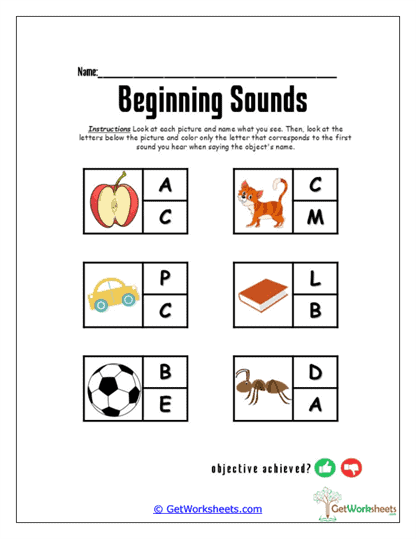
Coloring A-E
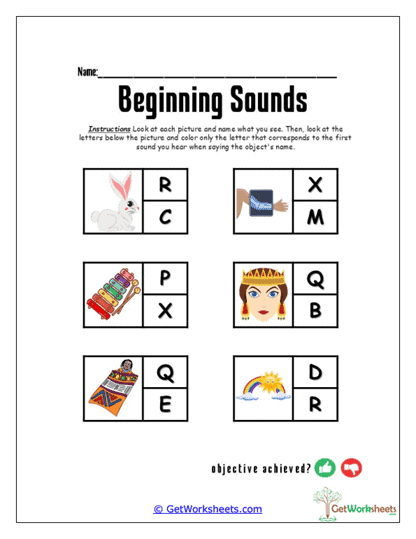
Learners say each picture name aloud, then color the box showing the correct beginning letter. Coloring adds a fine motor element while keeping students actively engaged. The activity helps bridge auditory learning with visual memory. It's both creative and educational for reinforcing letter-sound relationships.
Coloring U-V
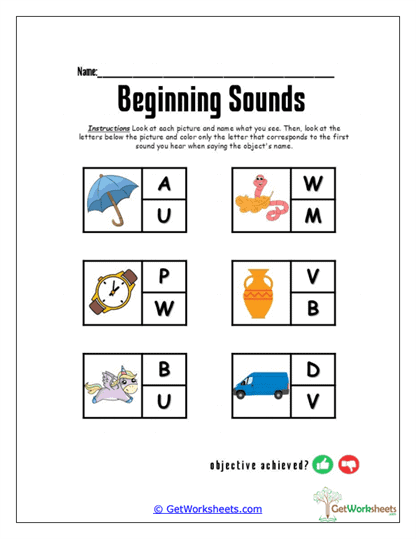
Students identify the initial sound of each picture-such as umbrella, worm, and van-and color the letter that matches. The task promotes active learning through art-based engagement. It strengthens phonemic awareness and visual association. Coloring helps early readers build patience and focus while learning sounds.
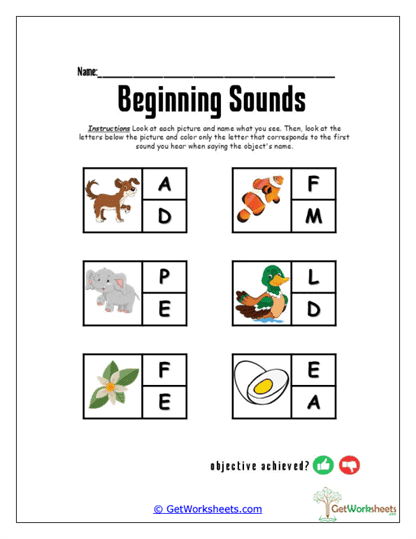
Coloring D-F
Learners find the correct beginning letter for each image, including dog, fish, and elephant. They color the appropriate letter to show understanding. This worksheet blends fine motor skills with early literacy practice. Students gain confidence recognizing sounds and associating them with written symbols.
Coloring Q-R
Children look at images like queen, rainbow, and xylophone and color the letter representing the first sound. The visual cues keep learners focused on sound identification. It reinforces memory through both seeing and doing. The activity offers a playful approach to practicing alphabet phonics.
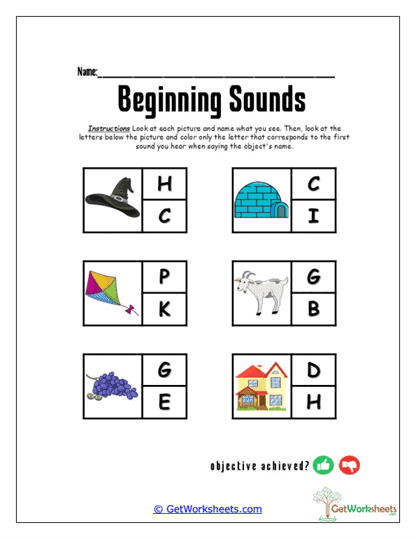
Coloring G-H
Students recognize the beginning sound for words such as goat, grapes, and hat, then color the matching letter. The worksheet supports early sound awareness and strengthens alphabet recall. Learners also practice fine motor coordination while coloring. It's a joyful mix of phonics, art, and attention skills.
Starts With L, M, N
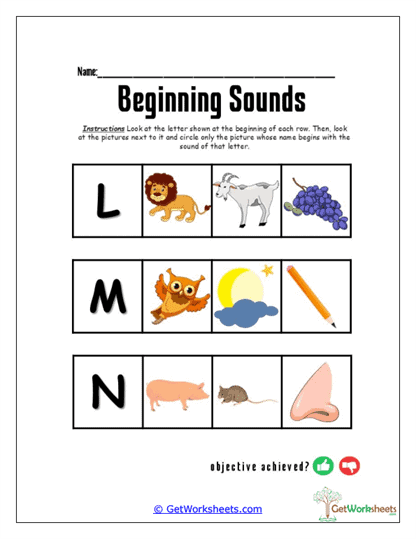
Students circle which picture starts with the target letter in each row, choosing from examples like lion, moon, and nose. The task builds critical listening and visual comparison skills. Learners practice isolating beginning sounds in familiar words. It's an essential step toward confident decoding.
Starts With O, S, U
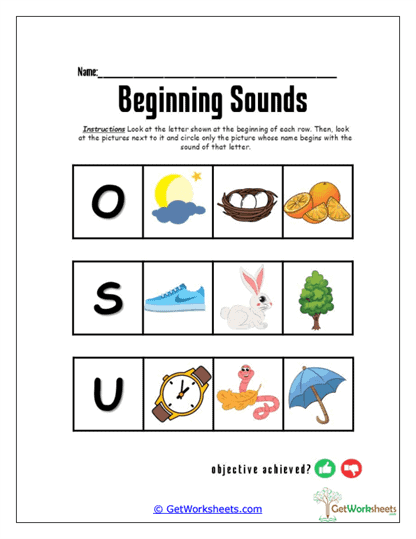
Learners examine each group of images and circle the one beginning with the correct letter. This activity connects listening skills with visual understanding. Students develop awareness of how letters represent specific sounds. The clear illustrations provide an intuitive learning experience for early readers.
Starts With A, C, U
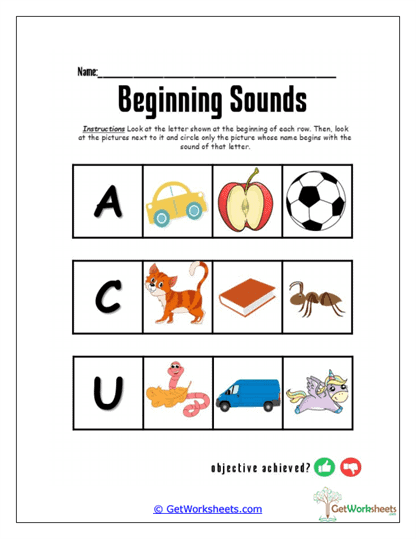
Students look at pictures like apple, cat, unicorn, and umbrella, then identify which matches the letter shown. The format encourages sound discrimination and letter recognition. Learners improve decoding skills through careful listening. It's a solid blend of phonics and vocabulary development.
Starts With I, G, Q
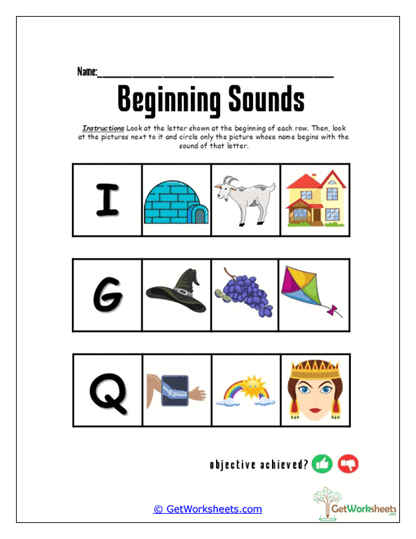
Children determine which picture in each row starts with the target letter's sound, such as igloo, grapes, or queen. The worksheet strengthens phonemic awareness and sound isolation skills. Learners connect letters with their spoken sounds confidently. This exercise helps bridge auditory and visual literacy foundations.
Bookmark Us Now!
New, high-quality worksheets are added every week! Do not miss out!