Bad vs. Badly Worksheets
About This Worksheet Collection
The Bad vs. Badly worksheet collection offers a clear, approachable way for students to practice one of the most common adjective-adverb confusions in English. Through sentence analysis, corrections, dialogues, short stories, and creative rewrites, learners explore how choosing bad or badly can completely change meaning. These worksheets provide structured practice that helps students understand how linking verbs, action verbs, and descriptive words interact within sentences.
Across the set, students develop stronger grammar awareness, editing fluency, and sentence-level comprehension. They learn to recognize verb types, apply rules consistently, and explain their reasoning using evidence from context. This combination of analysis, revision, and application builds confidence with descriptive language and strengthens overall writing clarity.
Detailed Descriptions Of These Worksheets
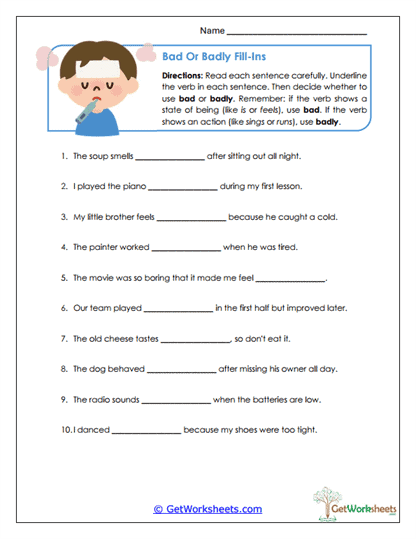
Bad or Badly Fill-Ins
In this activity, students underline the verb in each sentence and choose either bad or badly based on whether the verb expresses a state of being or an action. Learners deepen their understanding of how adjectives and adverbs function while also improving sentence interpretation skills. The worksheet encourages close reading and supports the development of accurate grammar habits. It helps students distinguish between describing feelings and describing behavior in a clear, structured way.
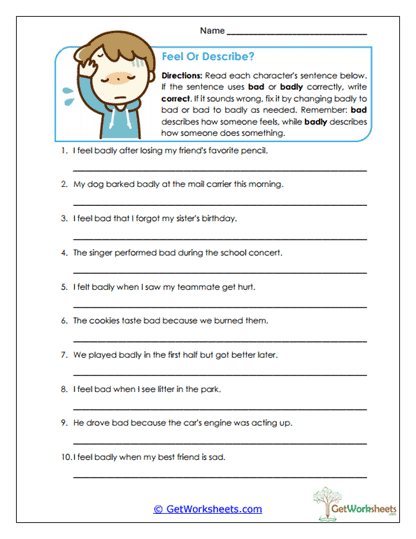
Feel or Describe?
Students determine whether each sentence uses bad or badly correctly and revise any incorrect examples. This strengthens editing skills and encourages learners to think critically about how descriptive words function. By applying rules related to adjectives and adverbs, students improve clarity in their writing. The task also reinforces the connection between verb type and word choice.
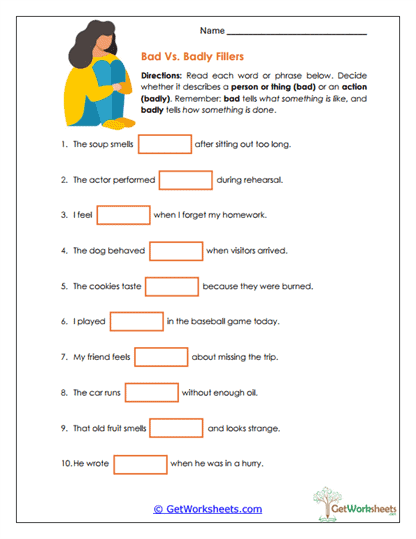
Bad vs. Badly Fillers
Learners decide which form-bad or badly-best completes each phrase or sentence, depending on whether the blank describes a noun or an action. The activity promotes careful sentence reading and supports consistent application of grammar rules. Students gain practice distinguishing between naming qualities and describing performance. It also helps improve precision in everyday writing.
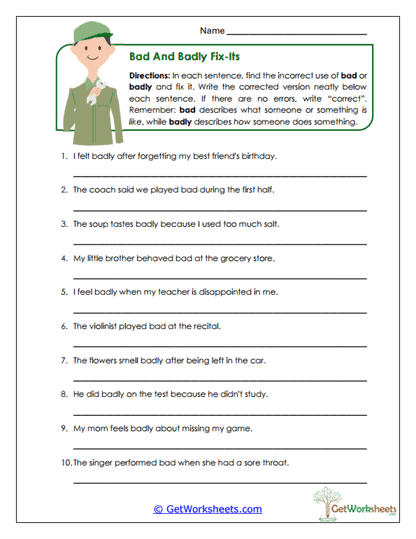
Bad and Badly Fix-Its
Students read each sentence, check for incorrect usage of bad or badly, and rewrite the corrected version. The exercise fosters proofreading skills and encourages attention to language details. Learners strengthen their understanding of how descriptive words interact with feelings and actions. It also provides repeated practice with identifying subtle grammar errors.
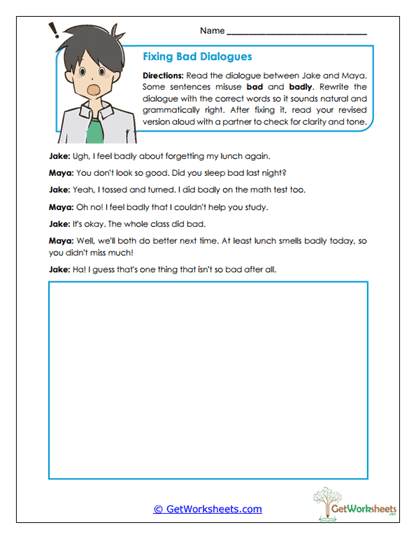
Fixing Bad Dialogues
Learners revise a conversation containing multiple errors in the use of bad and badly, ensuring the dialogue sounds natural and accurate. This task blends grammar practice with conversational writing, helping students consider tone and clarity. By editing spoken-style text, learners see how word choice affects meaning in dialogue. The worksheet reinforces accuracy and expression simultaneously.
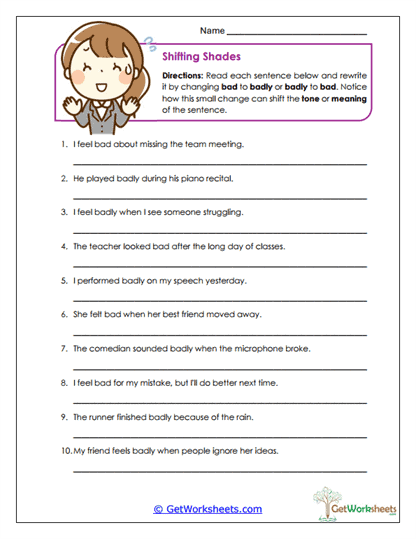
Shifting Shades
Students rewrite sentences by swapping bad and badly where needed to make each sentence grammatically correct. The activity demonstrates how a small change in word form can shift tone or meaning. Learners build awareness of adjective-adverb roles and strengthen revision fluency. It also encourages students to think critically about how meaning is constructed.
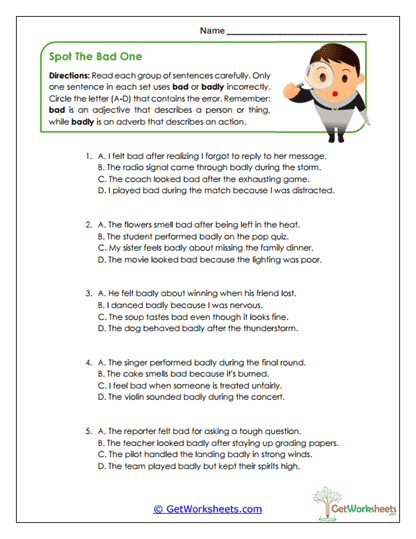
Spot the Bad One
In each set, learners identify the sentence that misuses bad or badly and circle the incorrect option. This encourages quick recognition of grammar errors and deepens understanding of descriptive word usage. Students compare correct and incorrect forms, refining analytical reading skills. The activity promotes stronger mastery of adjective and adverb distinctions.
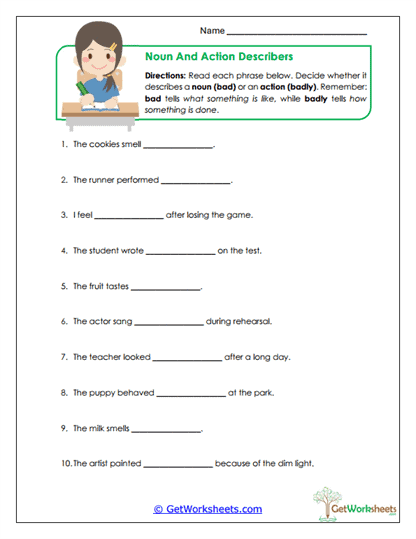
Noun and Action Describers
Students examine each phrase to determine whether it refers to a noun or an action, guiding them to choose bad or badly accordingly. This supports comprehension of sentence components and how descriptive words function. The worksheet encourages thoughtful interpretation of meaning. It helps students strengthen grammar accuracy through repeated, focused practice.
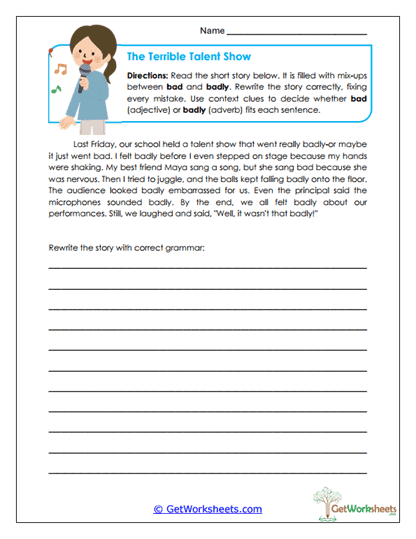
The Terrible Talent Show
Learners revise an entire short story packed with incorrect uses of bad and badly, producing a corrected version. This extended editing task reinforces consistency and careful reading. Students improve their ability to apply grammar rules throughout a narrative. The exercise strengthens comprehension, proofreading skills, and attention to detail.
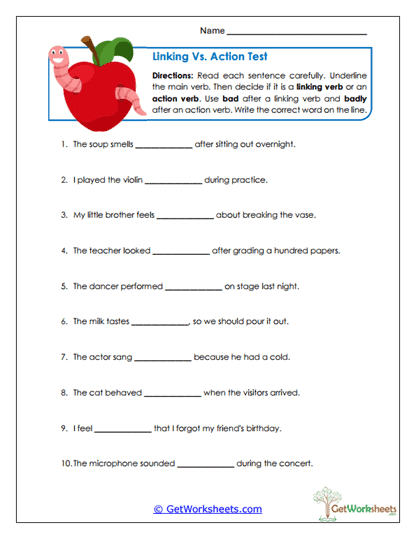
Linking vs. Action Test
Students underline verbs, identify them as linking or action verbs, and choose the correct descriptive form. This helps learners understand the relationship between verb types and accurate word choice. The task reinforces structural analysis of sentences. It strengthens both grammar knowledge and interpretation skills.
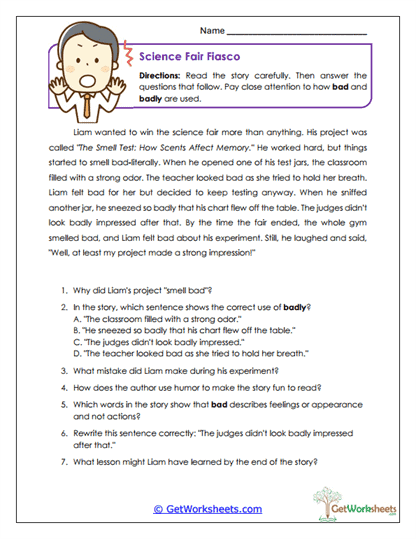
Science Fair Fiasco
Students read a humorous narrative and answer comprehension questions that focus on the difference between bad and badly. They evaluate errors, interpret figurative language, and revise sentences for accuracy. The worksheet blends reading analysis with grammar application. It encourages students to support their thinking with evidence from the text.
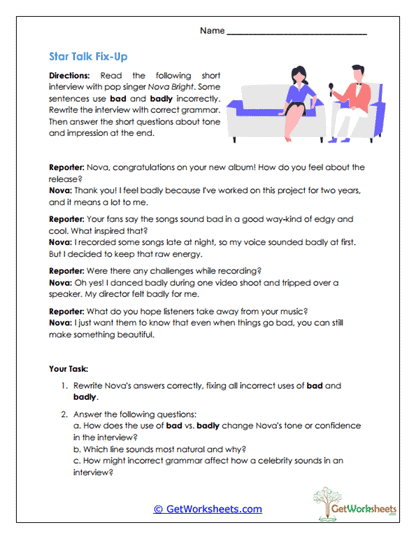
Star Talk Fix-Up
In this activity, learners revise an interview transcript containing incorrect uses of bad and badly, then answer questions about tone and meaning. They analyze how grammar affects a speaker's impression and clarity. The worksheet reinforces editing, critical thinking, and understanding of descriptive language. It connects grammar practice to authentic communication settings such as interviews and media.
Bookmark Us Now!
New, high-quality worksheets are added every week! Do not miss out!