Author's Purpose Worksheets
-
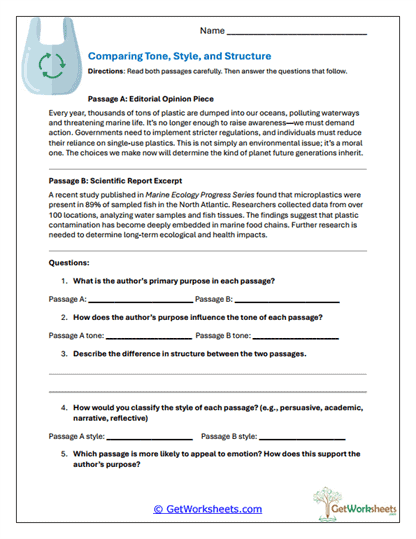
Advanced Tone and Style Comparison
-
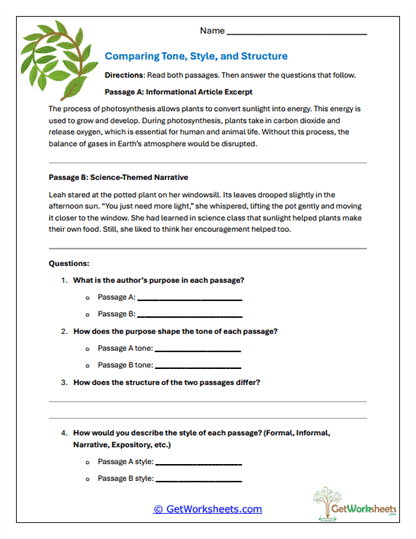
Comparing Tone and Style
-
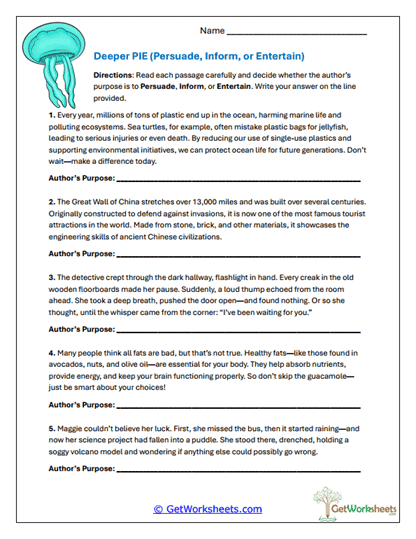
Deeper Purpose Identification
-
-
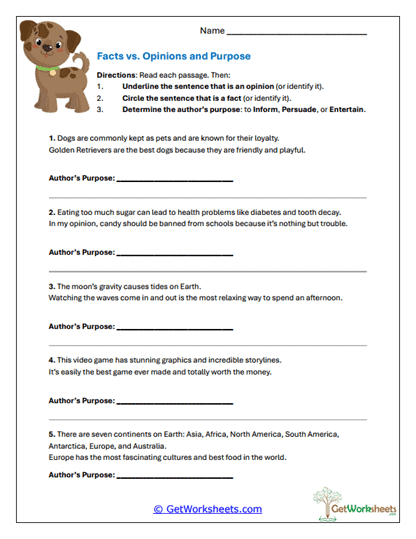
Facts, Opinions, and Purpose
-
More Nuanced Purposes
-
PIE Author’s Purpose
-
Purpose with Facts and Opinions
-
Reader Knowledge and Feelings
-
Spotting Purpose Clues
-
Spotting Textual Clues
-
Understanding Nuanced Purposes
-
What Is the Author Doing?
About This Worksheet Collection
This collection of author's purpose worksheets helps students develop the essential reading comprehension skill of understanding why an author chooses to write a text. Across a range of genres-including persuasive passages, informational articles, descriptive texts, expressive writing, and narrative scenes-students learn to analyze tone, structure, language choices, and content clues to determine intent. Whether the goal is to persuade, inform, entertain, explain, describe, or evoke emotion, these worksheets guide learners to recognize how purpose shapes meaning.
By comparing texts, identifying facts and opinions, citing textual evidence, and evaluating tone and style, students strengthen critical thinking and analytical reading abilities. They gain practice in distinguishing between author motivations, interpreting how writers influence readers, and understanding how genre affects purpose. This well-rounded collection prepares learners for deeper comprehension tasks across subjects and fosters confident, purposeful reading.
Detailed Descriptions Of These Worksheets
PIE Author's Purpose
Students read short passages and decide whether the author aims to persuade, inform, or entertain. Each selection contains clear cues that guide learners in identifying purpose. Children analyze tone and key details before writing the correct purpose. This worksheet strengthens foundational understanding of author intent across common text types.
Deeper Purpose Identification
Learners analyze more detailed passages that require closer reading and justification. With richer vocabulary and context, students must carefully interpret which purpose-persuade, inform, or entertain-is most fitting. The activity encourages deeper evaluation of text evidence. It supports accuracy in determining intent within more nuanced writing.
Understanding Nuanced Purposes
Students work with passages written to explain, describe, or express feelings. They examine sensory language, explanations, and emotional cues to determine precise author motivations. This worksheet moves beyond basic categories and encourages interpretation of tone and detail. It builds understanding of how specific purposes shape writing style.
More Nuanced Purposes
Learners analyze longer, more complex passages that may include scientific explanations, descriptive scenes, or reflective writing. Students evaluate purpose by observing organization, tone, and content. The worksheet deepens comprehension of how authors craft text to achieve targeted effects. It supports advanced reading analysis.
Reader Knowledge and Feelings
Students answer the question, "What does the author want the reader to know or feel?" after reading each passage. They support their interpretation with text evidence, strengthening written justification skills. The worksheet blends informational and descriptive excerpts to show how purpose influences emotion and understanding. It encourages thoughtful response writing.
What Is the Author Doing?
Learners evaluate passages focused on memory, reflection, and emotional tone to determine the author's intended message. Students analyze imagery, mood, and expressive language. This activity helps students identify deeper intentions beyond persuasion or information. It fosters reflective comprehension and evidence-based writing.
Facts, Opinions, and Purpose
Students identify a fact and an opinion from each passage before determining the author's purpose. This reinforces discrimination between objective and subjective content. Learners then decide whether the text aims to inform, persuade, or entertain. The activity integrates evaluation of purpose with analysis of text elements.
Purpose with Facts and Opinions
Learners read longer passages containing mixed factual and opinion-based information. They identify a fact, an opinion, and the overall purpose. This helps students analyze how authors blend different types of information. It strengthens interpretation of complex text and purpose identification.
Comparing Tone and Style
Students compare an informational passage with a narrative one, analyzing differences in tone, structure, and purpose. They answer questions that require close comparison of genre features. The activity helps learners understand how writing choices shift with purpose. It fosters genre awareness and critical comparison skills.
Advanced Tone and Style Comparison
Learners compare an editorial with a scientific report, examining how authors communicate ideas through tone, style, and structure. Students determine differences in intent, emotional appeal, and informational rigor. This advanced task builds sophisticated analytical abilities and prepares students for academic reading.
Spotting Purpose Clues
Students read short excerpts from different genres and identify textual clues-such as tone, word choice, or facts-that reveal the author's purpose. They then classify each purpose. The worksheet strengthens close reading and interpretation of author strategies. It helps students understand how writers signal intent through language.
Spotting Textual Clues
Learners analyze three passages-persuasive, informational, and narrative-to identify two clues per passage that reveal purpose. They then decide whether the author writes to inform, persuade, or entertain. This activity reinforces multi-genre comprehension and the ability to evaluate textual evidence. It supports confident interpretation of purpose across varied writing styles.
Bookmark Us Now!
New, high-quality worksheets are added every week! Do not miss out!