Assertiveness vs. Aggression vs. Passivity Worksheets
About This Worksheet Collection
The Assertiveness vs. Aggression vs. Passivity worksheet collection helps students build essential communication and emotional intelligence skills for everyday life. Through realistic scenarios, dialogues, and reflection activities, learners explore the differences between speaking up confidently, reacting harshly, and staying silent when it matters. These lessons guide students to recognize healthy communication patterns, interpret tone and body language, and develop empathy in both in-person and digital interactions.
Across the collection, students strengthen self-awareness, interpersonal skills, and emotional regulation through active reading, writing, and scenario-based learning. They learn to apply assertive strategies like "I" statements, boundary setting, and calm expression of needs-tools that promote respect, confidence, and collaboration. Whether in classroom discussions or online messages, these worksheets prepare students to communicate clearly, manage conflict constructively, and build positive relationships.
Detailed Descriptions Of These Worksheets
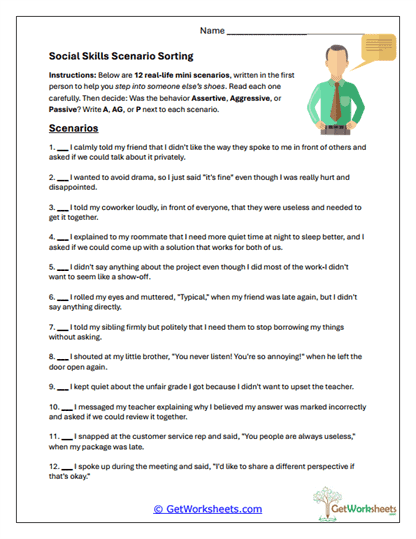
Social Skills Scenario Sorting
Students read short first-person situations and determine whether the behavior shown is assertive, aggressive, or passive. The activity immerses learners in relatable social dilemmas, helping them analyze emotional tone and intention. It encourages reflection on empathy, respect, and communication choices. This exercise lays the foundation for understanding balanced expression and response.
Understanding Communication Styles
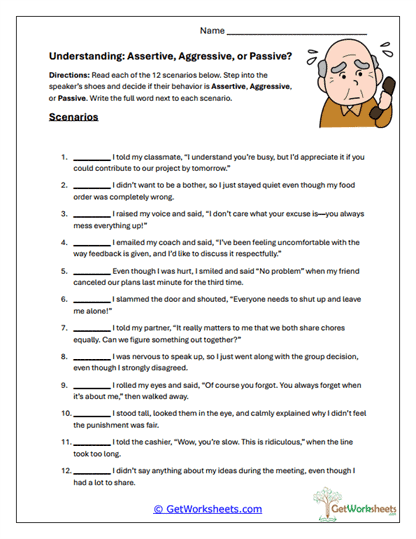
In this reading-based activity, students identify the communication style displayed in twelve short dialogues. They infer tone, motivation, and emotion from each statement to decide whether it's assertive, aggressive, or passive. The worksheet promotes social insight and awareness of how words and tone shape relationships. It builds emotional vocabulary and reasoning about human interaction.
Communication Style Quiz
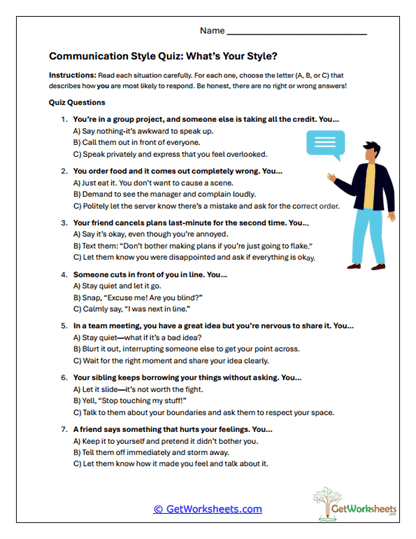
Learners take a self-assessment to explore their own communication habits. For each real-world scenario, they select the option that best matches how they might respond. The quiz encourages introspection and self-regulation while teaching strategies for balanced expression. It's an engaging way to connect self-awareness with personal growth.
Body Language & Communication Matching
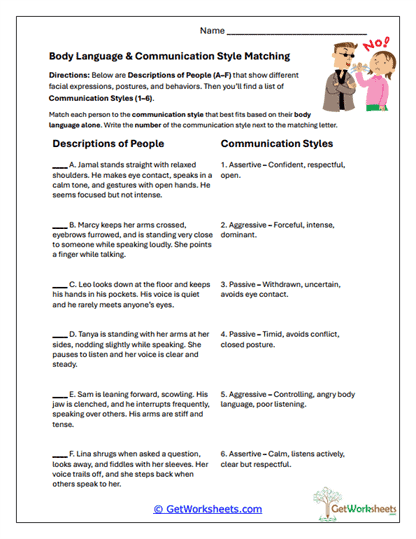
Students match body language descriptions-like eye contact, gestures, or posture-to corresponding communication styles. The exercise teaches that tone isn't only spoken but also physical. Learners build nonverbal literacy and gain insight into how gestures can reinforce or contradict words. It's a valuable bridge between emotional intelligence and social interpretation.
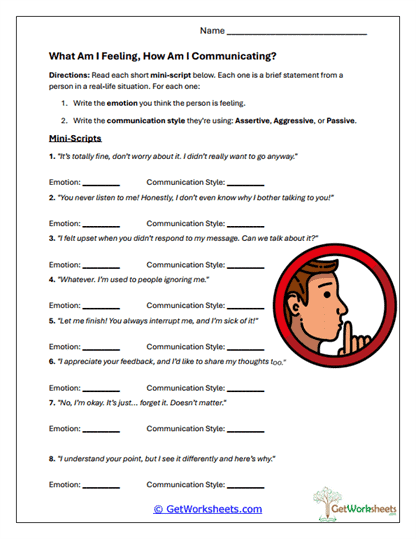
What Am I Feeling?
This worksheet combines emotional identification and communication analysis. Students determine both the feeling behind a statement and whether it reflects assertive, aggressive, or passive behavior. The task fosters empathy, emotional vocabulary, and understanding of how tone influences relationships. It's a thoughtful mix of emotional awareness and reasoning practice.
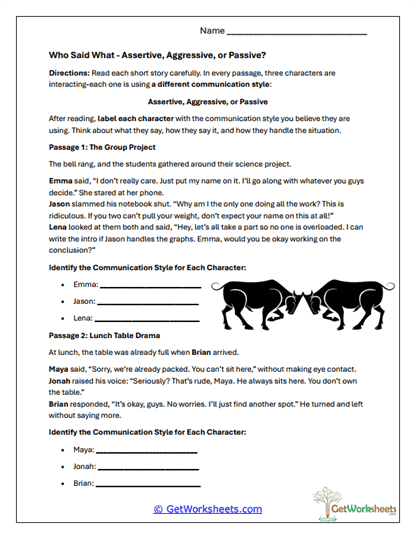
Who Said What?
Students read brief dialogues among three characters-each modeling a different communication style-and identify which character is assertive, aggressive, or passive. The exercise promotes comprehension of tone, intent, and verbal cues. It enhances understanding of how words affect group interactions and conflict resolution.
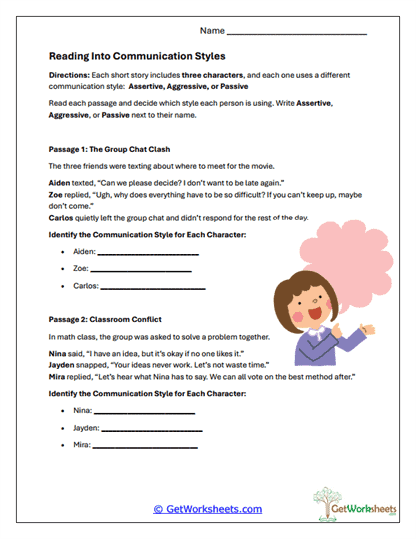
Reading Into Communication Styles
Through short classroom and social scenarios, students analyze how different communication styles play out among peers. They identify behaviors, interpret tone, and categorize responses accordingly. This activity strengthens reading comprehension and empathy while reinforcing lessons on respect and collaboration.
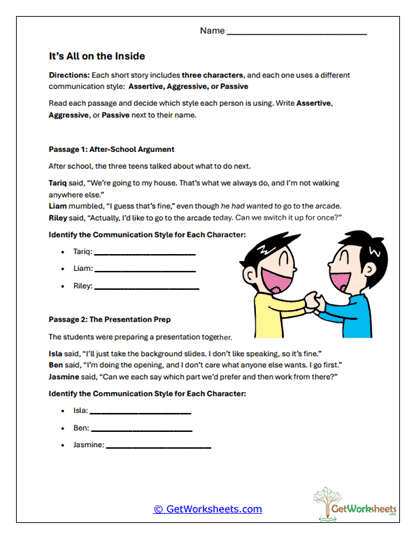
It's All on the Inside
Students analyze two realistic dialogues that illustrate distinct communication styles. They interpret tone, body language, and emotional context to determine which speaker models assertive, aggressive, or passive behavior. The worksheet builds emotional insight and encourages students to reflect on their own expression patterns.
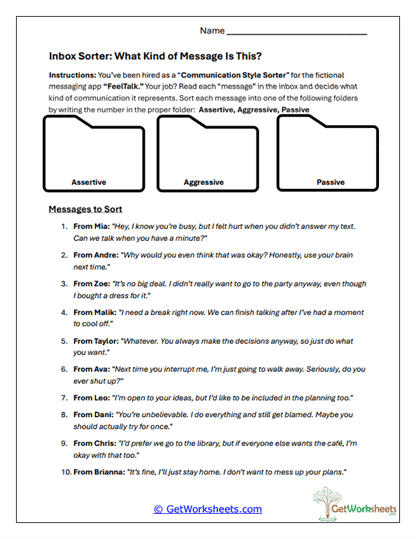
Inbox Sorter
In this digital-age activity, learners act as "communication style detectives," sorting ten text messages into assertive, aggressive, or passive categories. They practice interpreting tone in online writing and reflect on how word choice shapes meaning. This exercise boosts media literacy and responsible digital communication.
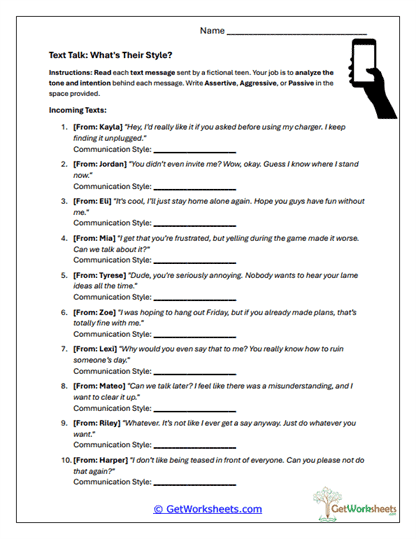
Text Talk
Students evaluate brief text-message conversations to identify communication style and emotional tone. The activity connects historical social skills to modern digital communication. Learners explore respect, frustration, and empathy in online contexts while practicing digital citizenship and analysis of intent.
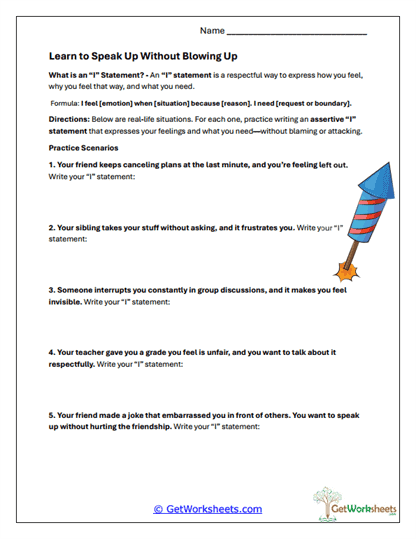
Learn to Speak Up
This worksheet teaches students to use "I" statements to express feelings and needs respectfully. They apply the formula to realistic social situations, transforming frustration into calm, assertive responses. The exercise promotes confidence, empathy, and problem-solving through structured expression. It's a practical tool for everyday communication success.
Flip the Script
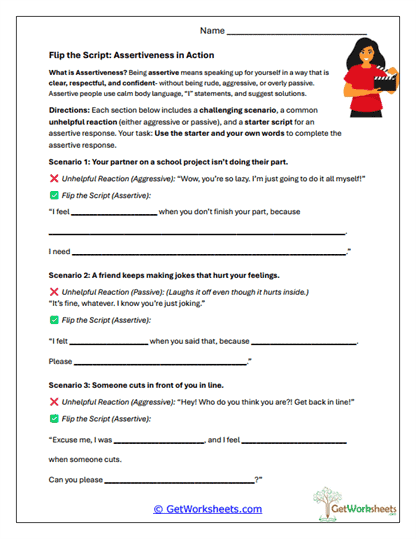
Learners examine reactive or unhelpful communication examples and rewrite them as assertive alternatives. Using sentence starters, they craft "I" statements to model calm, respectful dialogue. This activity develops emotional regulation, perspective-taking, and constructive self-expression. It's an empowering exercise that turns awareness into confident action.
Bookmark Us Now!
New, high-quality worksheets are added every week! Do not miss out!