Ash Wednesday Worksheets
About This Worksheet Collection
The Ash Wednesday collection invites students to explore the spiritual meaning, history, and cultural traditions of the first day of Lent. These worksheets guide learners through themes of reflection, repentance, humility, and renewal-encouraging both intellectual understanding and personal connection to faith. Through reading passages, vocabulary work, moral reasoning, and creative reflection, students deepen their grasp of Christian symbolism while developing literacy and critical-thinking skills.
Blending religion, language arts, and social-emotional learning, this collection helps students link sacred rituals to daily life and modern values. Activities emphasize compassion, ethical growth, and self-awareness, making the study of Ash Wednesday both academically engaging and spiritually meaningful.
Detailed Descriptions Of These Worksheets
Ash Wednesday Symbols
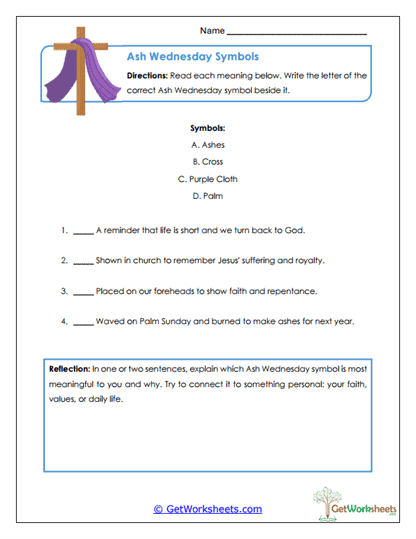
Students match four key Ash Wednesday symbols-ashes, cross, purple cloth, and palm-to their corresponding meanings. A reflection prompt encourages them to identify which symbol feels most meaningful personally and why. The activity strengthens understanding of Christian imagery and supports reflective connection to faith. It builds symbolic reasoning and appreciation for sacred traditions.
From Palm to Ash
This narrative reading passage explains how palm leaves from Palm Sunday are transformed into ashes for Ash Wednesday. Students answer comprehension questions focused on sequencing, cause and effect, and renewal. The task connects scientific and spiritual transformation. It encourages students to see continuity between celebration, reflection, and faith practice.
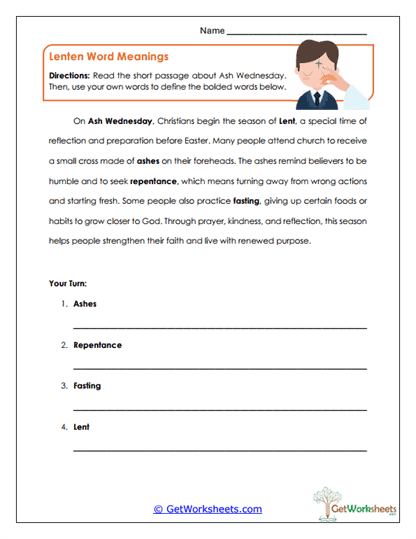
Lenten Word Meanings
Learners explore vocabulary such as ashes, repentance, and fasting by defining each in their own words after reading a contextual passage. This exercise builds religious literacy and reinforces understanding through personal expression. It promotes meaningful engagement with Lent's core ideas of humility and renewal.
Sacred Beginnings
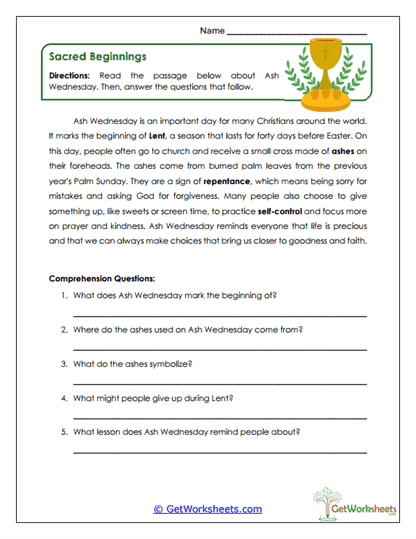
Students read a passage explaining Ash Wednesday as the beginning of Lent and answer comprehension questions that explore meaning and practice. Reflection prompts invite personal connection to fasting, prayer, and repentance. The worksheet combines reading comprehension with faith-based moral insight.
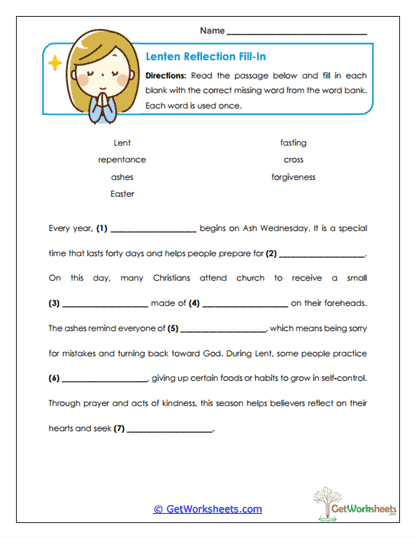
Lenten Reflection Fill-In
In this cloze reading activity, students fill in missing words from a passage summarizing Lent's message. Vocabulary like repentance and forgiveness helps reinforce faith-based language. The exercise builds literacy while reviewing Lent's themes of renewal and personal growth.
Renewed Reflections
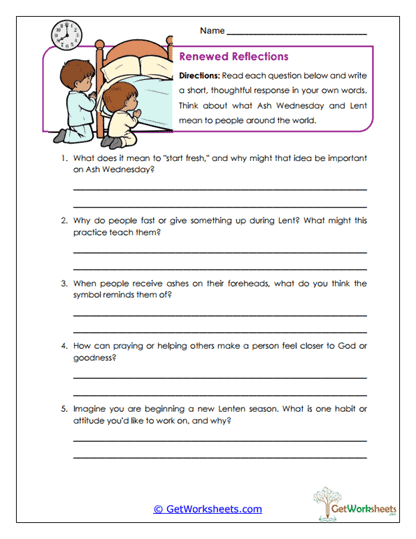
Students respond to five prompts about starting fresh, practicing kindness, and growing spiritually during Lent. Each open-ended response encourages introspection and emotional literacy. The worksheet develops both moral reasoning and written expression about personal faith.
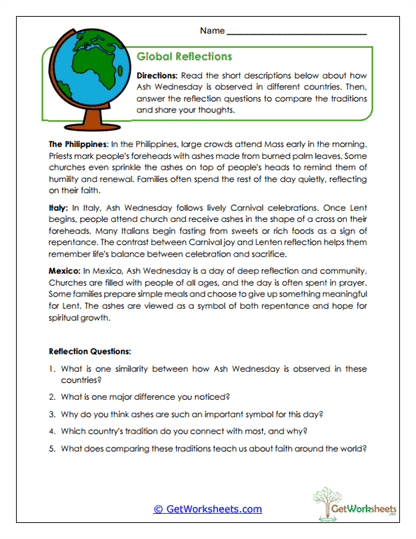
Global Reflections
Learners compare how Ash Wednesday is celebrated in countries such as Italy, Mexico, and the Philippines. After reading brief cultural summaries, they answer comparison questions about similarities and differences. This promotes cross-cultural understanding and awareness of global faith traditions.
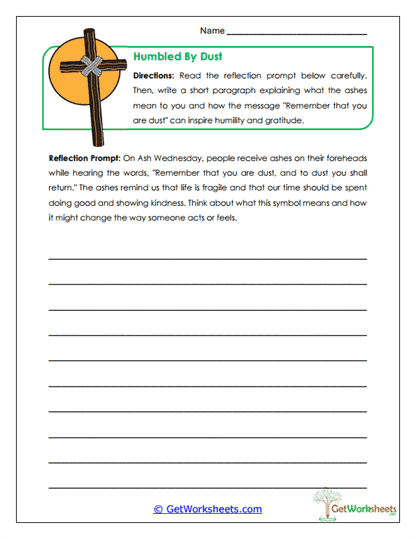
Humbled by Dust
This reflective writing activity focuses on the phrase "Remember that you are dust, and to dust you shall return." Students write about humility and gratitude inspired by this message. It integrates moral reflection with expressive writing, encouraging compassion and mindfulness.
Ashes and Elements
Students read about how ashes form through physical change, linking scientific explanation to spiritual symbolism. Reflection questions guide them to consider how both science and faith reveal renewal. The activity bridges scientific understanding and religious meaning.
Origins of Ashes
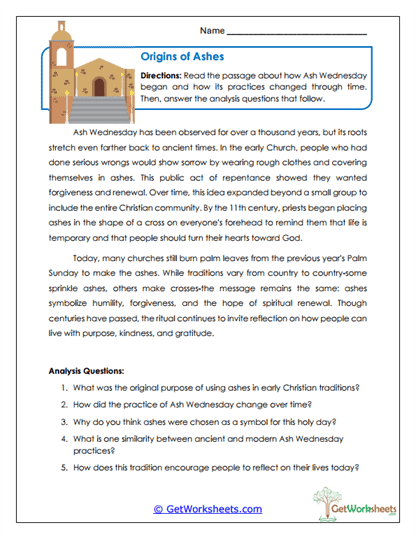
This analytical passage traces the history of Ash Wednesday from early Christianity to modern practice. Learners answer questions that connect historical facts with spiritual interpretation. It integrates history, religion, and ethics to show how traditions evolve while keeping their core meaning.
Choices and Conscience
Through a moral dilemma about honesty and temptation, students apply Lenten values such as repentance and self-control to real-life decisions. They write a paragraph explaining what the character should do and why. This worksheet promotes ethical reflection, empathy, and integrity.
Ashes and Awareness
Students read a passage about humility and reflection in the modern world, then write an essay connecting these themes to issues like materialism and technology. The activity encourages deeper understanding of how ancient practices remain relevant today. It develops critical thinking, essay writing, and moral insight.
Bookmark Us Now!
New, high-quality worksheets are added every week! Do not miss out!